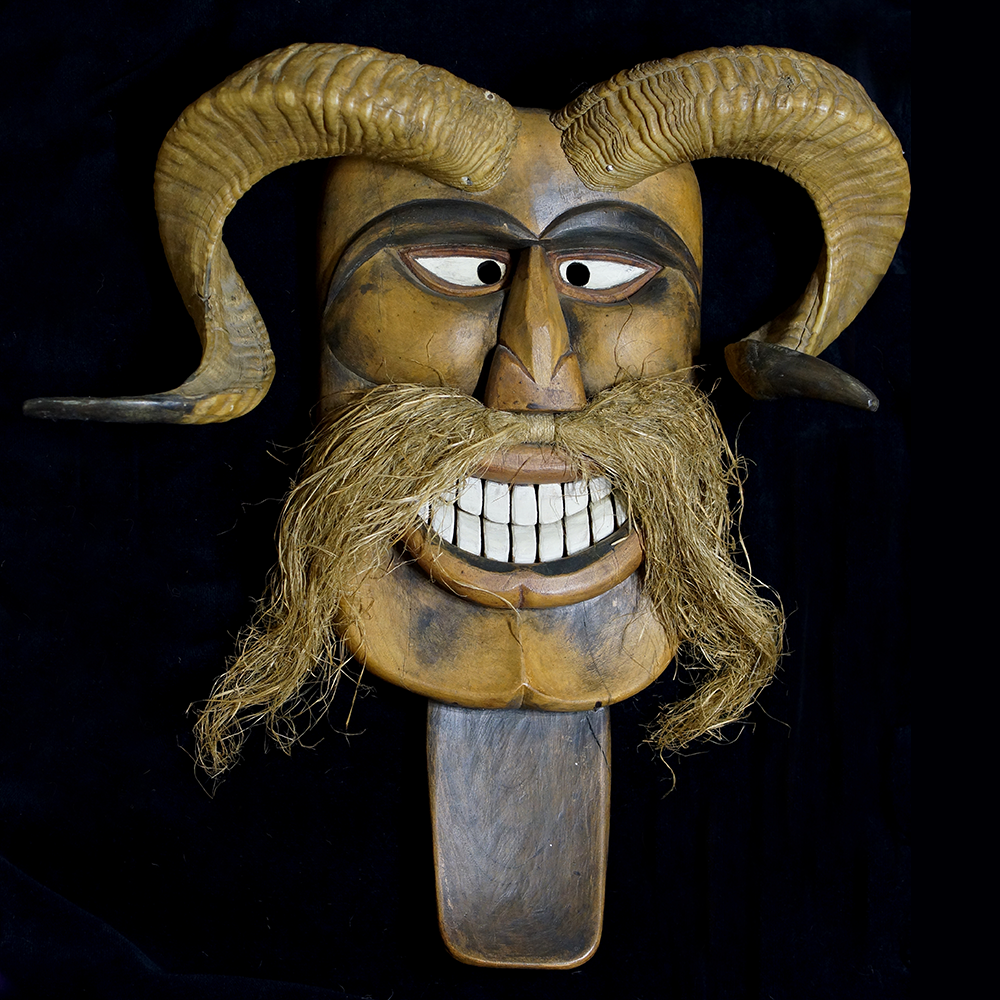
TITLE: Busójárás Mask
TYPE: face mask
GENERAL REGION: Europe
COUNTRY: Hungary
SUBREGION: Mohács
ETHNICITY: Šokci
DESCRIPTION: Large Busó mask
CATALOG ID: EUHU001
MAKER: Unknown
CEREMONY: Busójárás (Farsang)
AGE: 1960s-1970s
MAIN MATERIAL: wood
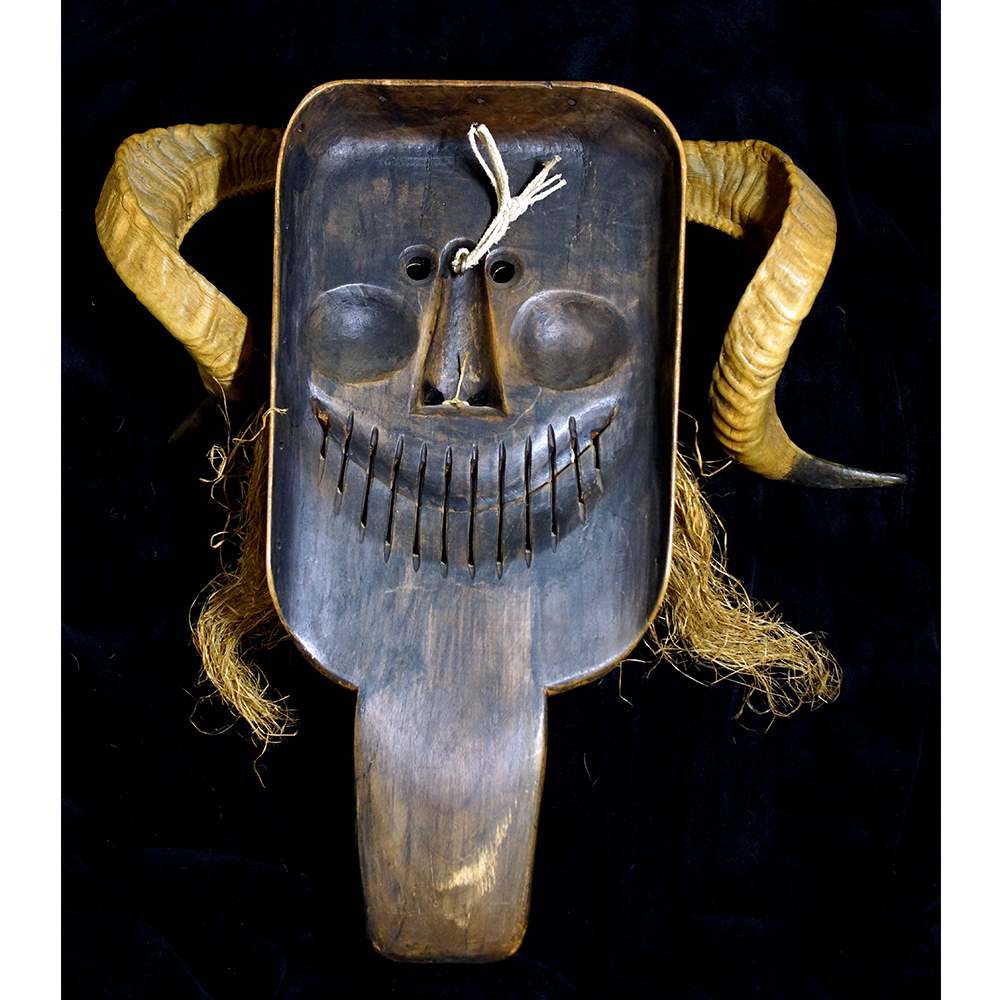
OTHER MATERIALS: ram horns; plant fiber; string; pigment

Busójárás is the Hungarian festival held annually in Mohács to celebrate the end of winter. Although the event has a pre-Christian origin as a ritual to frighten away the winter, it has been adapted to coincide with Christian ideology and timed to end with Carnival (Farsang). Masqueraders parade in devil masks of the kind shown here, wearing goat-skin suits and carrying staves or playing traditional folk music.

:

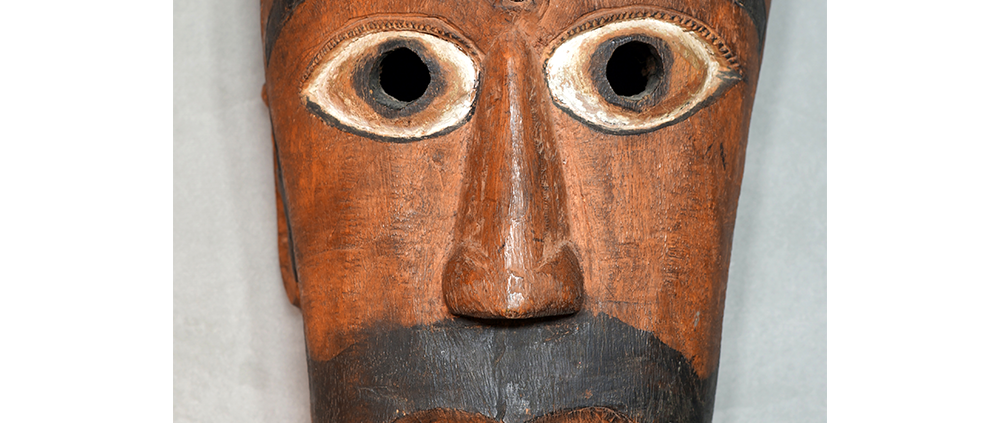
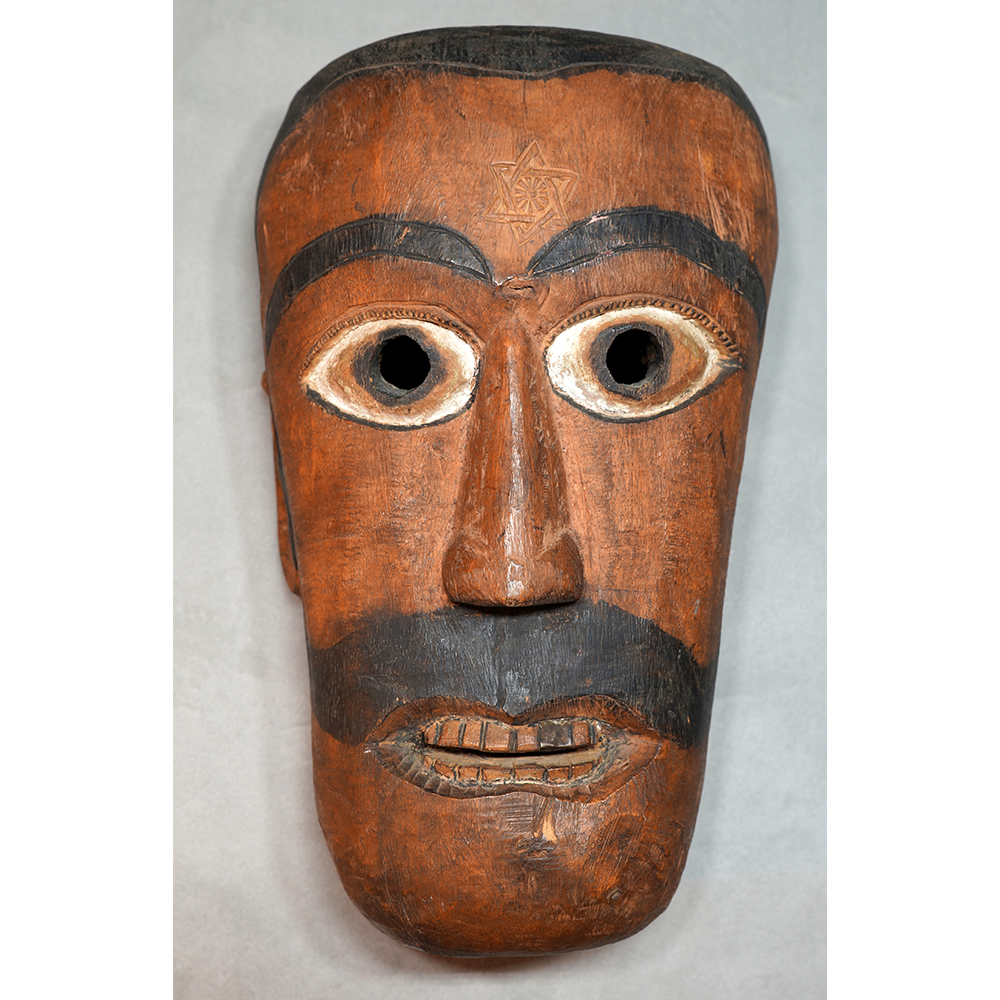
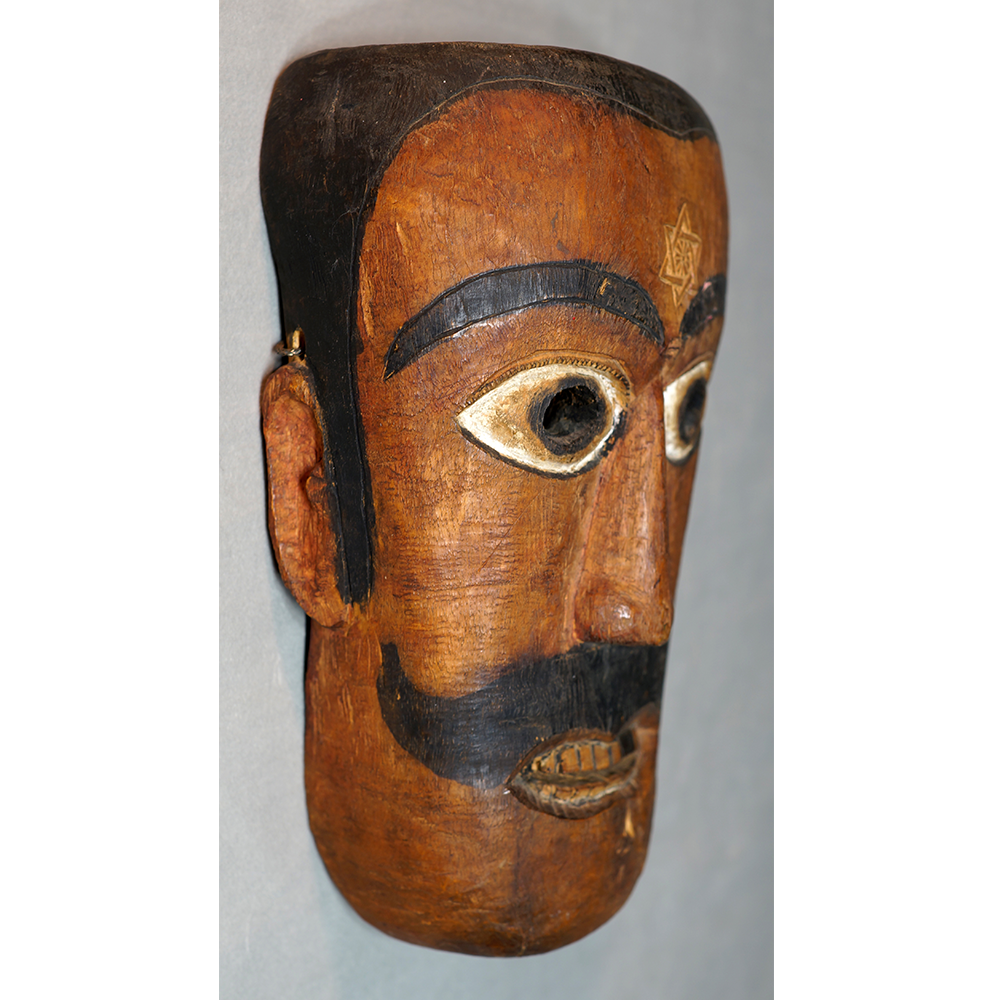
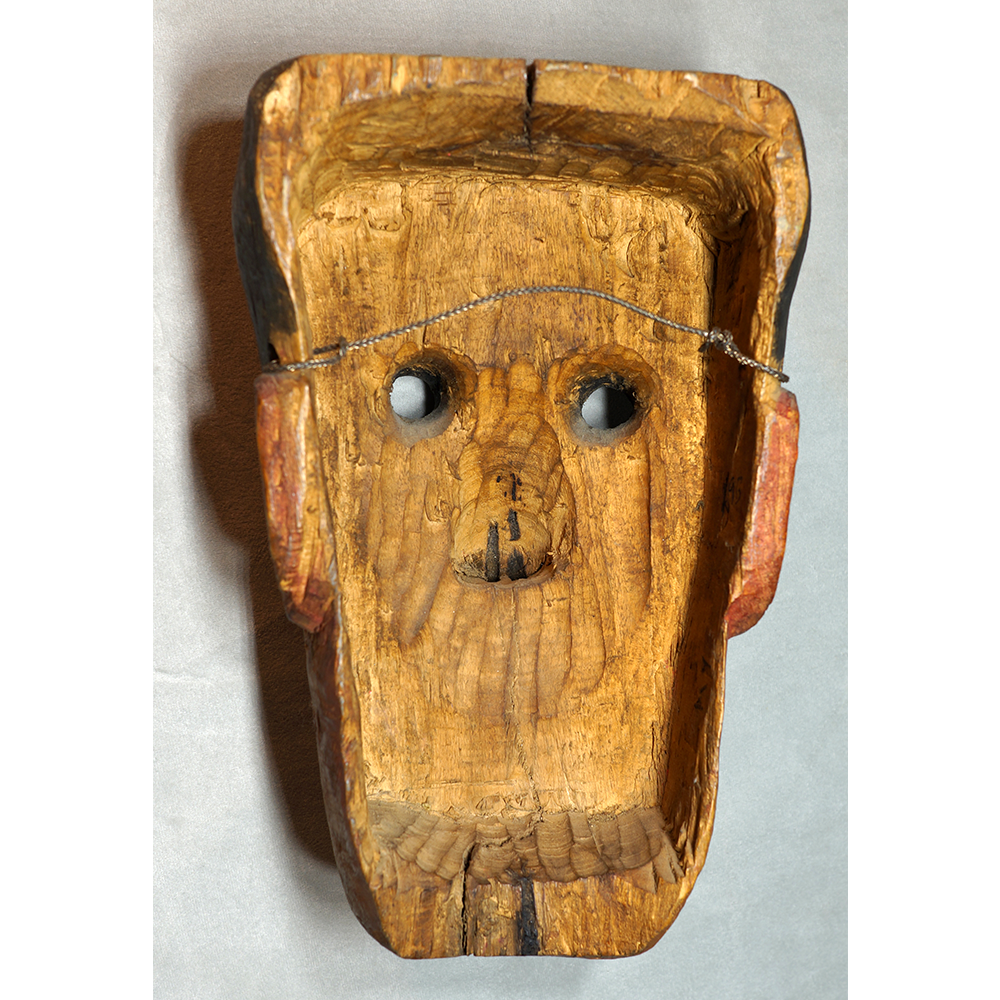
TITLE: Rey Moro Mask
TYPE: face mask
GENERAL REGION: Latin America
COUNTRY: Ecuador
SUBREGION: Latacunga
ETHNICITY: Mestizo
DESCRIPTION: Rey Moro (King Moor) Mask
CATALOG ID: LAEC001
MAKER: Unknown
CEREMONY: Fiesta de la Mama Negra
AGE: 1920s-1930s
MAIN MATERIAL: wood
OTHER MATERIALS: pigment

The Fiesta de la Mama Negra (Festival of the Black Mama) is a celebration held in September and again in early November in Latacunga, Ecuador. The event originates in pre-colonial indigenous practices and was adapted to honor the Virgin of Mercy (Virgen de la Merced) after Catholic conversion, in thanks for her supposed  intervention to protect the population from eruptions from the nearby Cotopaxi volcano.  The festival has become one of the most important in Latacunga, and includes a parade (comparsa) featuring the Mama Negra prominently as an African version of Mary, mother of Jesus.

Other important masks include animals, the Rey Moro (King Moor, showing the influence of the Conquistadors), angels, clowns (payasos abanderados), shamans (huacos), and miscellaneous other characters.  This mask, dating back to the early twentieth century, most probably represents the Rey Moro, judging by the Islamic star on his forehead.

:

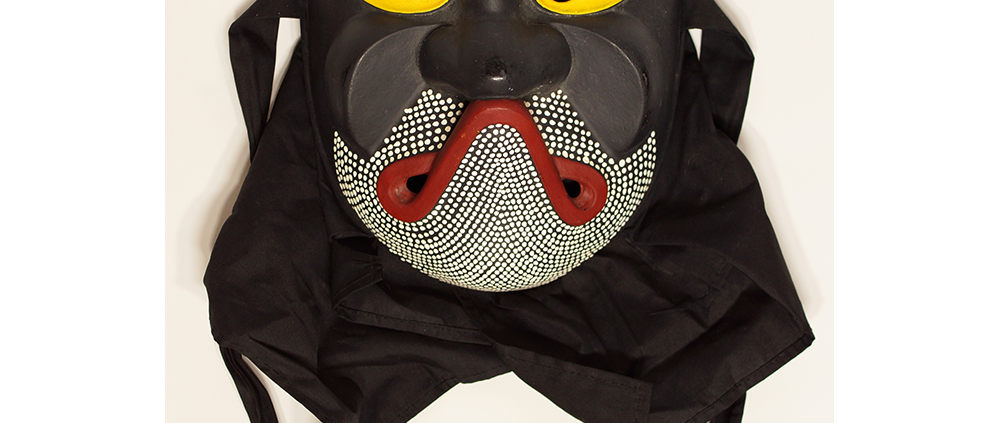
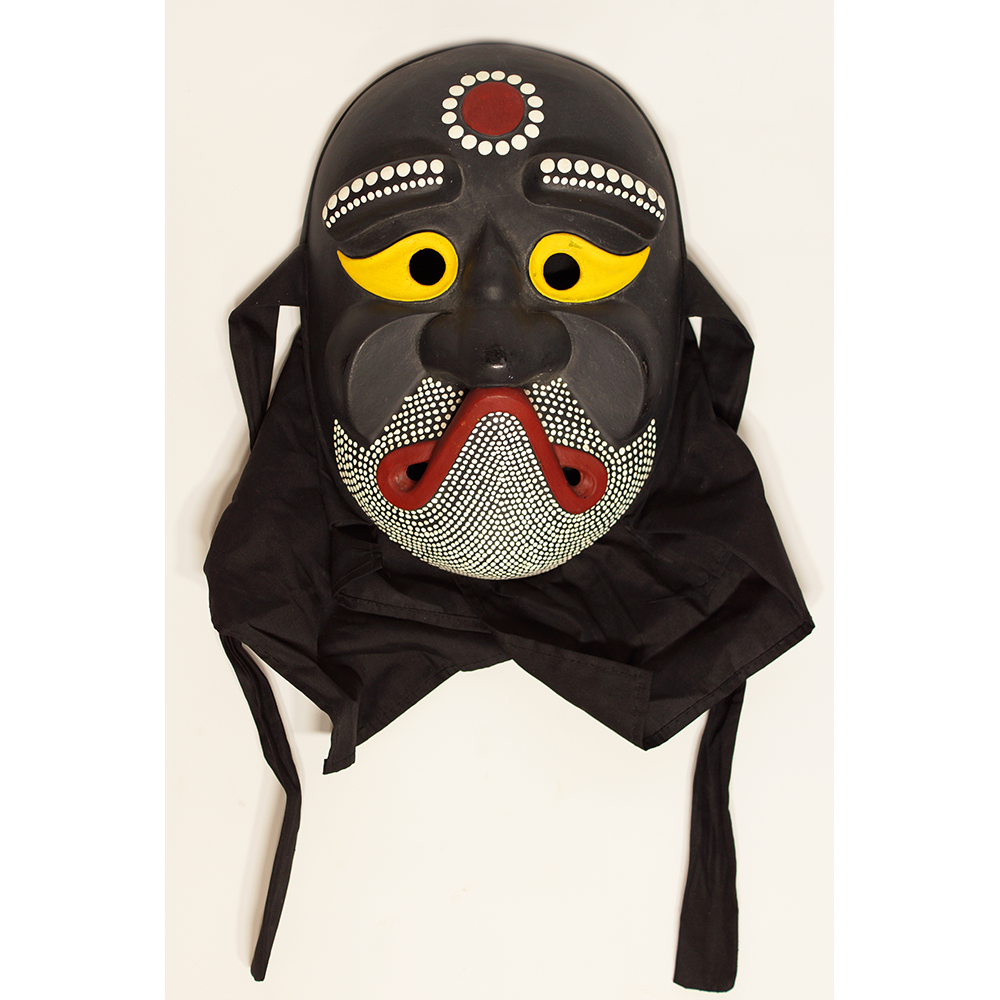
TITLE: Yangju Byeolsandae Nojang Mask
TYPE: face mask
GENERAL REGION: Asia
COUNTRY: Korea
SUBREGION: Yangju, Gyeonggi Province
ETHNICITY: Korean
DESCRIPTION: Nojang (Buddhist Monk) Mask
CATALOG ID: ASKR006
MAKER: Unknown
CEREMONY: Byeolsandae Drama
FUNCTION: celebration; entertainment
AGE: 1980s
MAIN MATERIAL: wood
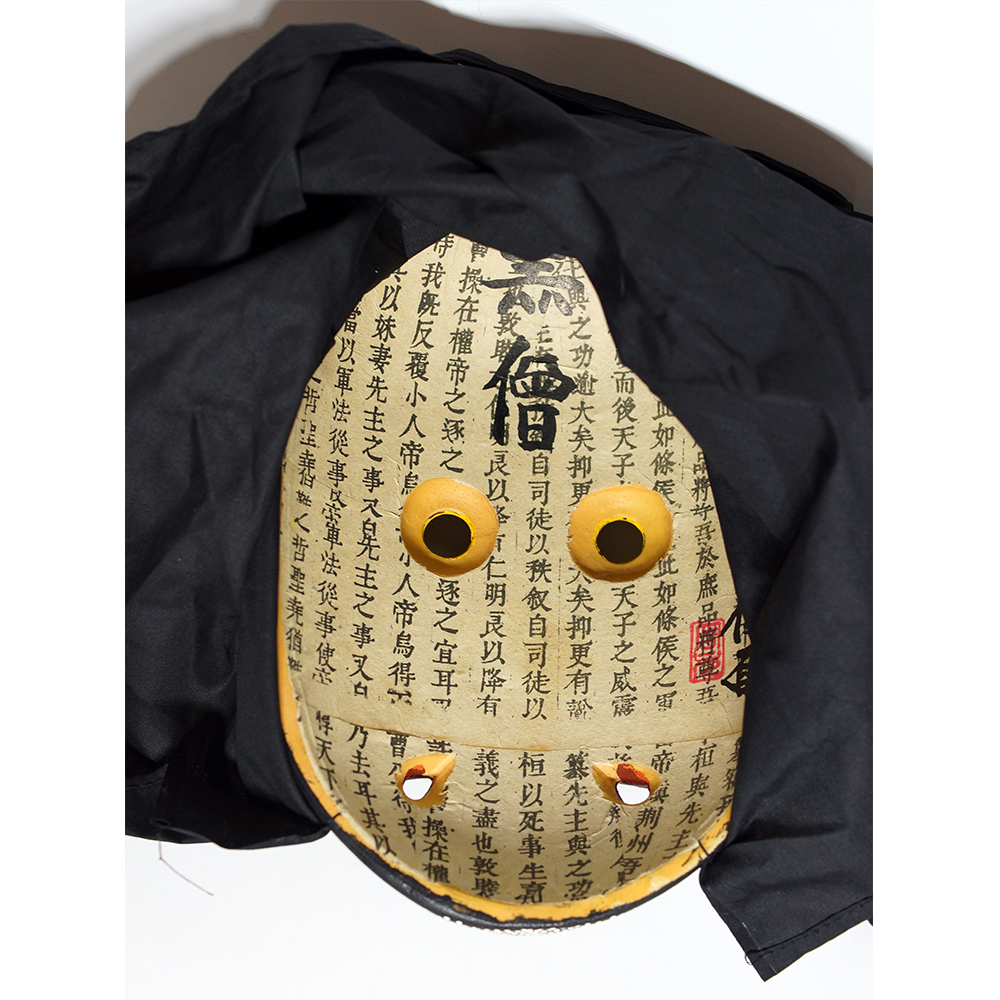
OTHER MATERIALS: cotton hood; paper; paint

Sandae noli is the type of masked drama in Gyeonggi Province and the Seoul region.  The drama is accompanied by music played on a small samhyeon yukgak ensemble, consisting of three aerophones, one chordophone, and two membranophones. The full performance involves dozens of characters in different masks.

This mask represents an old, corrupt Buddhist monk, or nojang, who has a fondness for liquor and women. The black color of the mask is meant to convey the monk’s advanced age.

For more on Korean masquerade, see Jeon Kyung-wook, Korean Mask Dance Dramas: Their History and Structural Principles (Gyeonggi-do, Rep. of Korea: Youlhwadang Pub. 2005).

:

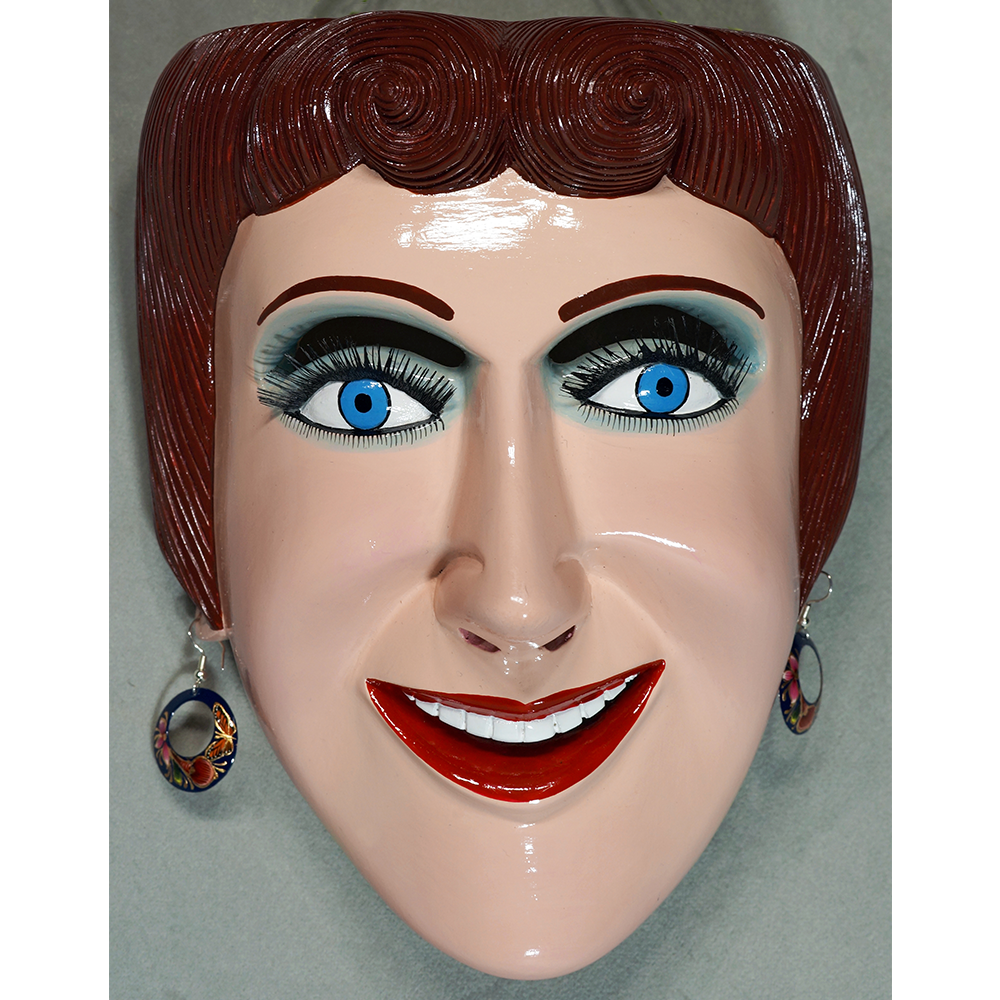
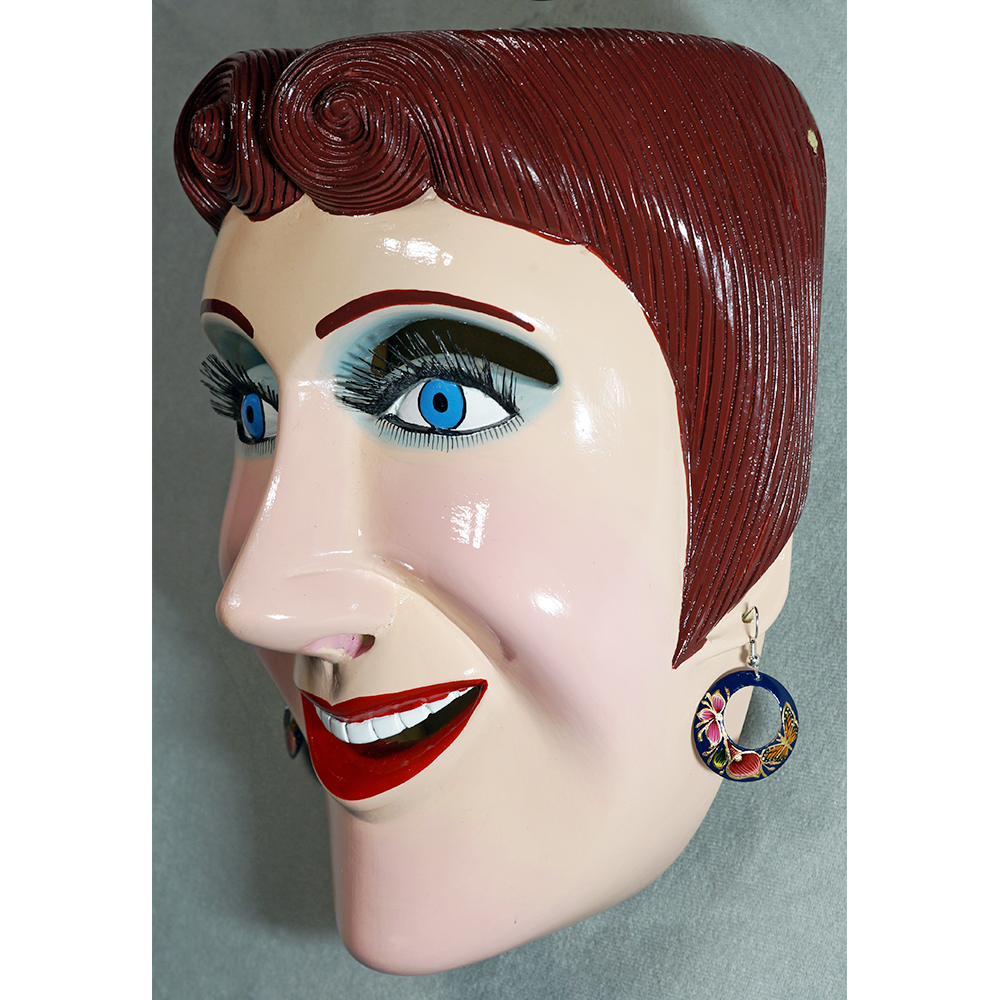
TITLE: Maringuilla Mask
TYPE: face mask
GENERAL REGION: Latin America
COUNTRY: Mexico
SUBREGION: Michoacán
ETHNICITY: Purépecha
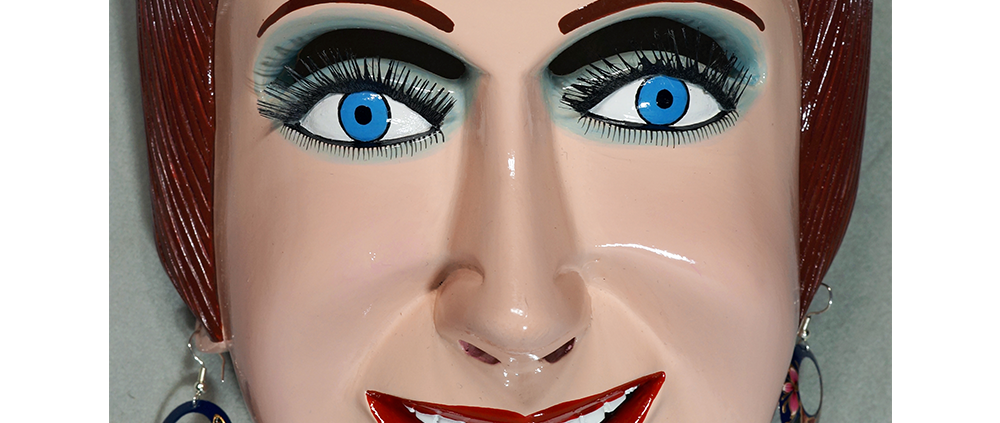
DESCRIPTION: Maringuilla (Little Mary) Mask
CATALOG ID: LAMX069
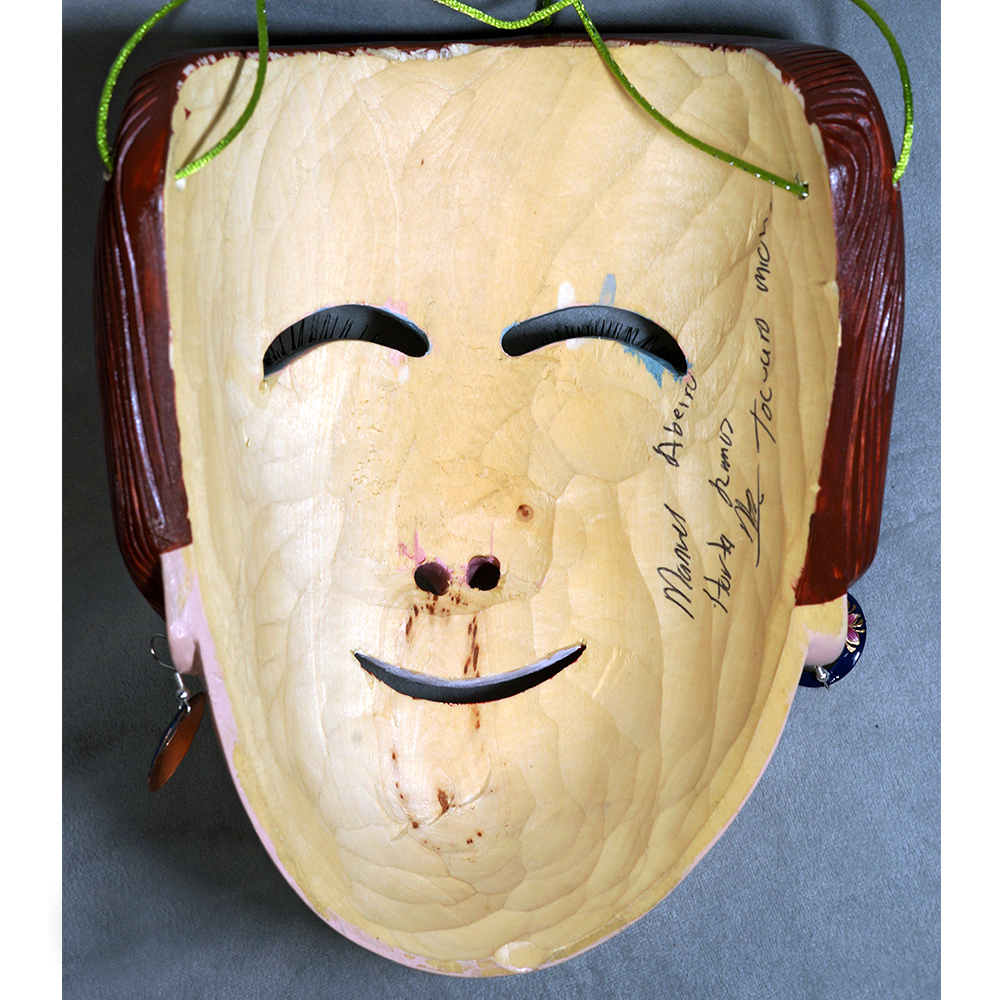
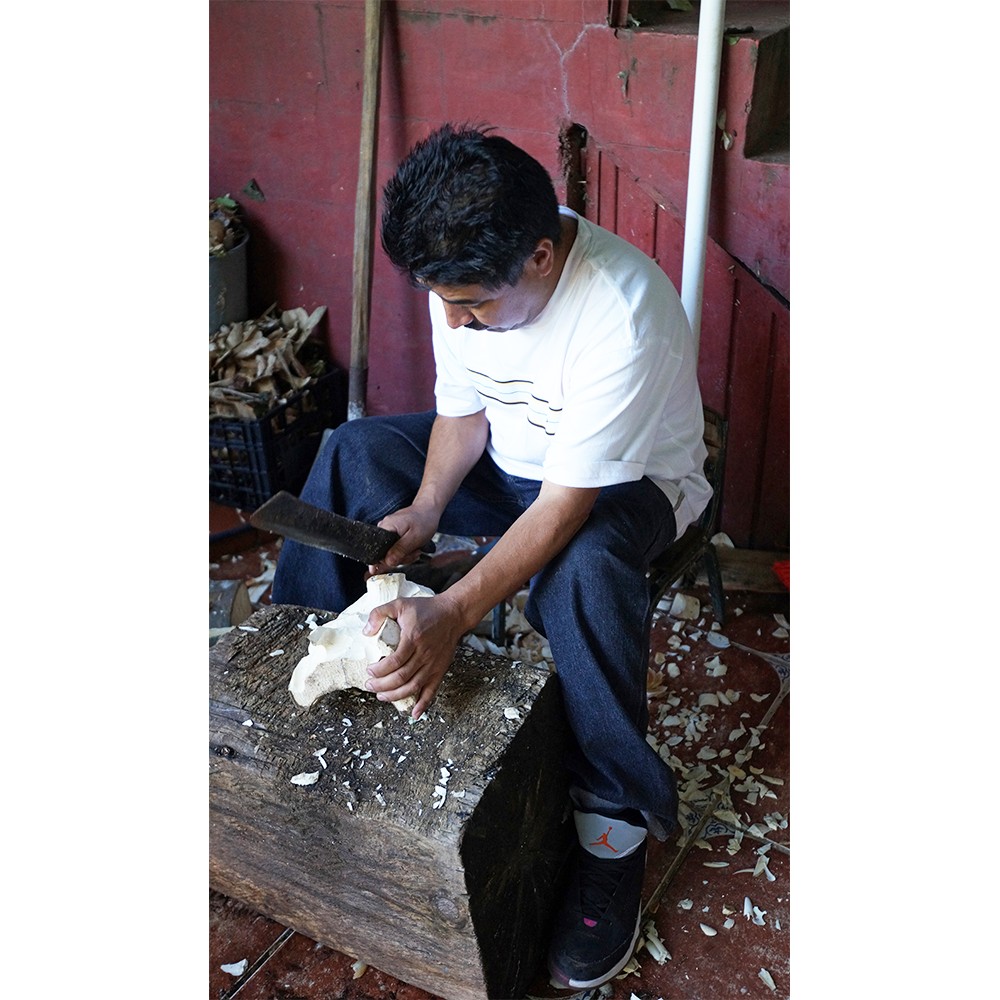
MAKER: Manuel Horta Ramos (Tocuaro)
CEREMONY: Pastorela
AGE: 2015
MAIN MATERIAL: wood
OTHER MATERIALS: plaster; maque; plastic eyelashes; metal and enamel earrings

The Pastorela is the ceremonial dance drama of Michoacán state in Mexico. Pastorelas, performed in February during the Shrovetide season, are primarily religious in significance. The main characters of the Dance of the Shepherds are the Devil, the Archangel Michael, shepherds, and a hermit (who paradoxically represents the ancestors of the performers).  The drama revolves around the attempts of Lucifer and his demon minions to steal the baby Jesus.  Other dramas performed on the occasion include the Dance of the Negritos (dance of the little blacks), relating to the importation of African slaves into Mexico by the Spaniards, and which includes an army of elegantly dressed “little Maries” (Maringuillas), like the one represented by this mask, and feos, or ugly clowns.

This mask was carved by Manuel Horta, one of a famous extended family of carvers from the town of Tocuaro, in 2015.

:

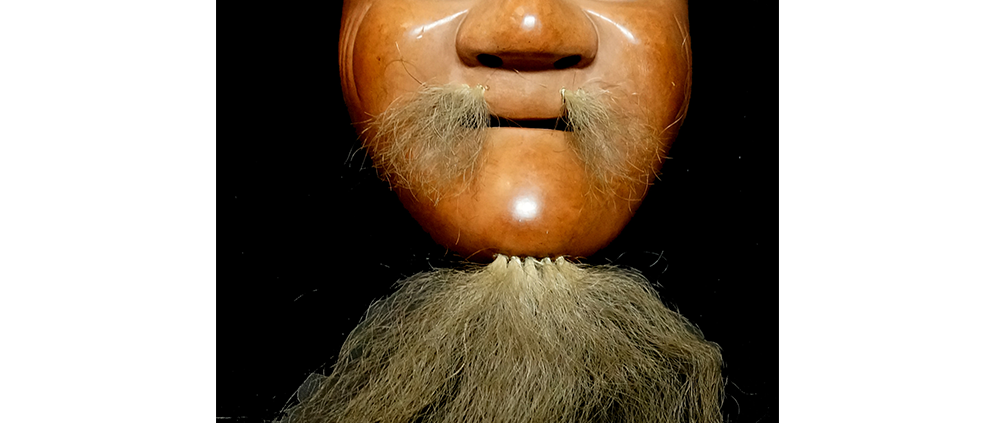
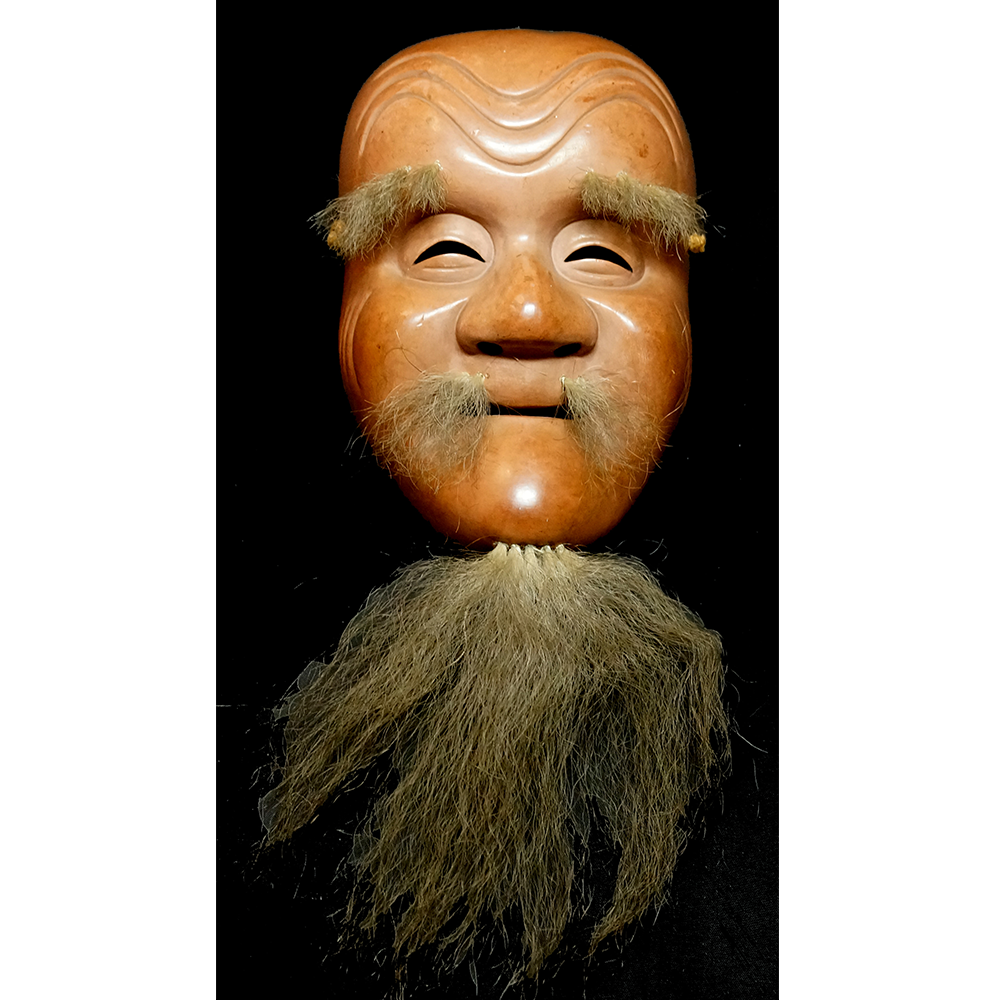
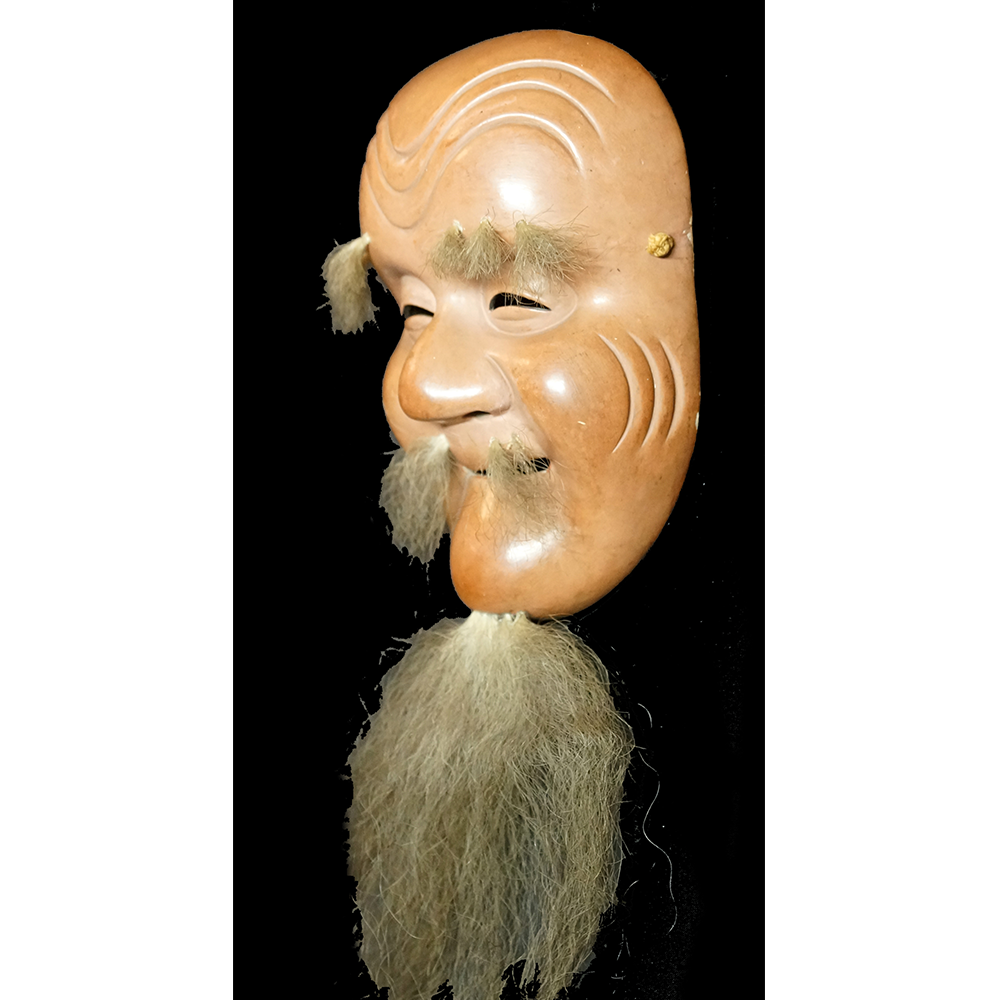
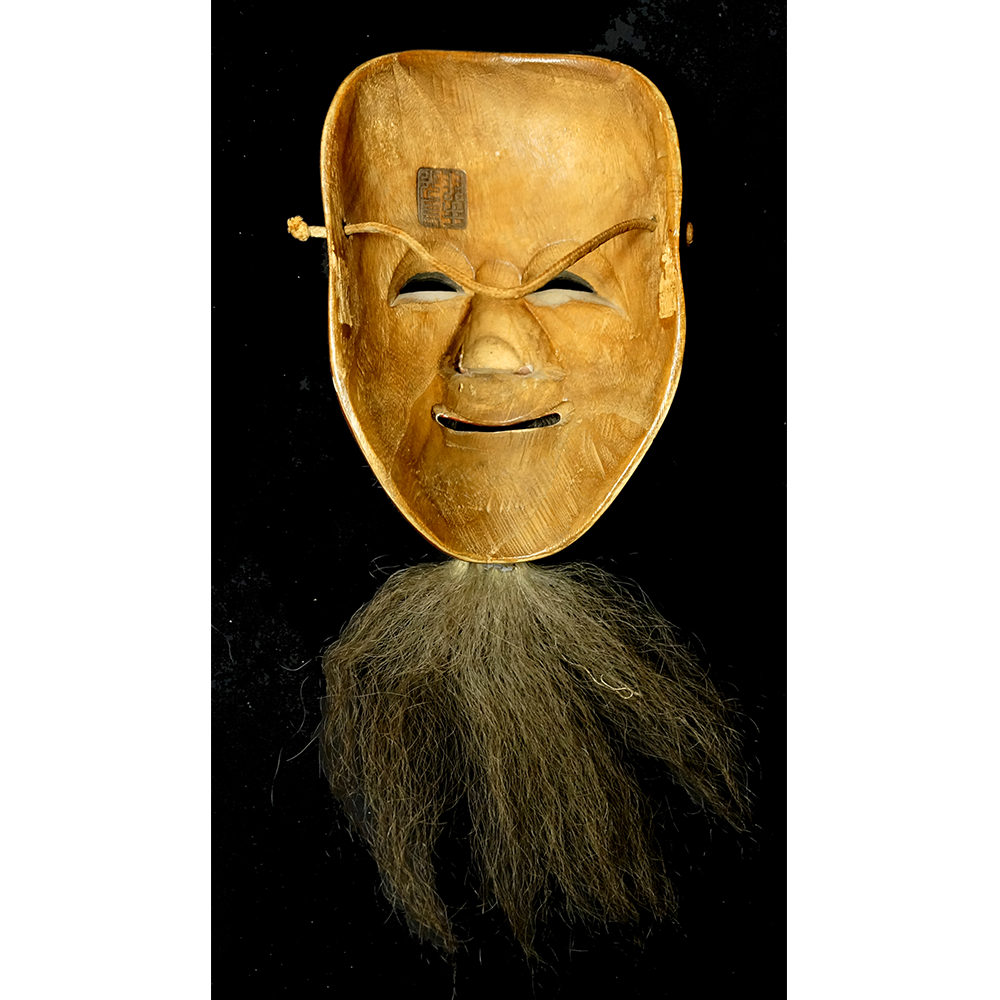
TITLE: Kokushiki-Jo
TYPE: face mask
GENERAL REGION: Asia
COUNTRY: Japan
ETHNICITY: Japanese
DESCRIPTION: Kyodomen Kokushiki-Jo Mask
CATALOG ID: ASJP022
MAKER: Habu Mitsuma
CEREMONY: Okina (翁)
FUNCTION: agriculture; purification; spirit invocation
AGE: 1960s
MAIN MATERIAL: wood
OTHER MATERIALS: animal hair; pigment

The Okina is an ancient Japanese dance ritual that uses forms of mask known as kokushiki-jo and hakushiki-jo. These are among the oldest masked characters in Japanese ceremonies, originating as folk masks (kyodomen) used in ancient sarugaku (“monkey music”) theatre (circa 1000-1300 CE) and migrating to the formal stage for use between noh plays. The kokushiki-jo and haukshiki-jo both represent old men with divine qualities, but with slight differences in appearance. Unlike noh theatre, the Okina dance is mute, and it is performed by a kyōgen performer rather than a noh actor.

The Okina plays an important ceremonial role in the Shinto religion, because the kokushiki-jo performs the Sanbasō, a prayer-dance celebrating the emperor’s peaceful rain and seeking blessings for a bountiful harvest.


To watch a short documentary about Japanese Nogaku (Noh drama and Kyogen plays), click above.

:

TITLE: Vejigante of Ponce Mask
TYPE: face mask
GENERAL REGION: Caribbean
COUNTRY: Puerto Rico
SUBREGION: Ponce
ETHNICITY: Mestizo
DESCRIPTION: Paper Maché Vejigante Mask
CATALOG ID: CAPR004
MAKER: Miguel Caraballo Jr. (Ponce, 1951- )
CEREMONY: Carnival
AGE: 2015
MAIN MATERIAL: paper maché
OTHER MATERIALS: gesso; paint

The Carnival paraders of Ponce, Puerto Rico traditionally use paper maché masks with multiple horns and sharp teeth, accompanied by colorful and frilly costumes, to represent fantastic devils. Most consider that the more horns a mask has, the better.  Formerly, participants carried an inflated goat or cow bladder (vejiga) on a string with which to bop passers-by on the posterior.  This is how the character got its name, vejigante (bladder-carrier). Today, goat bladders are in short supply, and this practice is rare. Vejigantes nonetheless remain an indispensable part of the Ponce Carnival.

A unique feature of the Ponce carnival is that it includes the burial of a giant symbolic sardine, carried by a parader dressed as a friar and another dressed as a hooked sardine.  The sardine symbolizes the Carnival itself, and the burial marks its end.

:

TITLE: Lombok Topeng Mask
TYPE: face mask
GENERAL REGION: Asia
COUNTRY: Indonesia
SUBREGION: Lombok
ETHNICITY: Sasak
DESCRIPTION: Sasak Topeng Mask
CATALOG ID: ASID039
MAKER: Unknown carver, collected in Mataram
CEREMONY: Topeng Dance Drama
FUNCTION: Celebration; Entertainment
AGE: 1960s
MAIN MATERIAL: candelnut wood
OTHER MATERIALS: paint

The Topeng dance drama centers around the political history of the region and are called Babad Dalem (Chronicles of the Kings). Although Topeng is best known on the islands of Java and Bali, it has also made its way to the Sasak people of Lombok. Topeng masks from this region exhibit characteristics of both Javanese and Balinese styles, with elements unique to the Sasak as well. The character represented by this mask is unclear, but the mask is well used.

:

TITLE: Dogon Satimbe Mask
TYPE: face mask
GENERAL REGION: Africa
COUNTRY: Mali
ETHNICITY: Dogon
DESCRIPTION: Satimbe mask
CATALOG ID: AFML005
MAKER: Unknown
CEREMONY: Dama
FUNCTION: Funeral
AGE: 1940s
MAIN MATERIAL: ebony wood
OTHER MATERIALS: paint; glass beads; cowrie shells; hair; cotton string; 1919 British West Africa penny; bronze bell

The Dogon people of Mali use a tremendous variety of masks, most of which center around funeral rites. Traditionally, the Awa Society controlled the use of masks. This mask represents Yayemme, the first woman to discover the mystical use of masks, and Yasigi, a female character from Dogon creation myths who served beer at the first Dogon sigi celebration.  It is used in funerals to usher the spirit of the dead from the village back to its proper place in the bush.

:

TITLE: Reamker Mask
TYPE: helmet mask
GENERAL REGION: Asia
COUNTRY: Cambodia
ETHNICITY: Khmer
DESCRIPTION: Reamker Mask
CATALOG ID: N/A
MAKER: N/A
CEREMONY: Reamker Dance Drama
AGE: N/A
MAIN MATERIAL: paper maché
OTHER MATERIALS: paste; gilding; mirrors; paint

Reamker is the Cambodian adaptation of the Hindu epic from India, the Ramayana. It is performed for public entertainment and features paper maché helmet masks on most male characters.  This specific character is Hanuman, the monkey god who plays the central role in assisting Rama (sometimes rendered “Phreah Ream” in Khmer), the hero of the epic, to recover his wife, who was abducted by the demon king Ravana (Krong Reap in Khmer).

At present the Museum does not have a representative example of a Reamker mask in its collection.

:

TITLE: Krampus Mask
TYPE: helmet mask
GENERAL REGION: Europe
COUNTRY: Austria
ETHNICITY: German (Austrian)
DESCRIPTION: Krampus Mask
CATALOG ID: EUAT002
MAKER: Josef “Sepp” Seidl (Sankt Veit im Pongau, 1975- )
CEREMONY: Krampuslauf
AGE: 2009
MAIN MATERIAL: wood
OTHER MATERIALS: goat horns; metal mesh; hardware; glass eyes; paint; horse hair

Krampuslauf (the Krampus Parade) is a winter event that forms part of the Christmas festivities in much of Austria and parts of southern Germany, Switzerland, northern Italy, and the Balkan states. From mid-November until the first week of December, many towns organize a parade of Krampuses, demons who represent evil spirits with frightening horned masks with sharp teeth and long, lolling tongues, typically in a suit of goat skin with loud cowbells attached to their belt.  They carry a whip of birch branches (a Rute) or a cowtail. Their function is to accompanying St. Nicholas, who rewards good children with treats and presents, while the Krampuses punish bad children by beating them with their whips or throwing them into wicker baskets on their backs to carry down to Hell for punishment.

: