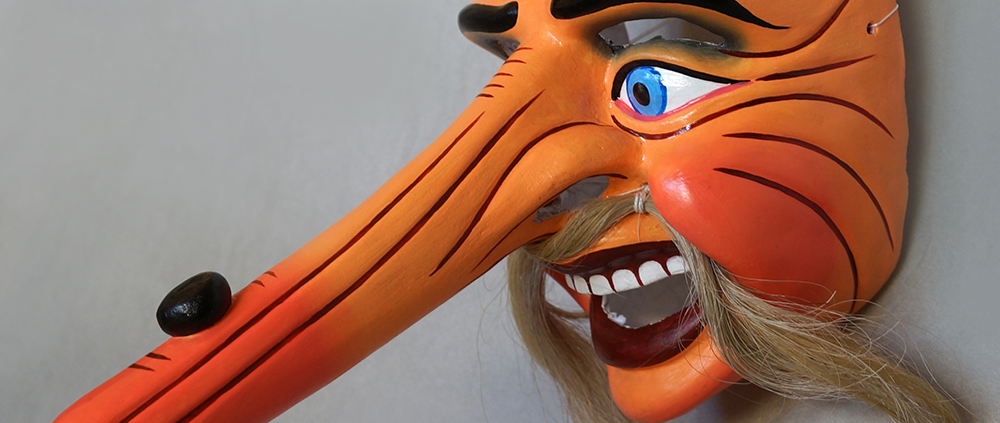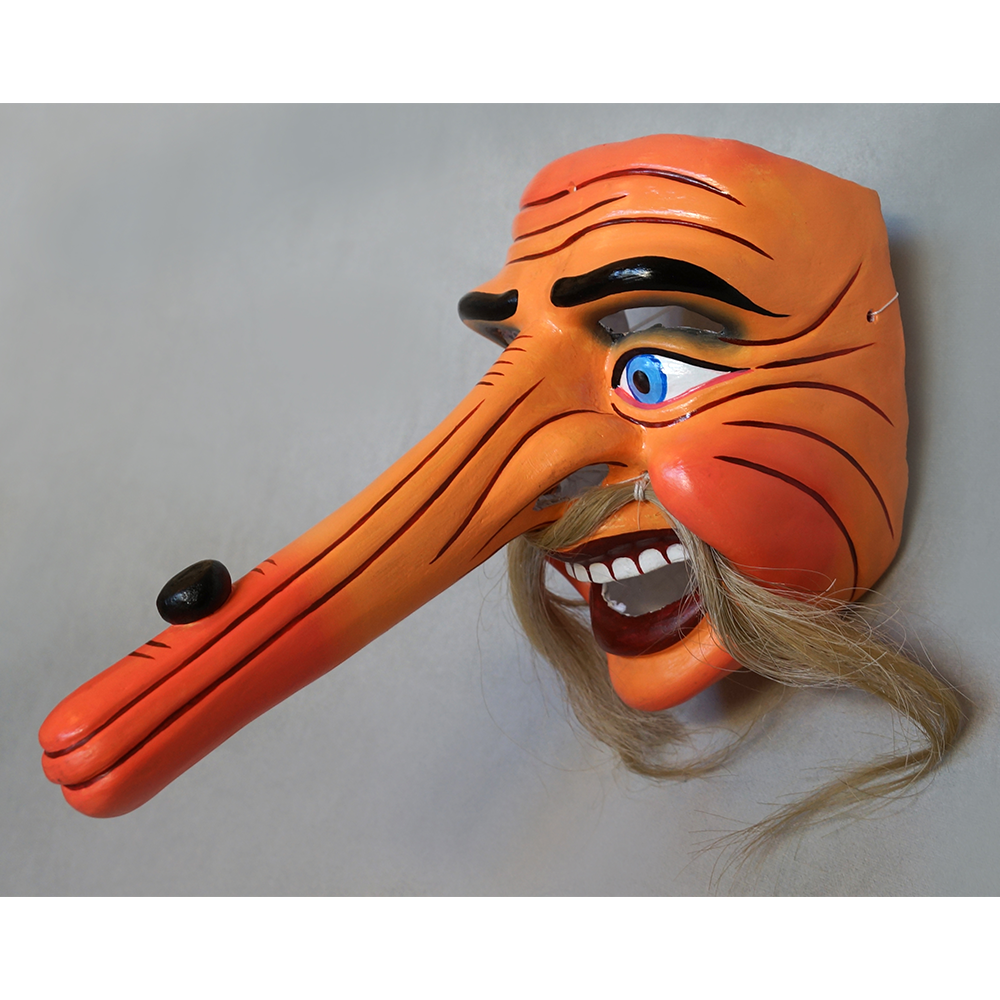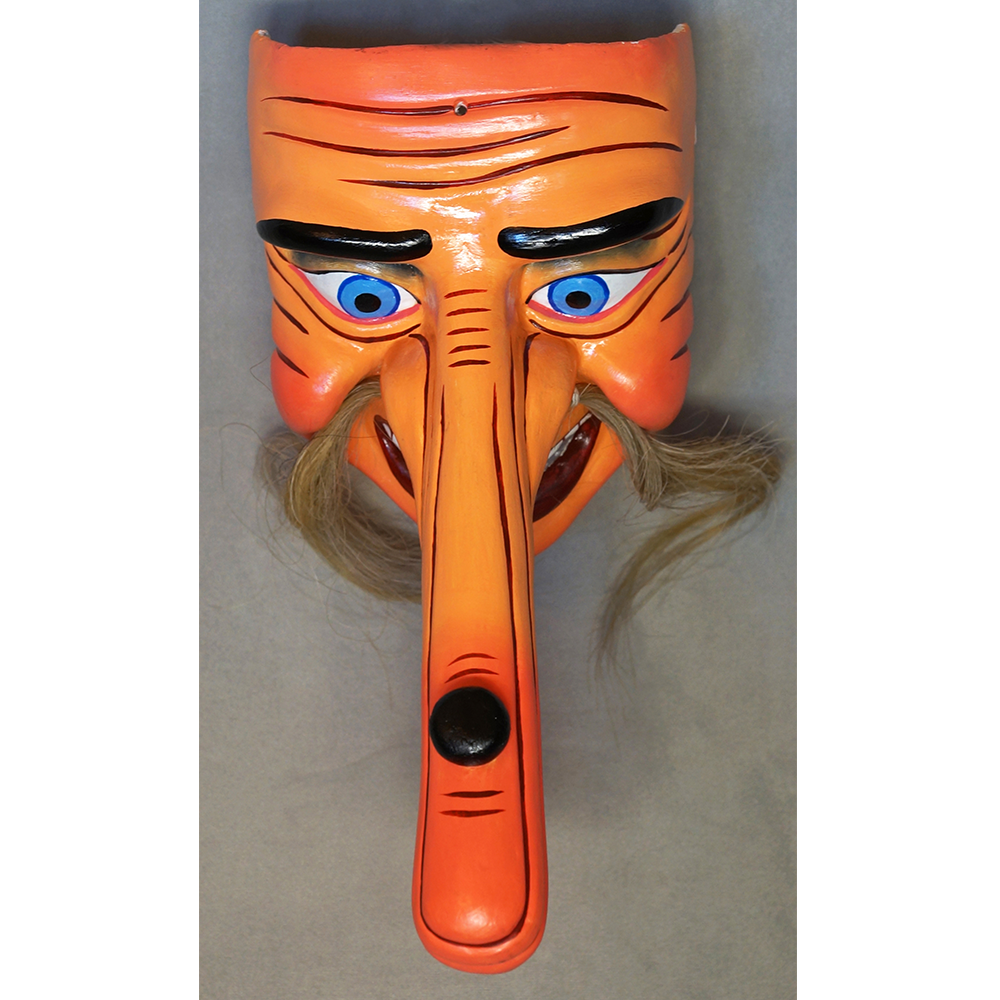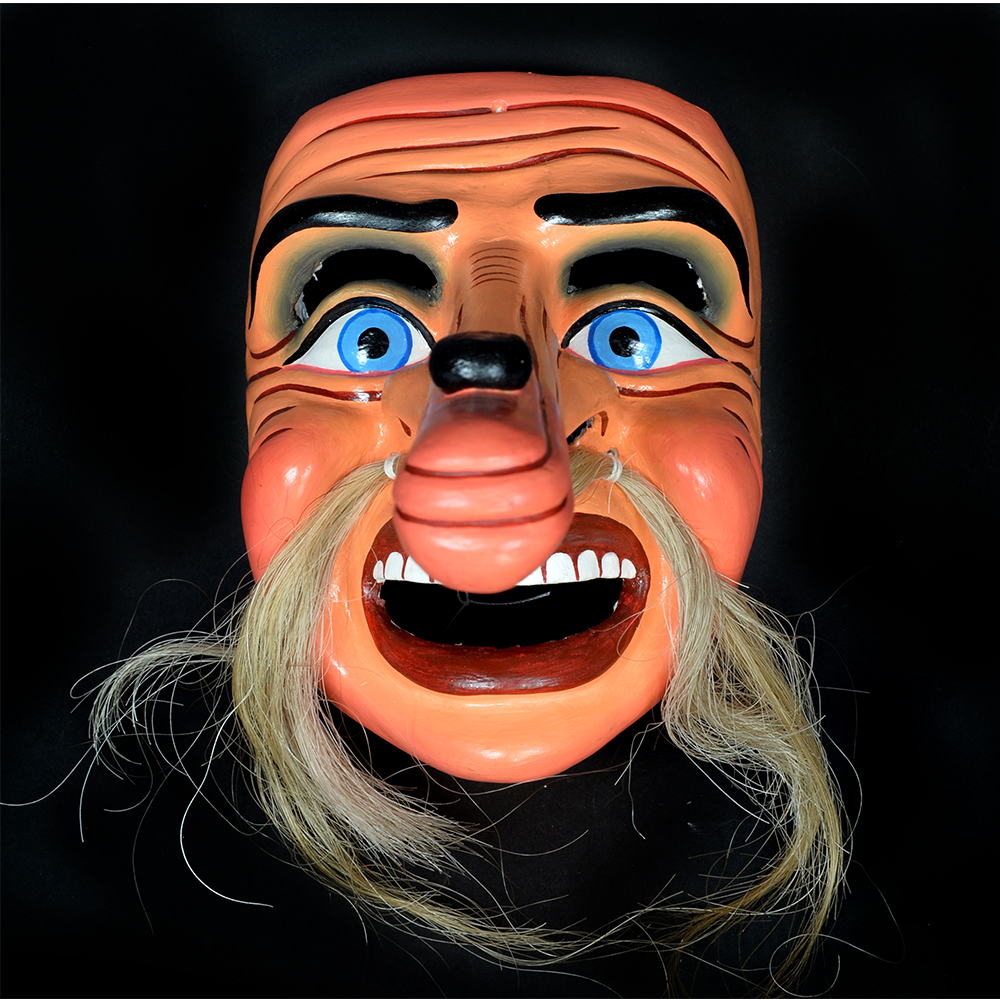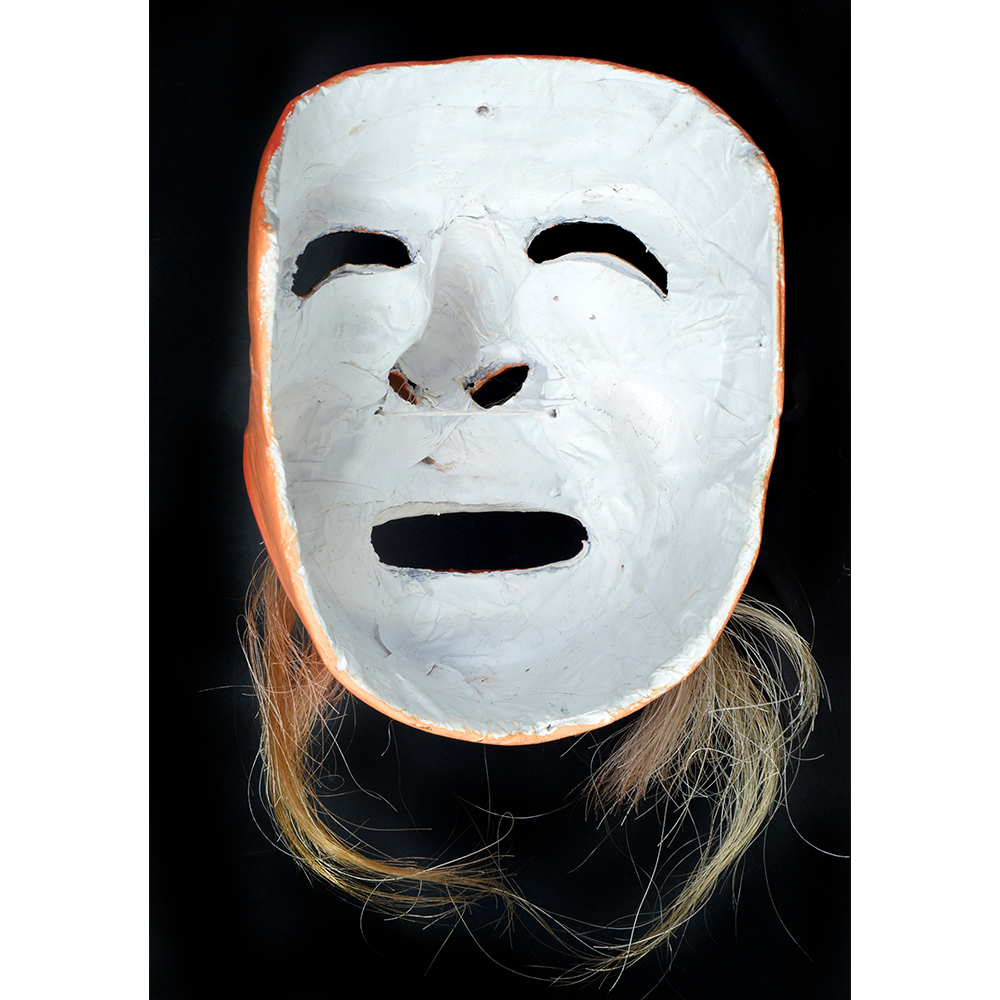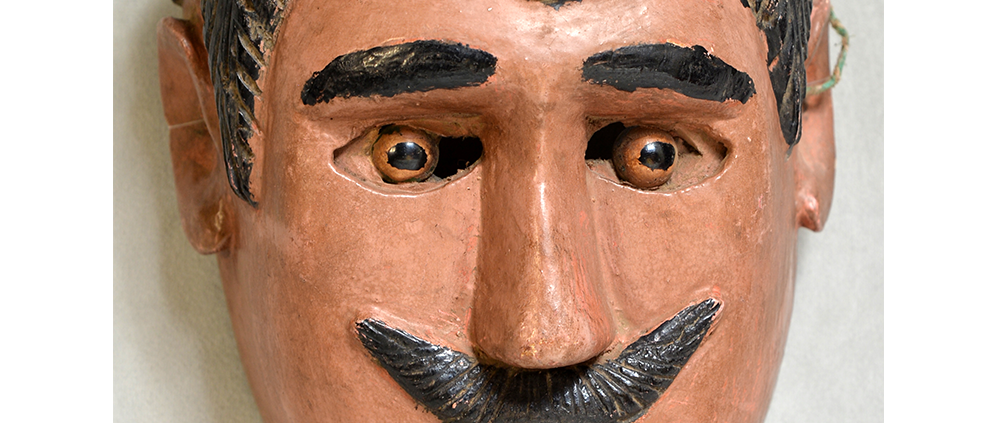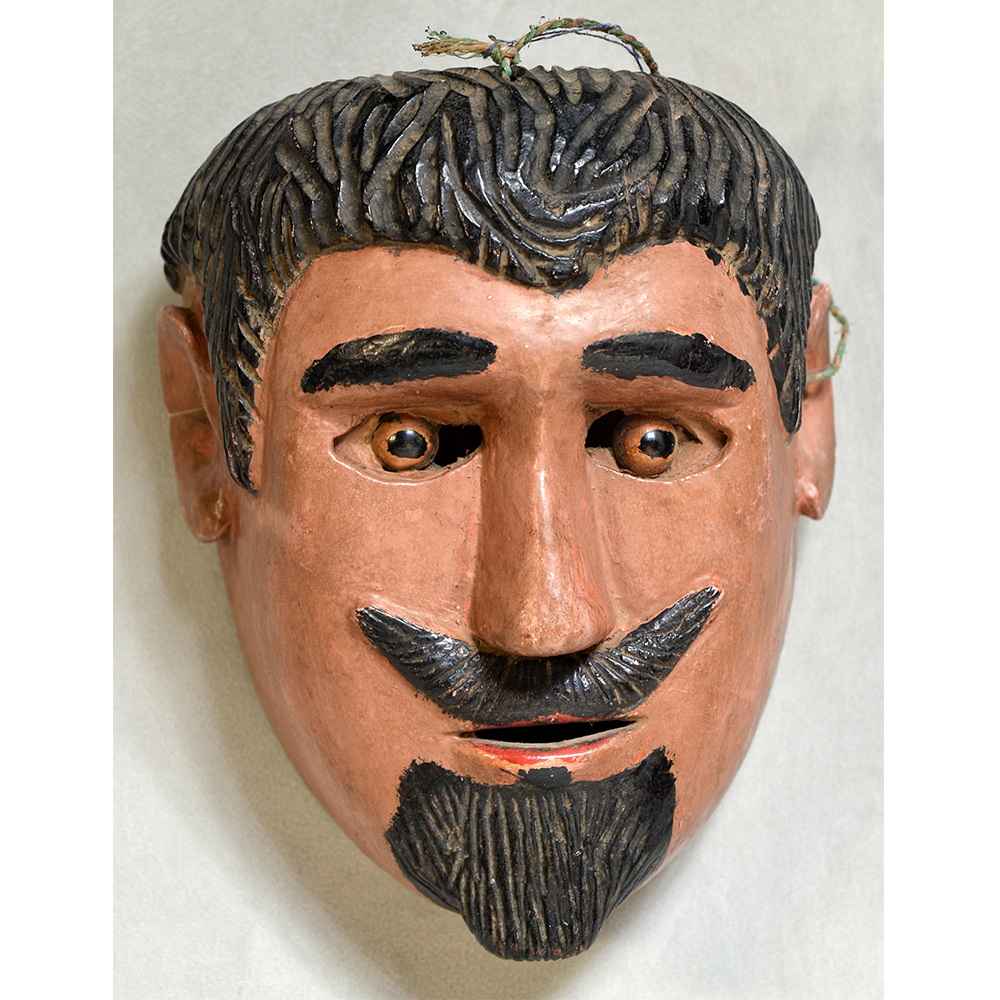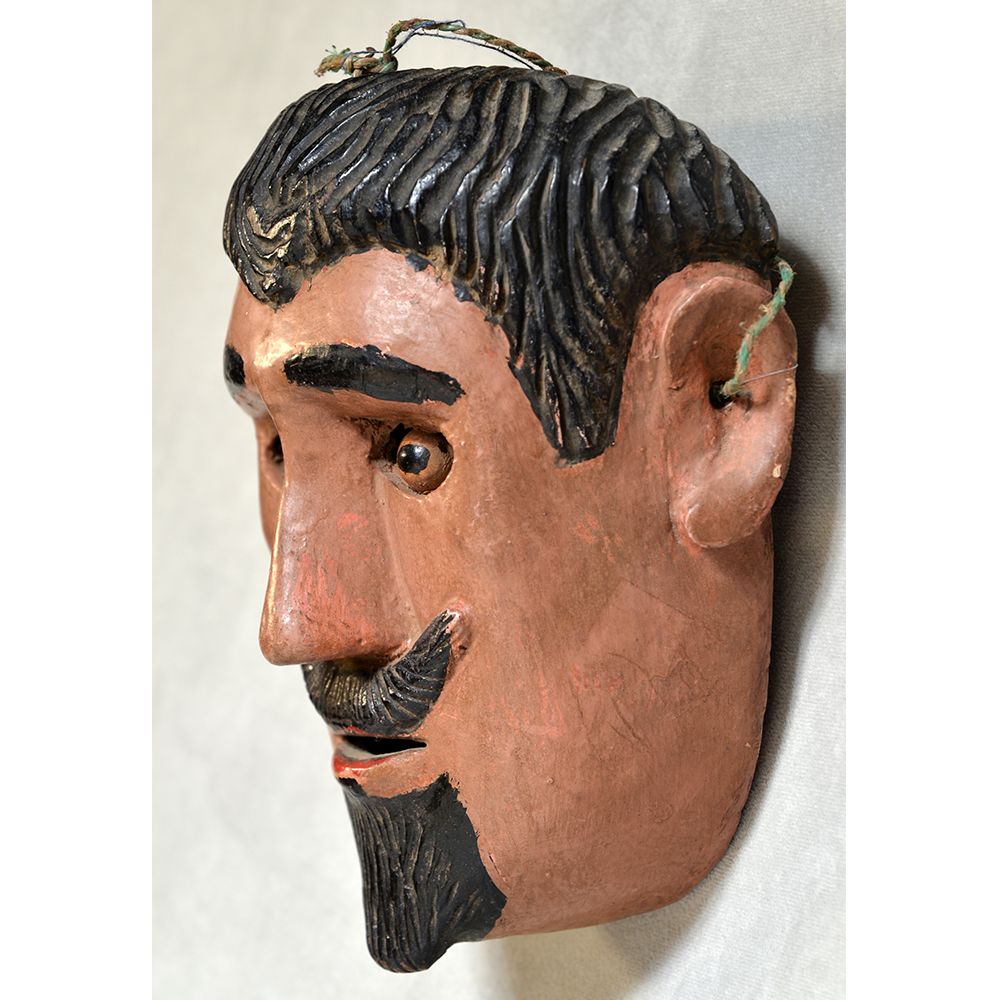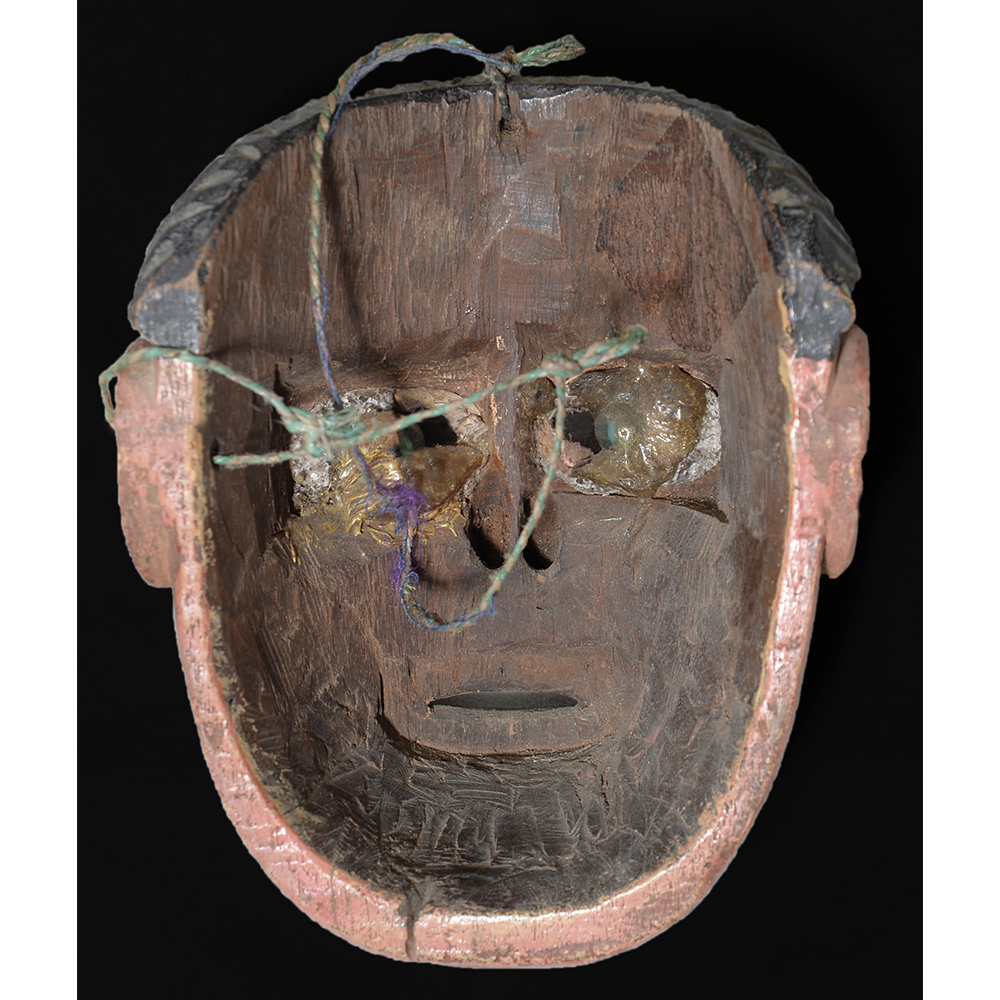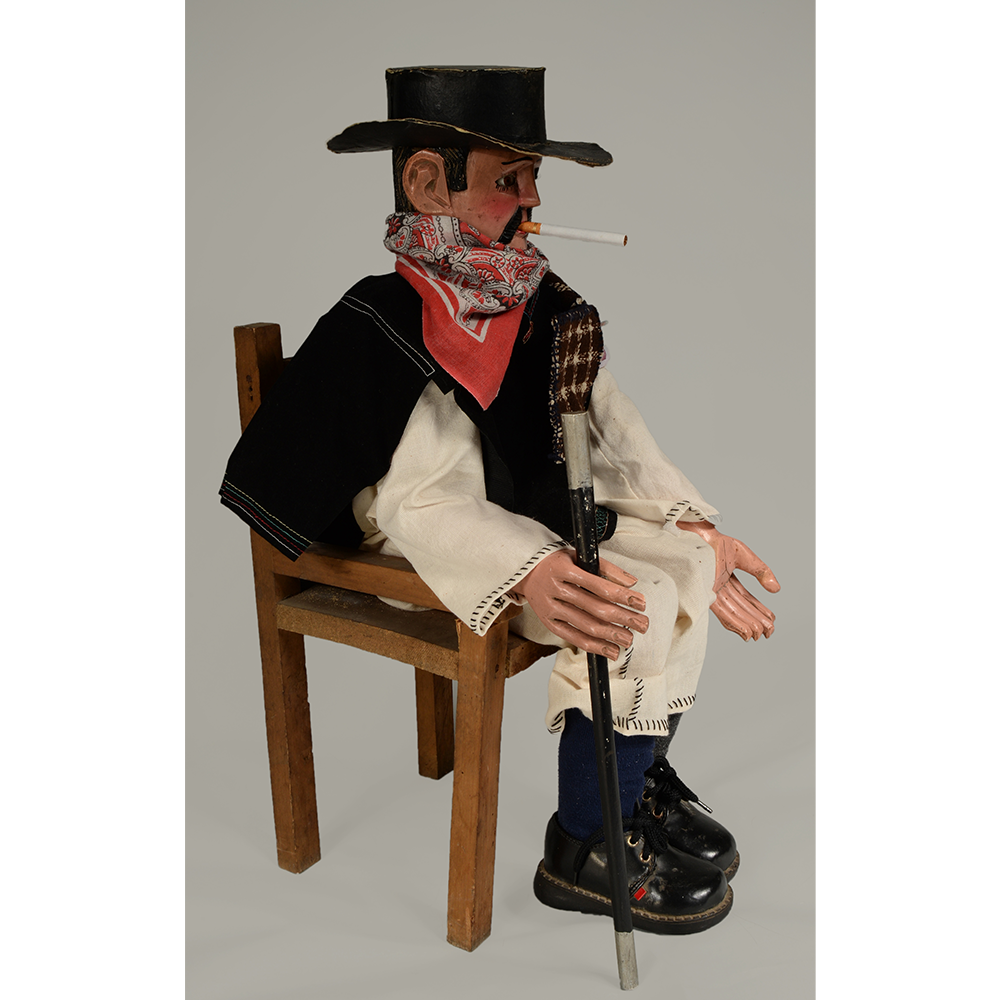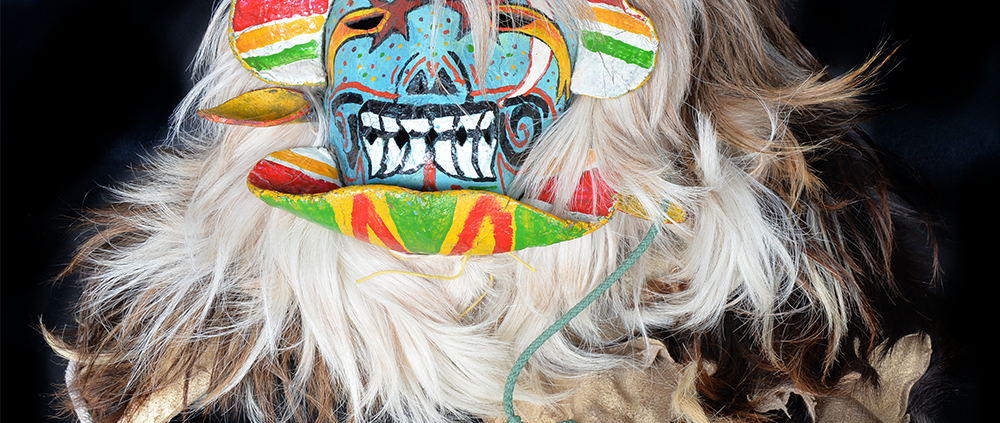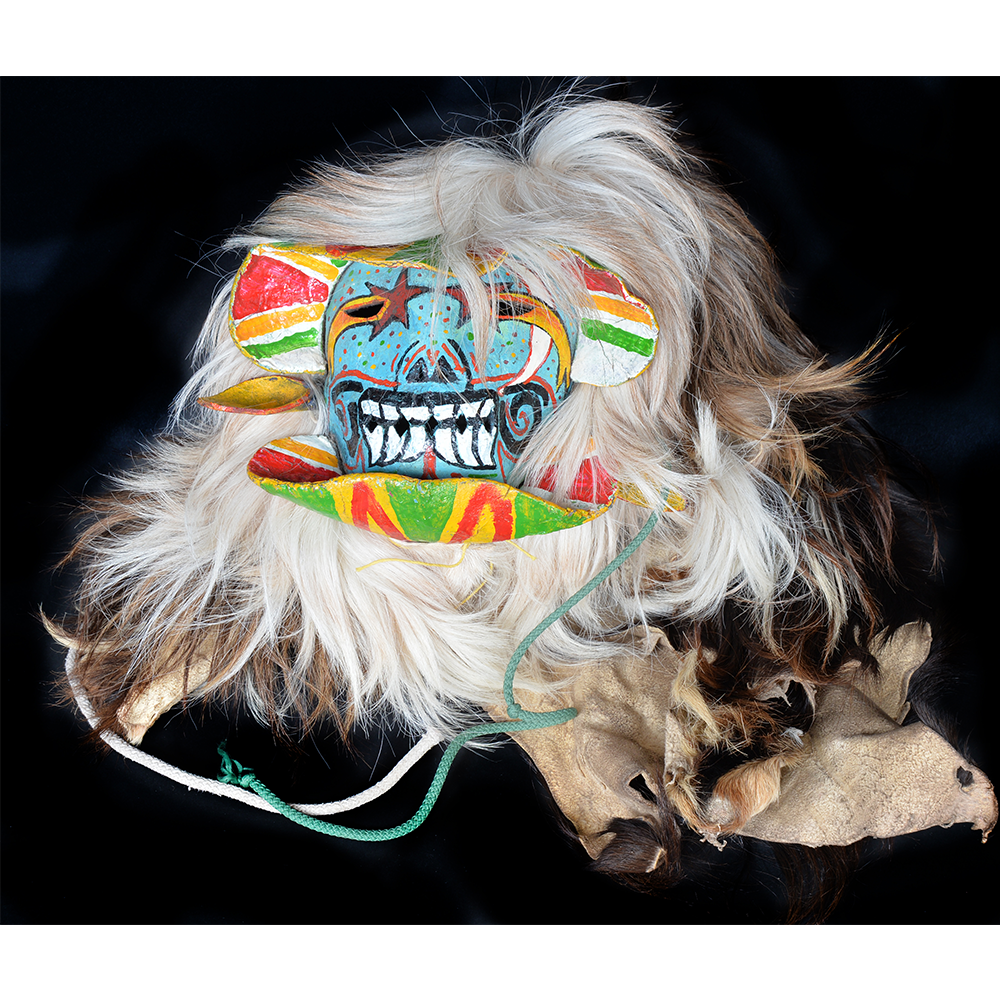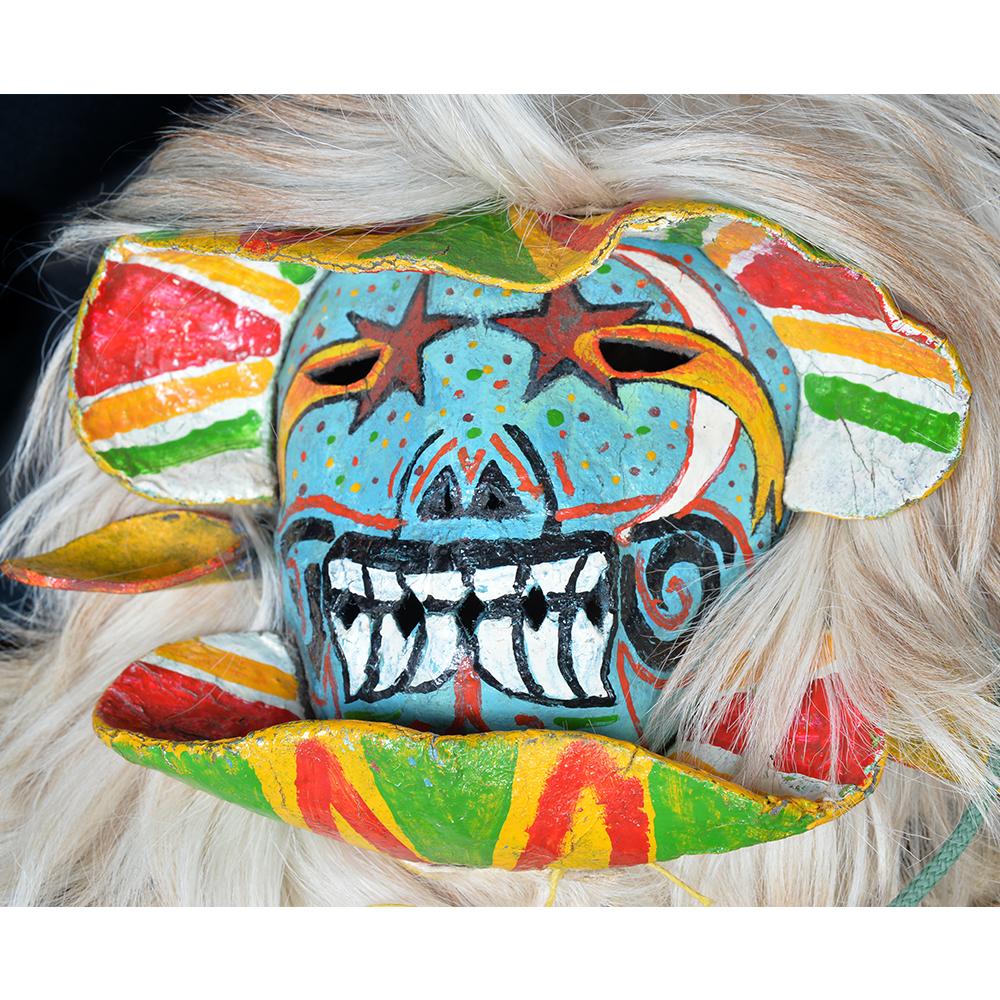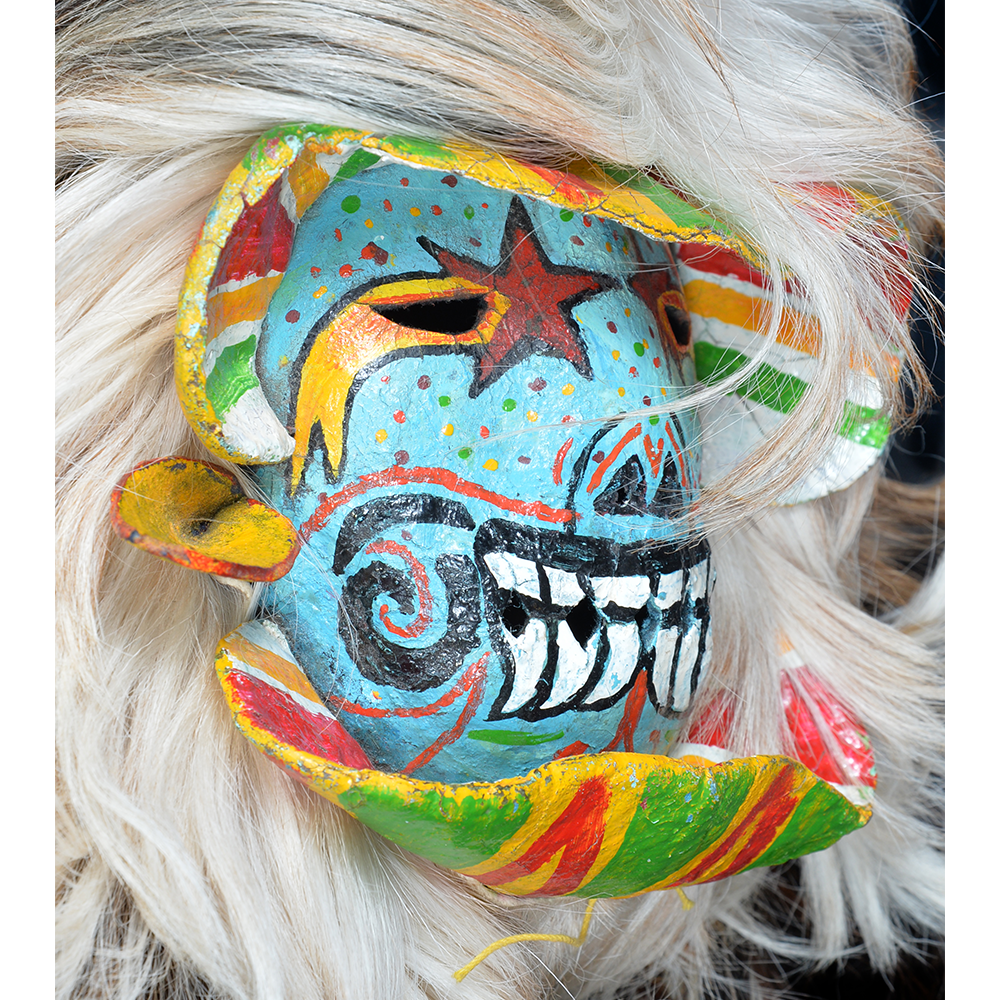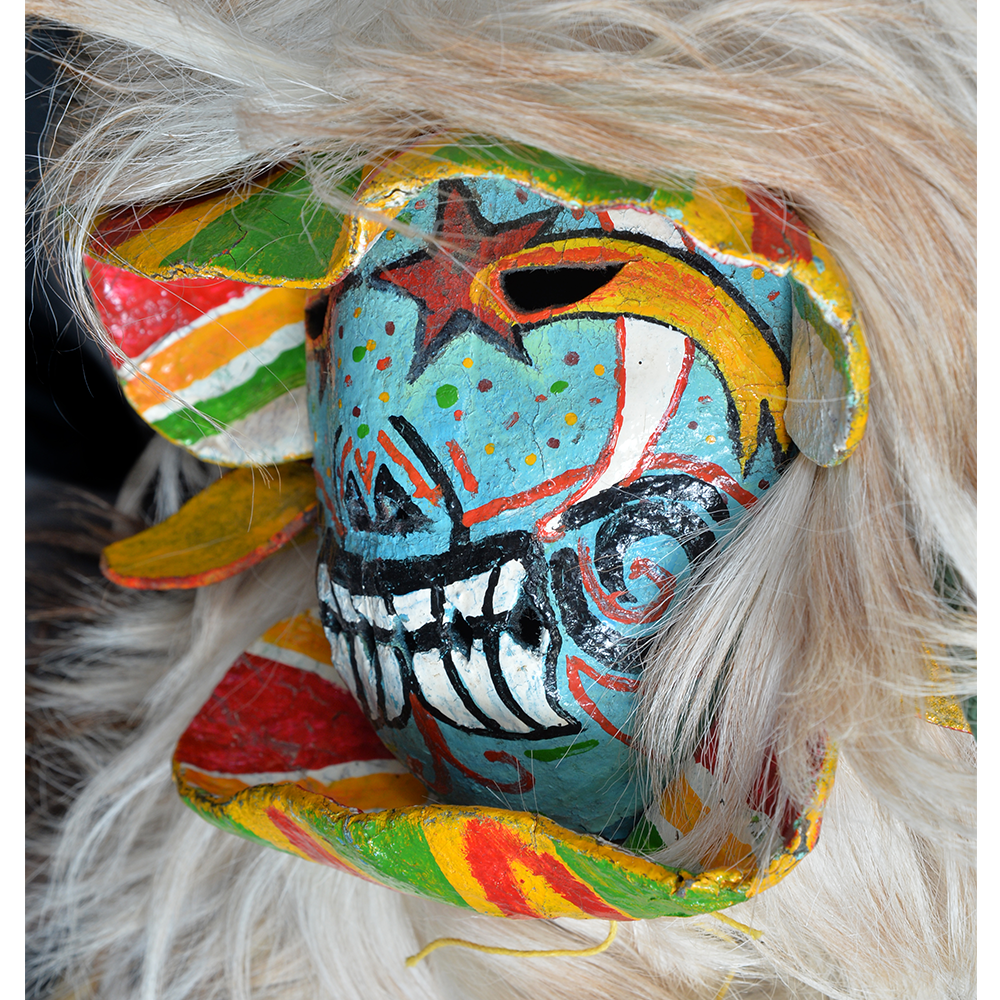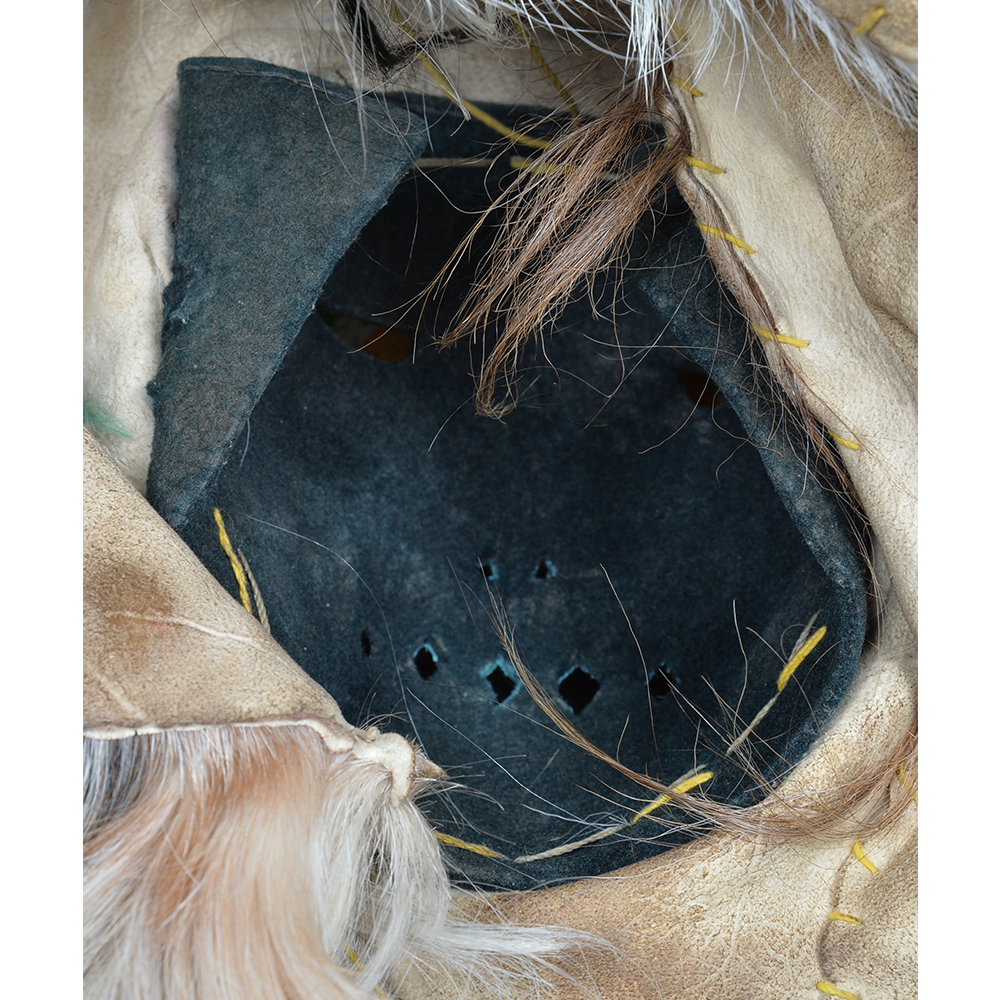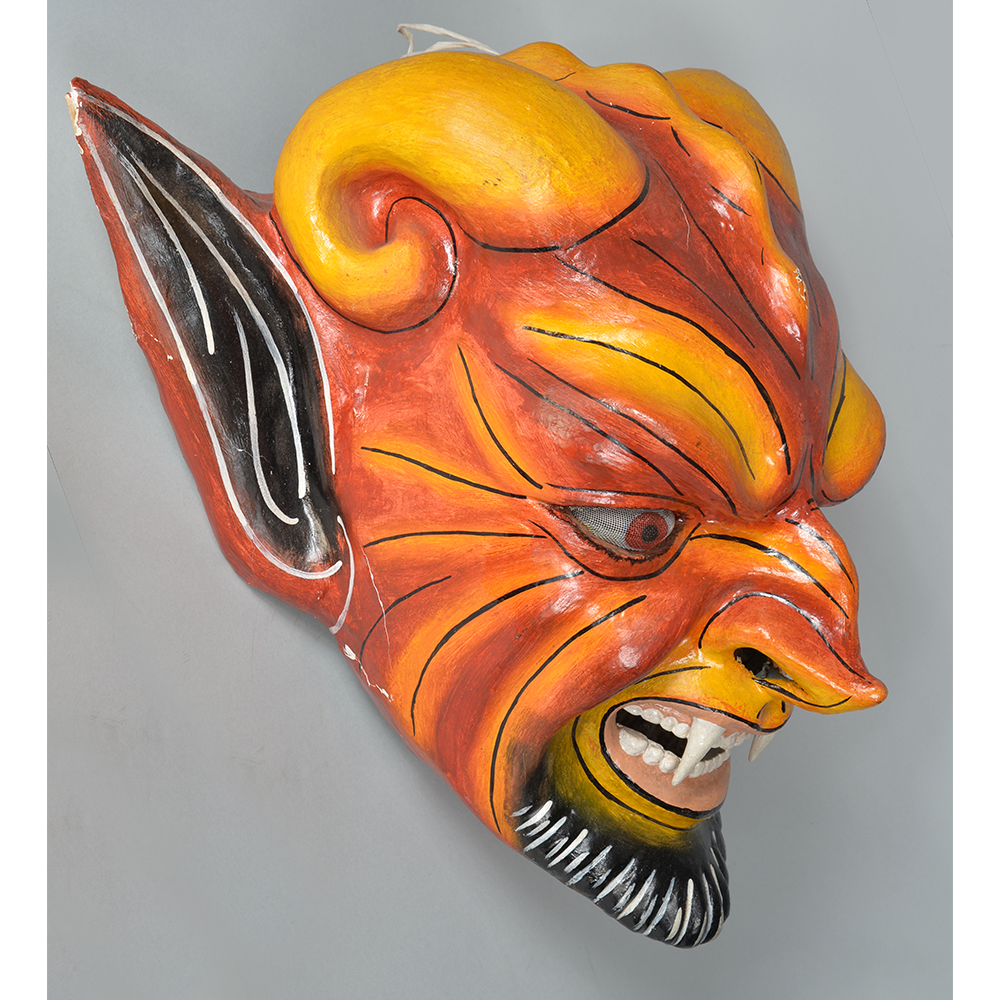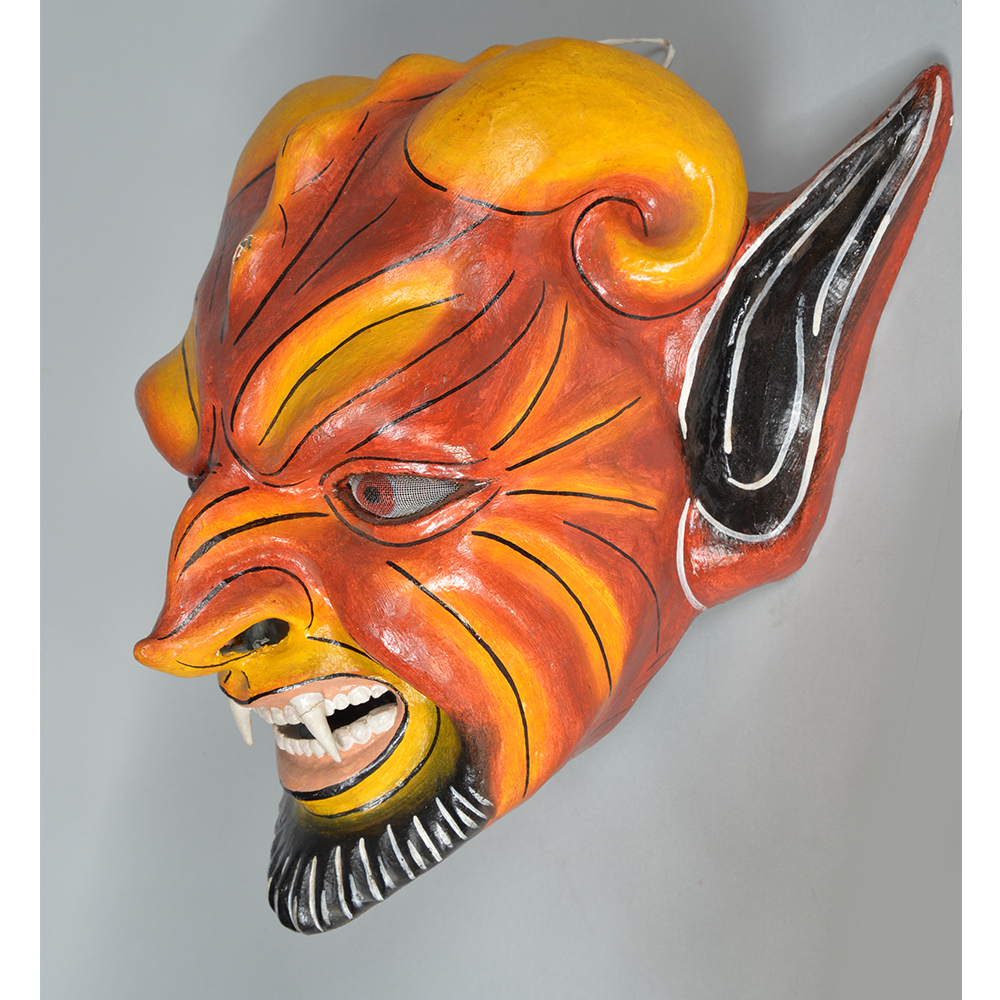
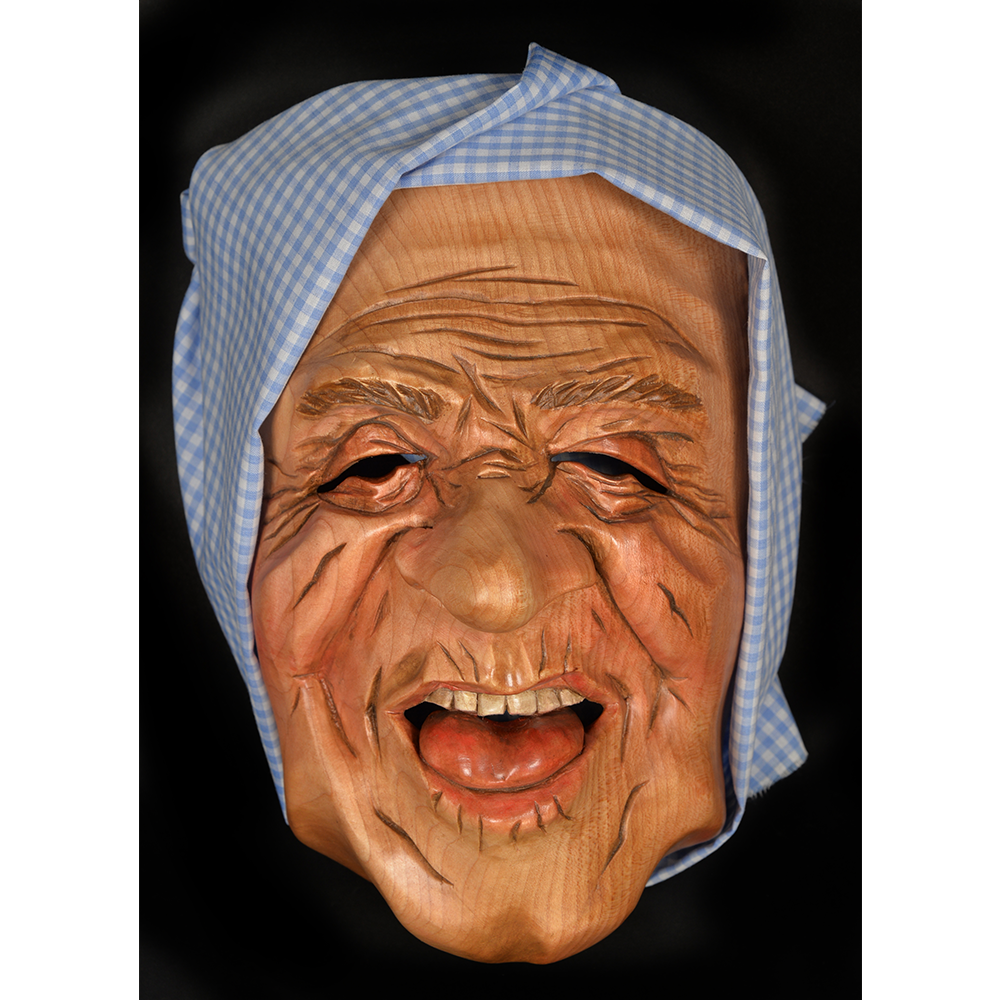
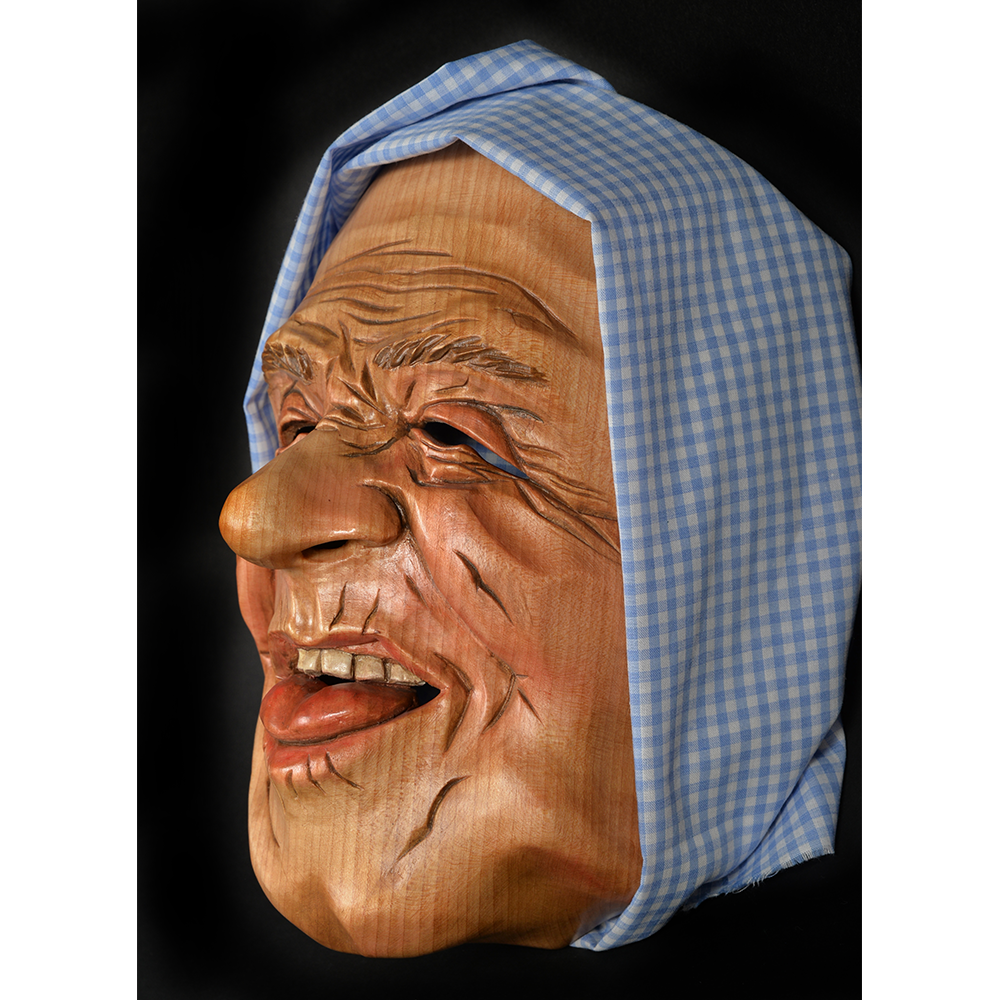
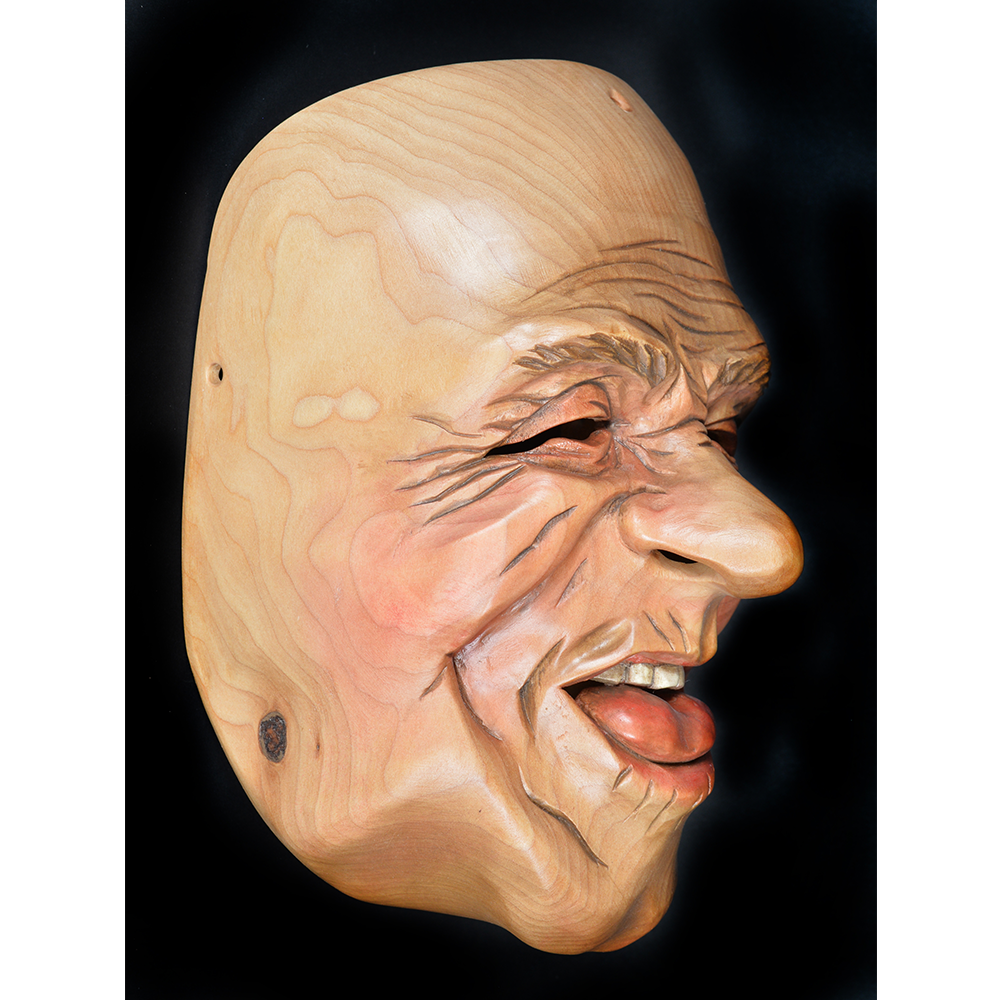
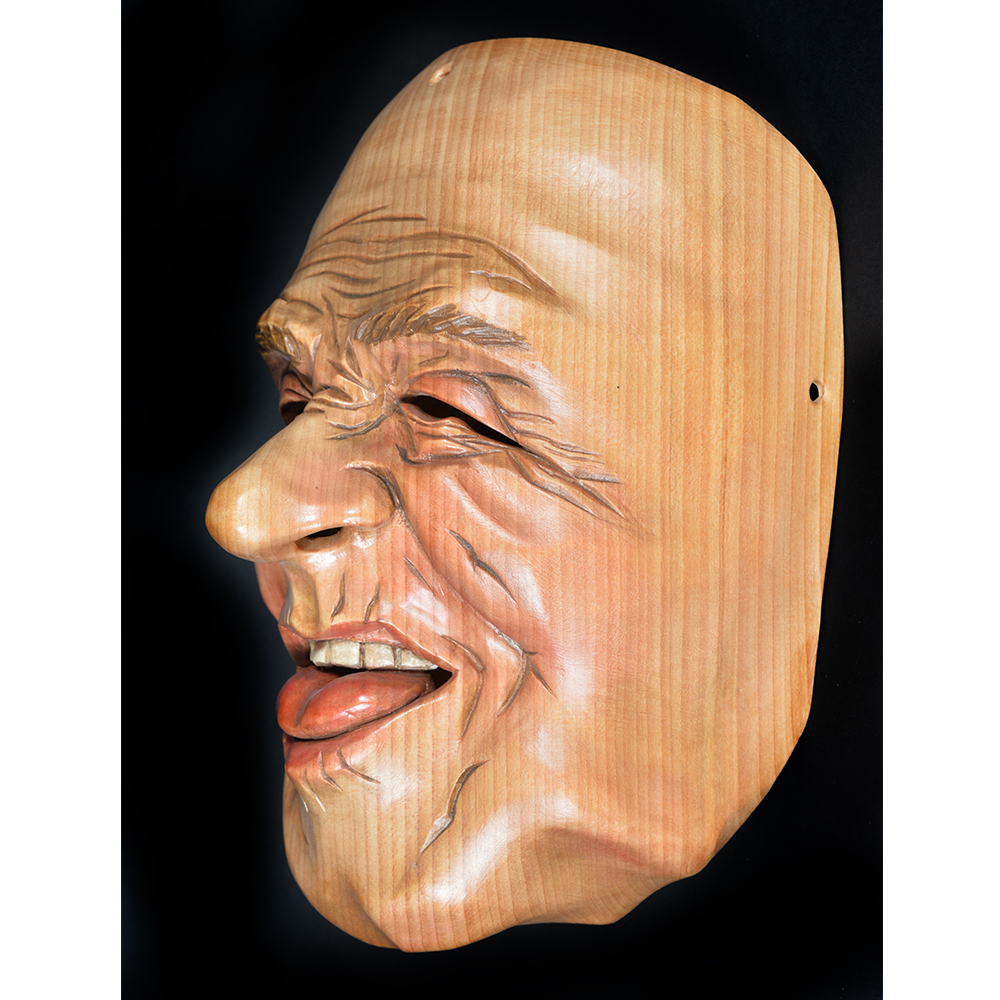
TITLE: Siqlla / Doctorcito
TYPE: face mask
GENERAL REGION: Latin America
COUNTRY: Peru
SUBREGION: Cusco
ETHNICITY: Quechua; Aymara
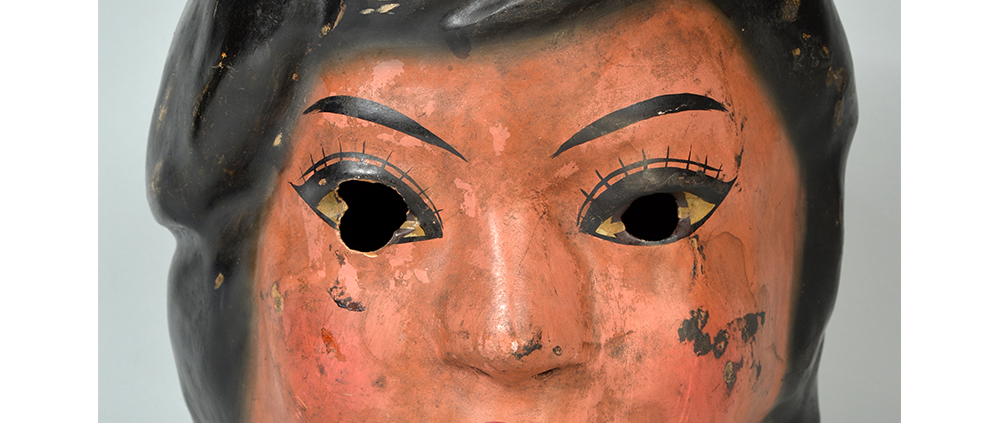
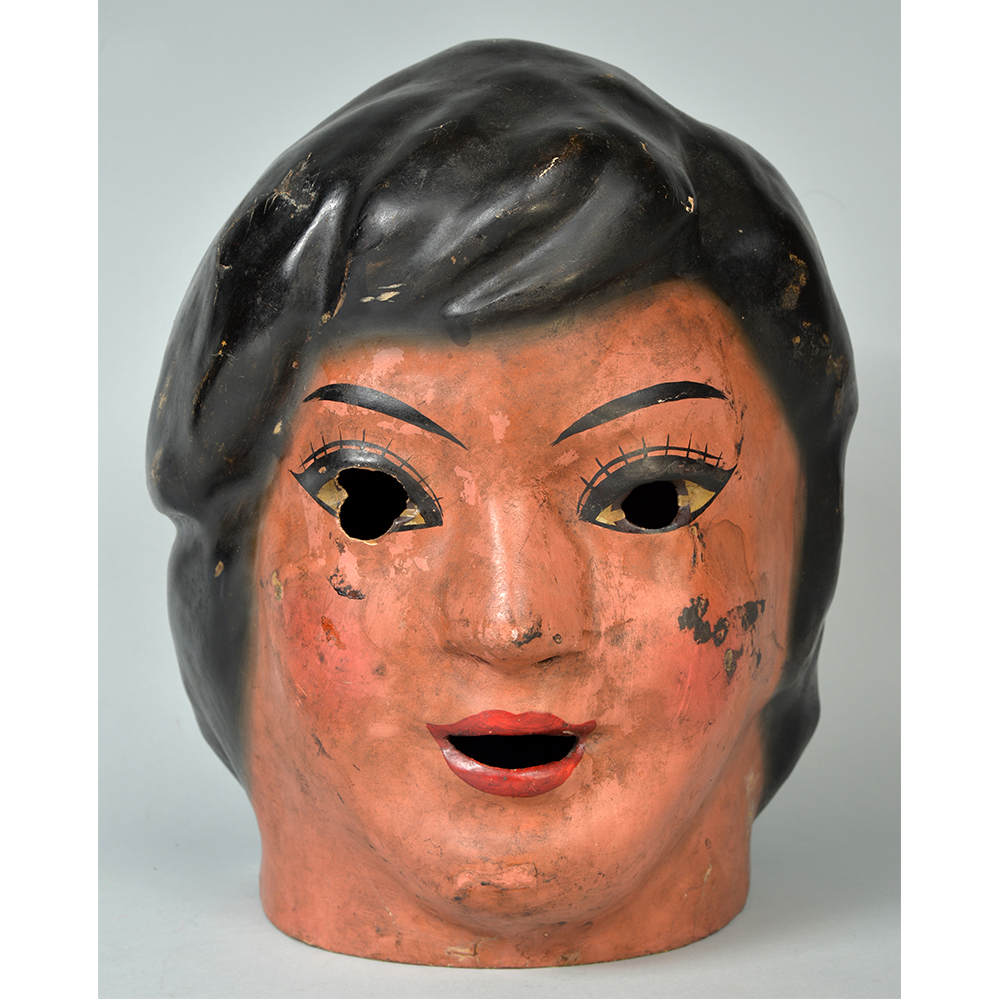
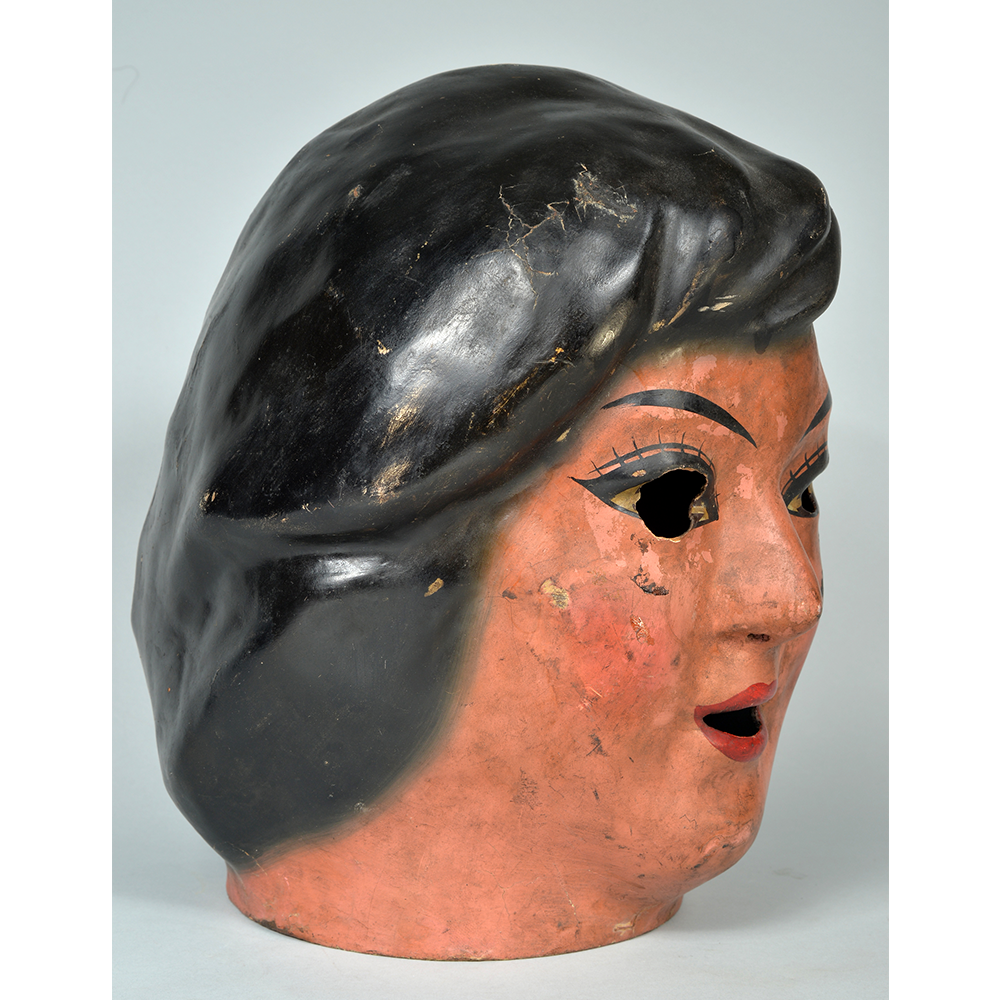
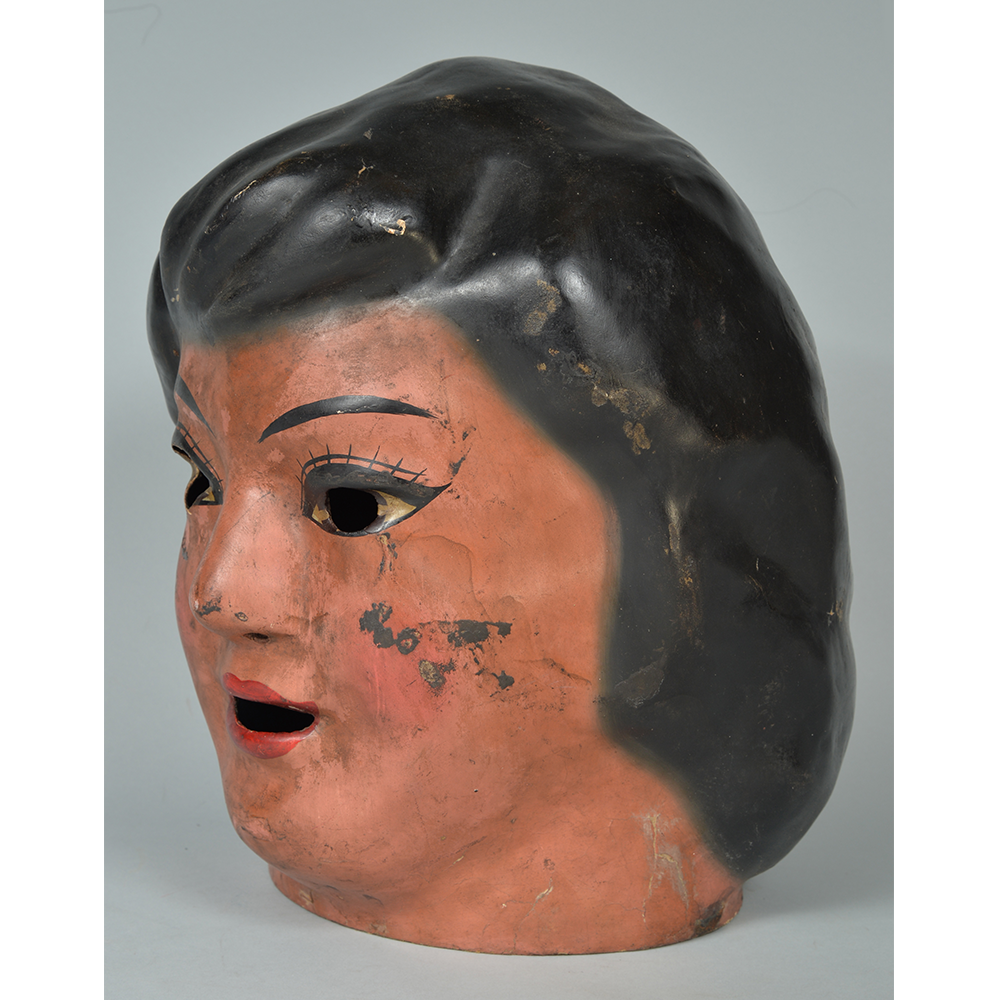
DESCRIPTION: Siqlla (Doctorcito, or Little Doctor) Mask
CATALOG ID: LAPE018
MAKER: Unknown maker in Paucartambo
CEREMONY: Danza Wayra (Kuwallada)
AGE: 2011
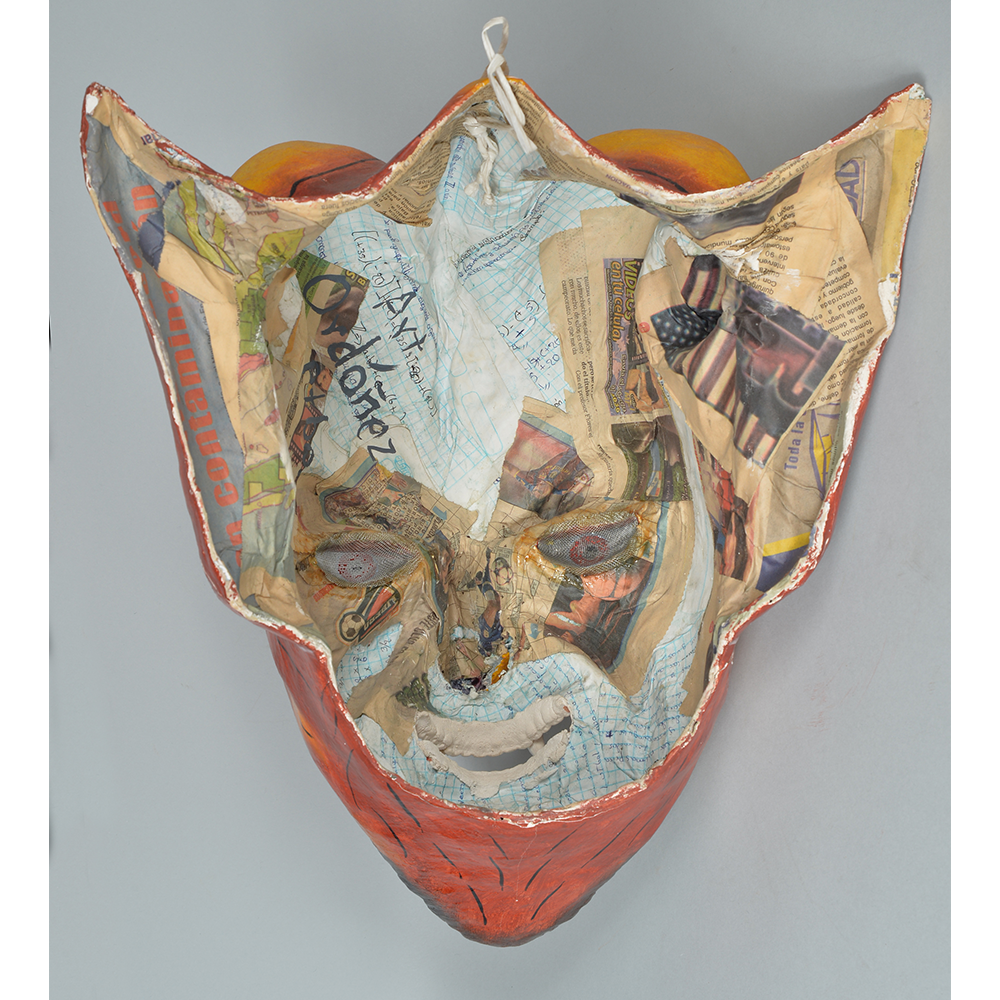
MAIN MATERIAL: paper maché
OTHER MATERIALS: plaster; paint; string

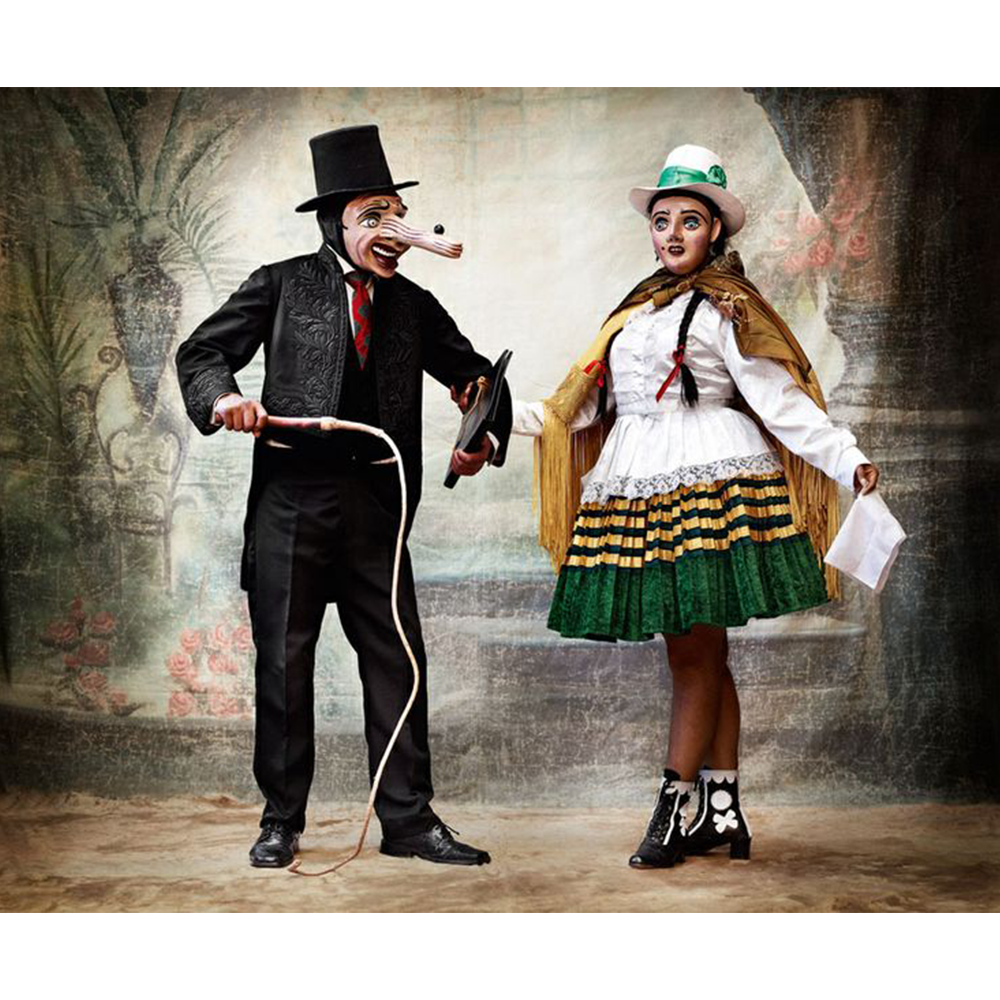
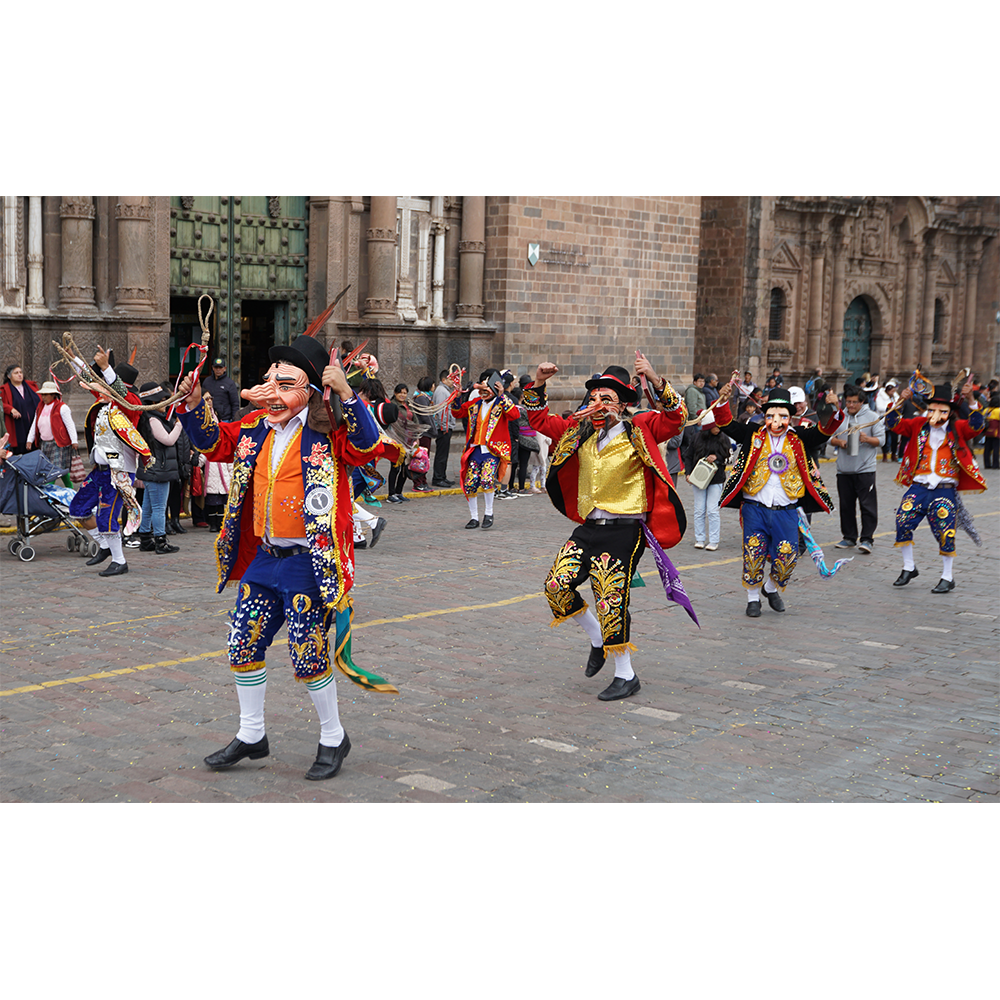
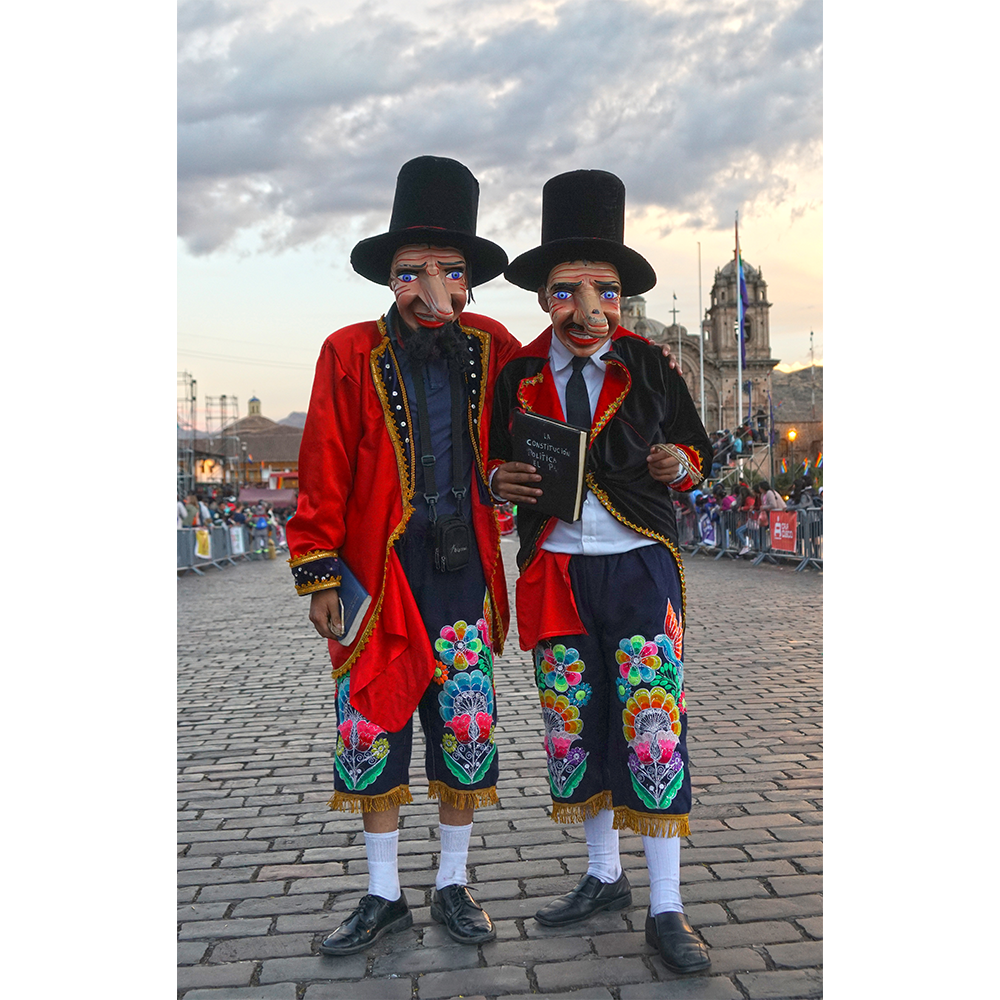
The city of Paucartambo, Peru, celebrates the Festival of the Virgin of Carmen (Mamacha Carmen) annually on July 16th. The Festival begins by the carrying of an image of the Virgin Mary through the streets to the church. Among the festivities that follow is the Kuwallada, a festival involving numerous masked characters in elaborate costumes. One component of Kuwallada is the Danza Wayra, also called Danza Siqlla or Siqlla, after the Quechua word for this character. The term wayra is Quechua for “wind,” probably referring to the “hot air” blown by liars; siqlla has no equivalent English word. Technically, these two dances are slight variations of each other, distinguishable by costume differences.  However, both satirize the grasping lawyers (in this context, “doctorcito” refers to a doctor of law, not a medical doctor), judges, and politicians of the town who are arrogant or abusive toward the indigenous population.

The dance is also performed throughout the Cusco region, including in Cusco itself, Pisaq, and Ollantaytambo.  It centers around a trial of an indigenous man (maqta), recited in Quechua and Spanish. The prosecutor leads the dance, followed by a mayor, lawyers, and the maqta. Most of the characters have exaggerated noses and fancy European clothes (except the maqta, who wears traditional Peruvian garb), but the lawyers are distinguished in carrying a bible and a whip.


Click above to watch a short documentary on Corpus Christi in Cusco, Peru.

:

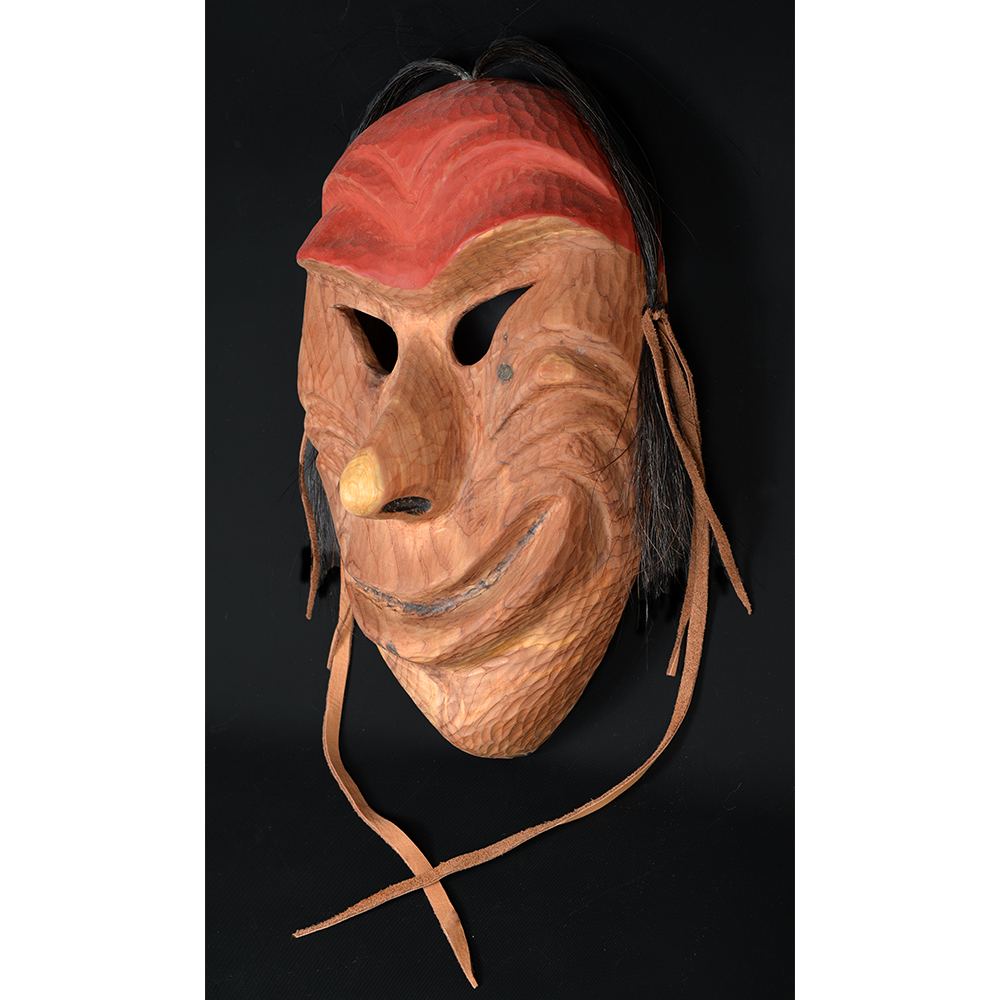
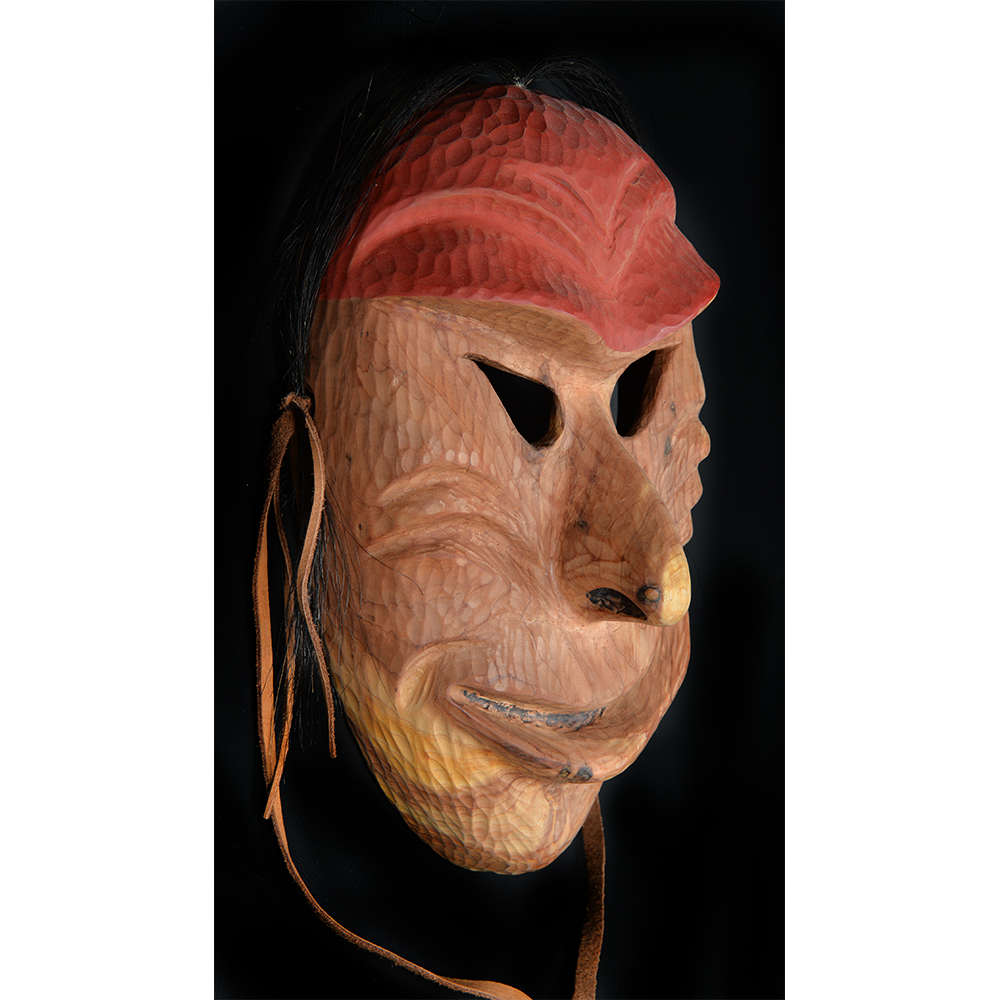
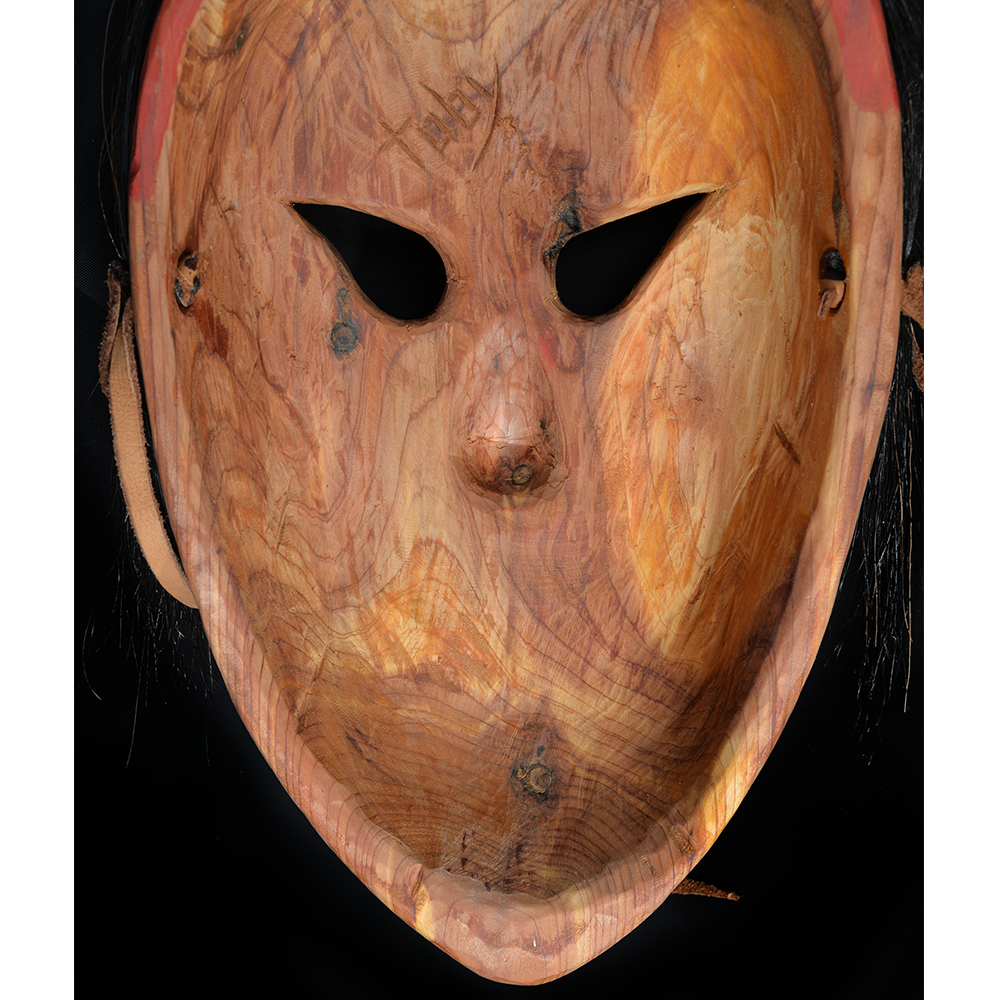
TITLE: Cherokee Booger
TYPE: face mask
GENERAL REGION: North America
COUNTRY: United States of America
SUBREGION: North Carolina
ETHNICITY: Cherokee
DESCRIPTION: Booger mask
CATALOG ID: NAUS080
MAKER: Luther “Toby” Hughes (Westville, Oklahoma, birth year unknown)
CEREMONY: Booger Dance
AGE: 1994
MAIN MATERIAL: cedar wood
OTHER MATERIALS: horsehair; pigment; leather straps

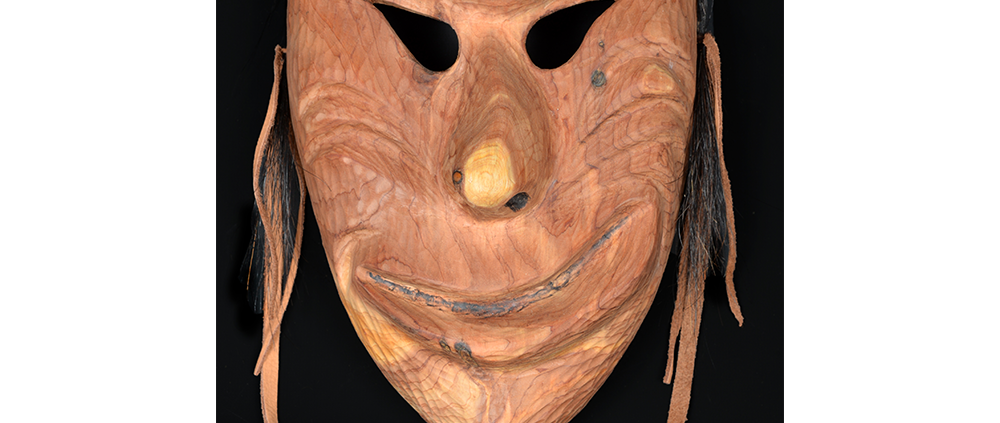
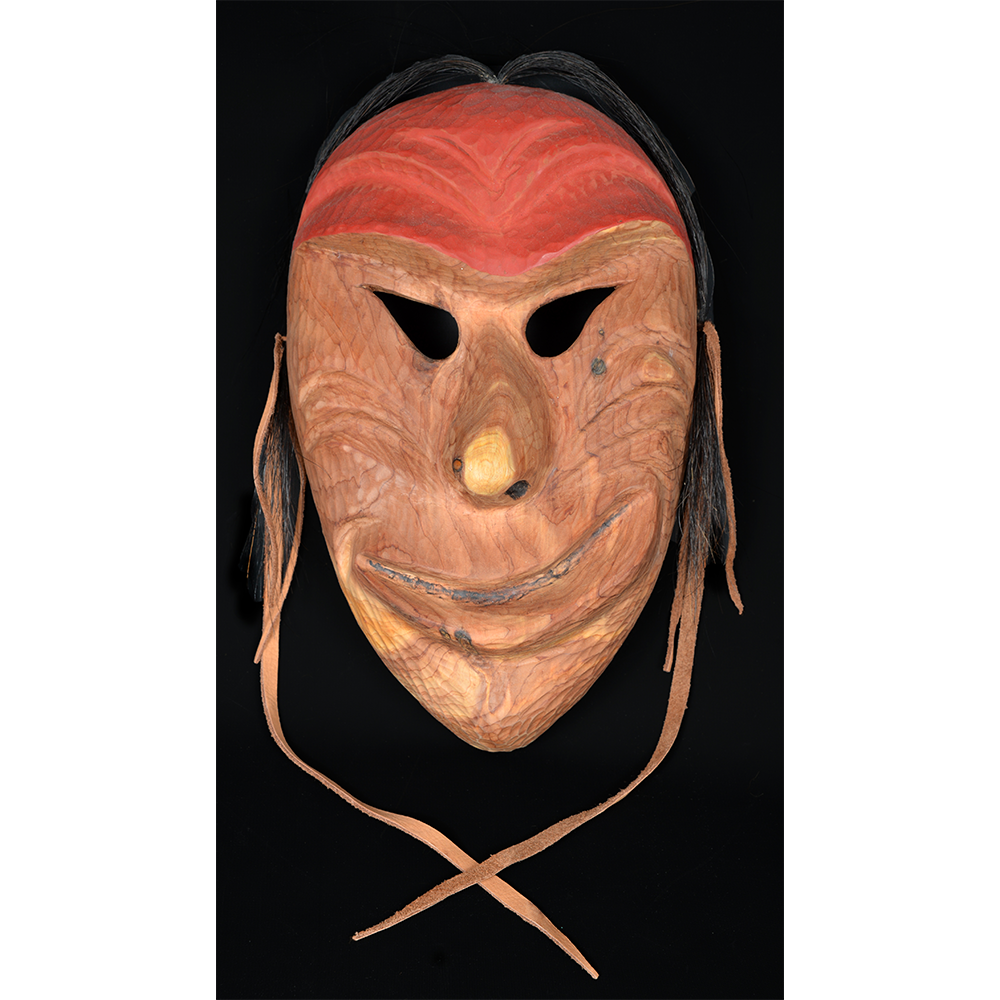
In the Eastern Cherokee Nation, the booger (tsu’nigadu’li) dance forms an important part of the winter celebration to discourage evil spirits from disrupting the coming growing season.  The boogers themselves represent the evil spirits, and they traditionally portrayed grotesque faces seeking to fight, chase women, and create general havoc. Following colonization, the booger dancers focused their misdeeds especially on satirizing the insolence, foolishness, and lust of European colonists toward the Cherokee women.

Booger masks could be made of wood, gourds, or carved wasp nests. This mask was made by Luther “Toby” Hughes, a member of the Keetowah Band who was designated a Living National Treasure in 1994, the same year this mask was made.

For more on Cherokee masked dance, see Frank G. Speck & Leonard Broom, Cherokee Dance and Drama (University of Oklahoma Press 1951).

:

TITLE: Maximón Mask
TYPE: face mask
GENERAL REGION: Latin America
COUNTRY: Guatemala
SUBREGION: Solalá
ETHNICITY: Mayan
DESCRIPTION: Maximón (St. Simon) Mask
CATALOG ID: LAGT025
MAKER: Unknown
CEREMONY: Protection; Spirit Invocation
AGE: 1960s
MAIN MATERIAL: wood
OTHER MATERIALS: paint; glass marbles; glue

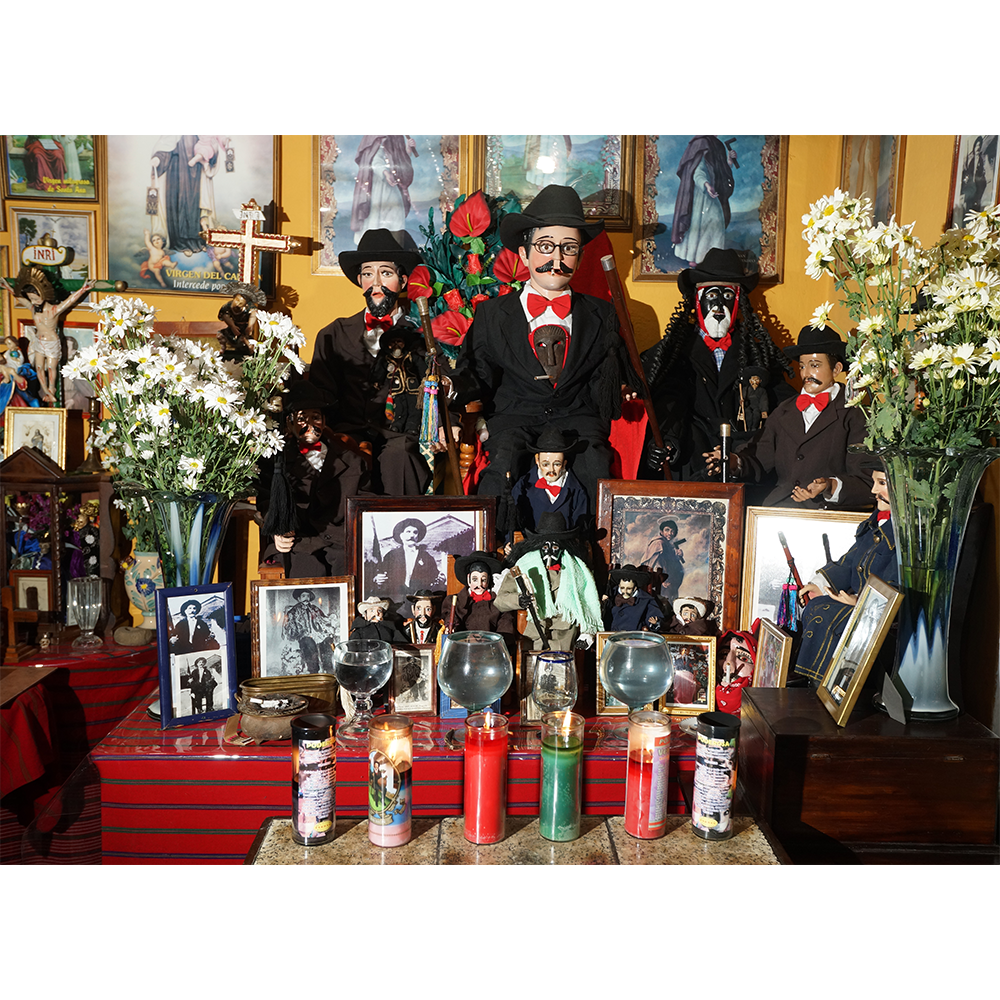
Maximón, a common Mayan pronunciation of St. Simón, is a complex and somewhat obscure figure. He seems to be the descendant of the pre-conquest Mayan god Mam, a sacred trickster whom the Catholic invaders associated with the Devil (as they did with nearly all local gods). He was worshiped in shrines as a protector of the village, but with the advent of Catholicism, the missionaries sought to convert the practice to saint worship, in this case worship of Simon the Zealot, reputedly a cousin of Jesus of Nazareth. Nonetheless, the image of Mam remains, as the Mayan descendants of Guatemala propitiate Maximón with offerings of liquor and cigarettes, along with the more traditional Catholic offerings of candles and flowers.  The shrine typically moves from house to house annually in any given village, although some villages have more than one shrine.

For more on Guatemalan masks, see Jim Pieper, Guatemala’s Masks and Drama(University of New Mexico Press, 2006).

:

TITLE: Archareo Mask
TYPE: face mask
GENERAL REGION: Latin America
COUNTRY: Mexico
SUBREGION: Mexico State
ETHNICITY: Mestizo
DESCRIPTION: Archareo (Archer) Mask
CATALOG ID: LAMX049
MAKER: Daniel Nuñez (San Martín de las Pirámides, birth date unknown)
CEREMONY: Fiesta de San Martín
AGE: 1980s
MAIN MATERIAL: leather
OTHER MATERIALS: felt; goat fur; paint; stitching

The Danza de los Archareos (Dance of the Archers), also called the Danza de los Alchilelos, Archileos, Alchareos, and other variants, is performed on the Feast Day of San Martín (April 13th) every year in the village of San Martín de las Pirámides. Similar dances are performed elsewhere in Mexico State and Guerrero.  It is a form of Christians and Moors dance, with the masked archers representing the evil Moors.  The Moors dance to flute and drum music in a group wearing brightly colored outfits.  The Christians similarly dance in a group, mostly unmasked (except for the leader, who has a mock horse and represents St. James the Apostle) and wearing elaborate capes and feathered hats. Eventually, the groups engage in mock battles with swords, which the Christians inevitably win.

:

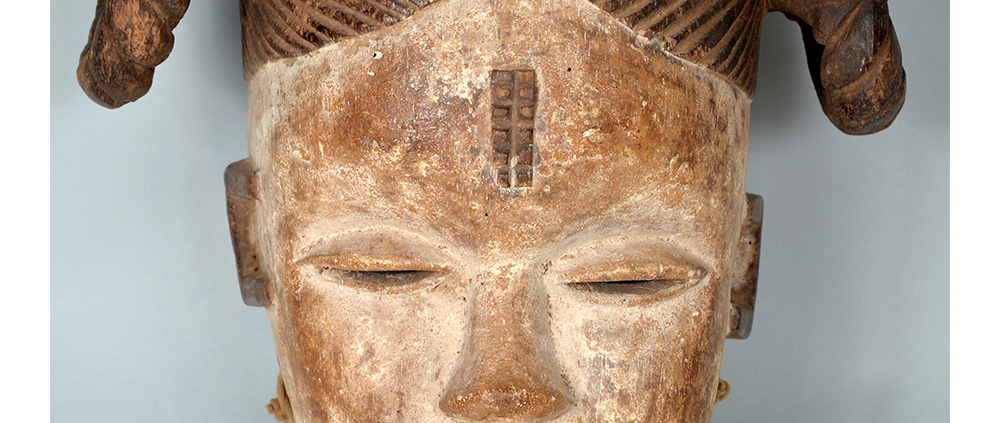
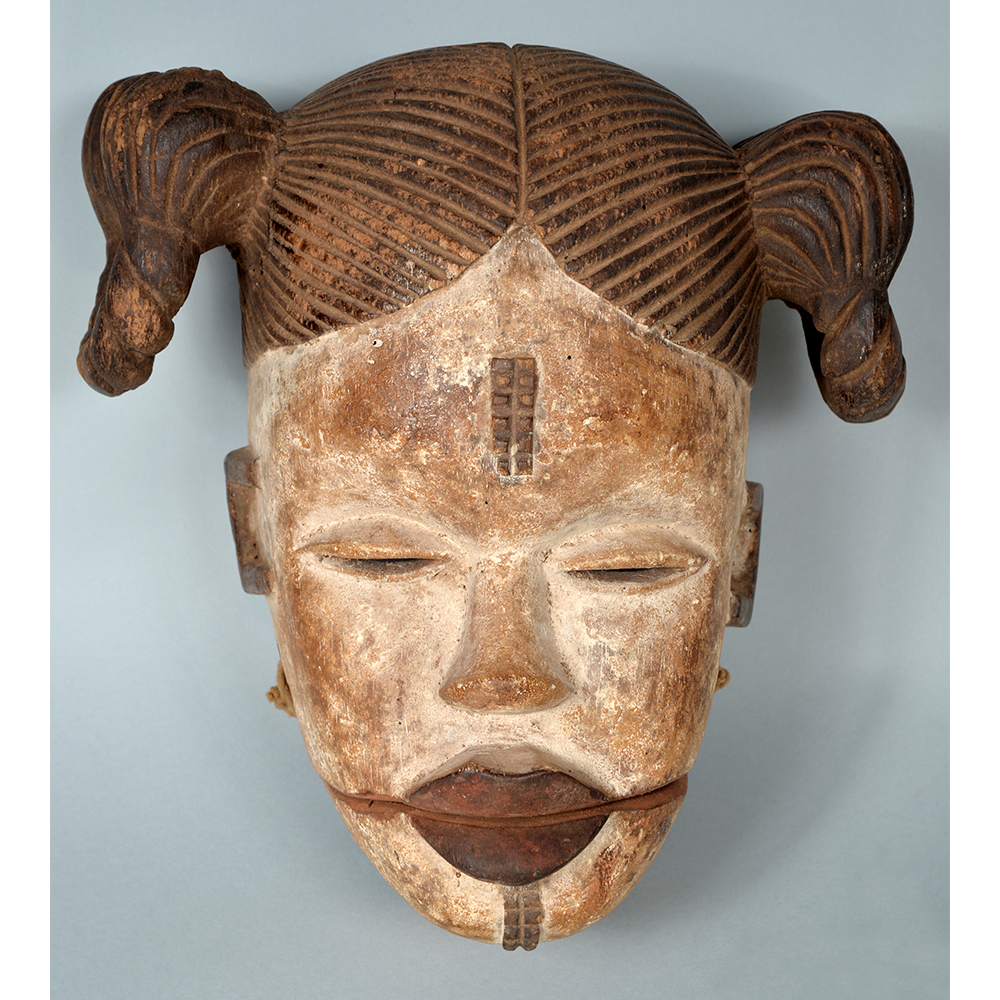
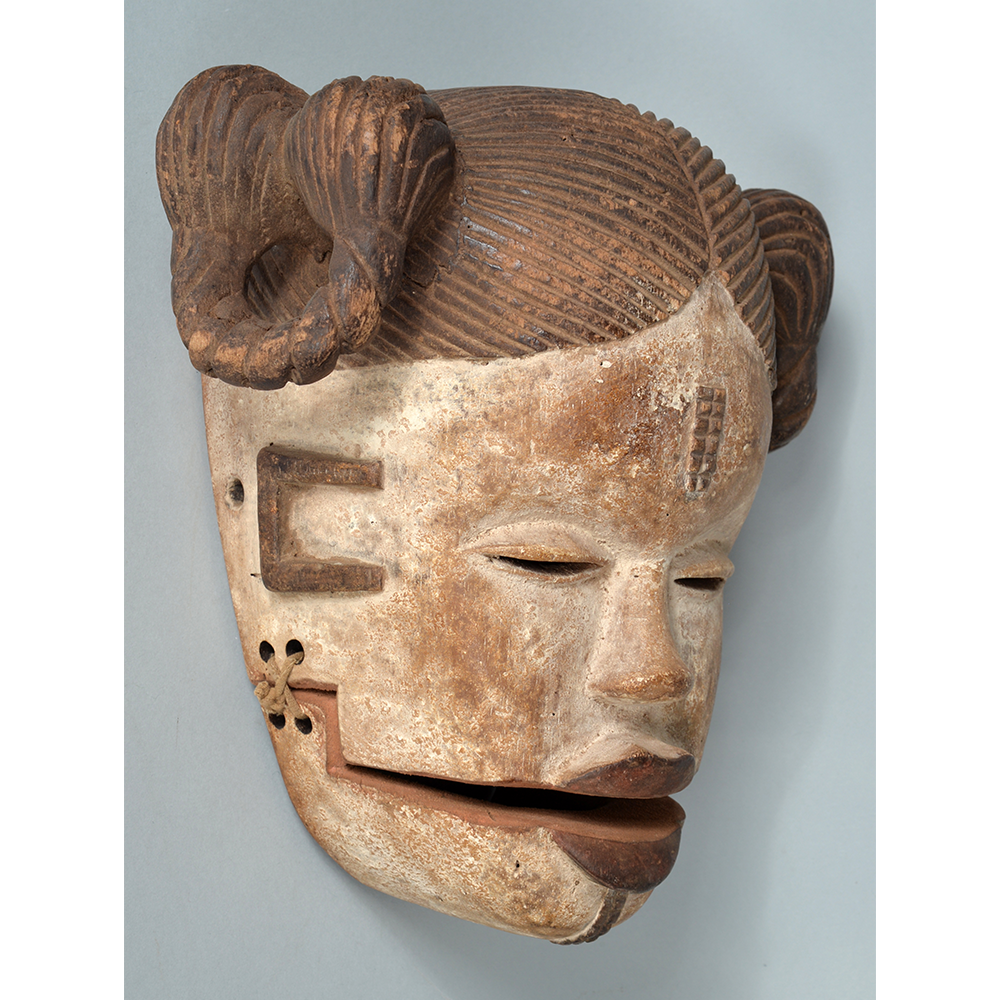
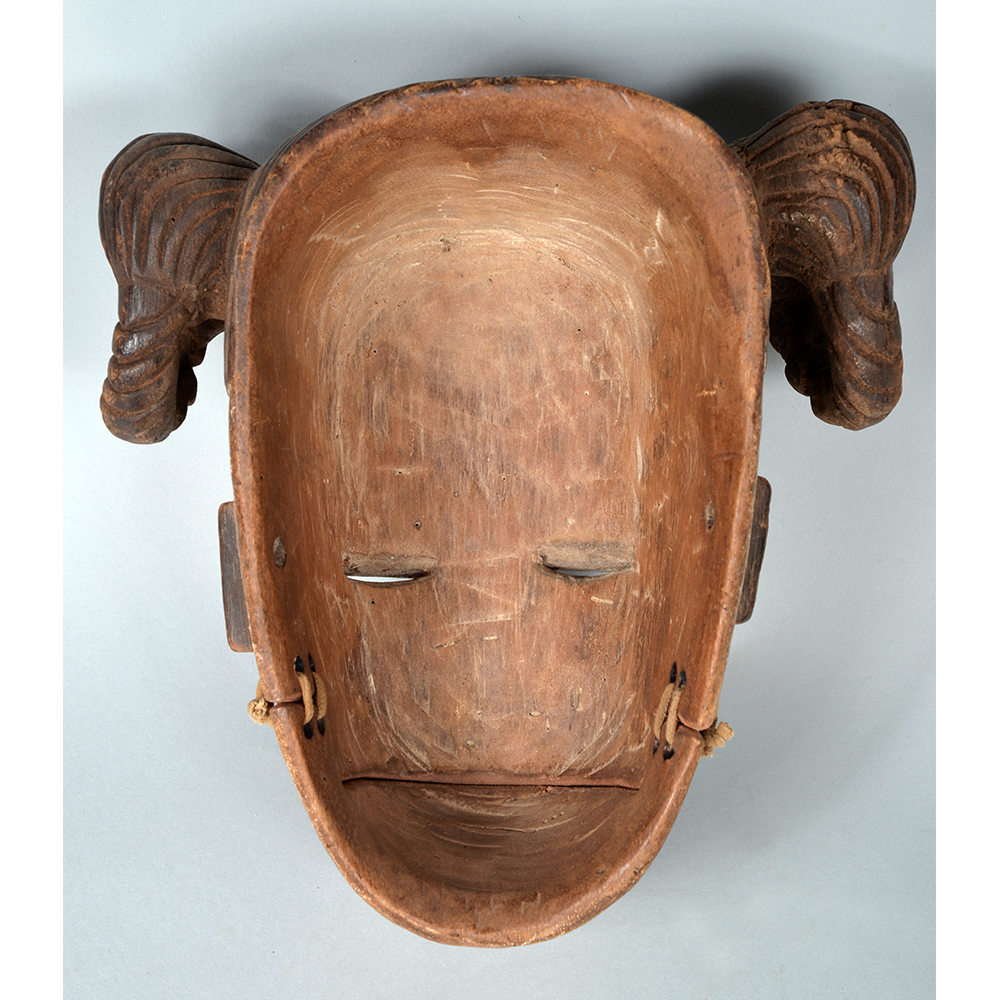
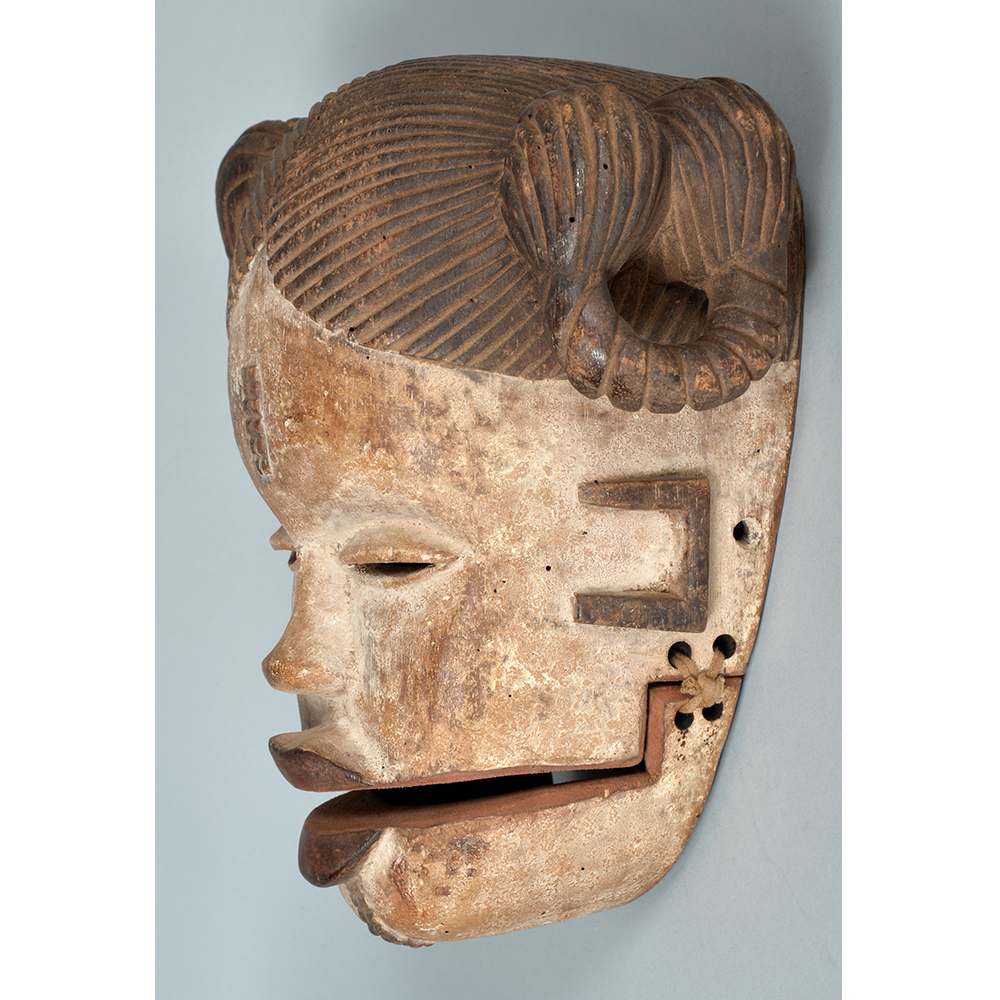
TITLE: Ogoni Mask
TYPE: face mask
GENERAL REGION: Africa
COUNTRY: Nigeria
ETHNICITY: Ogoni
DESCRIPTION: Articulated mask of a female spirit
CATALOG ID: AFNG009
MAKER: Unknown
CEREMONY: Adult Initiation; Secret Society
AGE: 1990s
MAIN MATERIAL: wood
OTHER MATERIALS: kaolin clay; plant fiber; natural pigment

The Ogoni people have managed to maintain much of their precolonial culture, including their masquerading traditions.  Masks are used by the Ogoni for many purposes. Some are reserved for members of secret societies having varying social ranks.  Others are mainly for entertainment. This mask has an articulated jaw to make the mask look like it is talking while being danced. It would be used in a ritual for initiation of girls into adulthood by a secret society.

:

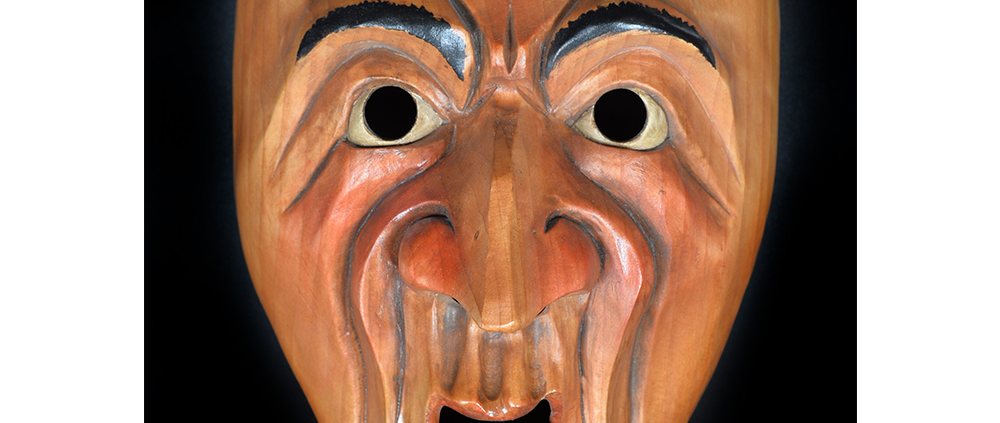
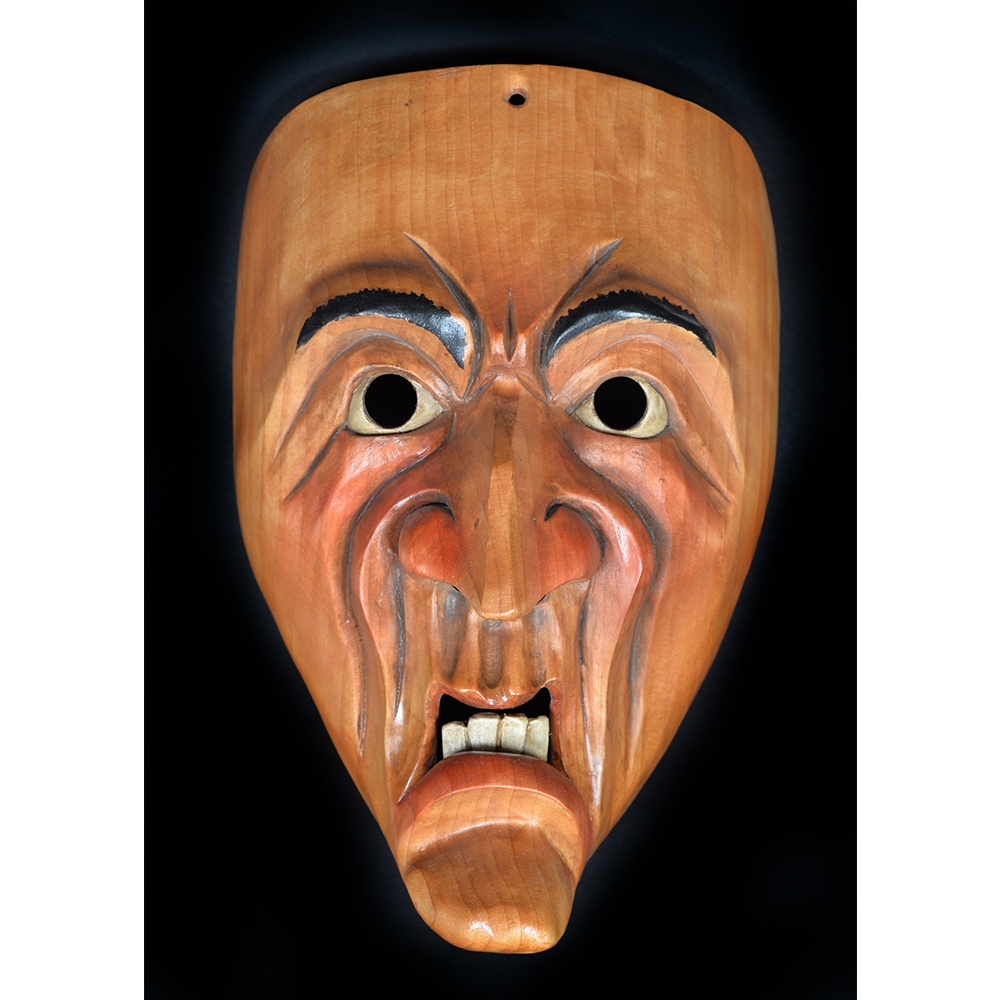
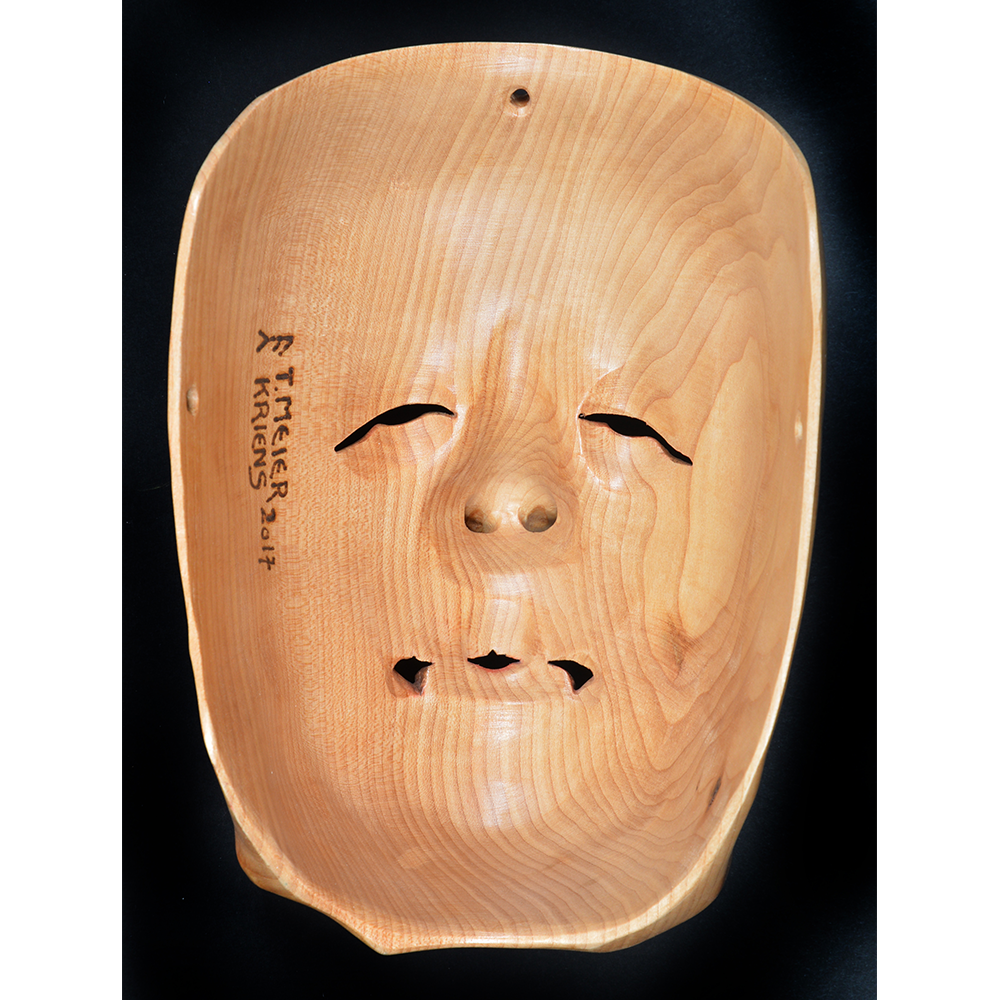
TITLE: Carnival Fright Mask
TYPE: face mask
GENERAL REGION: Europe
COUNTRY: Switzerland
SUBREGION: Lucerne
ETHNICITY: Swiss
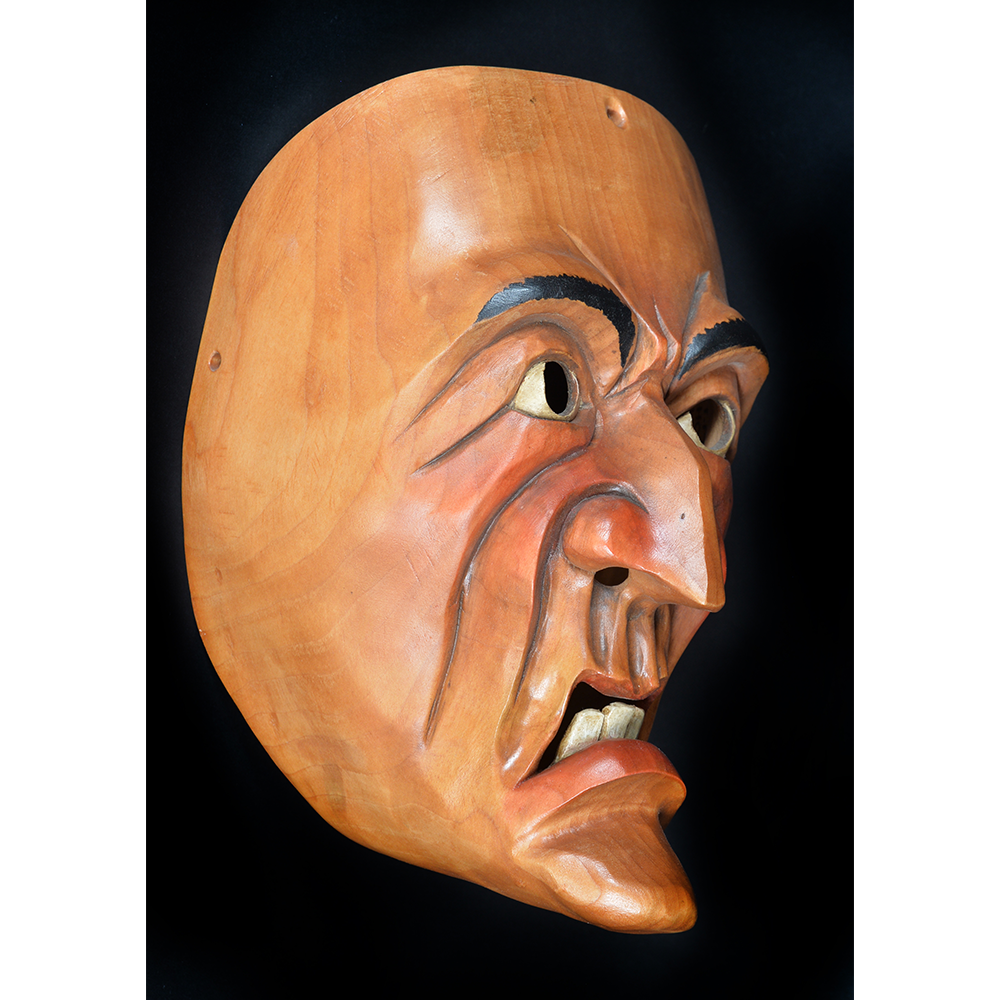
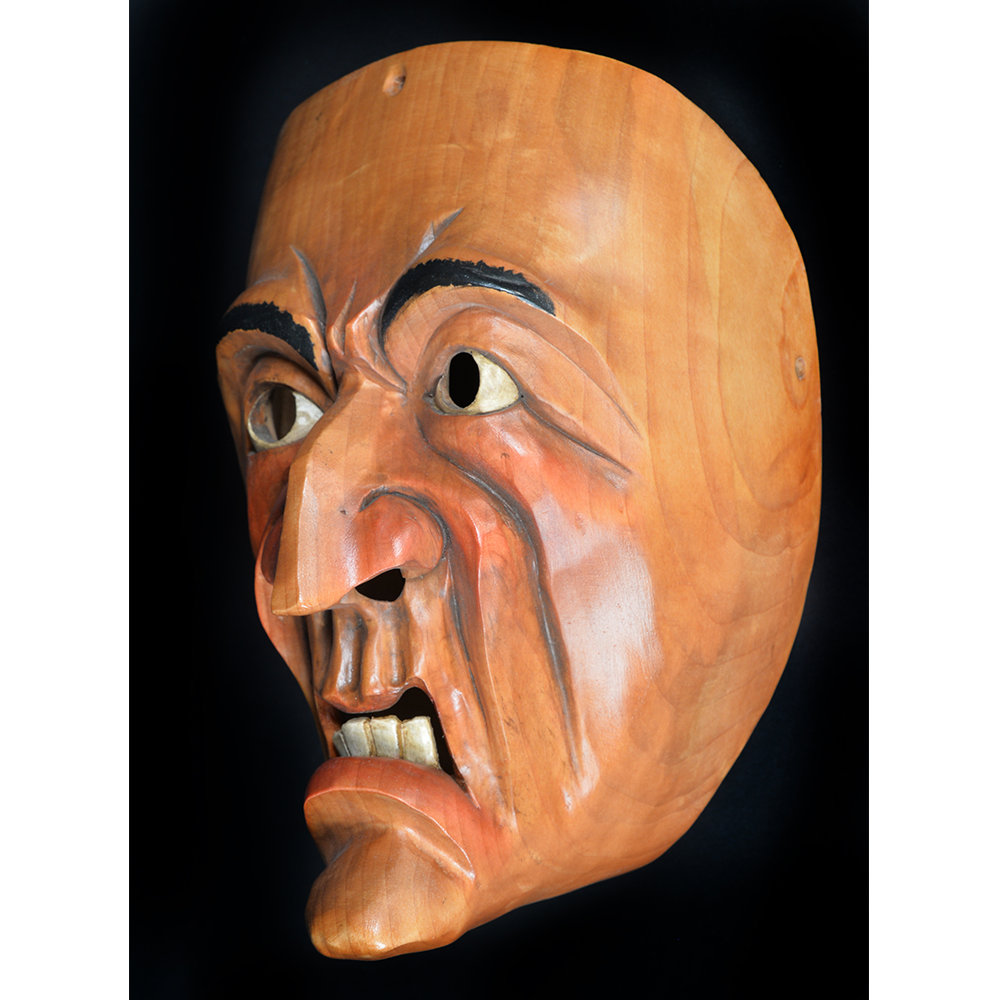
DESCRIPTION: Schreckmaske (Fright Mask)
CATALOG ID: EUCH015
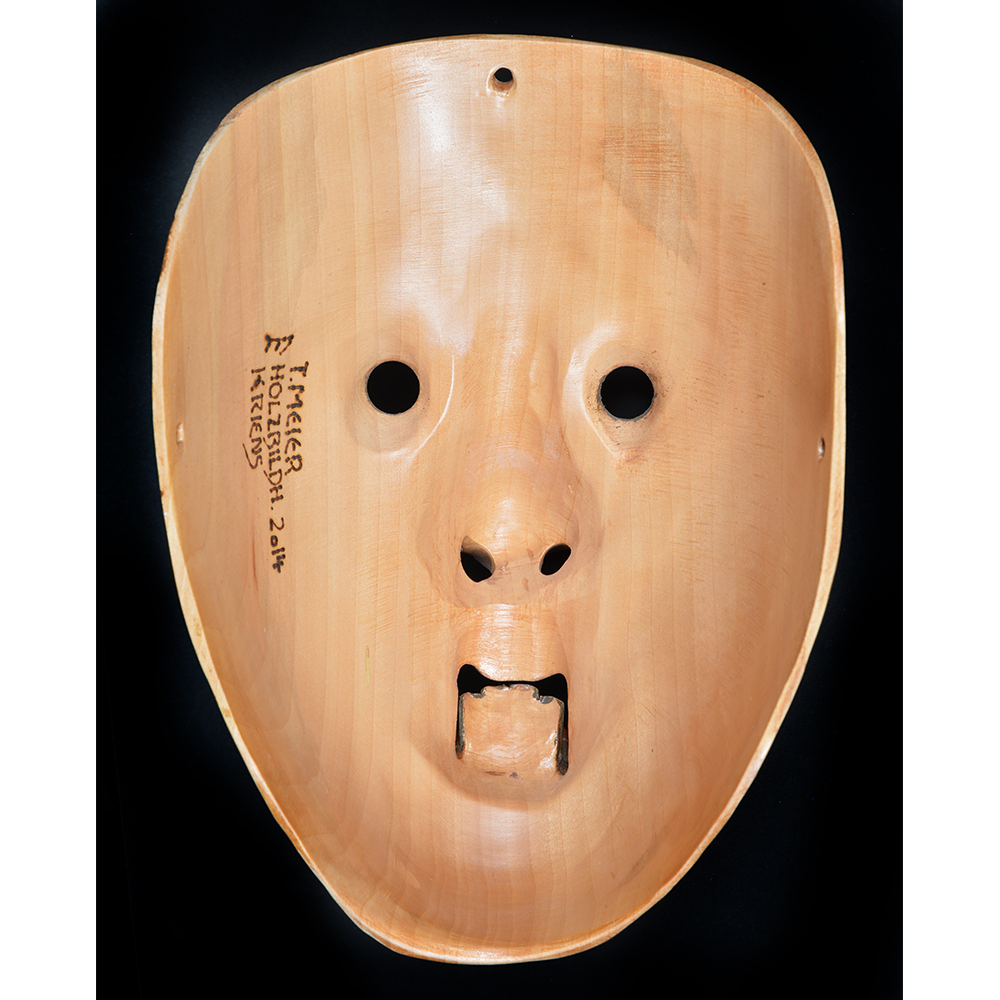
MAKER: Toni Meier, Kriens (1941- )
CEREMONY: Fasnacht (Carnival)
AGE: 2017
MAIN MATERIAL: linden wood
OTHER MATERIALS: paint; lacquer

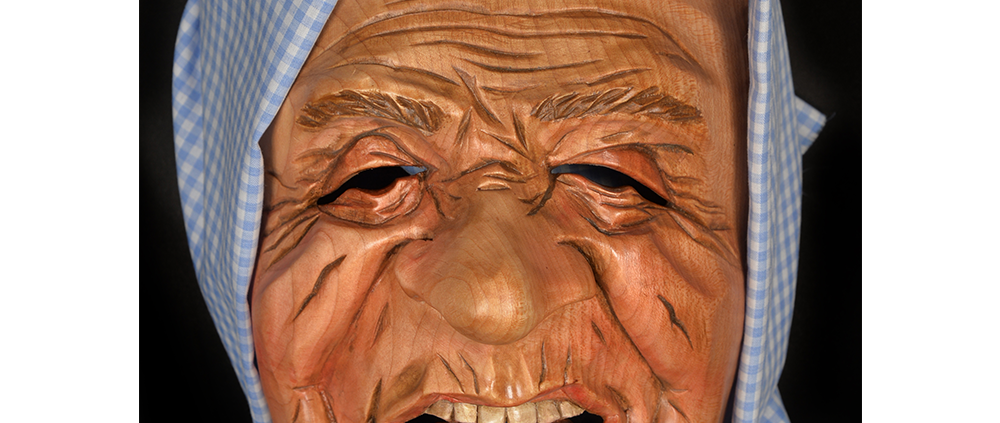
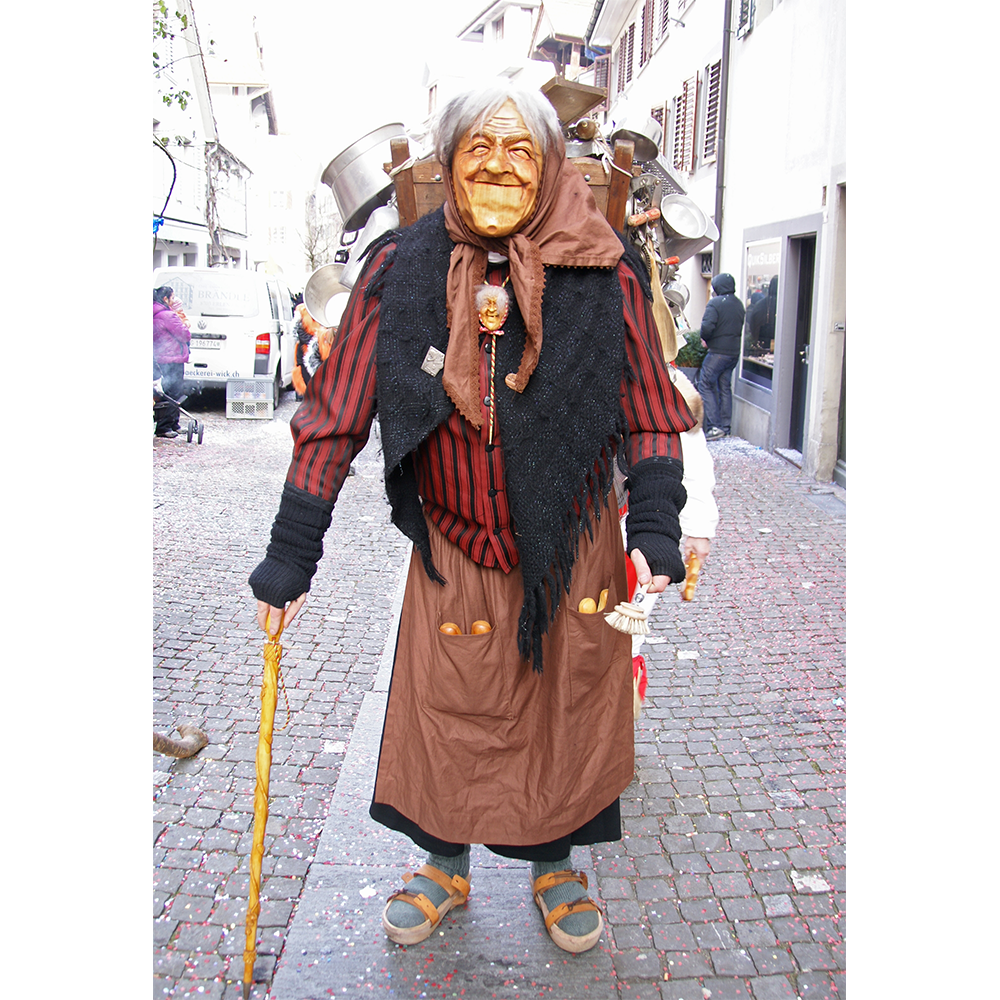
Fasnacht is what the Swiss call Carnival.  In many towns in Switzerland, Austria, southern Germany, and northern Italy, local folk don elaborate masks and costumes to parade through the town.  Different Swiss towns have variations on the parade, such as Fasnacht of Basel, the Tschäggättä of Lötschental, or the Rabadan of Bellinzona.

Although traditional masked Carnival is no longer celebrated in most of Lucerne, in the town of Kriens, masquerade using masks called Muur or Hübeli still plays a role. Two types of masked are typically used in this region, satirical character masks which can represent either sex. Character masks come in many different types, such as the Wöschwyb (washerwoman) and Alter (old man). The other type are Schreckmasken (fright masks) representing scary men, known as the Krienser Deckel (Kriens head) and Buuremaa (farmer). This mask is a typical Kriens fright mask.

Unfortunately, the best book on Swiss masking traditions is available in German only: Albert Bärtsch, Holzmasken: Fasnachts- und Maskenbrauchtum in der Schweiz, in Süddeutschland und Österreich (AT Verlag 1993).
:

TITLE: Lunar New Year Mask
TYPE: helmet mask
GENERAL REGION: Asia
COUNTRY: China
SUBREGION: Hong Kong
ETHNICITY: Han
DESCRIPTION: Boy “Big Head” Mask
CATALOG ID: ASCN003
MAKER: Unknown
CEREMONY: Lunar New Year
FUNCTION: Celebration; Entertainment; Protection/Purification
AGE: 1950s
MAIN MATERIAL: paper maché
OTHER MATERIALS: plaster; paint; cotton straps

The Chinese celebrate the lunar new year with lion dances, parades, and fireworks throughout the country.  Normally, the celebration begins on new year’s eve and lasts 15 days, and it provides an opportunity for entertainment, family reunion, honoring ancestors, and planning for the coming year. In the parade, armies of “big-headed Buddhas” clad in traditional silk costumes (or their modern polyester equivalents) follow the lion dancers.  They cavort for the entertainment of the audience and to bring good fortune in the coming year. Among these masqueraders are old man and old woman characters, such as the one represented by this mask. In modern Hong Kong, this is the largest festival of the year, and includes floats and decorations throughout the city.

:

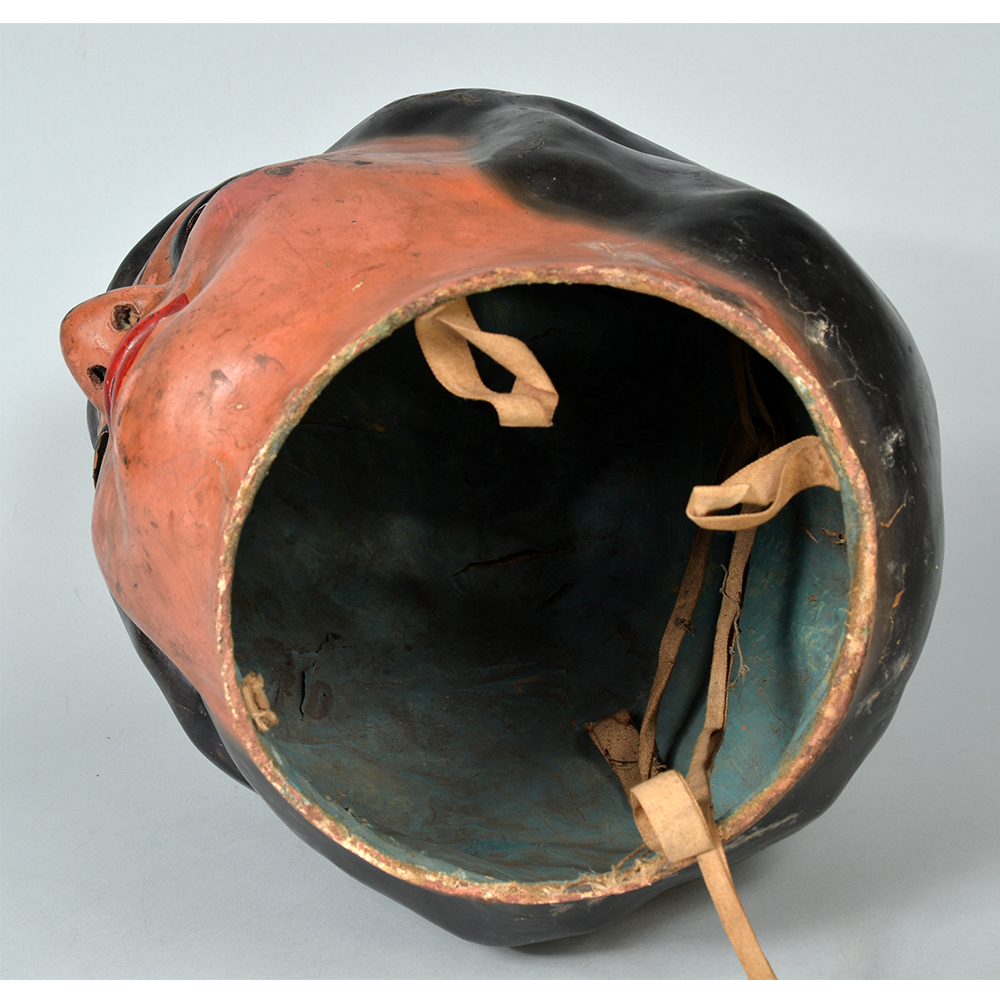
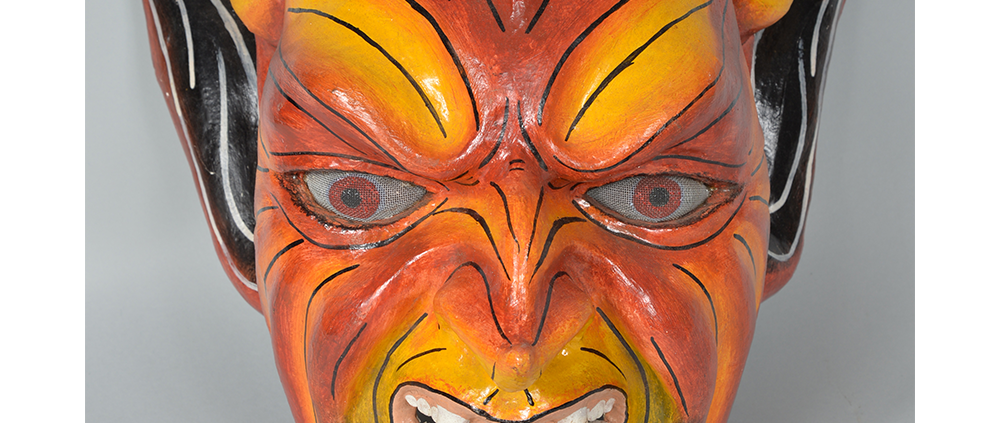
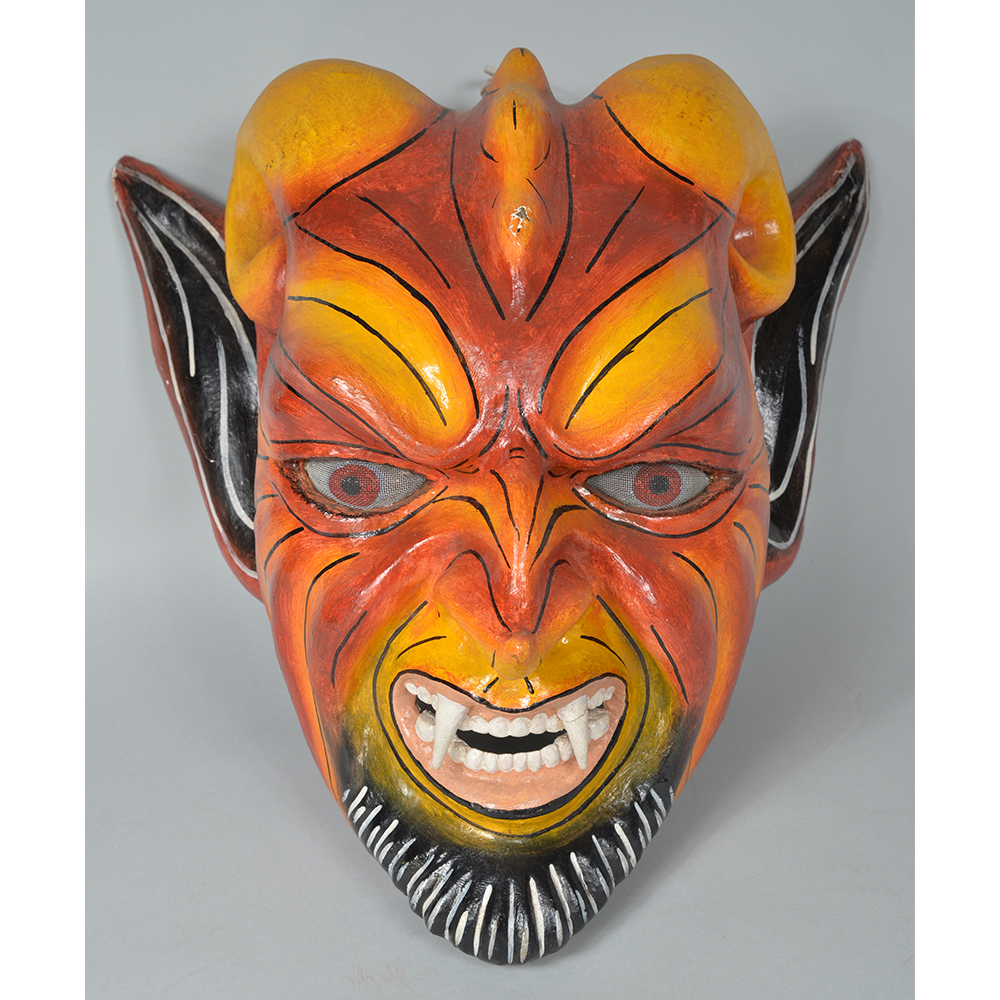
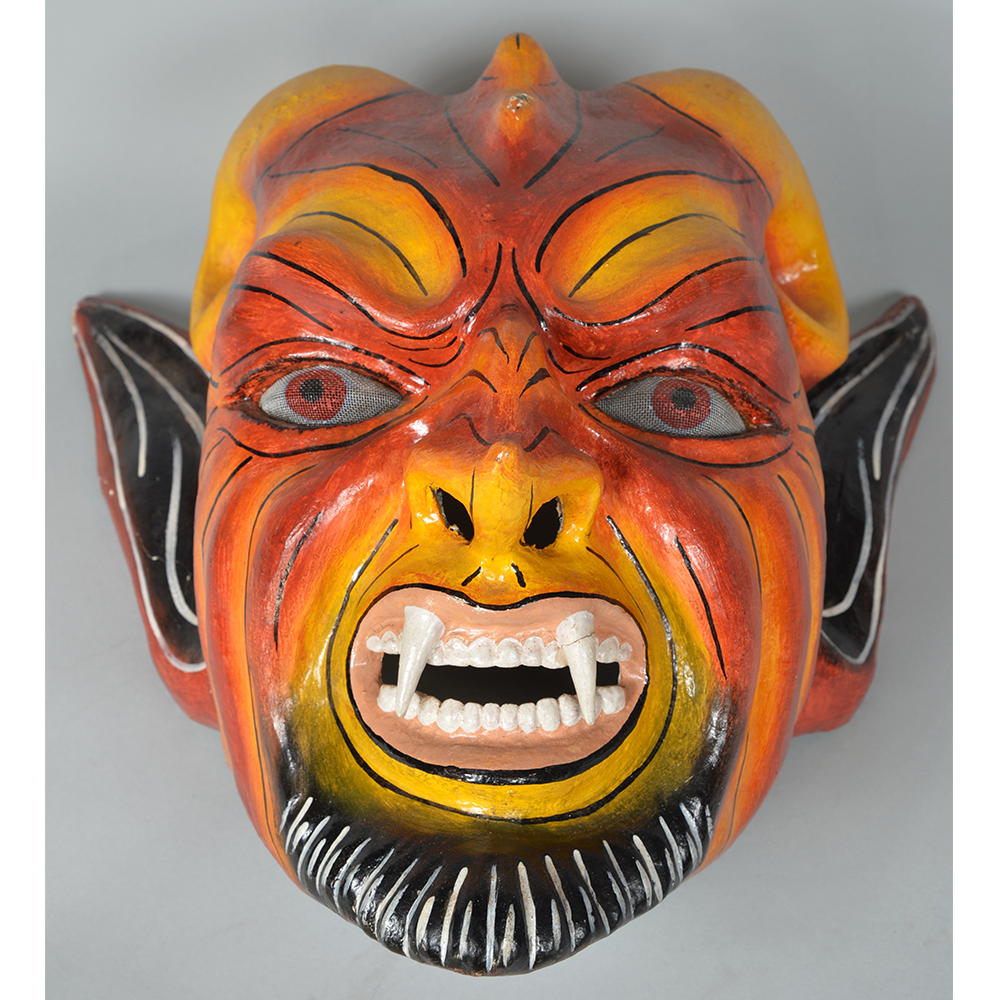
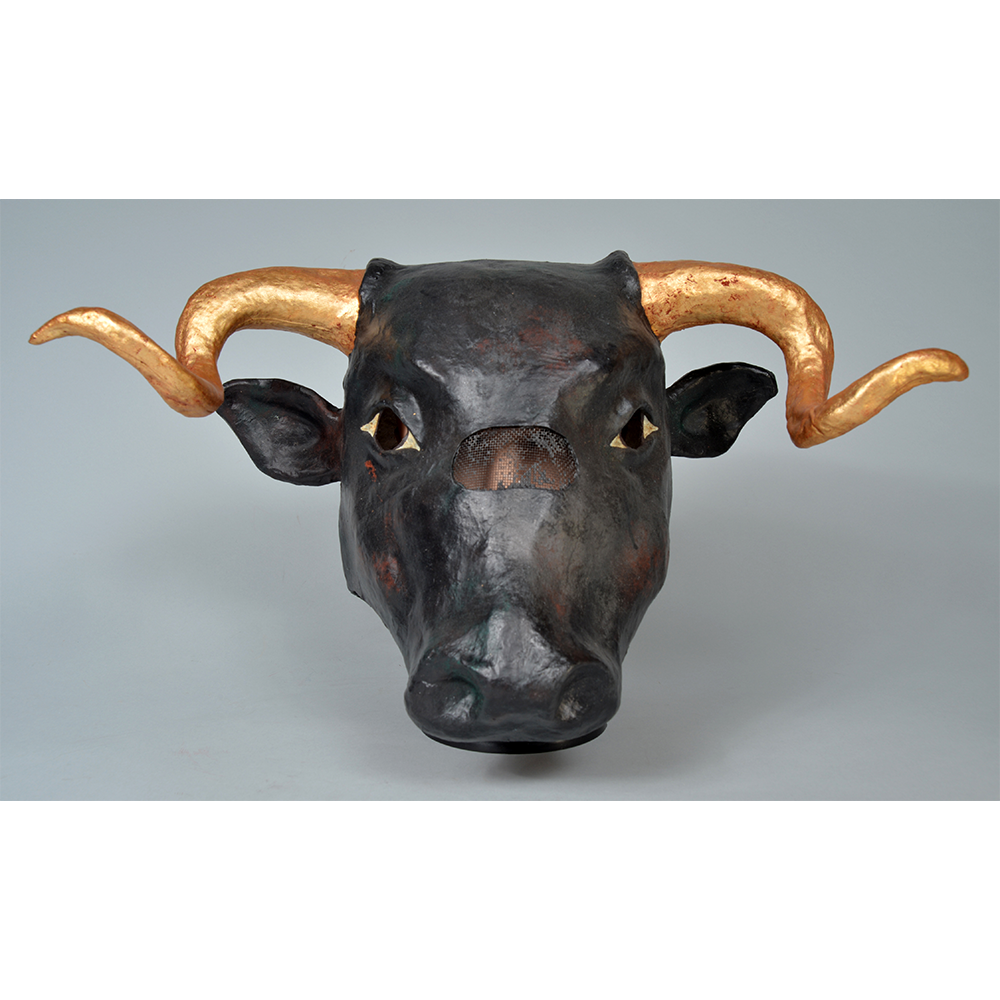
TITLE: Diablo Mask
TYPE: helmet mask
GENERAL REGION: Latin America
COUNTRY: Peru
SUBREGION: Cuzco
ETHNICITY: Quechua and Aymara
DESCRIPTION: Diablo (Devil) Helmet Mask
CATALOG ID: LAPE030
MAKER: Unknown
CEREMONY: Carnival
AGE: ca. 1980s
MAIN MATERIAL: paper maché; plaster
OTHER MATERIALS: wire mesh; paint

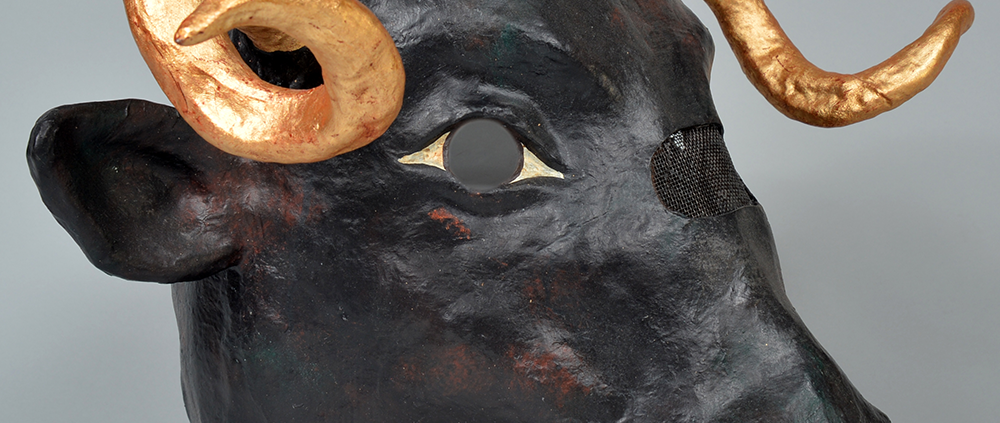
Carnival is the Catholic festival that precedes the fasting season of Lent, a period known as Shrovetide. In Peru, Carnival celebrations typically include parades of masked and costumed characters, marching or dancing to music, and street celebrations, often accompanied by water battles. Costumes portray a mix of Christian and indigenous themes with an emphasis on parody and parable. Common characters include devils, Spaniards, Moors, and angels.

While most modern Peruvian masks are made from tin, or increasingly fiberglass or plastic, this mask is made in the older style of paper maché coated with plaster.


Click above to watch a short documentary on Corpus Christi in Cusco, Peru.

:

TITLE: Tastoan Mask
TYPE: face mask
GENERAL REGION: Latin America
COUNTRY: Mexico
SUBREGION: Jalisco
ETHNICITY: Nahua
DESCRIPTION: Tastoan mask with leaf design
CATALOG ID: LAMX044
MAKER: Ubaldo Macías Bernabe (Tonalá, 1972- )
CEREMONY: Fiesta de Santiago el Apostól
AGE: 2017
MAIN MATERIAL: leather
OTHER MATERIALS: horse teeth; animal bone; acrylic paint; lacquer; glue paste; wire; thread; elastic bands; horse hair; woven plant fiber helmet

In parts of Jalisco and Zacatecas, the holiday in honor of Santiago el Apostól (St. James the Apostle) is held every 25th of July. Celebrants carry spears and dress in long pants, leather chaps, and boots, with demonic masks made of wood (Zacatecas) or molded leather (Jalisco) covered with a montera (headdress) of goat hair, horse hair, or plant fiber. The festival commemorates a battle between the indigenous warriors of the area and conquistadors. The appearance of the tastoanes, who represent indigenous warriors, conveys their ferocity through sharp teeth, large noses, and snakes, lizards, scorpions and spiders for decorations. This mask has images of the mythical creatures nahual and nahuala, half jaguar and half human, who symbolize the ferocity of the Tonaltecs. In some cases, the masks are dotted to convey the transmission of diseases such as smallpox and syphilis from the Spaniards to the indigenous peoples.

During the celebration, tastoanes and either three kings wearing ceramic masks or three Aztec priestesses (one representing the Tonaltec queen Tzapotzintli, also known as Tzuapili or Cihualpilli) carry an image of St. James along a parade route and dance to music carrying swords or whips, after which they make defiant speeches and engage in a mock battle (jugada) with a participant carrying a whip who represents St. James.  At the end of the battle, all the tastoanes die and St. James is victorious. In the past, all tastoanes were male, but recently women have begun to participate as well.  In some towns, an organization such as a Cofradía de Santo Santiago (Fraternity of St. James) organizes the event.

This specific mask was made by the award-winning craftsman Ubaldo Macías of Tonalá.

Click above to watch a short documentary about the tastoanes of Tonalá, Mexico.

:

TITLE: Achachi Paxlo
TYPE: face mask
GENERAL REGION: Latin America
COUNTRY: Bolivia
SUBREGION: Oruro
ETHNICITY: Quechua and Aymara
DESCRIPTION: Achachi Paxlo Helmet Mask
CATALOG ID: LABO008
MAKER: Unknown
CEREMONY: Carnival (La Diablada)
AGE: 1980s
MAIN MATERIAL: tin sheet
OTHER MATERIALS: brass; plastic; synthetic fiber; metal chain; paint; glitter; dyed ostrich feathers

The Morenada (Dance of the Moors) is an annual ceremony in several towns in the Altiplano region of Bolivia, Peru, and northern Chile, usually incorporated into Carnival.  The dance includes both male and female Moors dancing in a group with whips, rattles, or scepters. A King of the Moors (Rey de Morenos) presides and coordinates the dance. The dance typically occurs in the course of a parade, with marching bands playing musical scores for the dancers.  The precise origins of the Morenada are the subject of debate, with most specialists concluding that the dance was inspired by African slaves brought to Bolivia to work the mines or the subsequent integration of Africans into the Yungas community near La Paz.  The morena wears a fancy version of the traditional Bolivian costume with the classic bowler hat.

This mask represents an achachi, an old, bald man who previously worked as a captain or slave-driver under a colonial landowner.  The achachi may be represented as a black or white man (as here), but in either case he has a long, aquiline nose, bushy beard, cruel expression, and elaborate costume.  The pipe is a fixture in both achachi and moreno characters.

This specific mask was fashioned by a skilled mask-maker (caretero) in Oruro, probably around the early 1980s, from recycled tin sheeting.

For more on Bolivian masquerade, see Peter McFarren ed., Masks of the Bolivian Andes (La Paz: Editorial Quipus/Banco Mercantil SA, 1993).
: