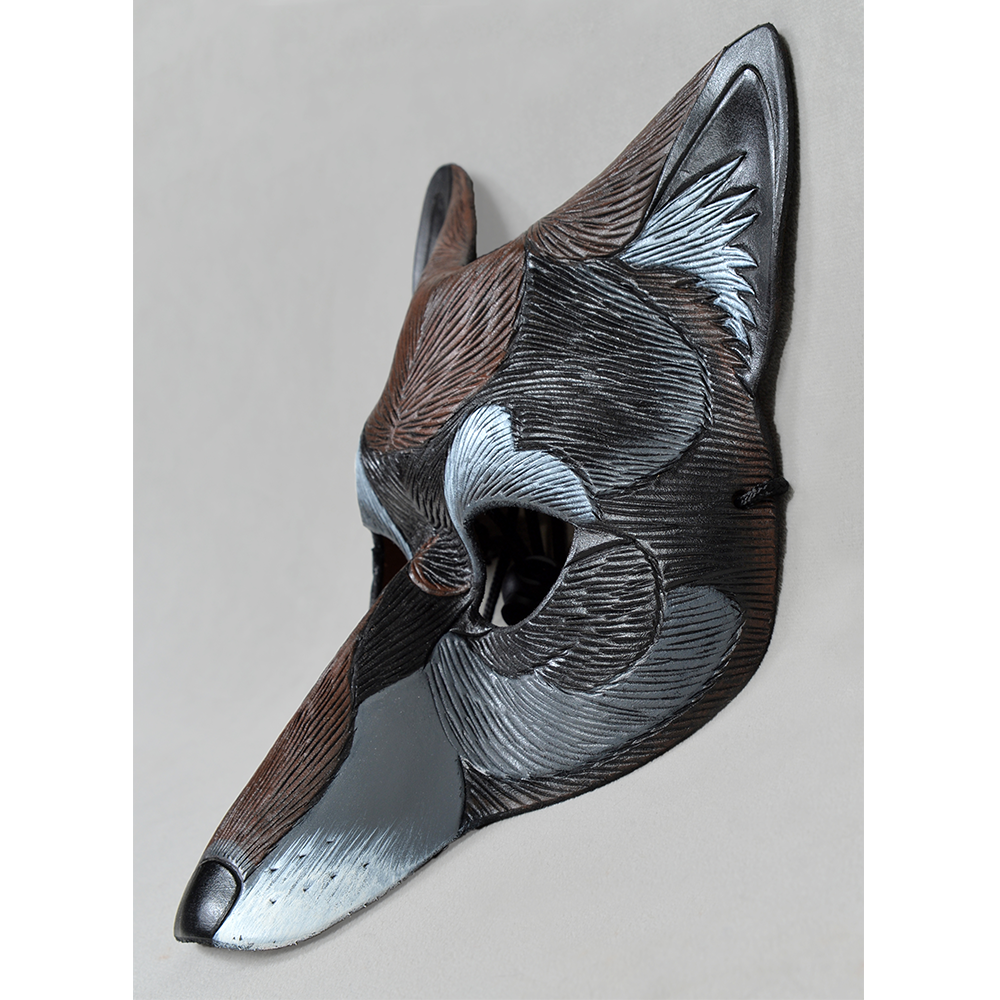
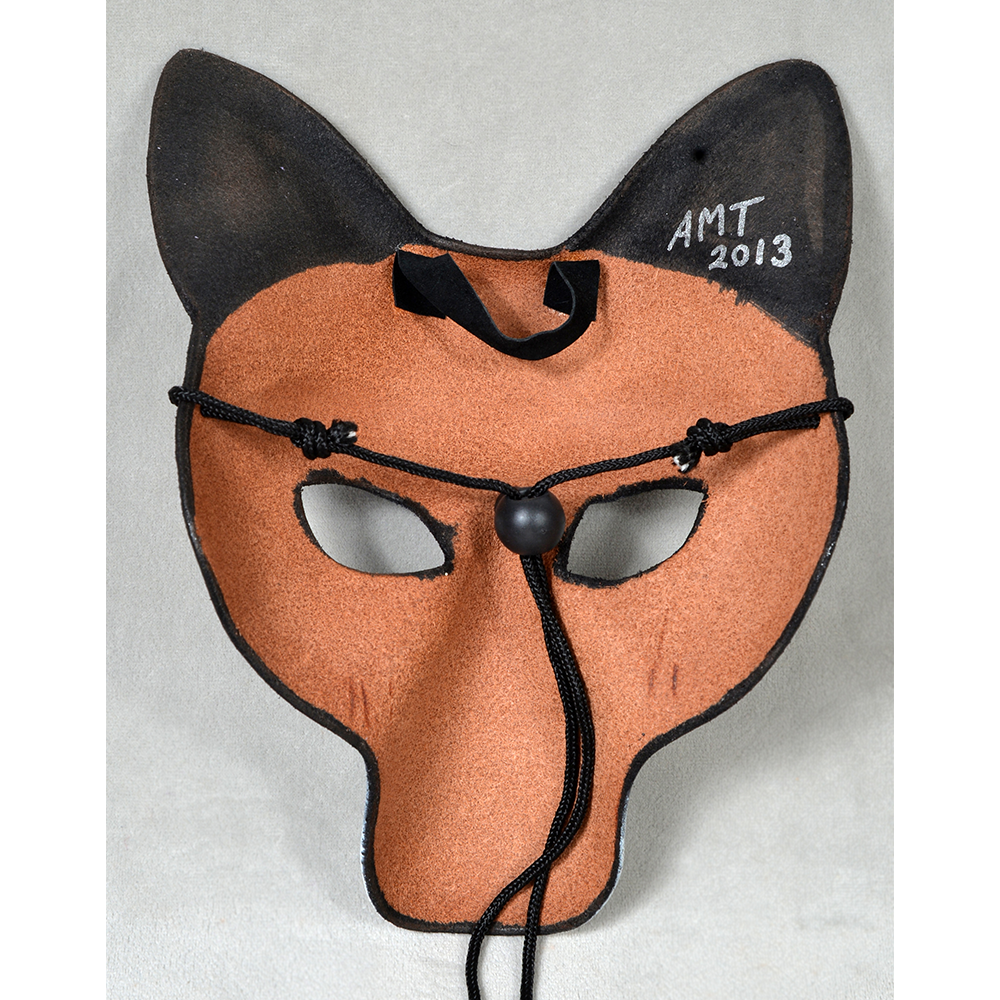
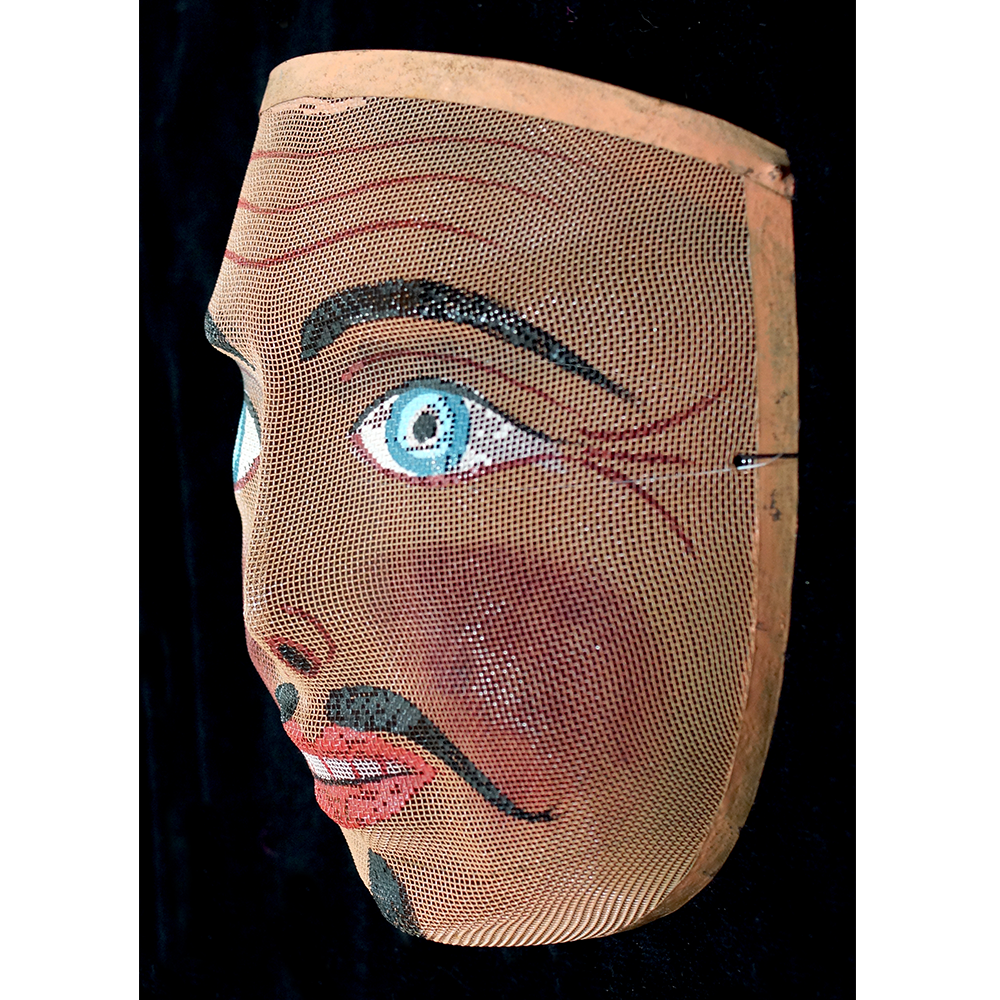
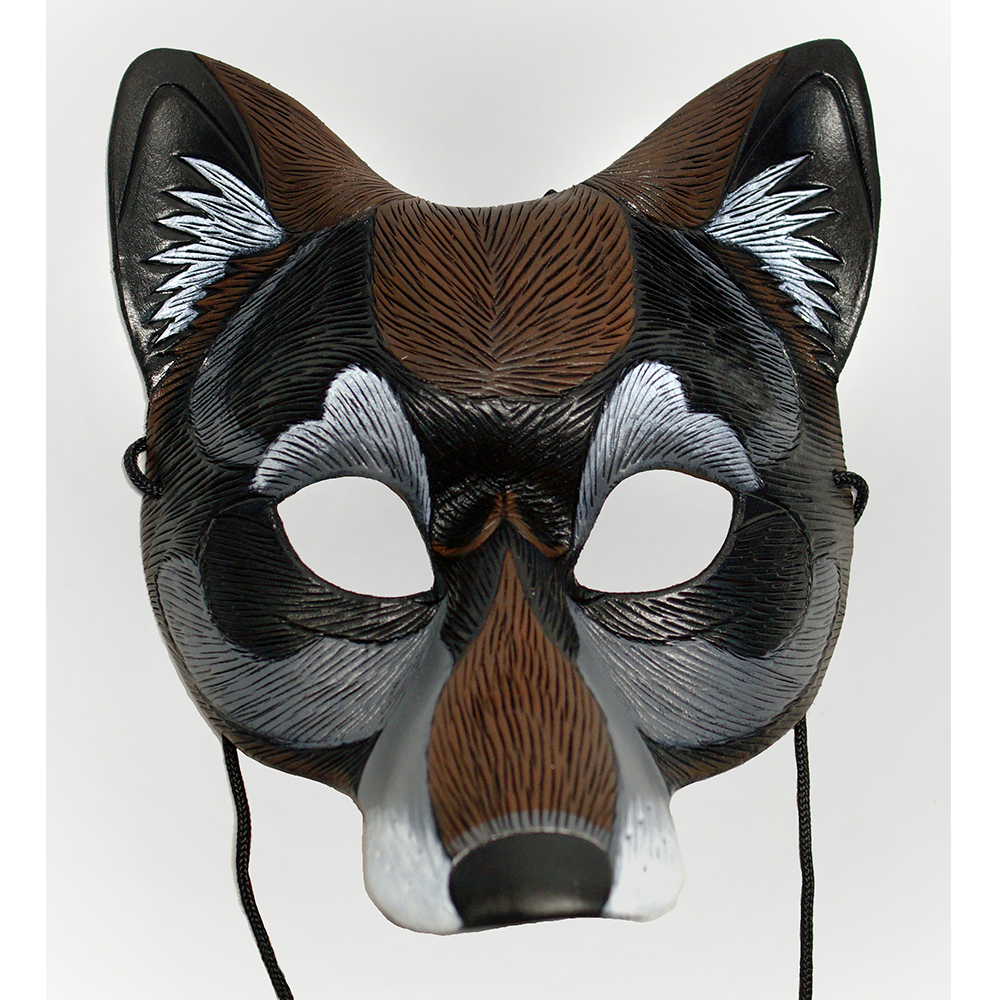
TITLE: Mardi Gras Timber Wolf
TYPE: face mask
GENERAL REGION: North America
COUNTRY: United States of America
SUB-REGION: New Orleans, Louisiana
ETHNICITY: Mixed
DESCRIPTION: Leather timber wolf mask
CATALOG ID: NAUS068
MAKER: Andrea Masse, Tonawanda, New York (1965- )
CEREMONY: Mardi Gras; fantasy
AGE: 2013
MAIN MATERIAL: leather
OTHER MATERIALS: acrylic paint; vinyl cord

In Catholic practice, Mardi Gras (“Fat Tuesday”) is the last day of celebration of Carnival before the fasting period of Lent. In the United States, the holiday is nowhere more vigorously celebrated than in New Orleans, Louisiana. There, a two-week Carnival season terminating on Mardi Gras is celebrated with parades composed of elaborate costumes and masks, floats, marching bands, all organize by private “krewes” composed of public-spirited citizens dedicated to preserving the Mardi Gras tradition. Krewes tend to have a fairly constant structure of officers, who frequently ride horseback in handsome costumes and white draped masks, float riders who chuck “throws,” or small gifts such as plastic beaded necklaces, toys, or mementos (usually with the krewe’s name and insignia) into the cheering crowds, and a guest “king” and “queen” of the krewe.

Mardi Gras in New Orleans is also typically celebrated with formal balls held by the krewes in honor of the king and queen, and to celebrate the season.  Mask wearing among street celebrants is common as well. Traditionally, Mardi Gras masks are made of formed and painted leather, and can represent any character from real life or fantasy.  In modern practice, cheap masks mass manufactured of sequined cloth or paper maché covered in dyed feathers have become common.

This specific mask was hand made by Andrea Masse, a skilled artisan from New York state, for such events as Renaissance festivals and Mardi Gras.


Click above to watch a short documentary about Mardi Gras in New Orleans, Louisiana in 2019 and 2020.

:

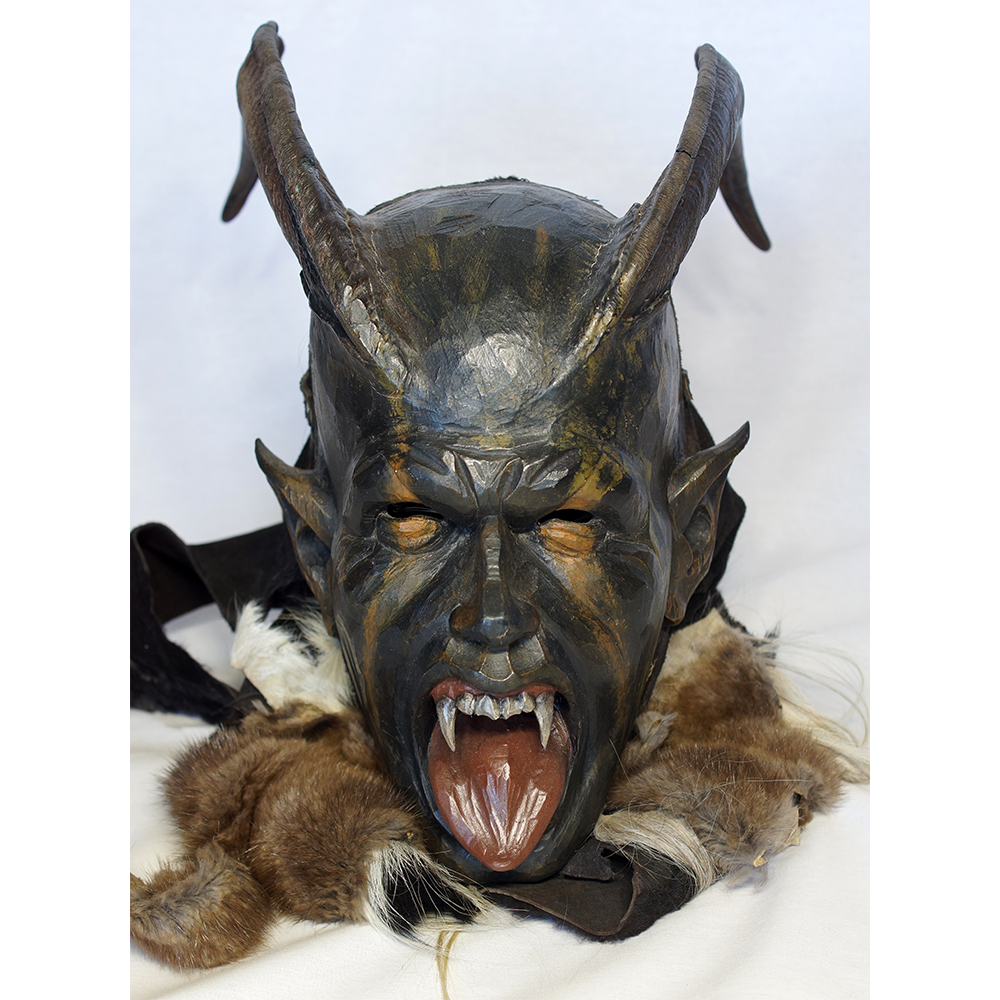
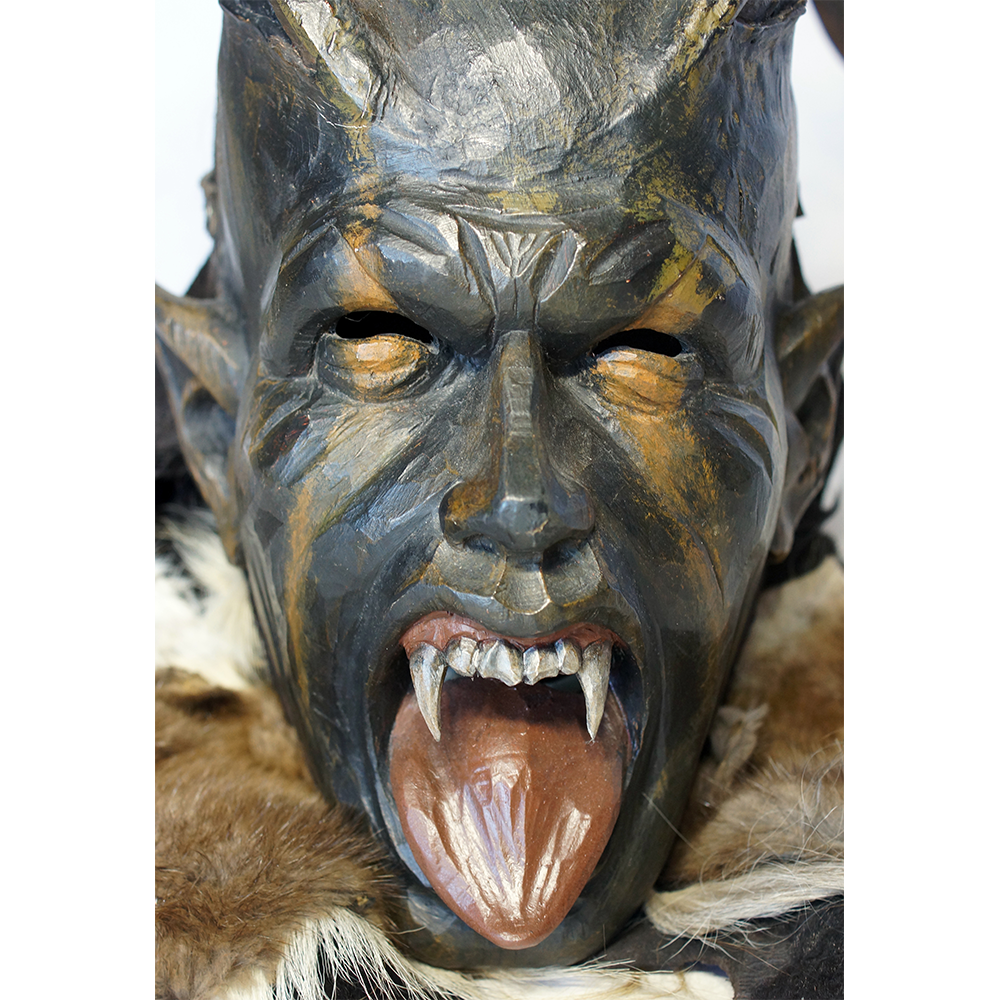
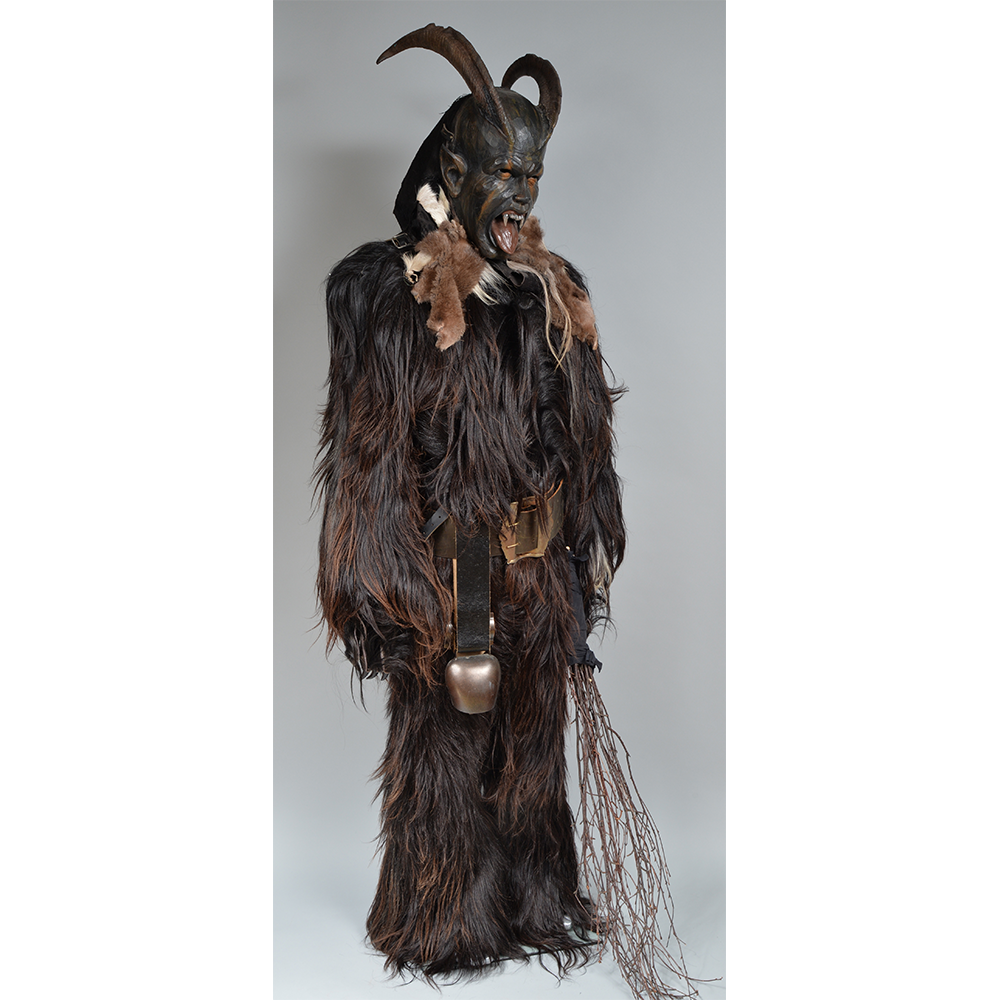
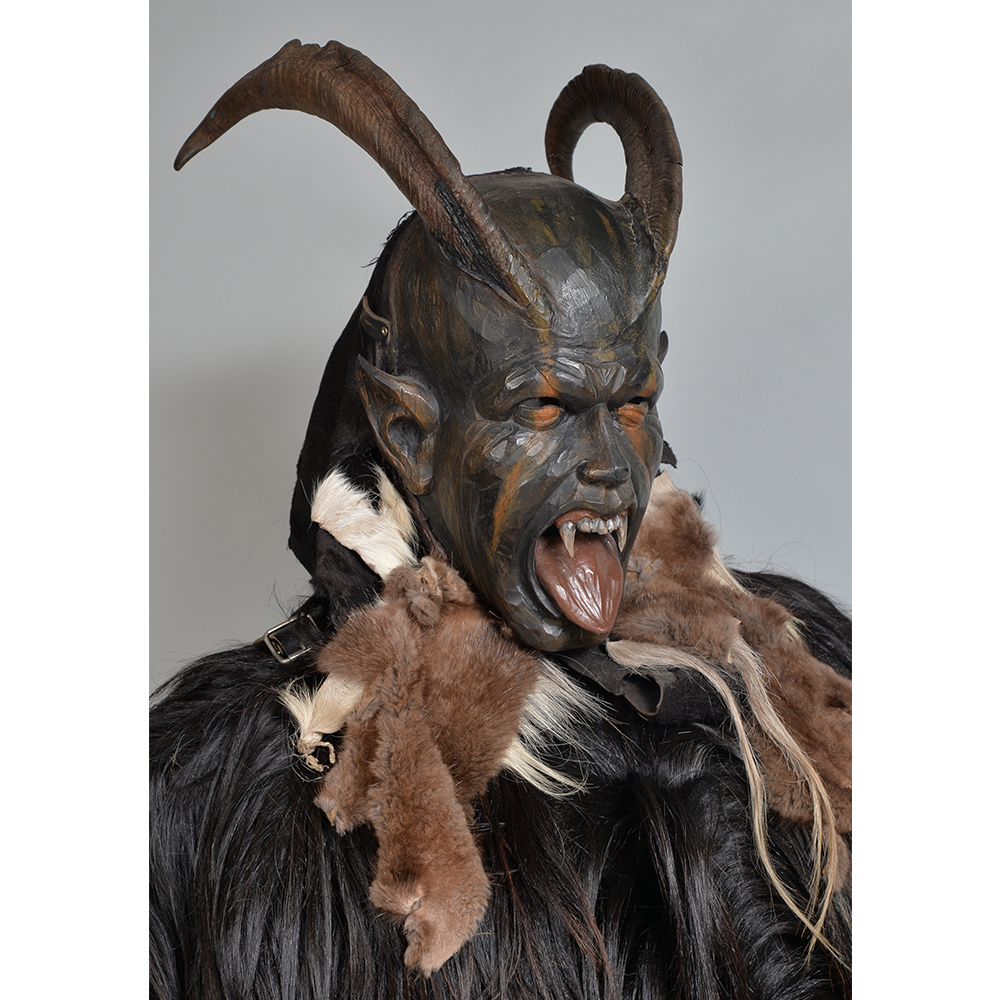
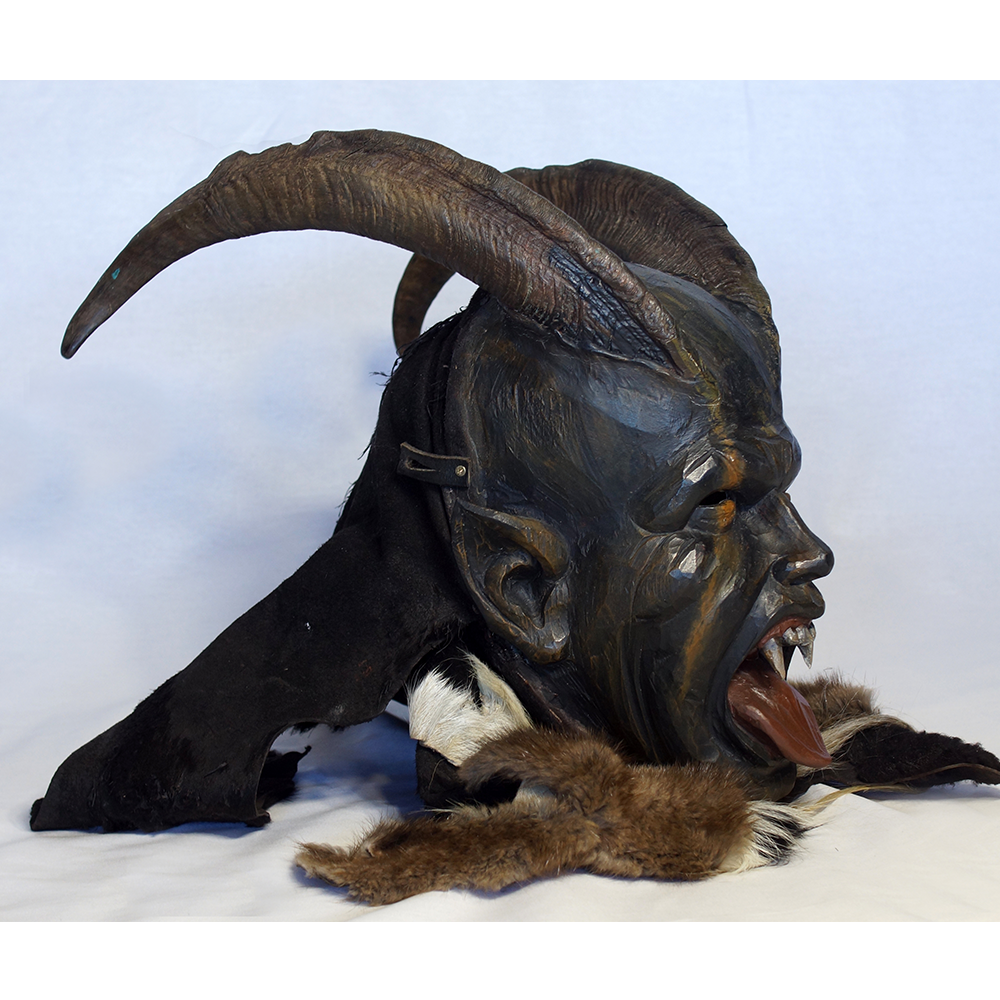
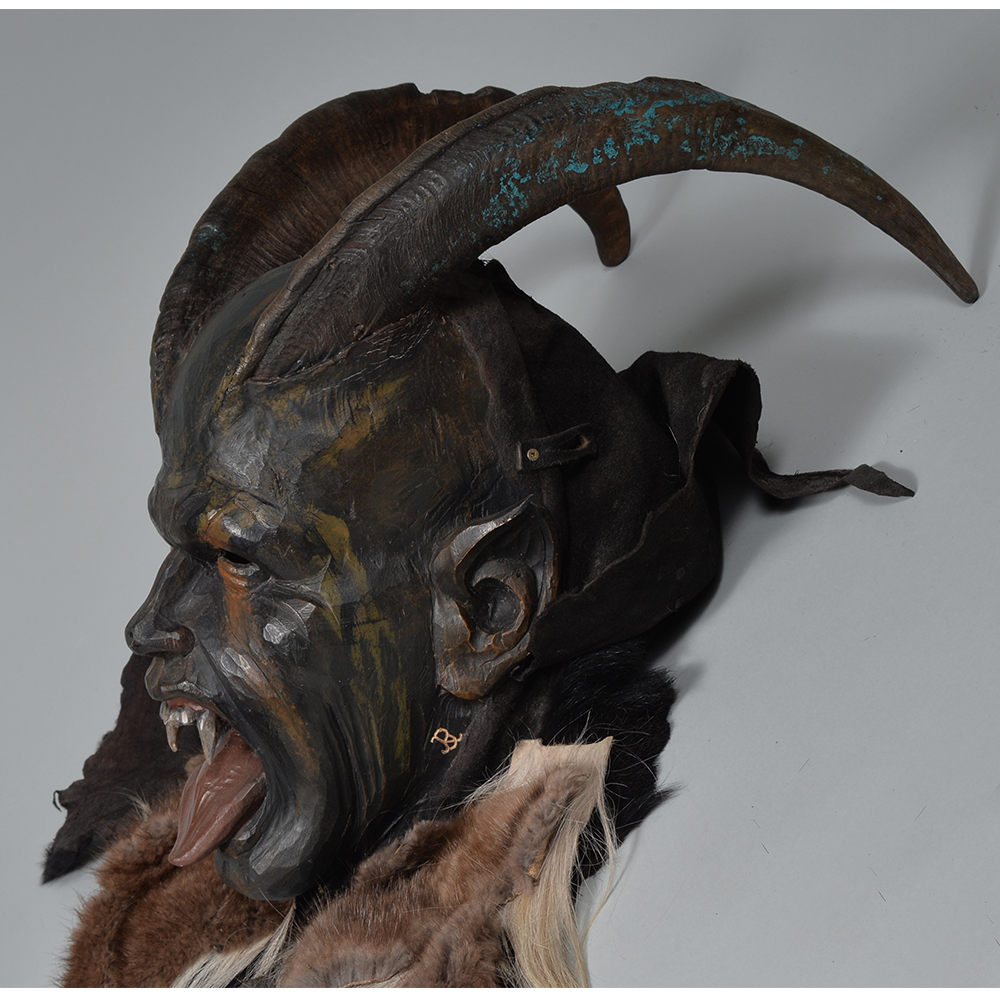
TITLE: Krampus Mask and Costume
TYPE: helmet mask; costume; accessory
GENERAL REGION: Europe
COUNTRY: Austria
ETHNICITY: German (Austrian)
DESCRIPTION: Black Krampus Mask and Costume
CATALOG ID: EUAT013
MAKER: Sascha Pozewaunig (Villach, 1978- )
CEREMONY: Krampuslauf
AGE: 2003 (mask); 2014 (costume)
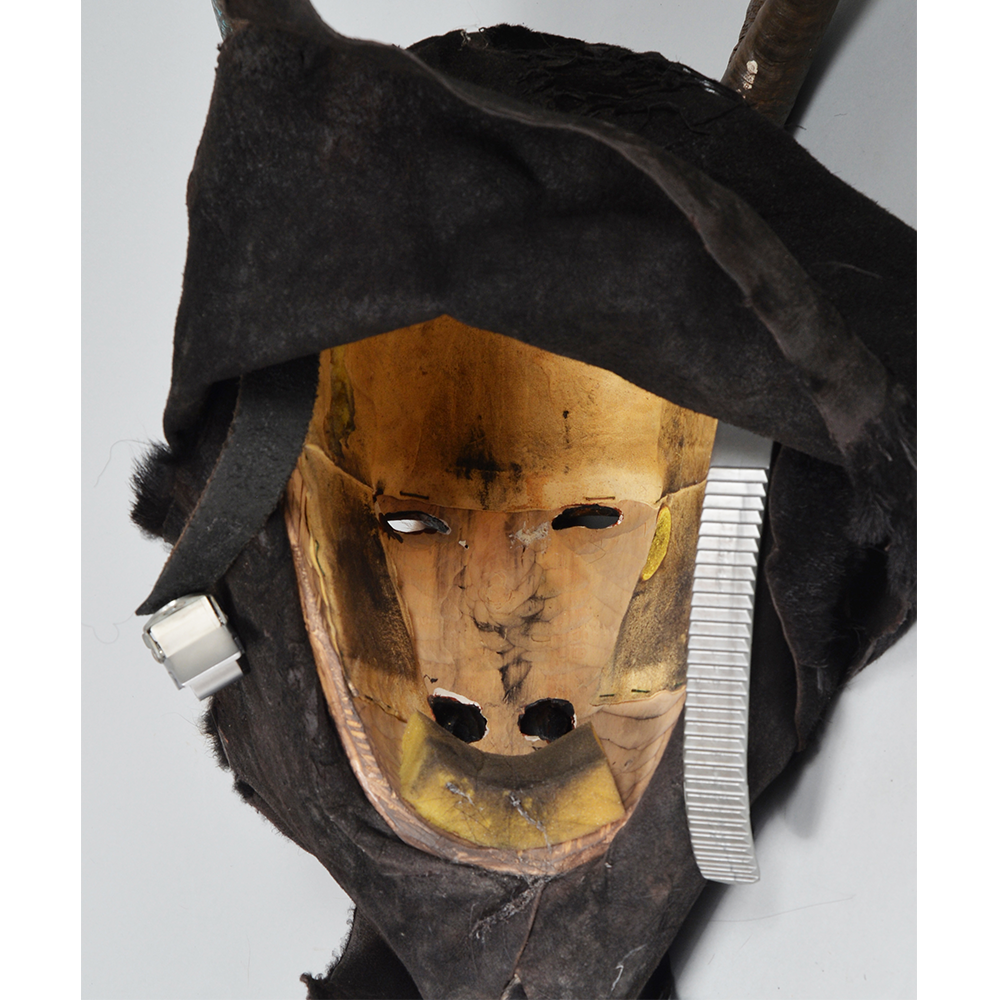
MAIN MATERIAL (Mask): wood
OTHER MATERIALS (Mask): goat horns; paint; goat fur; rabbit fur; foam rubber; adhesive
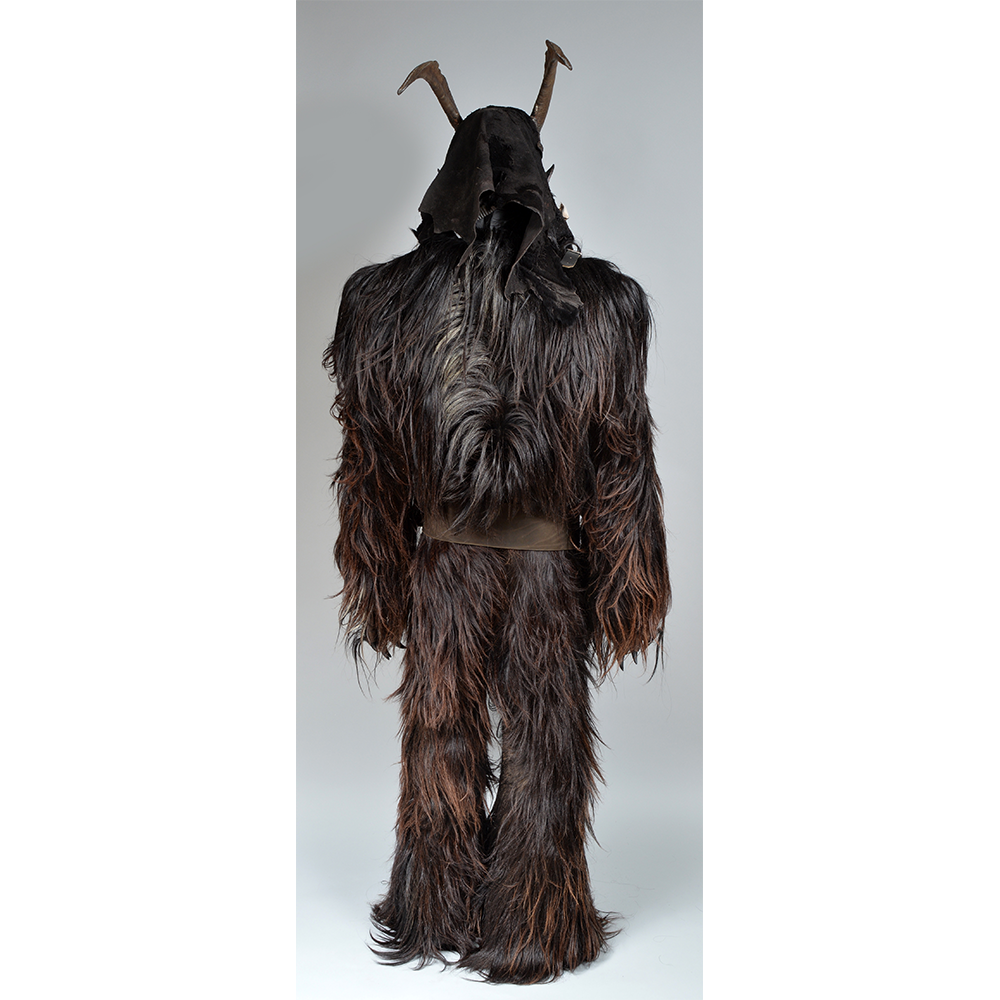
MAIN MATERIAL (Costume): goat leather and fur
OTHER MATERIALS (Costume): bronze hardware; bronze bells; birch sticks; cloth; paint

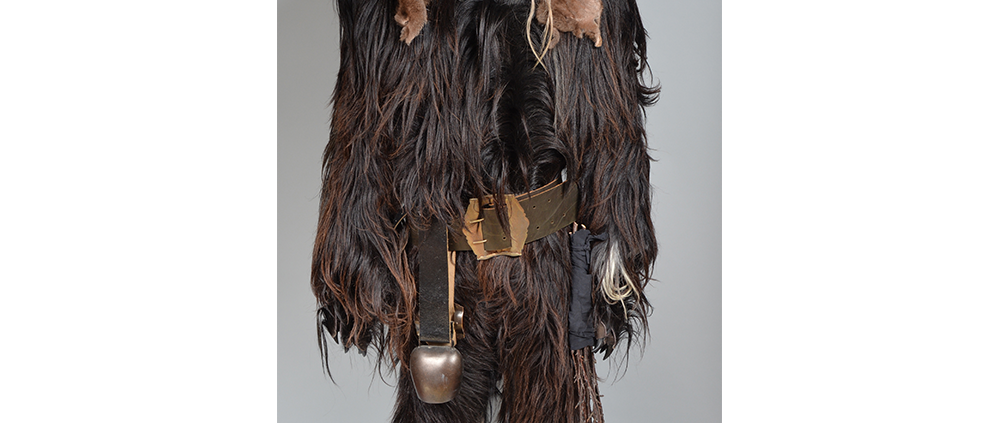
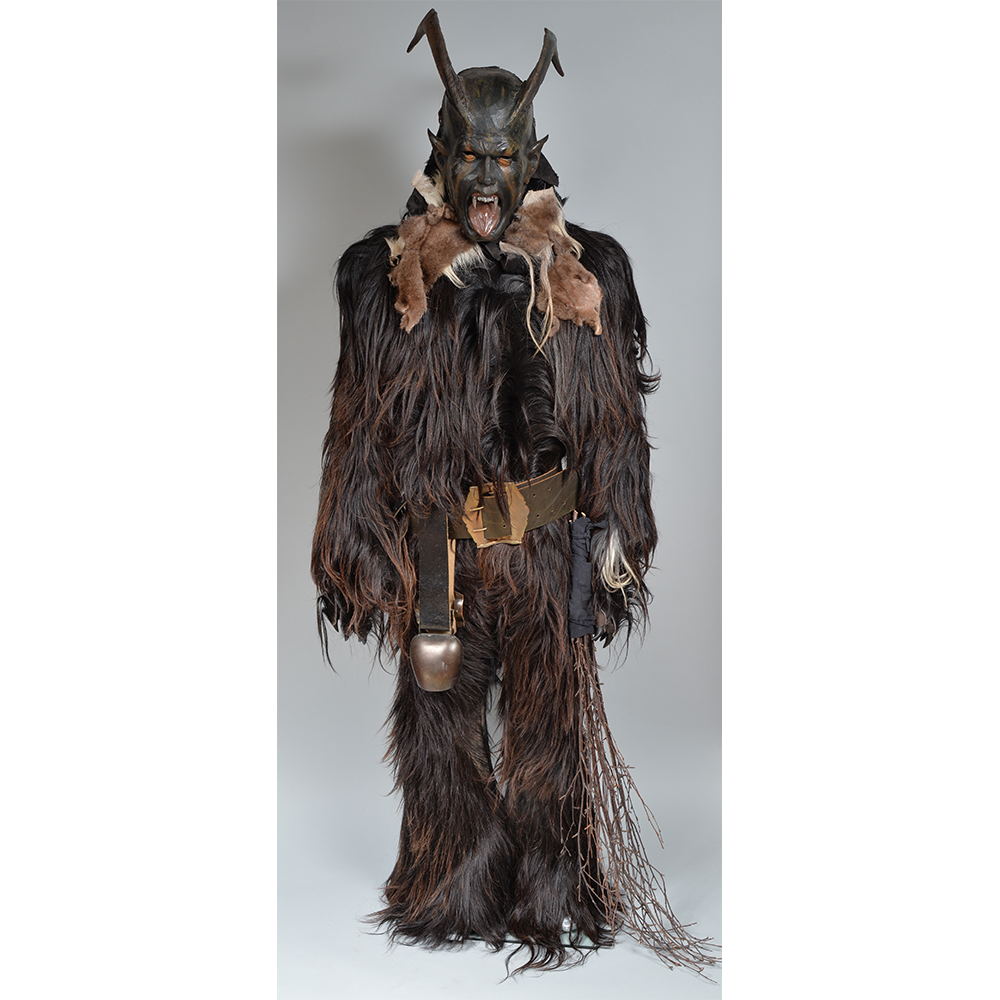
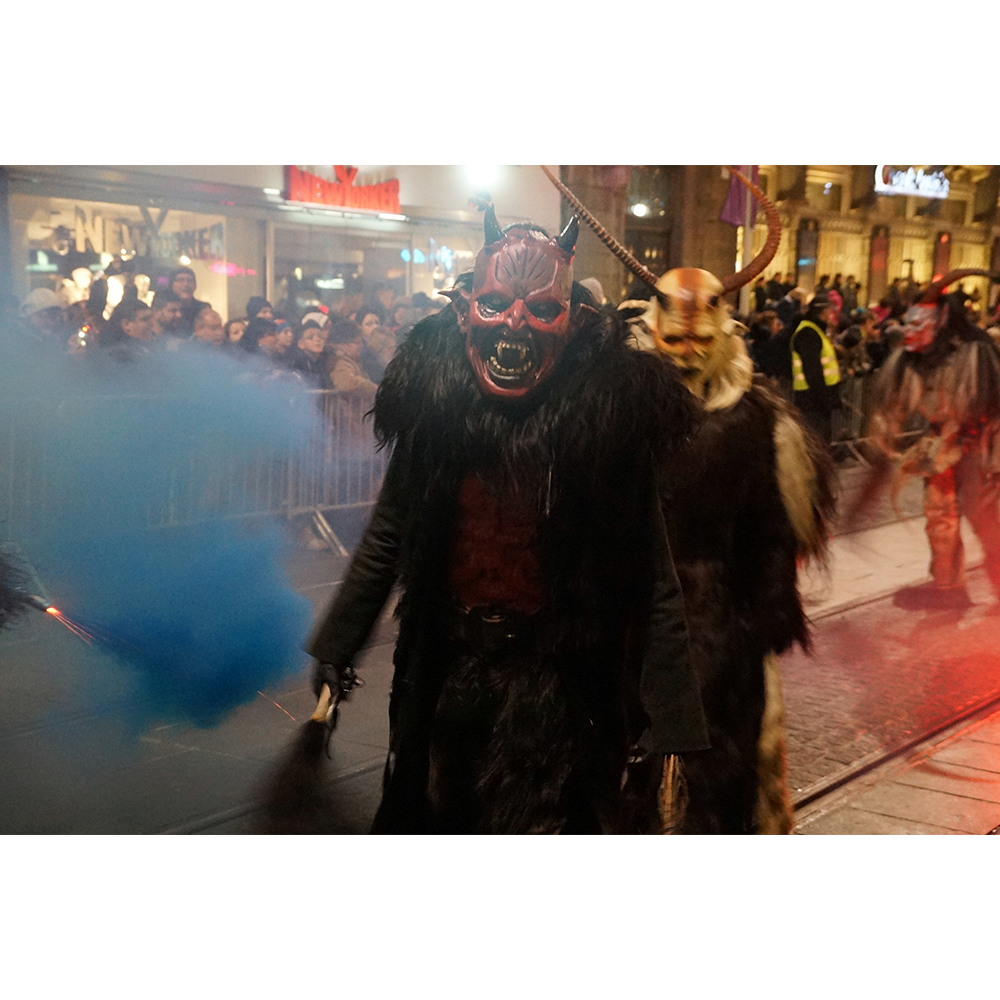
Krampuslauf (the Krampus Parade) is a winter event that forms part of the Christmas festivities in much of Austria and parts of southern Germany, Switzerland, northern Italy, and the Balkan states. From mid-November until the first week of December, many towns organize a parade of Krampuses, demons who represent evil spirits with frightening horned masks with sharp teeth and long, lolling tongues, typically in a suit of goat skin with loud cowbells attached to their belt.  They carry a whip of birch branches (a Rute) or a cowtail. Their function is to accompanying St. Nicholas, who rewards good children with treats and presents, while the Krampuses punish bad children by beating them with their whips or throwing them into wicker baskets on their backs to carry down to Hell for punishment. Although different regions celebrate Krampuslauf on different days, the traditional Krampus Day is December 5, and the traditional St. Nicholaus Day is December 6. Krampuses may march on both days.

This complete costume includes a goat leather body suit, gloves with simulated long nails (made of leather), a leather and bronze belt with bronze cowbells, and a birch stick switch for whipping children and other audience members.

:

TITLE: Kolam Maneme Moonu
TYPE: face mask
GENERAL REGION: Asia
COUNTRY: Sri Lanka
ETHNICITY: Sinhalese
DESCRIPTION: Maneme Moonu (Prince) Mask
CATALOG ID: ASLK003
MAKER: Unknown
CEREMONY: Kolam Natima
AGE: 1960s
MAIN MATERIAL: kadura (Strychnox nux vomica) wood
OTHER MATERIALS: paint

The masked dance of Sri Lanka developed from shamanic healing and purification rituals, and  split along two lines.  The first, Yakun Natima, is the healing dance performed by a shaman.  Each demon (yakku) represents a specific disease or ailment, and to invoke the demon, the shaman wears a mask depicting the symptoms or symbols of the disease. When performing as a group, a character known as Kola Sanni Yakka, who is a kind of amalgamation of all diseases, presides over the demons.

The second line, Kolam Natima is a storytelling dance drama involving 40 masked characters of very diverse types. The story originates in a myth of a pregnant Sinhalese queen who develops a craving to see masked dances. She begs her husband, the king, to arrange it, but he knows of no such dances. At his request, the god Sekkria, one of the four guardian gods, carves the masks and teaches the people how to perform the dance. They perform for the royal audience, and the baby is consequently born strong and healthy. The stories told with the masks are not a single cohesive narrative, but a series of stories that merge Sinhalese folk traditions with Buddhist Jataka stories, which tell of the former lives of the Buddha.

A Kolam Natima performance begins with ritual addresses to gods and the Buddha. What follows is a prologue showing brief stock, mostly comical, scenes from traditional Sri Lankan society.  Finally, the king and the queen in very large masks enter with their retinue, whence they watch the dance.  The performance ends with the dance, typically involving Gara demons, Nagas (snake demons) and the Garuda (a Naga-eating god-bird) who were eventually reconciled by the Buddha. The performance is intended to purify the village and to spread prosperity.

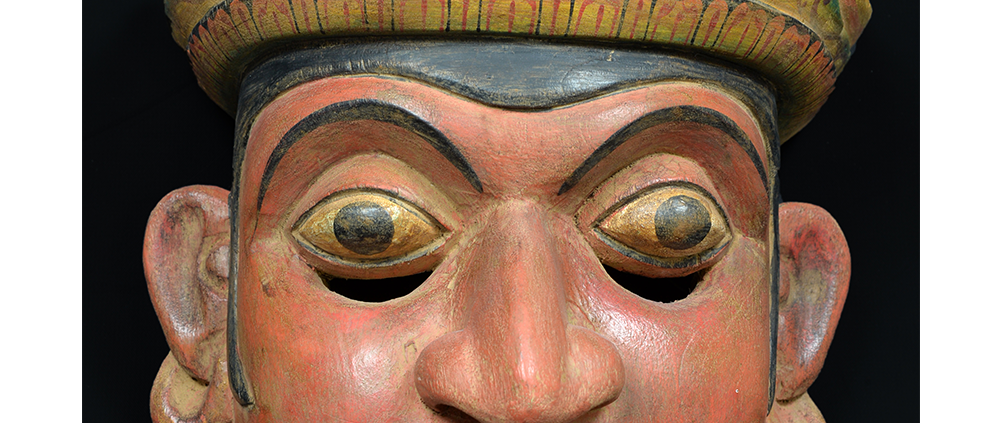
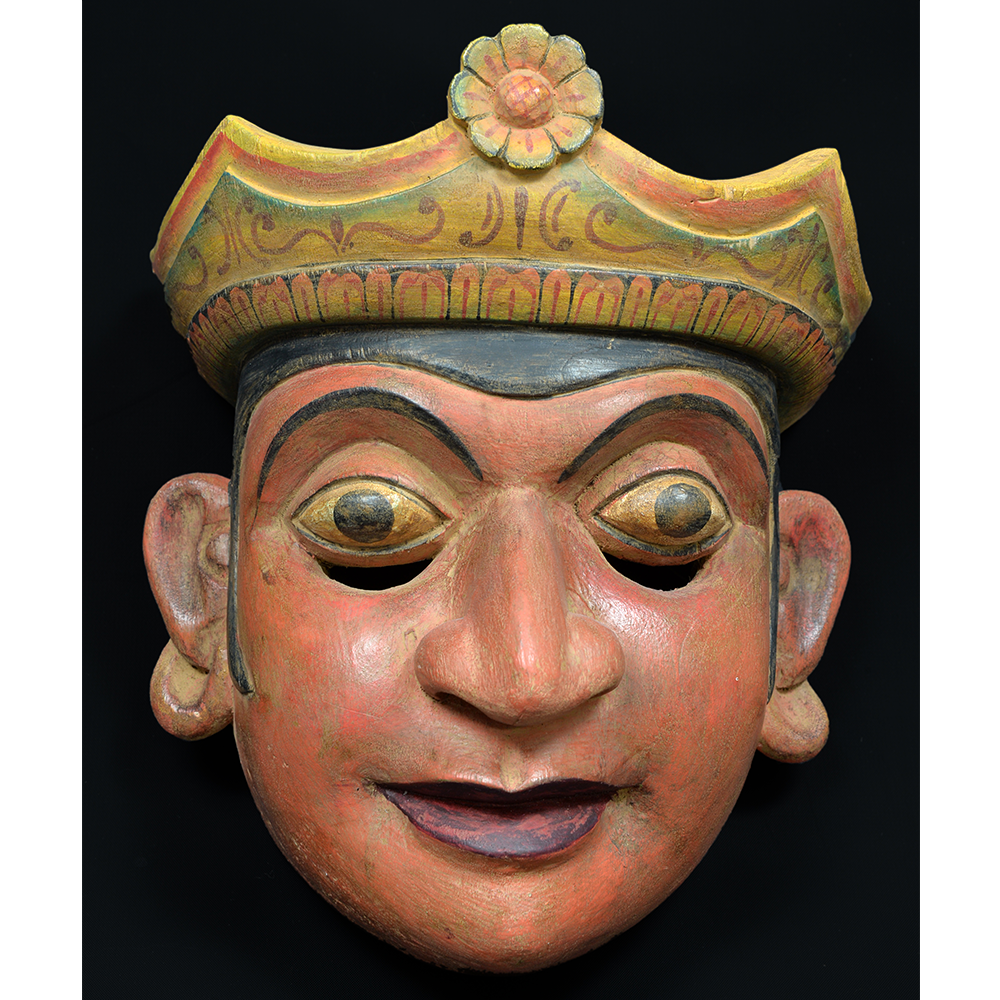
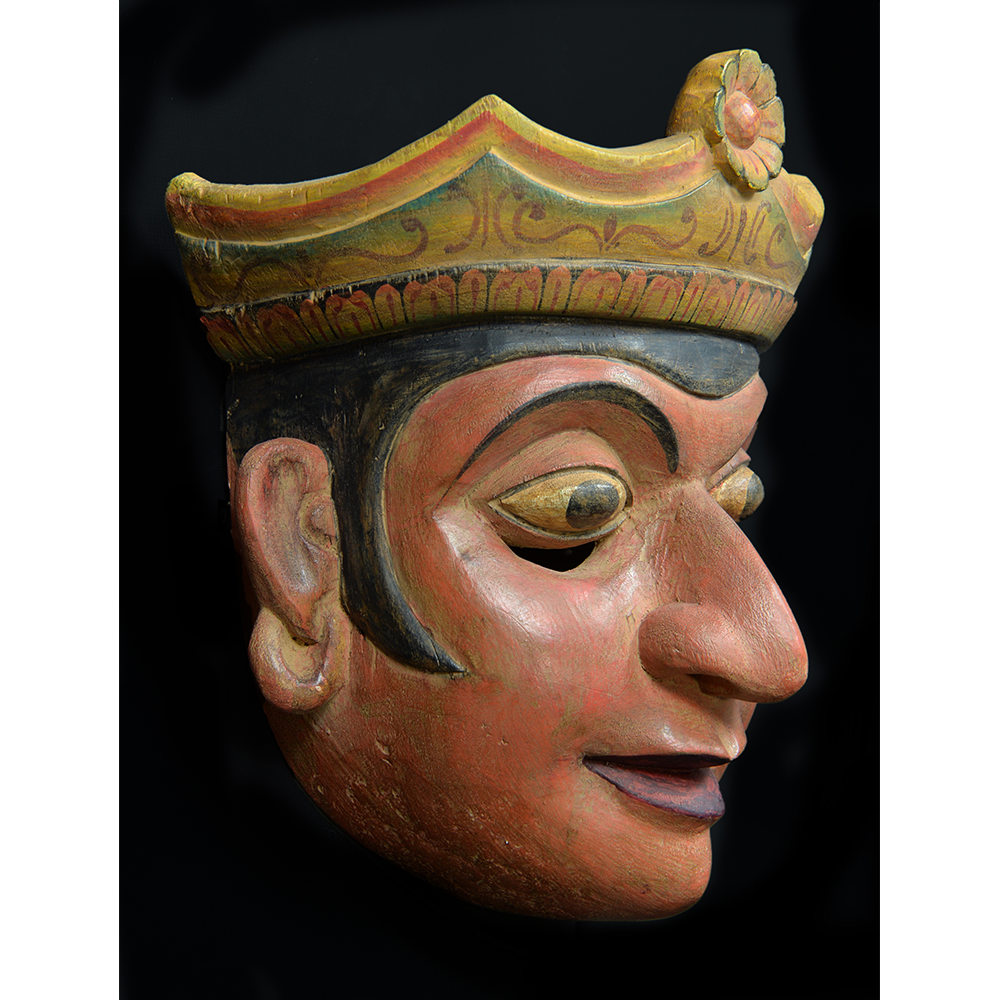
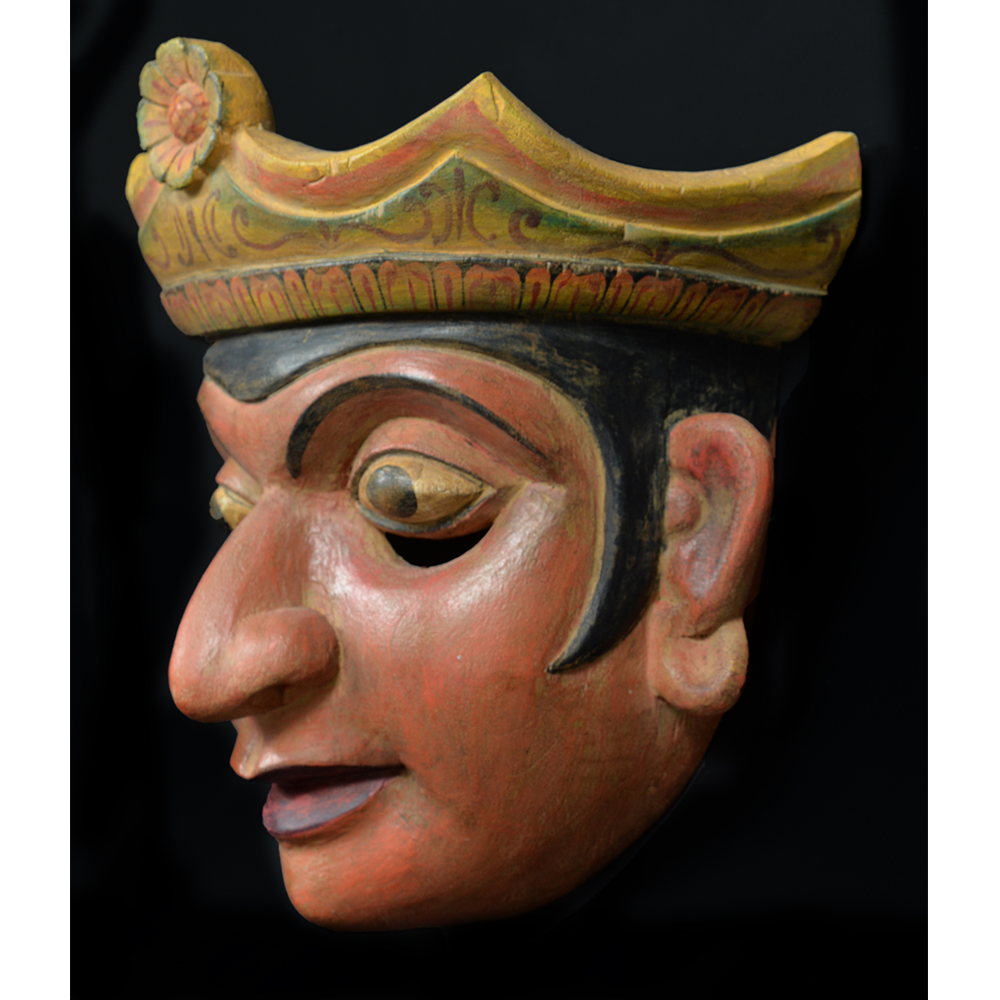
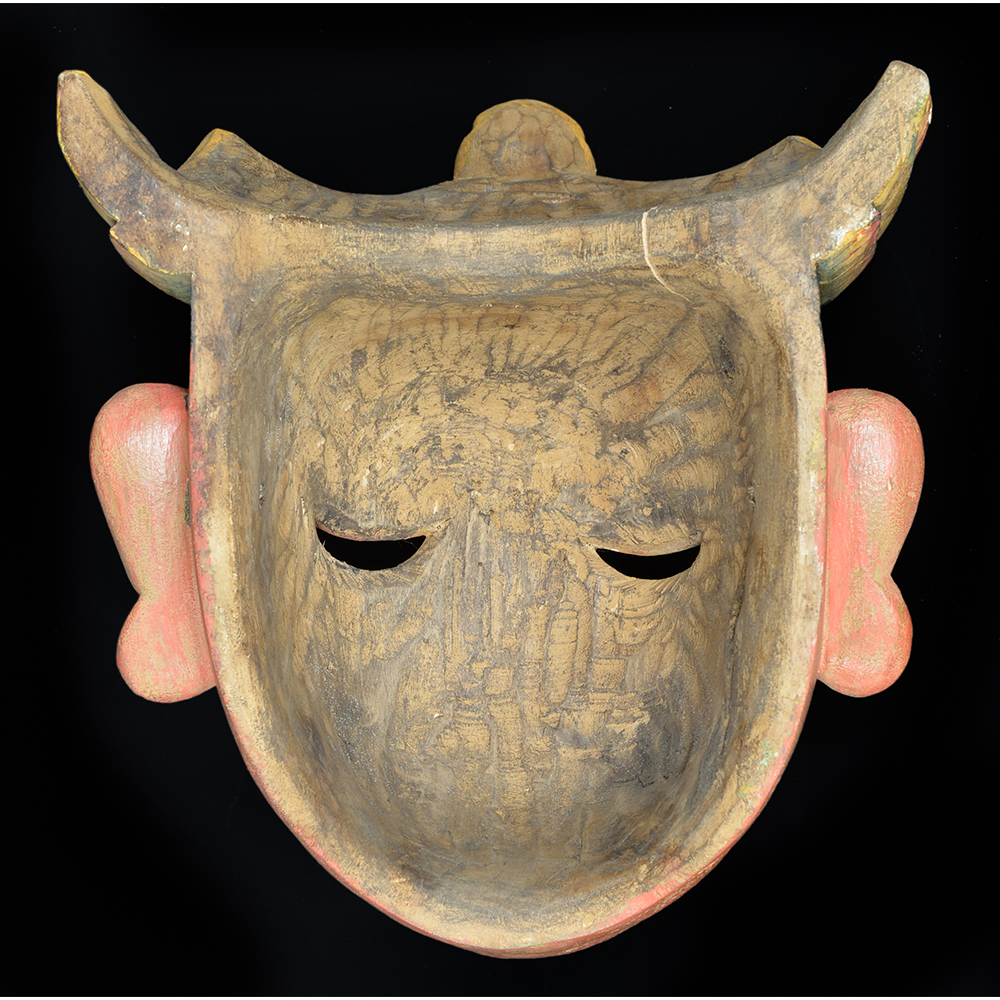
This mask represents the maneme moonu, a prince and one of several royal characters in the Kolam drama.

For more on the masks of Sri Lanka, see Alain Loviconi, Masks and Exorcisms of Sri Lanka (Paris: Éditions Errance, 1981).

:

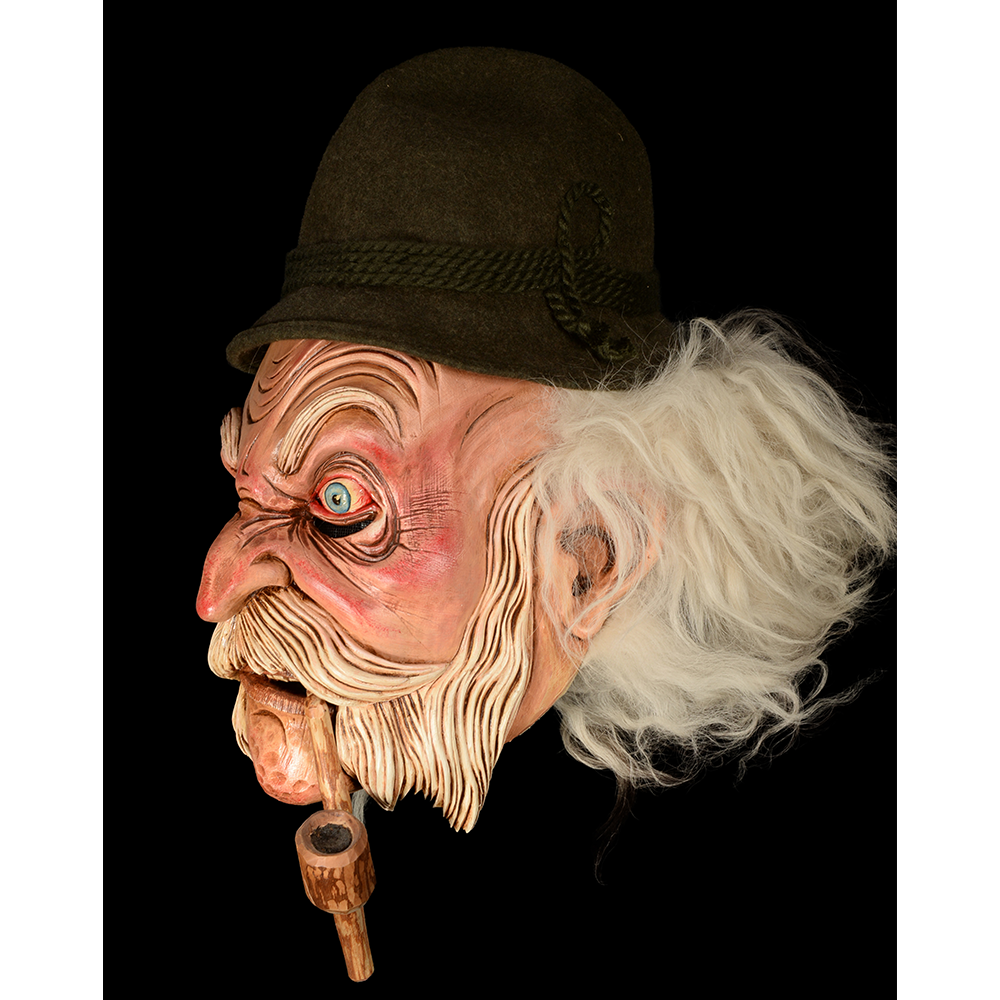
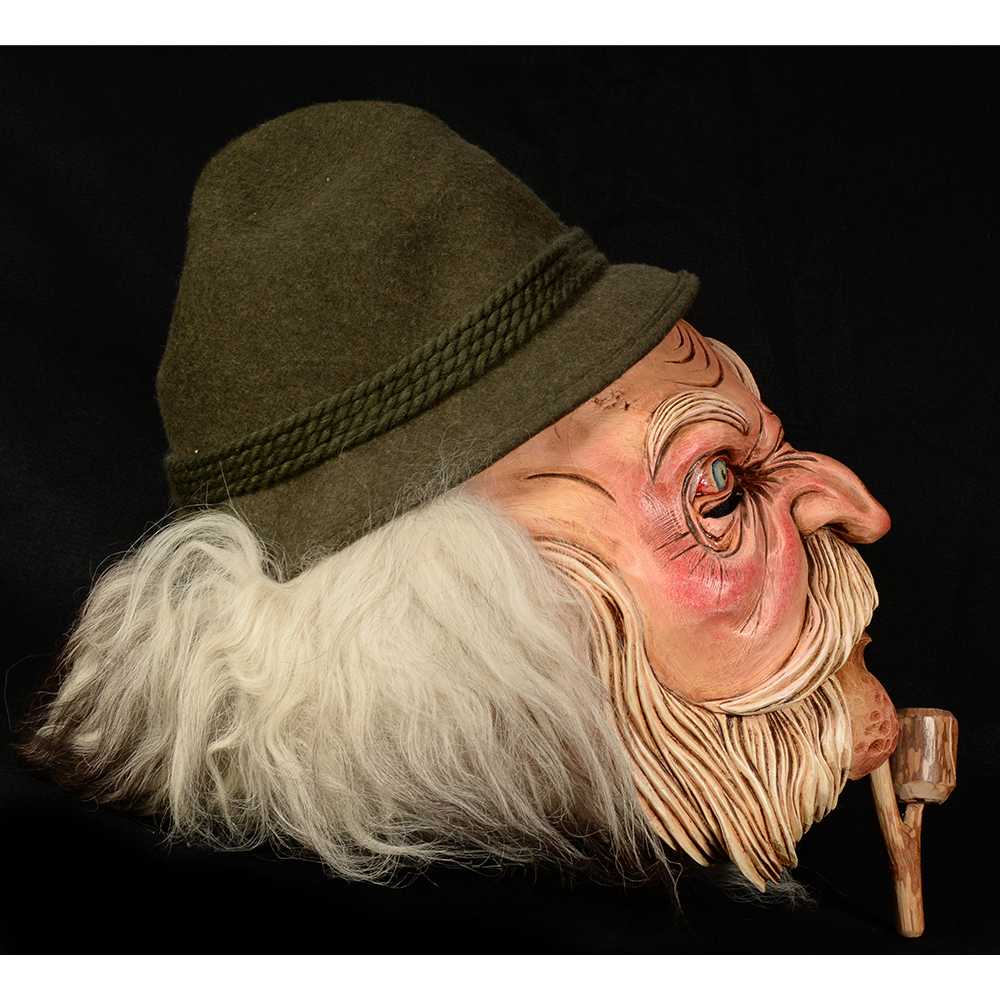
TITLE: Old Man Krampus Mask
TYPE: helmet mask
GENERAL REGION: Europe
COUNTRY: Austria
ETHNICITY: German (Austrian)
DESCRIPTION: Alter Mann (Old Man) Krampus Mask
CATALOG ID: EUAT003
MAKER: Josef “Sepp” Seidl, Sankt Veit im Pongau (1975- )
CEREMONY: Krampuslauf
AGE: 2013
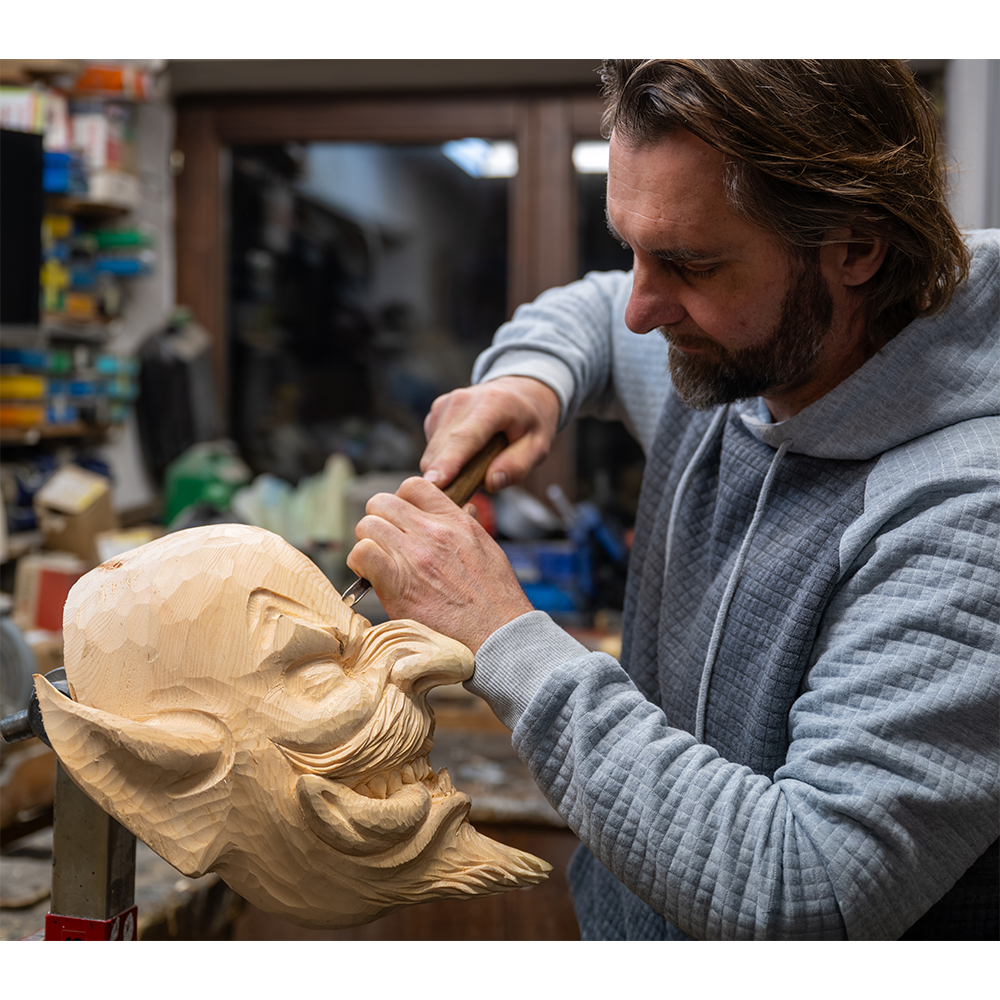
MAIN MATERIAL: Swiss Stone Pine wood
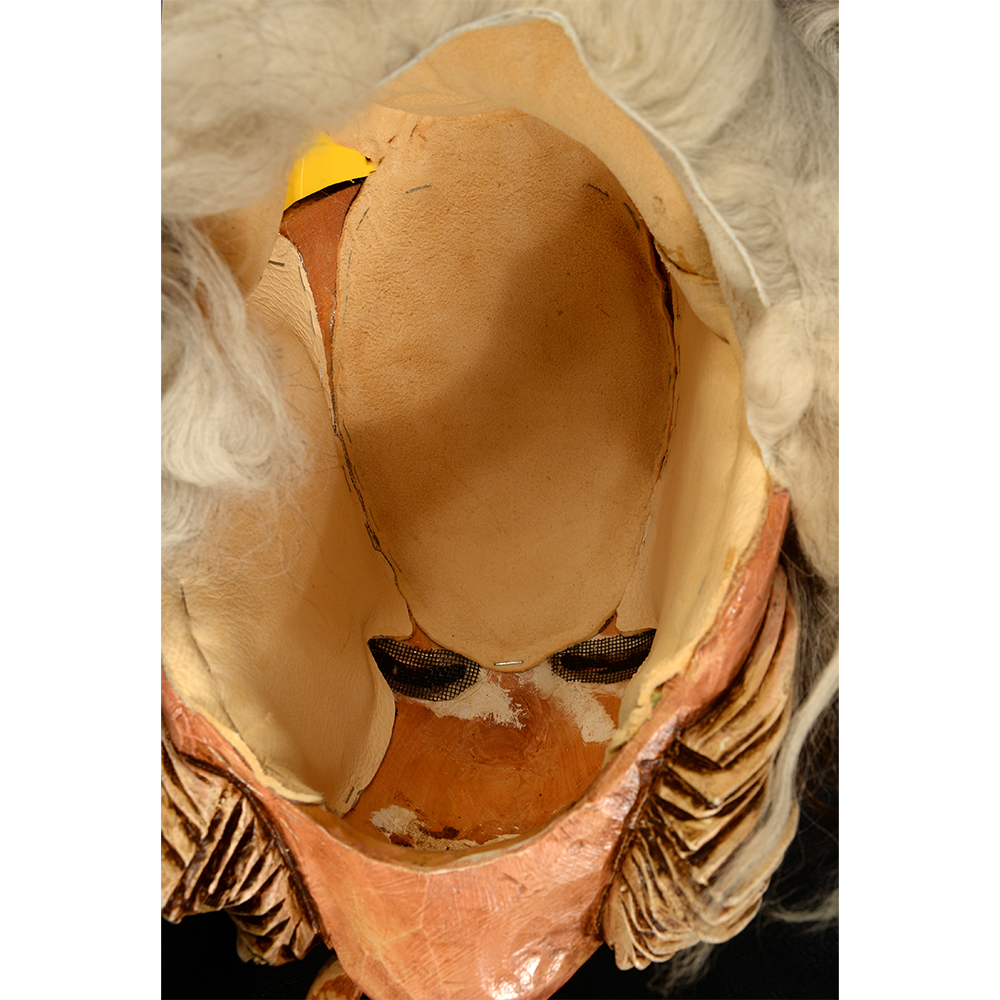
OTHER MATERIALS: paint; sheep’s wool; wool Tirolean hat; foam padding; mesh; adhesive; wood pipe

Krampuslauf (the Krampus Parade) is a winter event that forms part of the Christmas festivities in much of Austria and parts of southern Germany, Switzerland, northern Italy, and the Balkan states. From mid-November until the first week of December, many towns organize a parade of Krampuses, demons who represent evil spirits with frightening horned masks with sharp teeth and long, lolling tongues, typically in a suit of goat skin with loud cowbells attached to their belt.  They carry a whip of birch branches (a Rute) or a cowtail. Their function is to accompanying St. Nicholas, who rewards good children with treats and presents, while the Krampuses punish bad children by beating them with their whips or throwing them into wicker baskets on their backs to carry down to Hell for punishment. Although different regions celebrate Krampuslauf on different days, the traditional Krampus Day is December 5, and the traditional St. Nicholaus Day is December 6. Krampuses may march on both days.

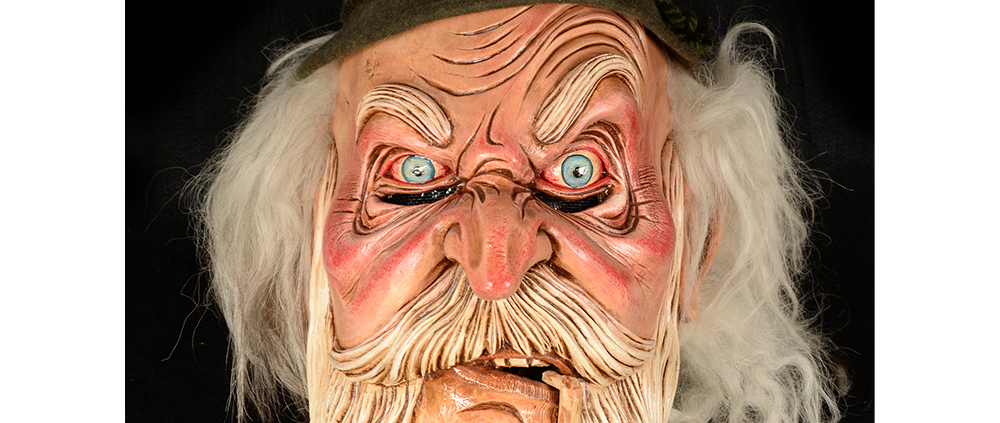
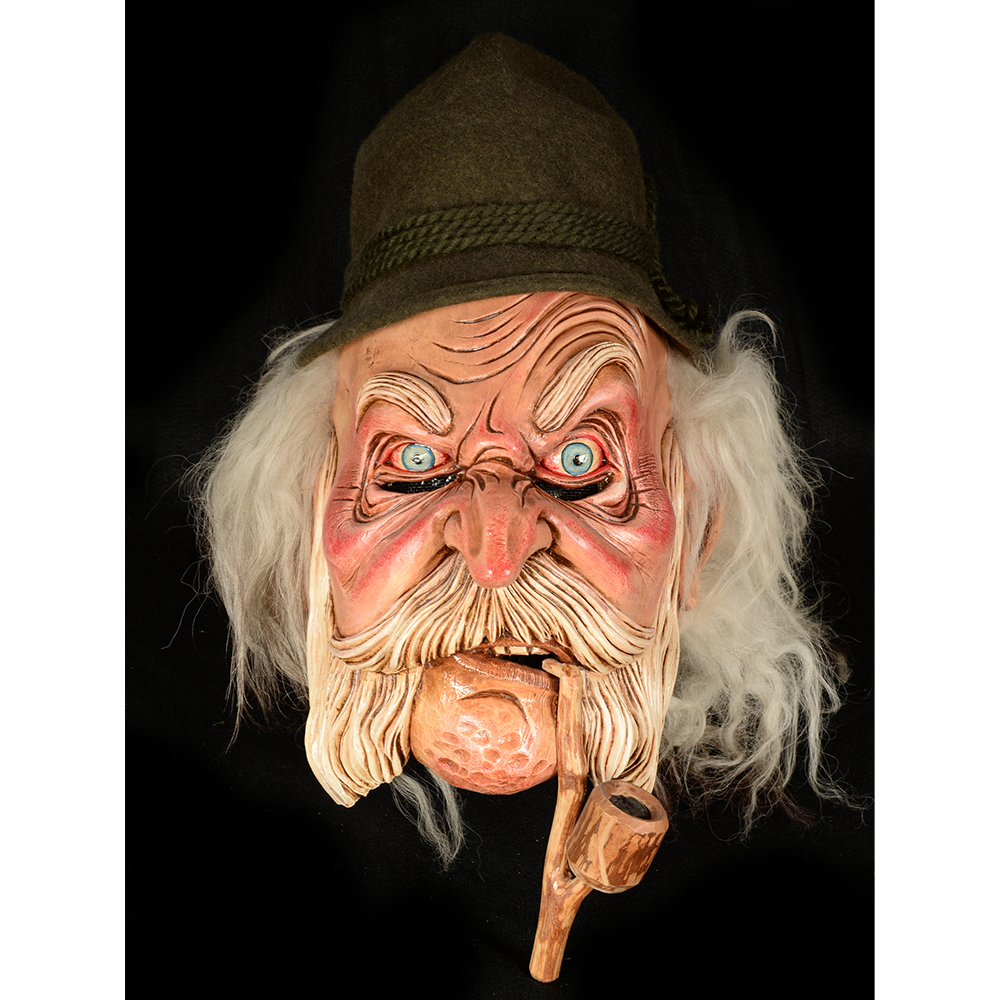
Although this mask is technically a Krampus mask, the character resembles a grumpy old man and is the companion to the old woman Krampus made by the same artist, Sepp Seidl.

:

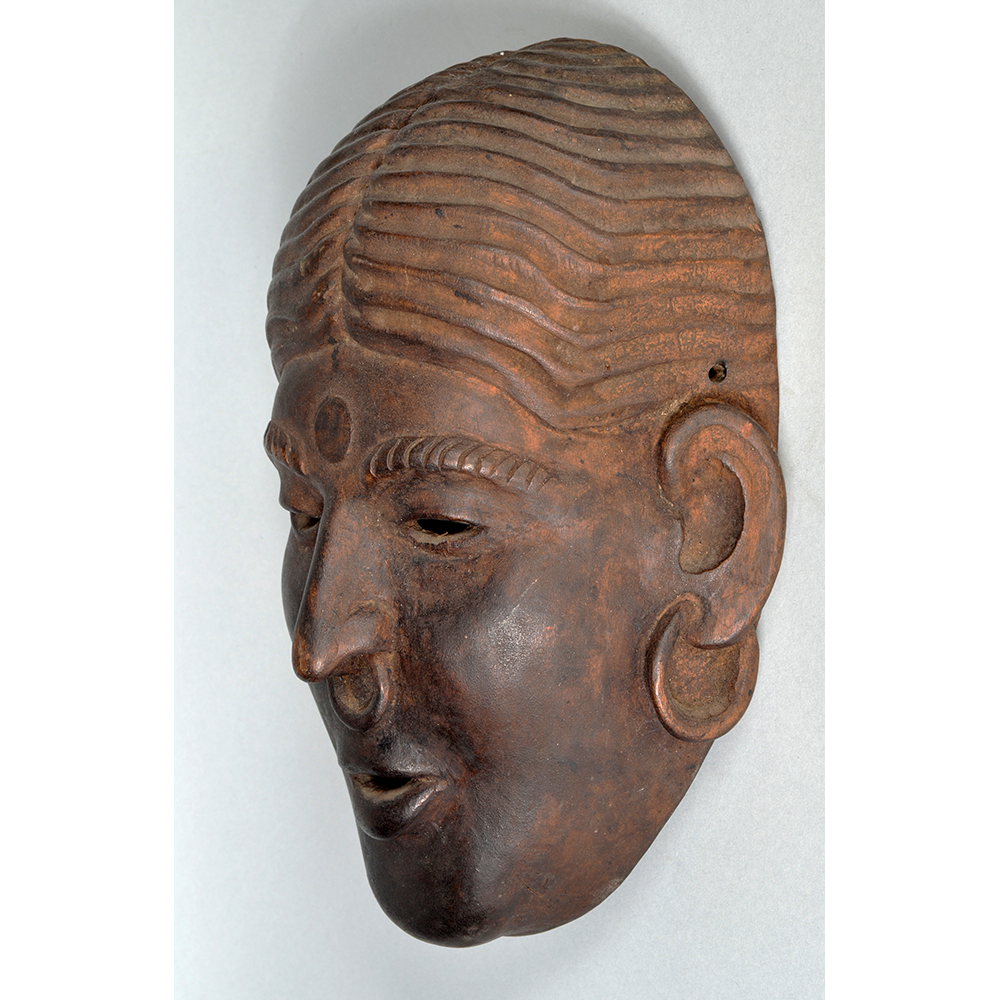
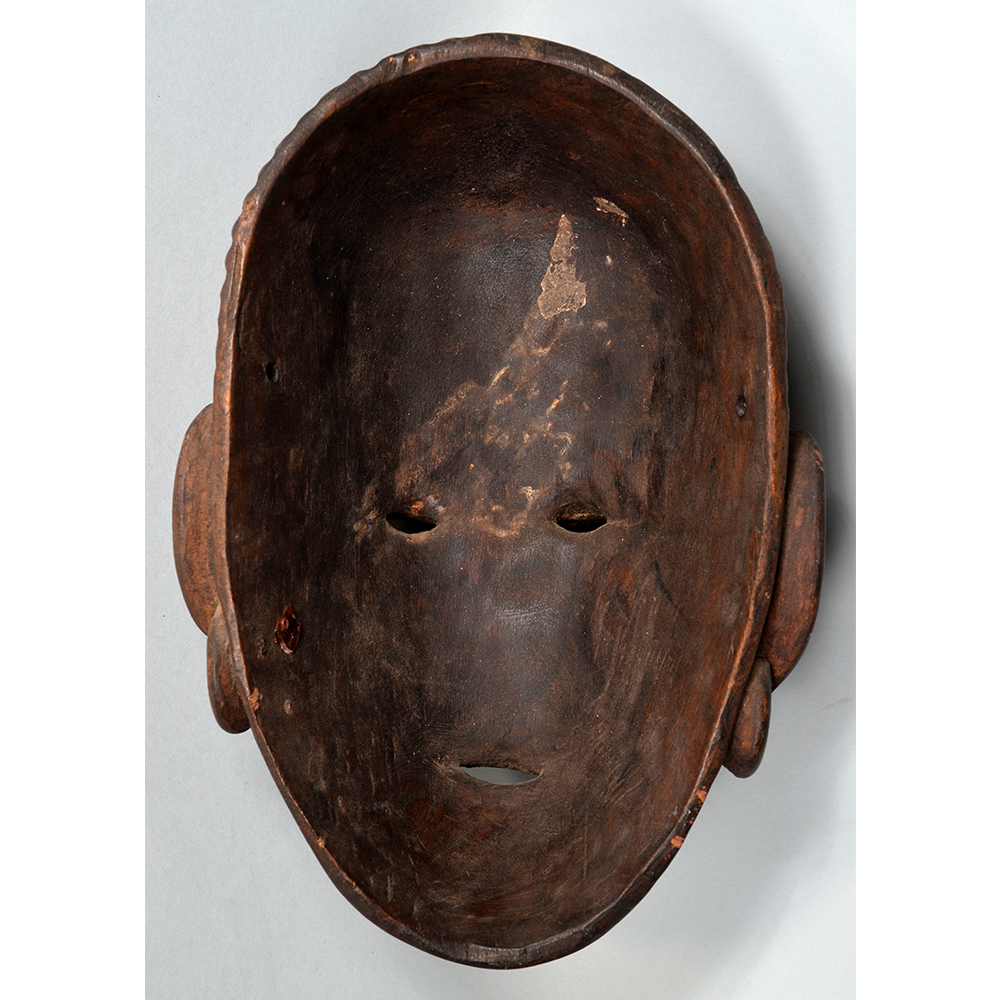
TITLE: Monpa Goddess Mask
TYPE: face mask
GENERAL REGION: Asia
COUNTRY: Bhutan
SUBREGION: Eastern Bhutan
ETHNICITY: Monpa
DESCRIPTION: Hindu Goddess Mask
CATALOG ID: ASBT002
MAKER: Unknown
CEREMONY: Cham Dance
FUNCTION: Celebration; Entertainment
AGE: ca. 1960s
MAIN MATERIAL: wood
OTHER MATERIALS: pigment

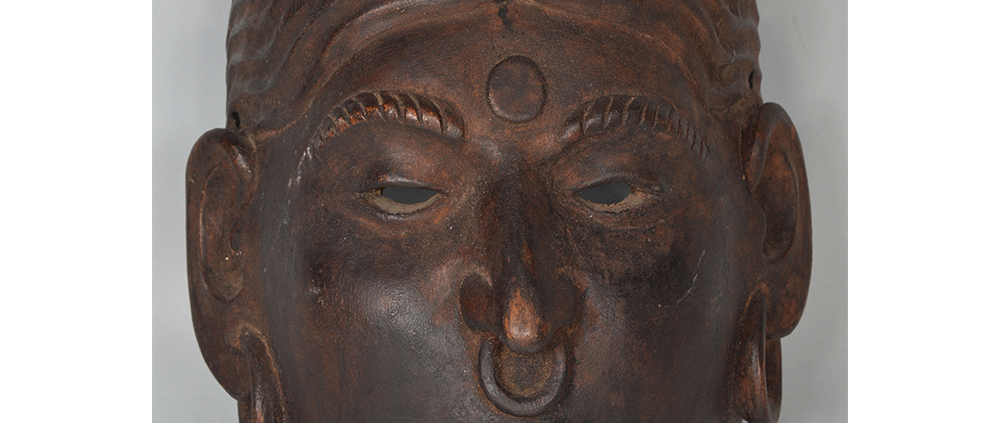
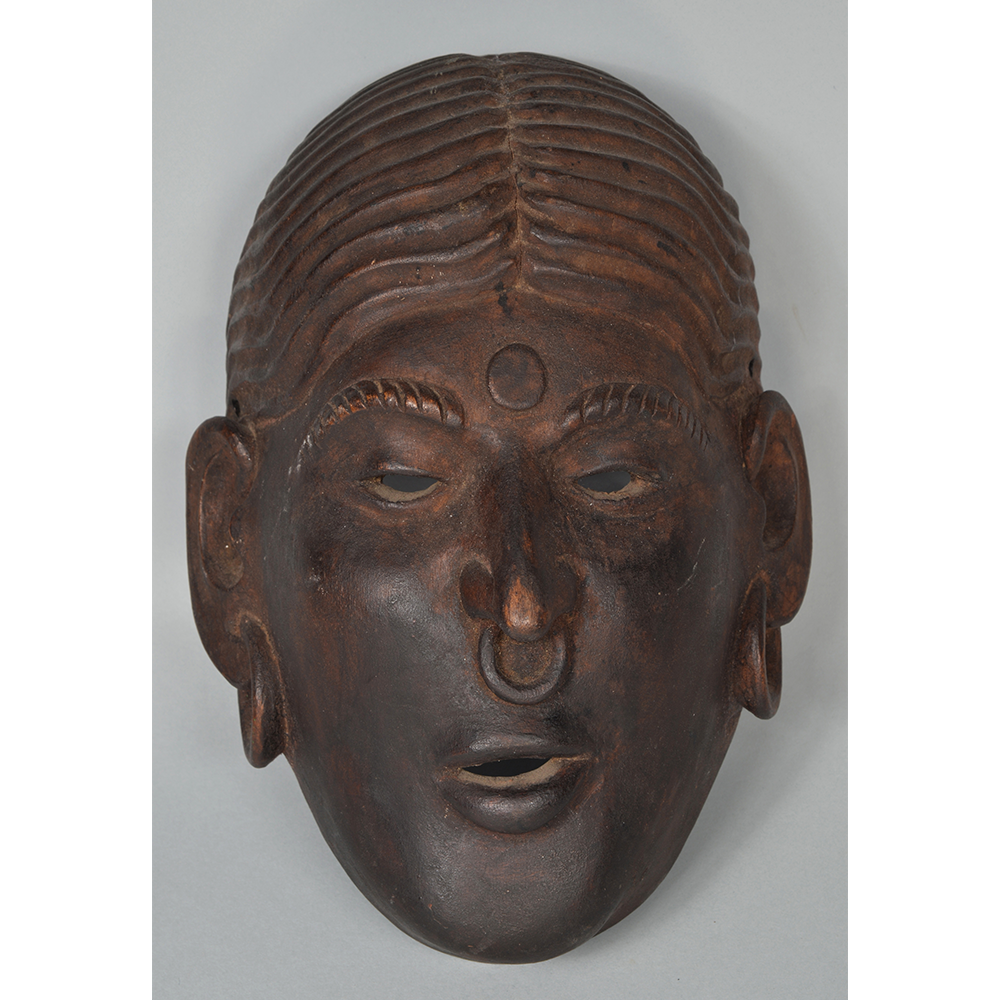
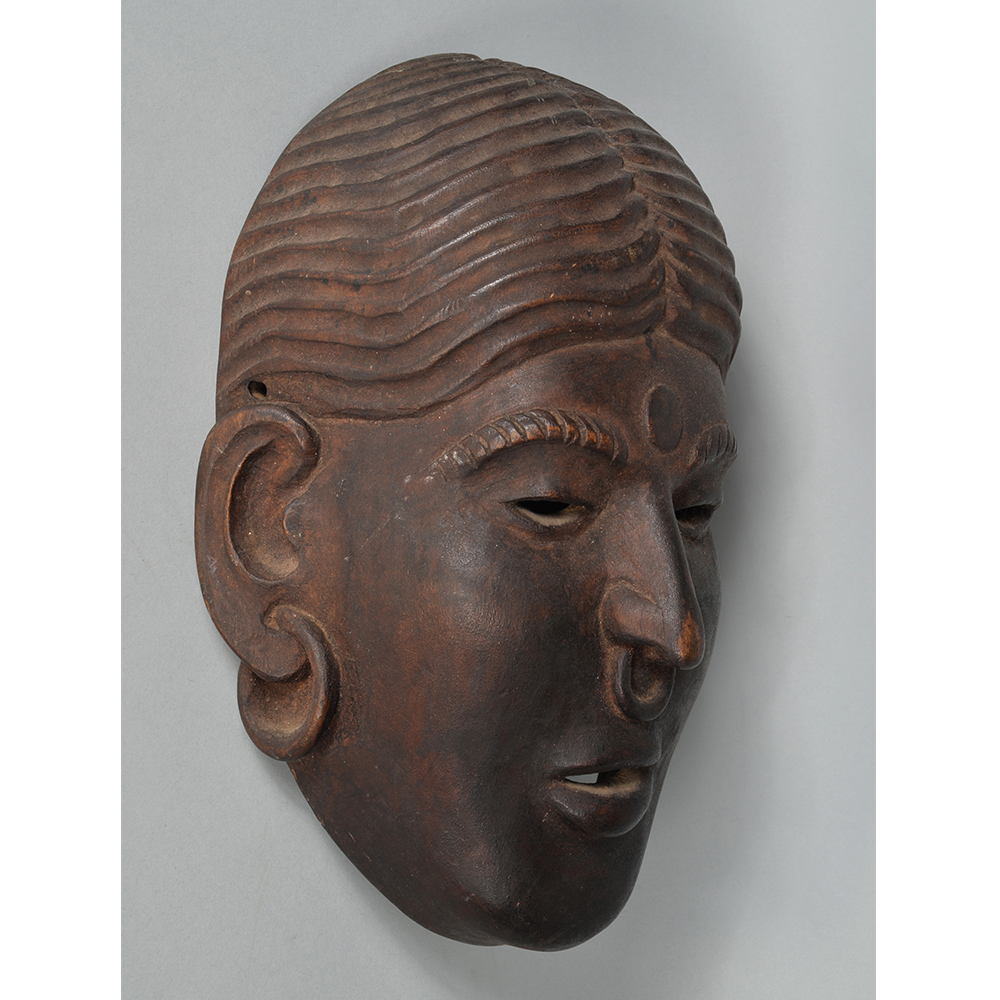
The Monpa people are a small ethnic group, estimated at around 78,000 persons, who inhabit Tibet, the Indian state of Arunachal Pradesh, and Bhutan.  They are a nomadic people who rely heavily on grazing herds for subsistence.  The Monpa are primarily Buddhist, and their masks are typically worn at monastery celebrations known as Cham Dances to bless the sowing of the grain, pray for a bountiful harvest, and entertain the public.  This mask, representing a Hindu goddess, demonstrates the syncretism of Buddhism and Hinduism in the region.

:

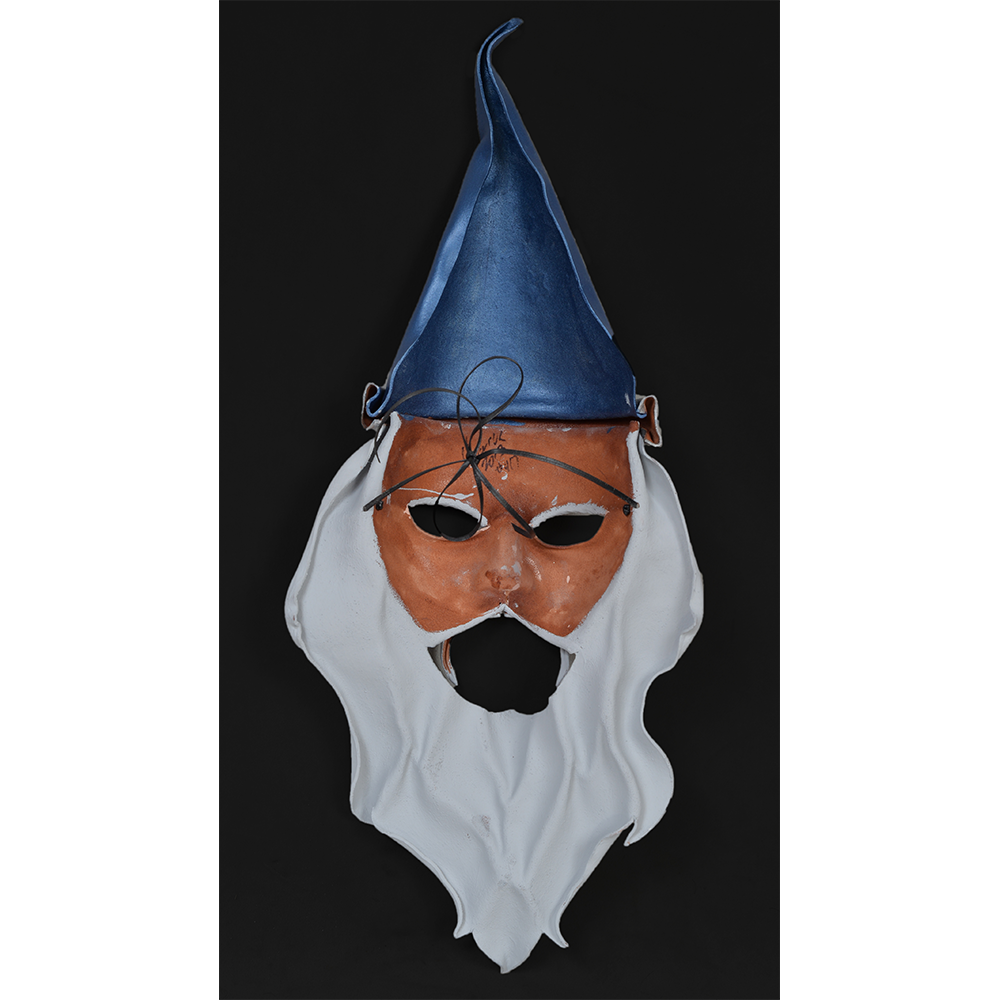
TITLE: Mardi Gras Wizard
TYPE: face mask
GENERAL REGION: North America
COUNTRY: United States of America
SUB-REGION: New Orleans, Louisiana
ETHNICITY: Mixed
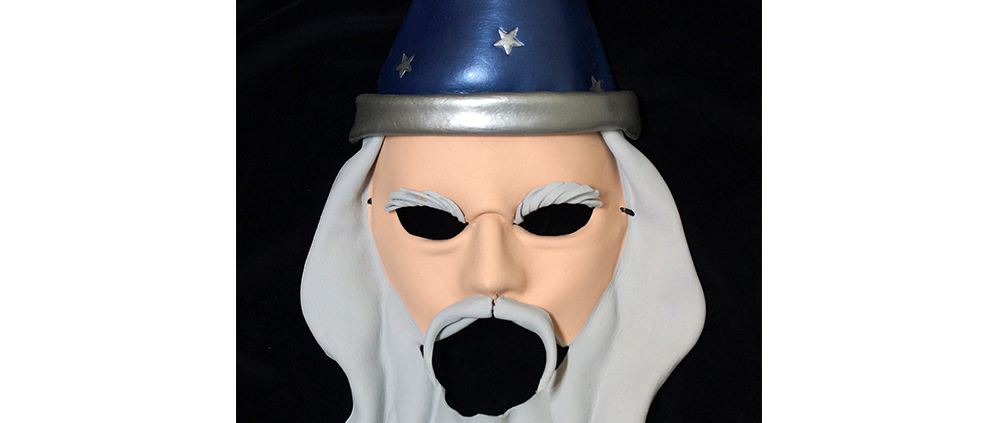
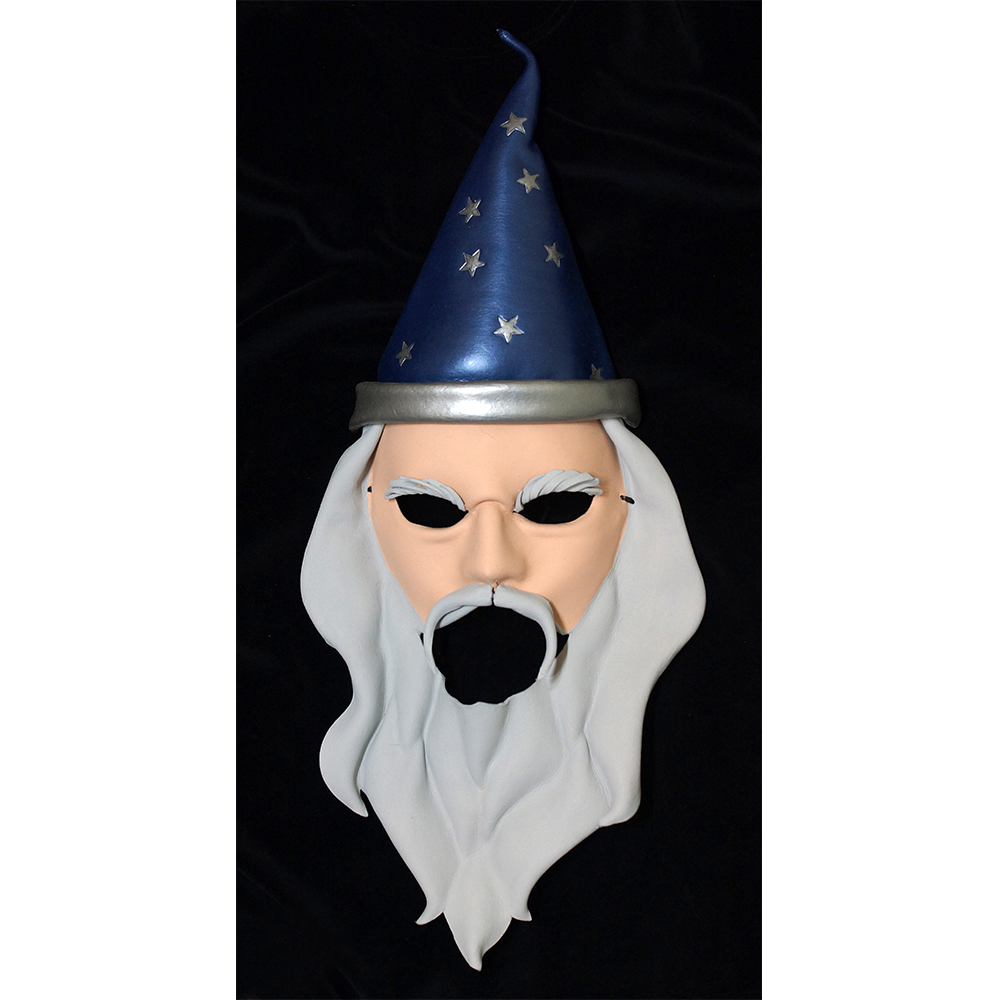
DESCRIPTION: Leather Wizard Mask
CATALOG ID: NAUS072
MAKER: Vincent Alan Ur (Tulsa, Oklahoma, 1966- )
CEREMONY: Mardi Gras
AGE: 2013
MAIN MATERIAL: leather
OTHER MATERIALS: acrylic paint

In Catholic practice, Mardi Gras (“Fat Tuesday”) is the last day of celebration of Carnival before the fasting period of Lent. In the United States, the holiday is nowhere more vigorously celebrated than in New Orleans, Louisiana. There, a two-week Carnival season terminating on Mardi Gras is celebrated with parades composed of elaborate costumes and masks, floats, marching bands, all organize by private “krewes” composed of public-spirited citizens dedicated to preserving the Mardi Gras tradition. Krewes tend to have a fairly constant structure of officers, who frequently ride horseback in handsome costumes and white draped masks, float riders who chuck “throws,” or small gifts such as plastic beaded necklaces, toys, or mementos (usually with the krewe’s name and insignia) into the cheering crowds, and a guest “king” and “queen” of the krewe.

Mardi Gras in New Orleans is also typically celebrated with formal balls held by the krewes in honor of the king and queen, and to celebrate the season.  Mask wearing among street celebrants is common as well. Traditionally, Mardi Gras masks are made of formed and painted leather, and can represent any character from real life or fantasy.  In modern practice, cheap masks mass manufactured of sequined cloth or paper maché covered in dyed feathers have become common.

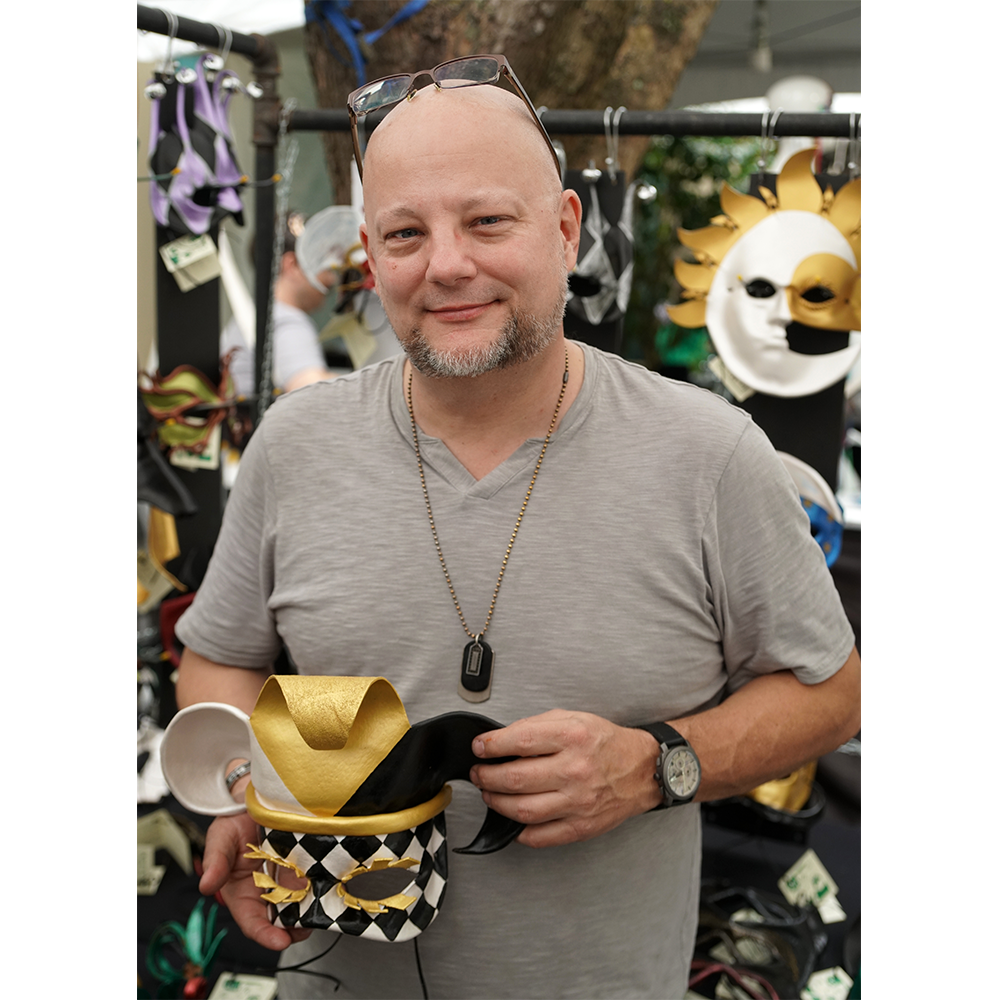
This specific mask was hand made by a skilled artisan from Tulsa, Oklahoma and brought to New Orleans during Mardi Gras to be sold.


Click above to watch a short documentary about Mardi Gras in New Orleans, Louisiana in 2019 and 2020.

:

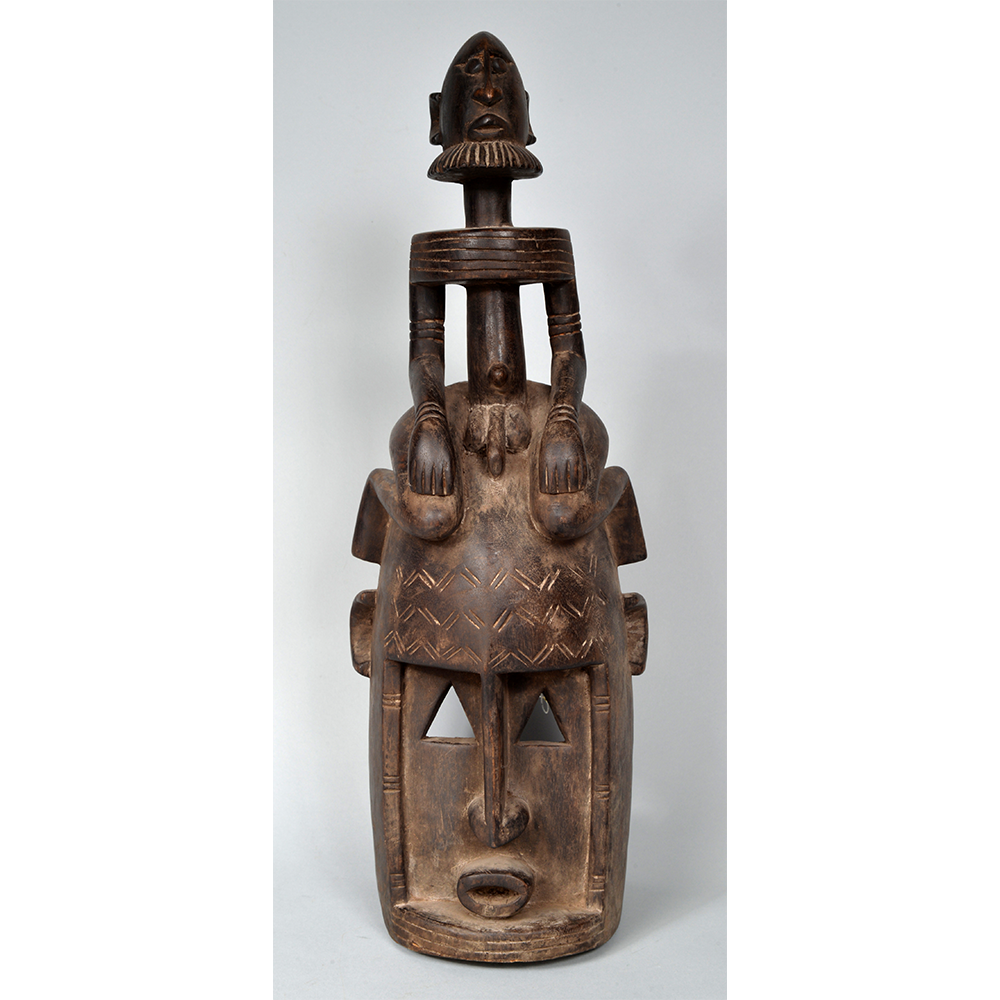
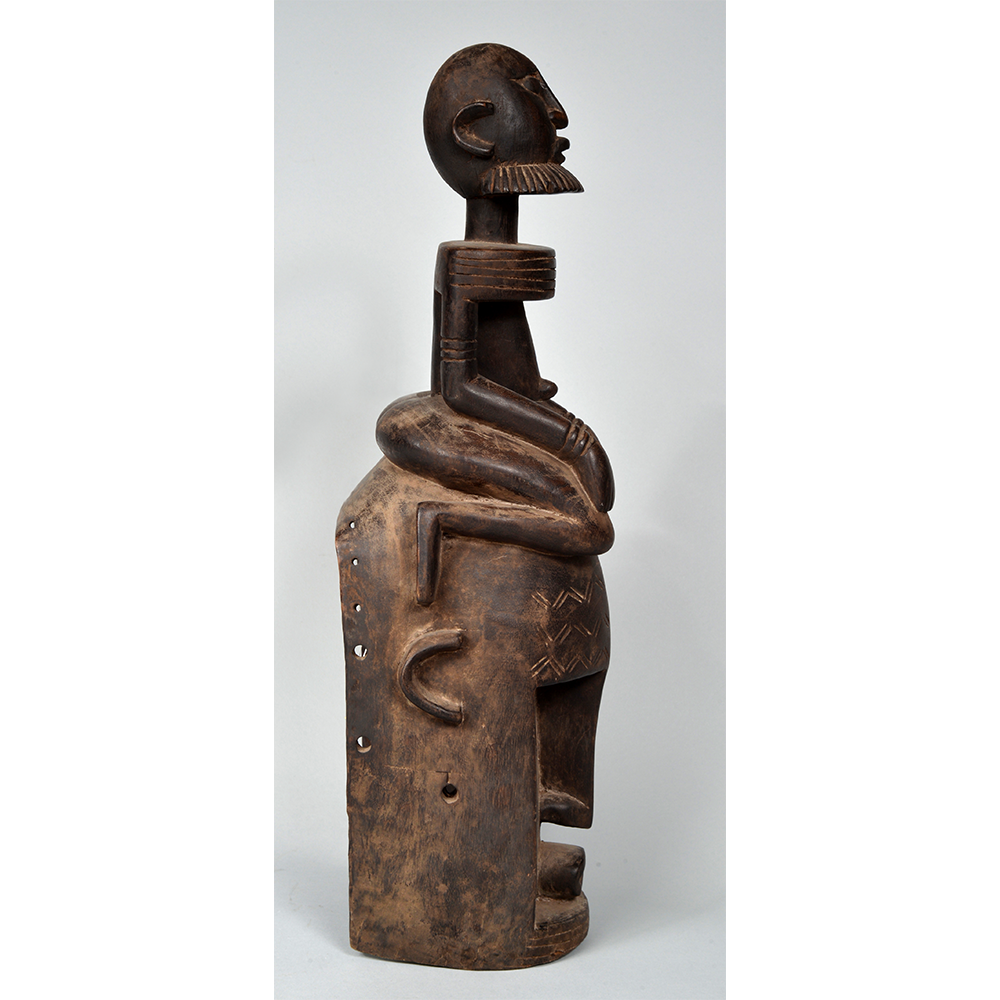
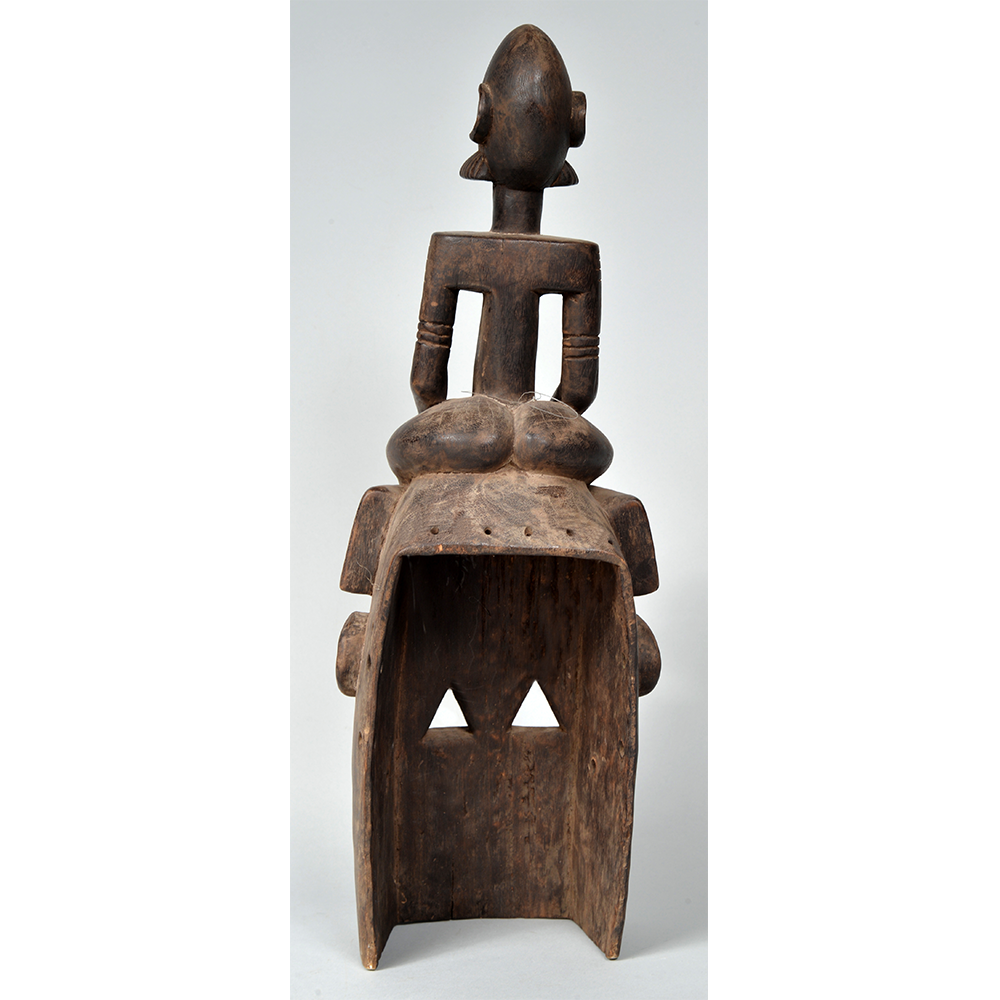
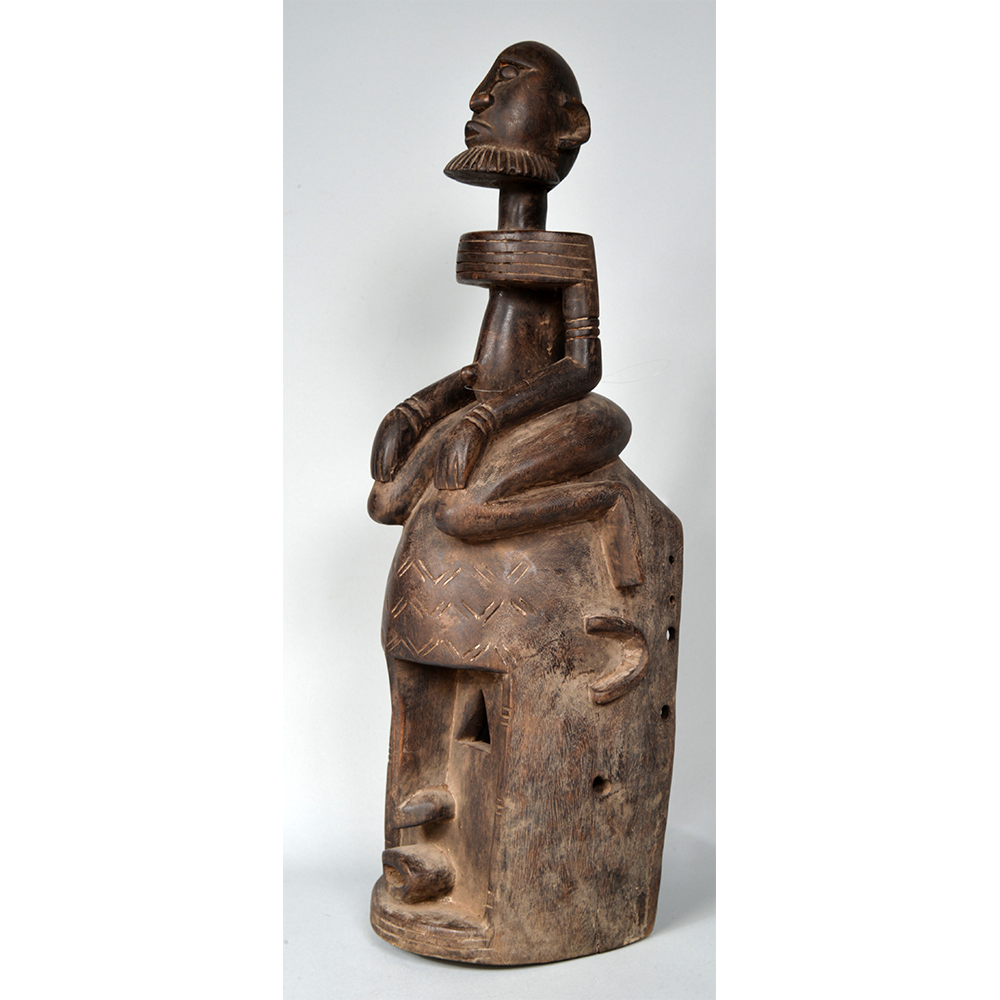
TITLE: Dogon Nommo Mask
TYPE: face mask
GENERAL REGION: Africa
COUNTRY: Mali
ETHNICITY: Dogon
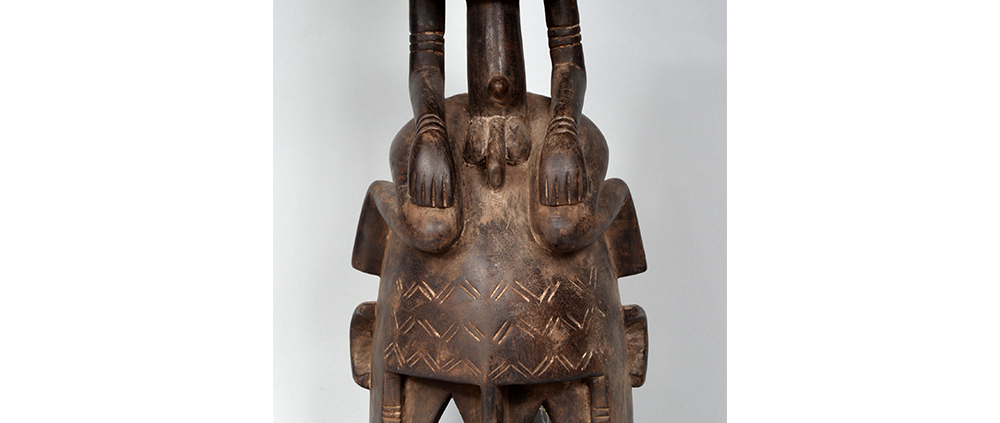
DESCRIPTION: Nommo (circumcision) mask with seated figure on head
CATALOG ID: AFML003
MAKER: Unknown
CEREMONY: Circumcision
FUNCTION: Adult Initiation
AGE: ca. 1970s
MAIN MATERIAL: wood
OTHER MATERIALS: N/A

The Dogon people of Mali use a tremendous variety of masks, most of which center around funeral rites. Traditionally, the Awa Society controlled the use of masks. This nommo mask would have been used in the adult initiation ritual for boys between the ages of 9 and 12, at their circumcision. During the ritual, members of the Awa Society wear masks such as this one, representing important ancestors.

:

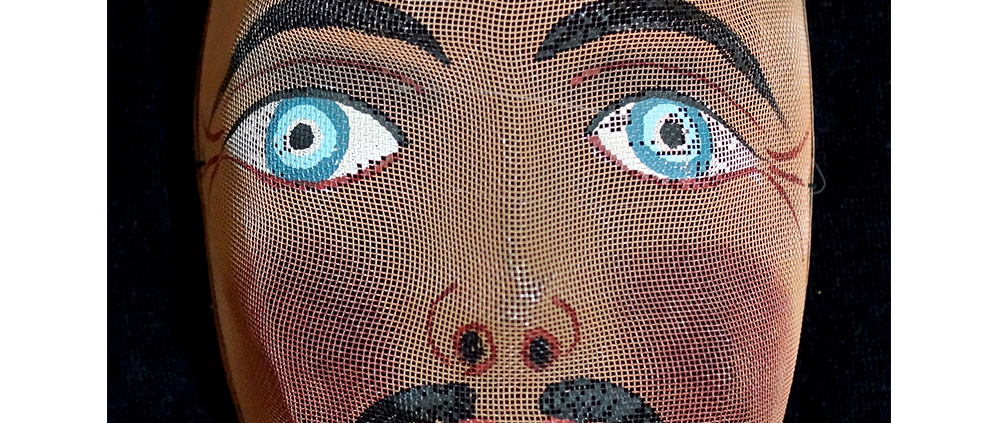
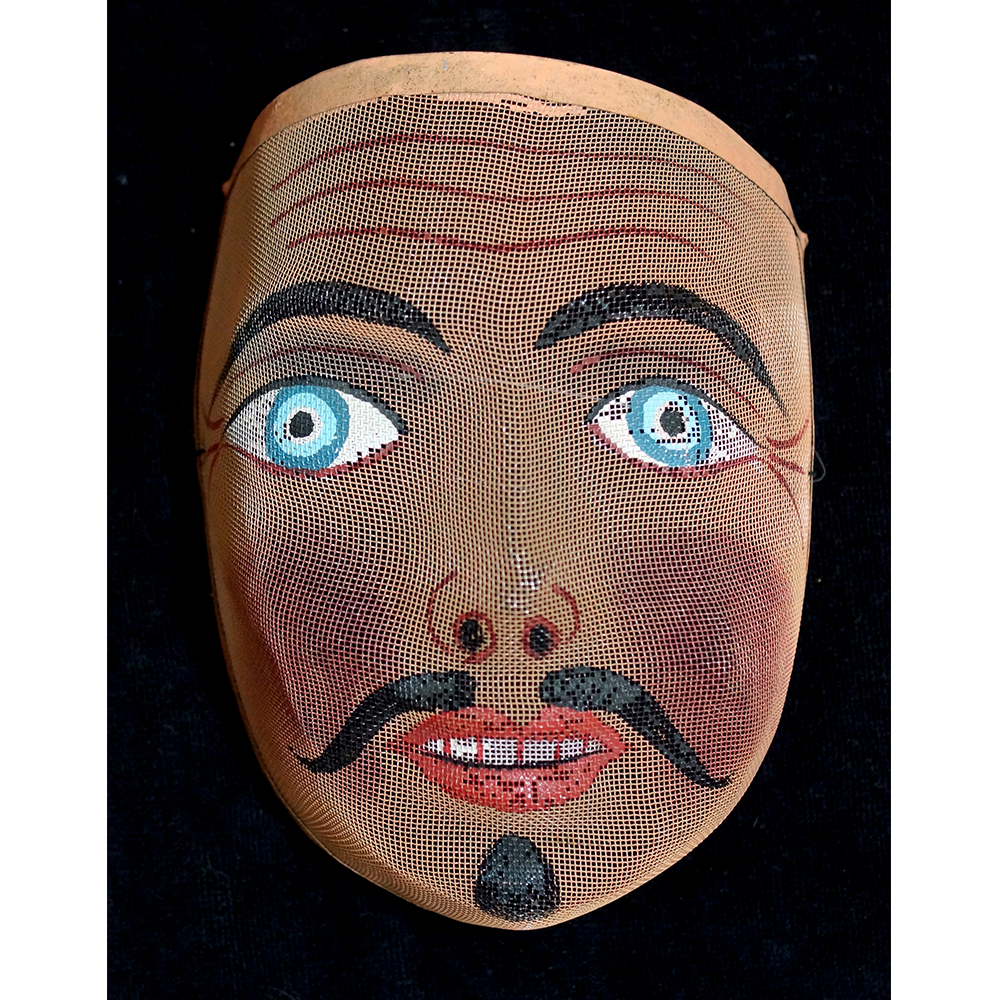
TITLE: K’achampa Mask
TYPE: face mask
GENERAL REGION: Latin America
COUNTRY: Peru
SUBREGION: Cusco
ETHNICITY: Quechua
DESCRIPTION: K’achampa Mask
CATALOG ID: LAPE007
MAKER: Unknown
CEREMONY: K’achampa Dance
AGE: 1980s
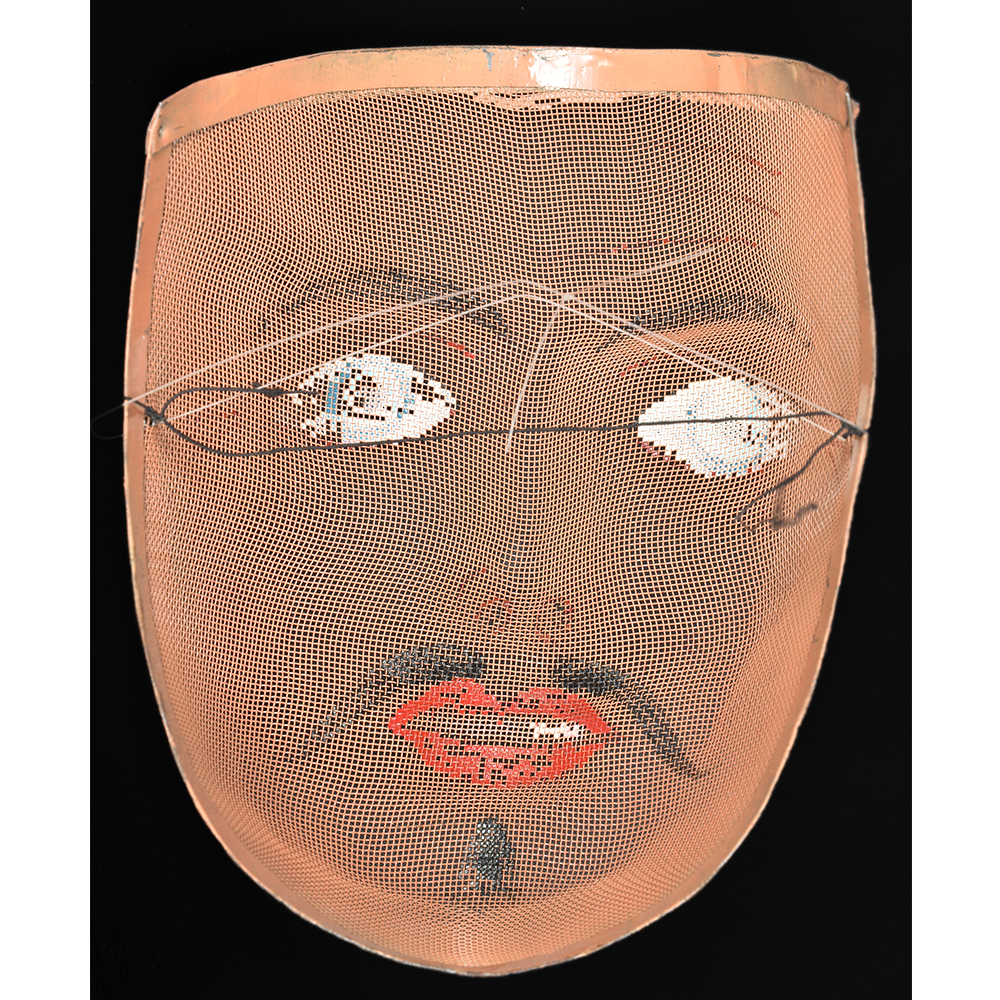
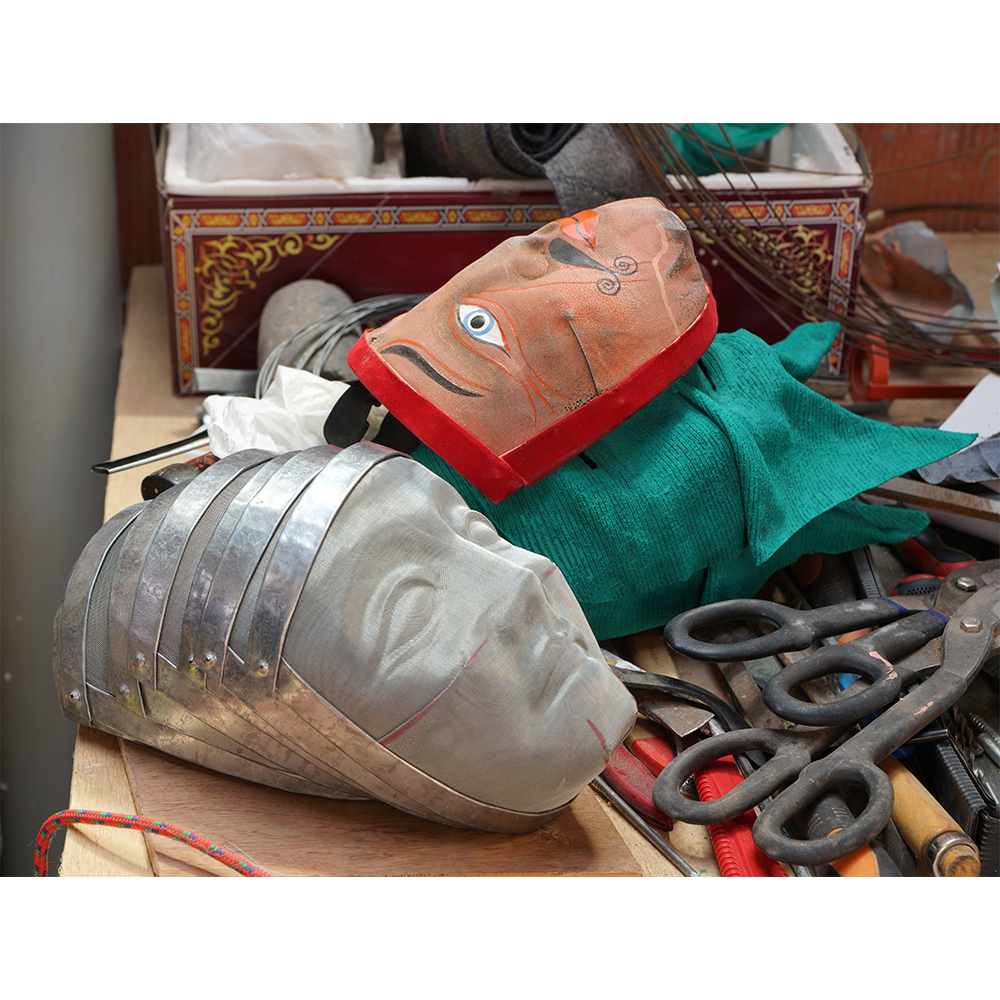
MAIN MATERIAL: wire mesh
OTHER MATERIALS: paint; steel strips

The k’achampa dance is performed throughout the central mountains of Peru to the accompaniment of martial music. The characters include a leader (caporal), soldiers, and children. The dance is performed for different purposes in different parts of Peru. In Cusco, it is performed during Corpus Christi.  In Paucartambo, it is usually part of the Fiesta de la Virgen de Carmen in mid-July. In Ollantaytambo, it is performed at the Feast of the Pentecost on January 6. In all cases, the mask is worn with a costume consisting of an elaborately decorated flat-topped hat or ch’ullu (traditional Andean wool hat with earflaps), a vest with mirrors and bells, a white shirt, black tie, white gloves, black shorts, and vest and dress coat. The masqueraders may also carry a slingshot. The dance is thought to be Incan in origin and to relate to war rituals.


Click above to watch a short documentary on Corpus Christi in Cusco, Peru.

:

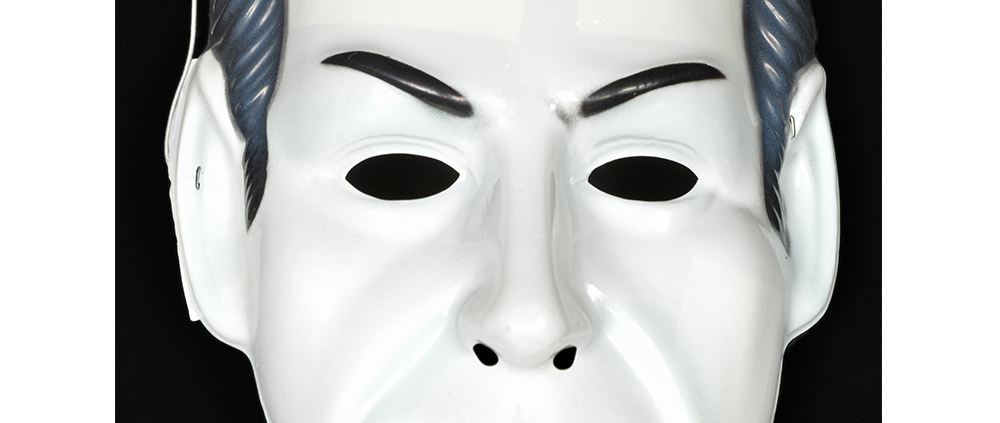
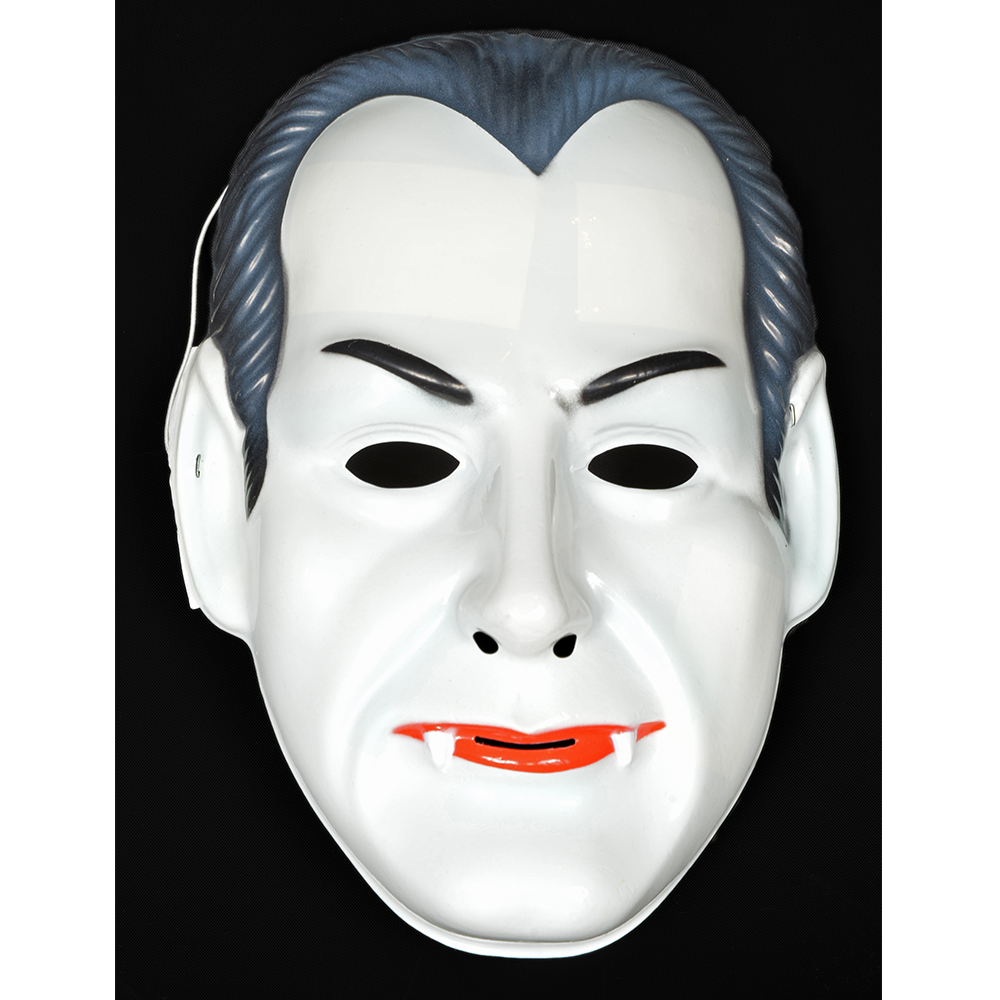
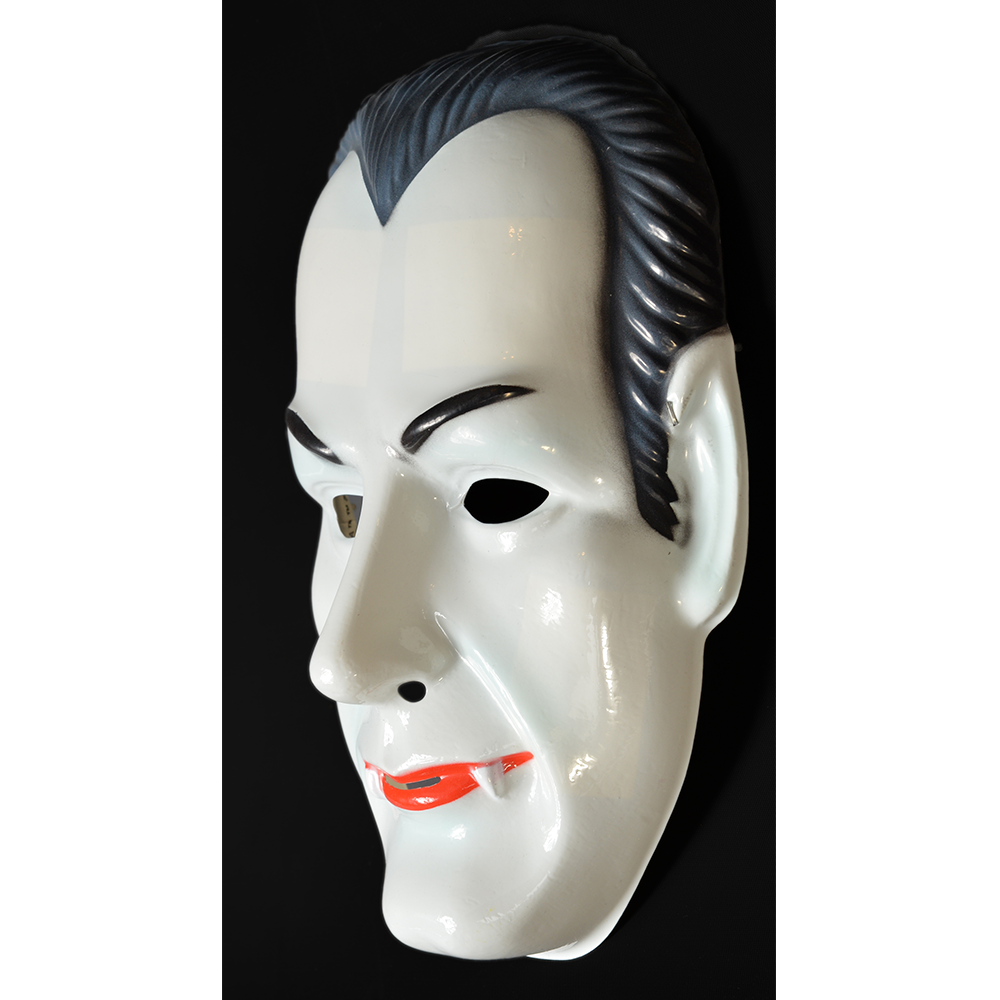
TITLE: Halloween Dracula Mask
TYPE: face mask
GENERAL REGION: North America
COUNTRY: United States of America
SUBREGION: Northeast
ETHNICITY: Mixed
DESCRIPTION: Don Post Dracula (Vampire) Mask
CATALOG ID: NAUS073
MAKER: Rubie’s Costume Co., New York City
CEREMONY: Halloween
AGE: 1991
MAIN MATERIAL: styrene plastic
OTHER MATERIALS: paint; steel staples; elastic band

Halloween is one of the major secular festivals in the United States, celebrated on October 31st each year.  It originated in pre-Christian times, possibly among the ancient Celts, who practiced Samhain in late fall by wearing frightening costumes and lighting bonfires in mid-autumn to scare away ghosts. In the eighth century, Pope Gregory III declared November 1st as a day to honor all the saints collectively. The celebration prior to this All Saints Day became known as All Hallows’ Eve (hence the shortened name, All Hallowe’en, eventually elided to Halloween), and involved many of the same traditions practiced by the Celts.

Halloween formerly had many traditions that varied by region.  In modern and relatively homogenized practice, Halloween generally has three main components: costumed parties, “trick-or-treating,” and haunted houses.  Costumed parties are the modern descendant of social activities designed to honor the saints and create solidarity in the community. Children’s parties typically involved games with prizes, such as bobbing for apples and carving pumpkins and other relatively dry squash into frightening “jack-o-lanterns” with candles inside for illumination.  Adult parties commonly involve less innocent games and elaborate decorations to create a scary mood.

Trick-or-treating is the children’s practice of wearing scary costumes to extort candy and other sweets from neighbors. Like roaming goblins, the monsters visiting the house would demand a treat or threaten to play a nasty trick on the neighbor. The threat is of course a formality, as sharing candy with trick-or-treaters is considered a mandatory practice for friendly and community-spirited neighbors. In modern practice, many children have abandoned the tradition of wearing frightening costumes and have leaned toward fantasy characters such as superheroes, princesses, and fairies.

Haunted houses are a relatively modern innovation.  They may be designed and staffed by volunteers or for profit, and generally take the form of a decrepit mansion haunted by ghosts, mad scientists, monsters, the walking dead, etc. The idea is to inspire terror and wonder in a factually safe environment.

In addition, many Americans celebrate by watching horror movies (the release of which Hollywood times to coincide with the Halloween season), and in some regions, most notably Greenwich Village, Manhattan in New York and Salem, Massachusetts, major costumed parades are organized each year.  In many cities, “zombie walks” composed of masses of costumed zombies have been organized as well.

Popular masks and costumes include devils, zombies, skeletons, vampires, werewolves, mummies, witches, pirates, political figures, and characters from popular culture, such as Frankenstein’s monster. However, Halloween costumes can include almost anything, including inanimate objects and abstractions.  The choice is limited only by the imagination of the masquerader.  Masks and costumes depicting offensive racial stereotypes, popular prior to the 1980s, are no longer widely used.

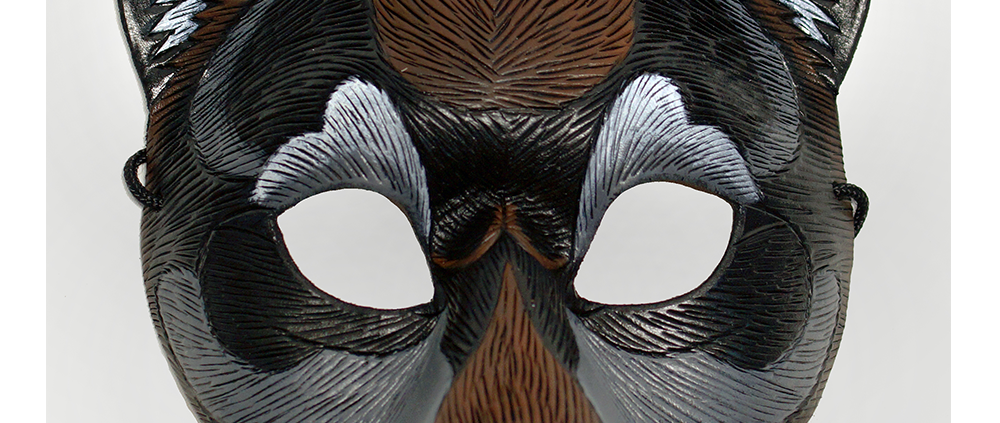
This specific mask was mass produced by a process known as vacuform molding. Sheets of heated styrene plastic are placed over a three-dimensional mold and a vacuum sucks out the air, forming the plastic to the mold. The mask is then cut out, machine painted, and an elastic band is stapled to the mask. The process is exceedingly fast and inexpensive, making the mask very popular with the overwhelming majority of Americans from the late 1950s to today.

For more on 20th century American Halloween costumes, see Phyllis Galembo, Dressed for Thrills: 100 Years of Halloween Costumes and Masquerade (New York: Harry N. Abrams Inc., 2002).
Click above to watch a documentary on Halloween in the United States.
:

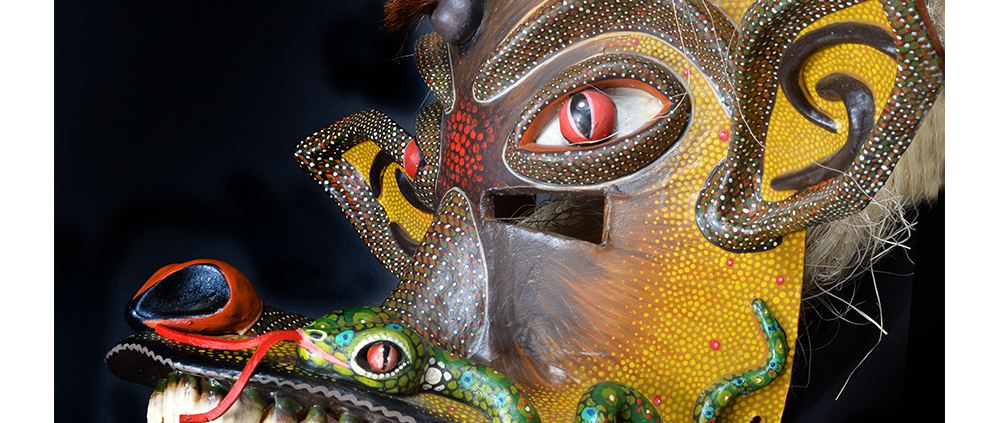
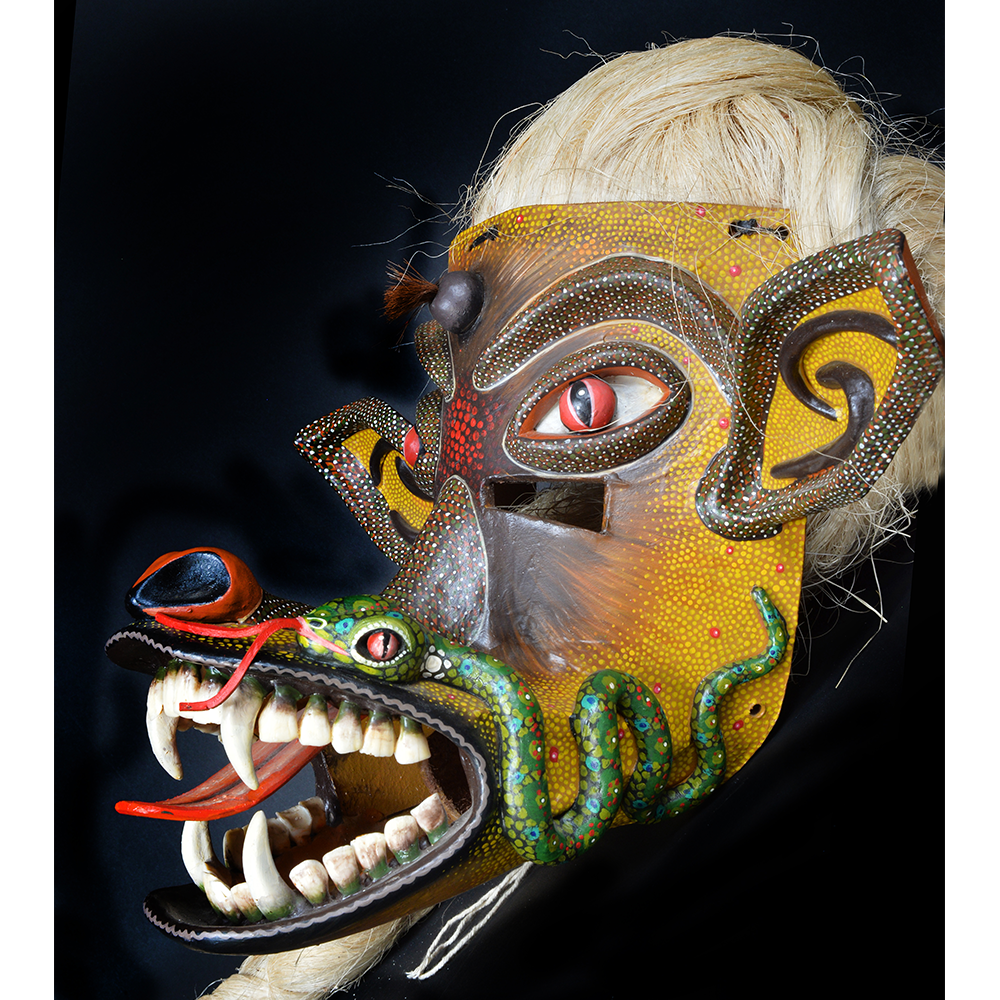
TITLE: Tastoan Perro Mask
TYPE: face mask
GENERAL REGION: Latin America
COUNTRY: Mexico
SUBREGION: Jalisco
ETHNICITY: Nahua
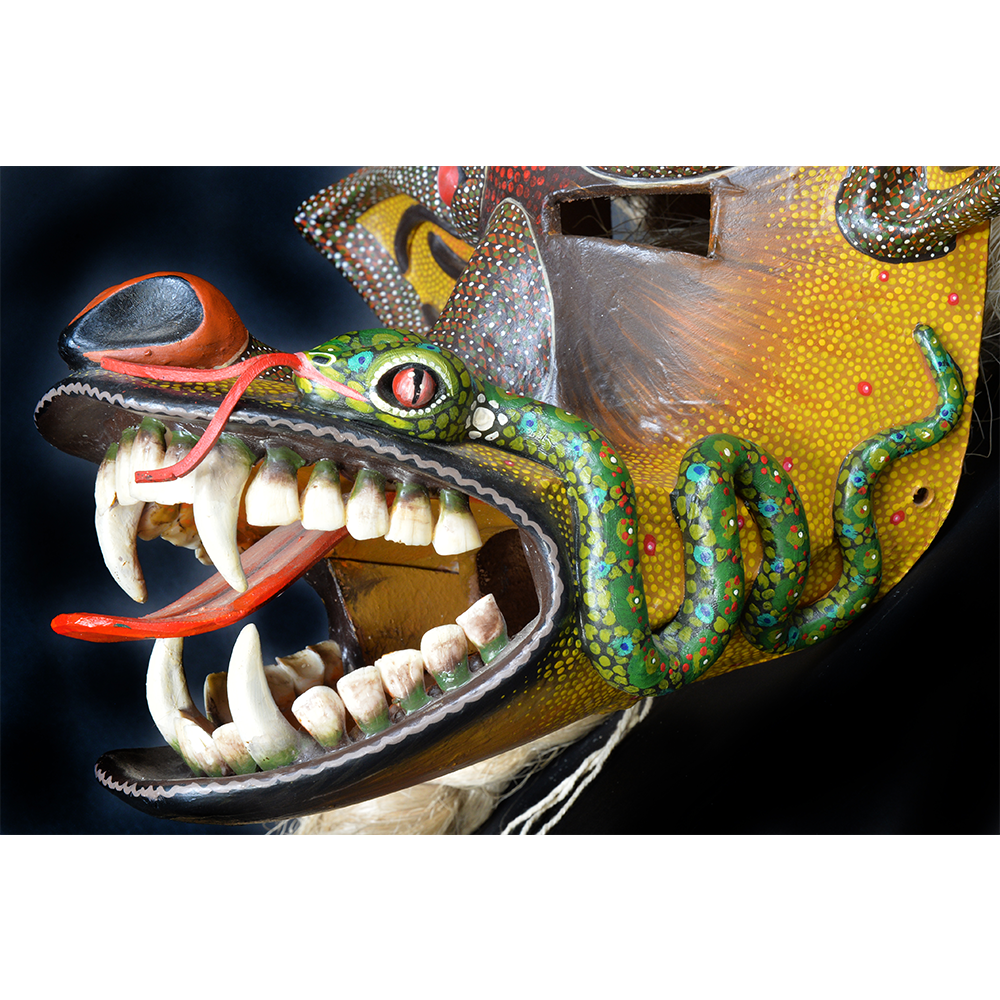
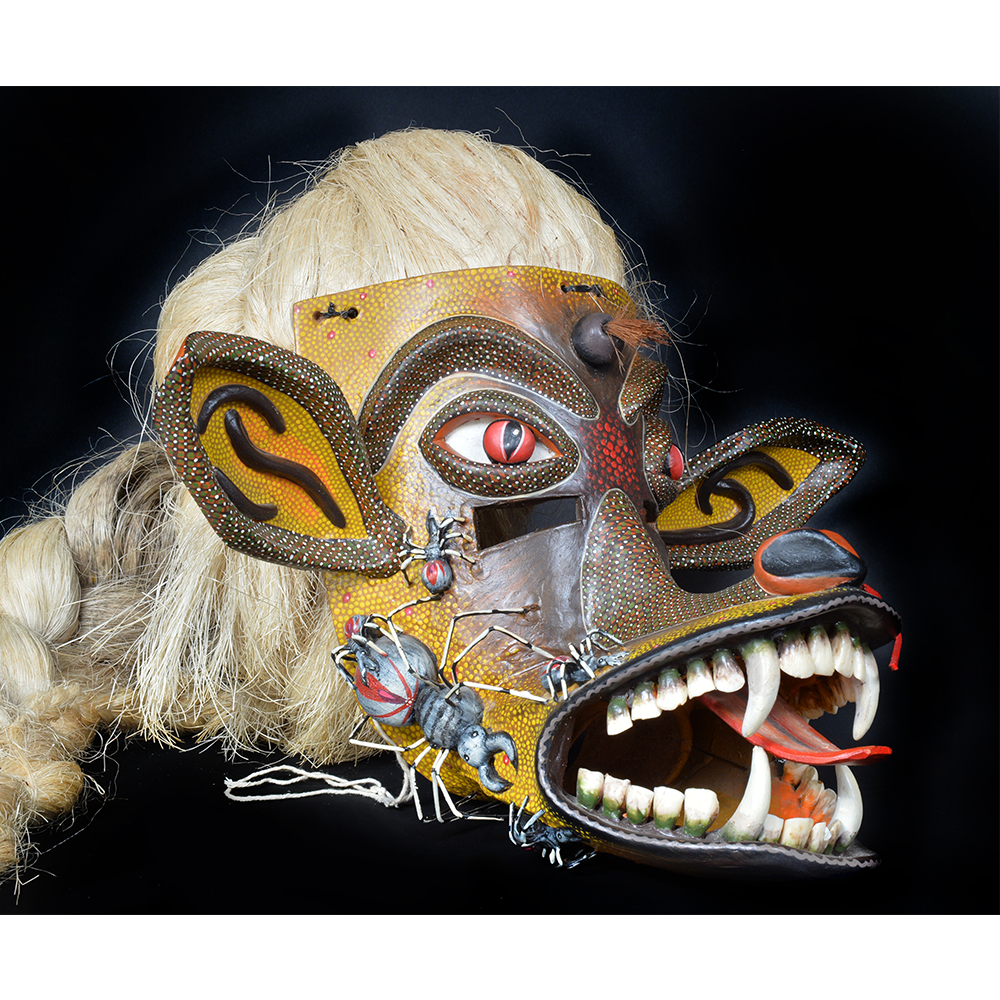
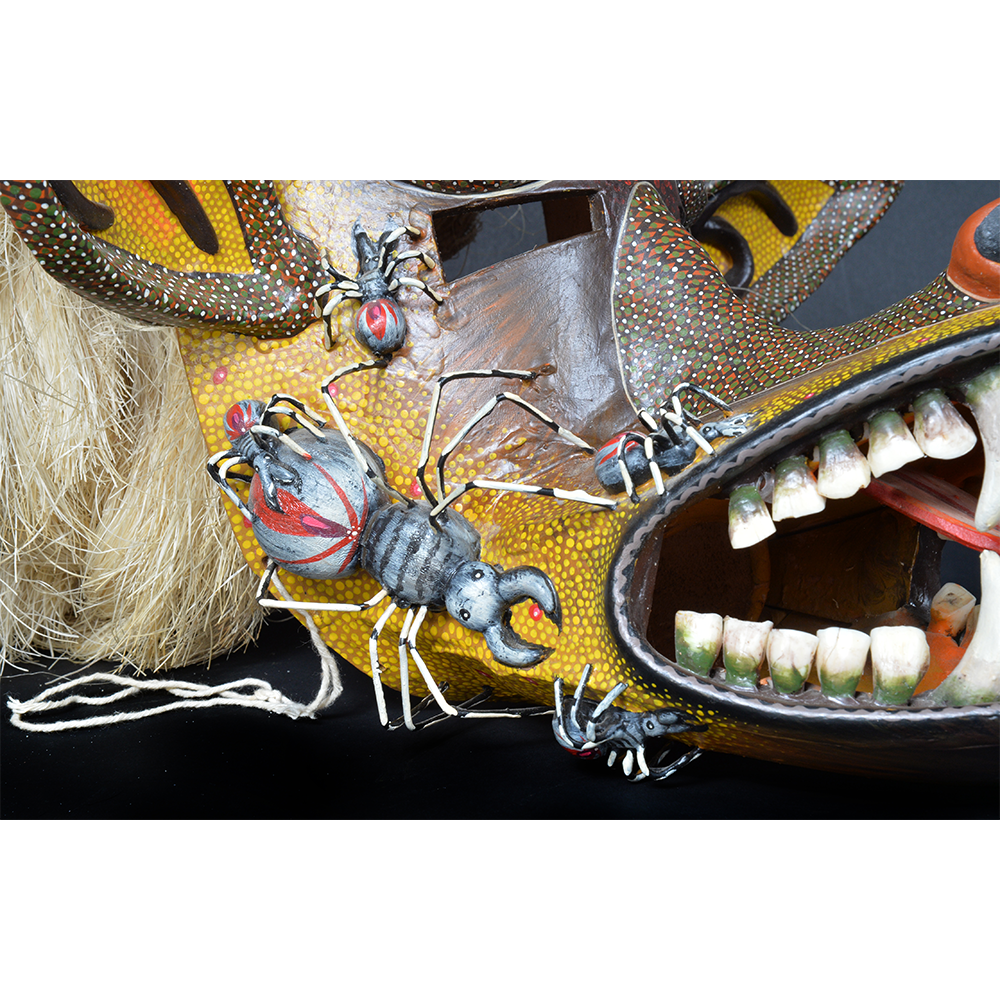
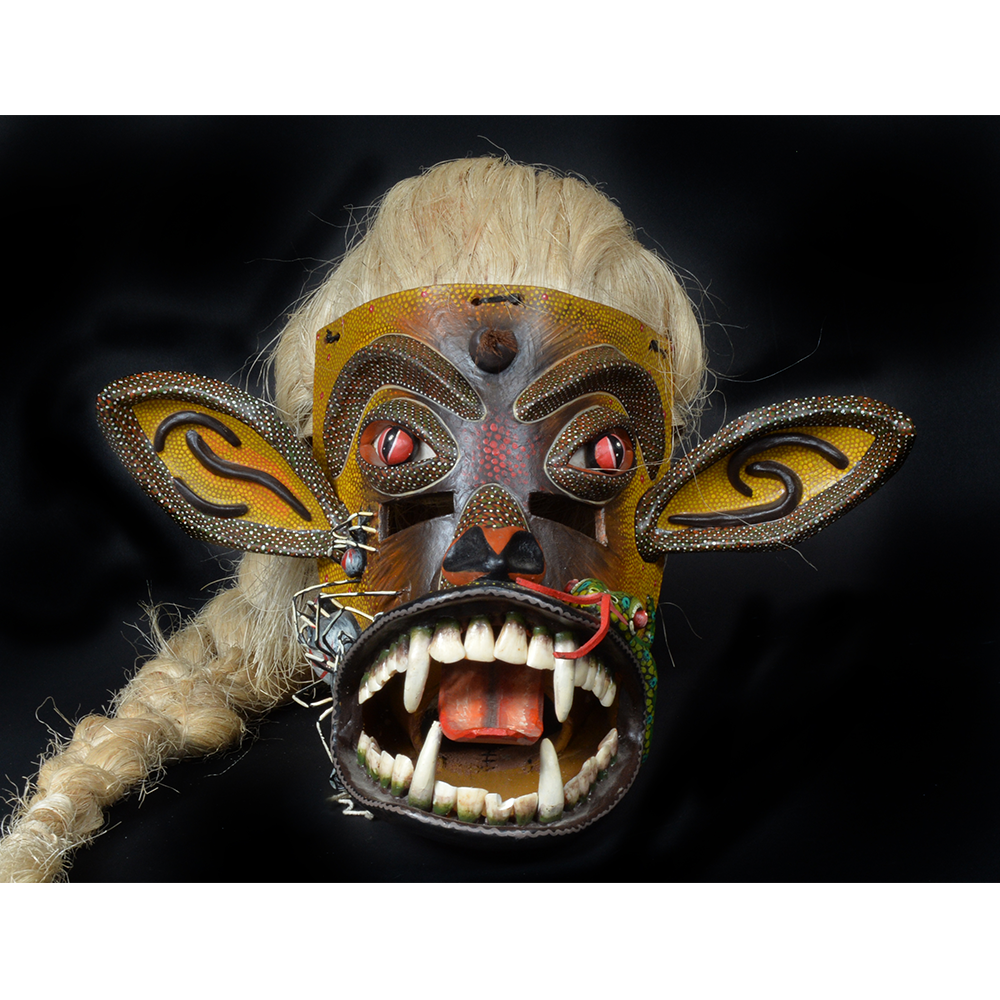
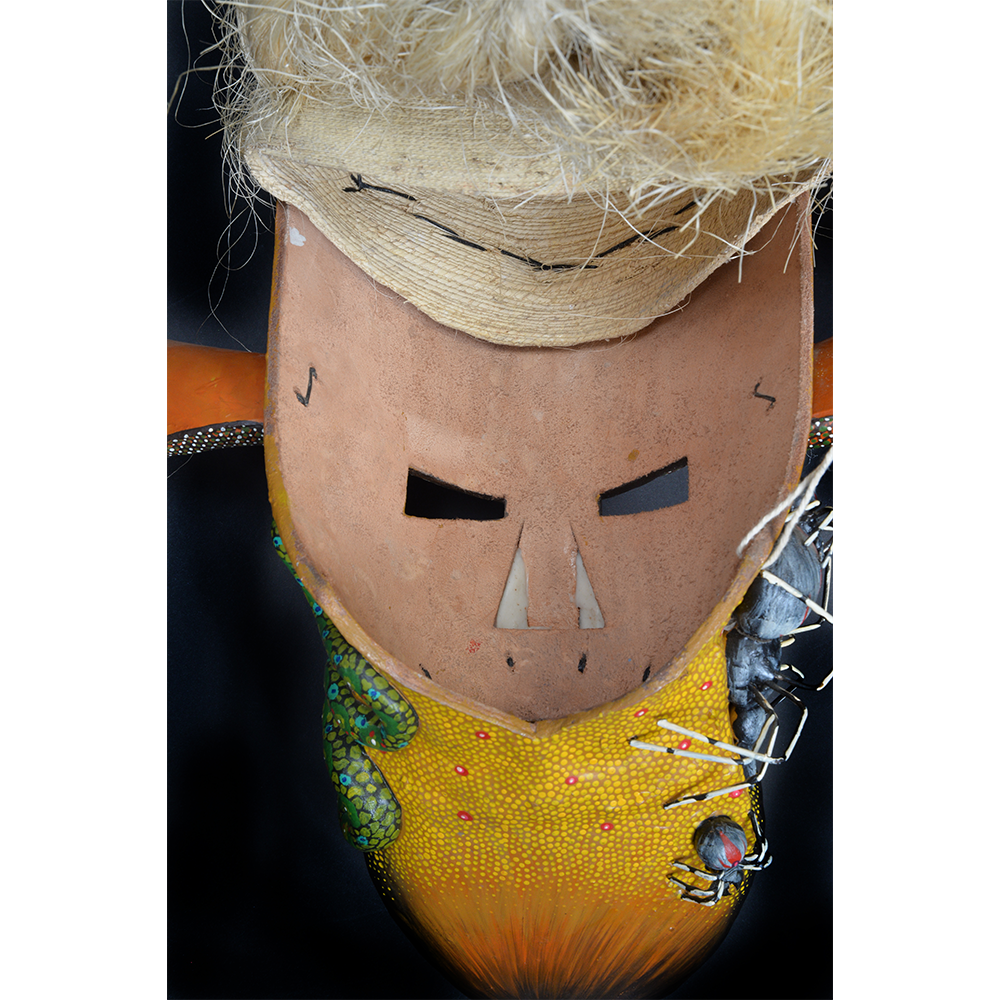
DESCRIPTION: Perra (female dog) mask for the Tastoanes dance
CATALOG ID: LAMX045
MAKER: Ubaldo Macías Bernabe (Tonalá, 1972- )
CEREMONY: Fiesta de Santiago el Apostól
AGE: 2017
MAIN MATERIAL: leather
OTHER MATERIALS: acrylic paint; lacquer; glue paste; wire; thread; elastic bands; goat hair; ixtle fiber

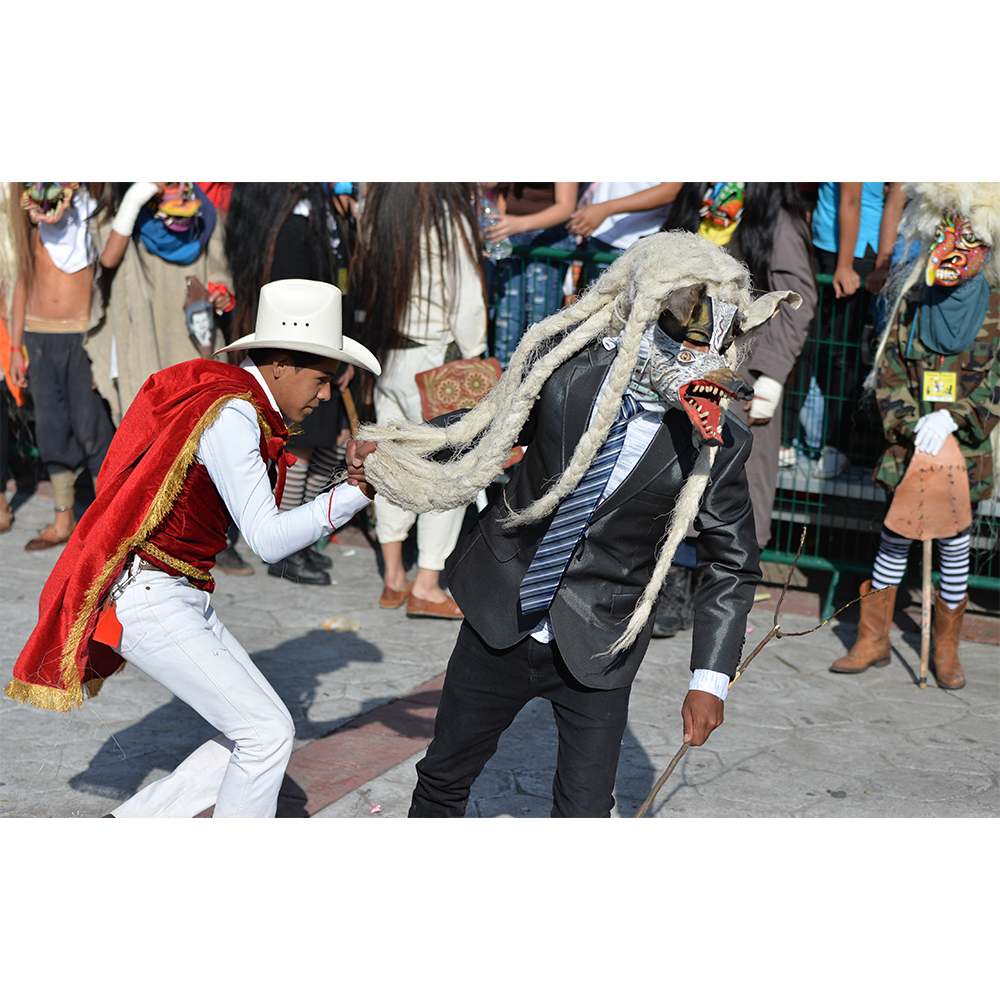
In parts of Jalisco and Zacatecas, the holiday in honor of Santiago el Apostól (St. James the Apostle) is held every 25th of July. Celebrants carry spears and dress in long pants, leather chaps, and boots, with demonic masks made of wood (Zacatecas) or molded leather (Jalisco) covered with a montera (headdress) of goat hair, horse hair, or plant fiber. The festival commemorates a battle between the indigenous warriors of the area and conquistadors. The appearance of the tastoanes, who represent indigenous warriors, conveys their ferocity through sharp teeth, large noses, and snakes, lizards, scorpions and spiders for decorations.

During the celebration, tastoanes and either three kings wearing ceramic masks or three Aztec priestesses (one representing the Tonaltec queen Tzapotzintli, also known as Tzuapili or Cihualpilli) carry an image of St. James along a parade route and dance to music carrying swords or whips, after which they make defiant speeches and engage in a mock battle (jugada) with a participant carrying a whip who represents St. James. At the beginning of the battle, the tastoanes carry in St. James as a prisoner and torture him, but he is rescued by his dog (perro), which this mask represents. The dog drives away the tastoanes with a stick and assists St. James, afterward supplying him with new sticks as he breaks them on the bodies of tastoanes. In most performances, the dog dies in the course of the battle. Nonetheless, at the end, all the tastoanes die and St. James is victorious. In some towns, an organization such as a Cofradía de Santo Santiago (Fraternity of St. James) organizes the event.

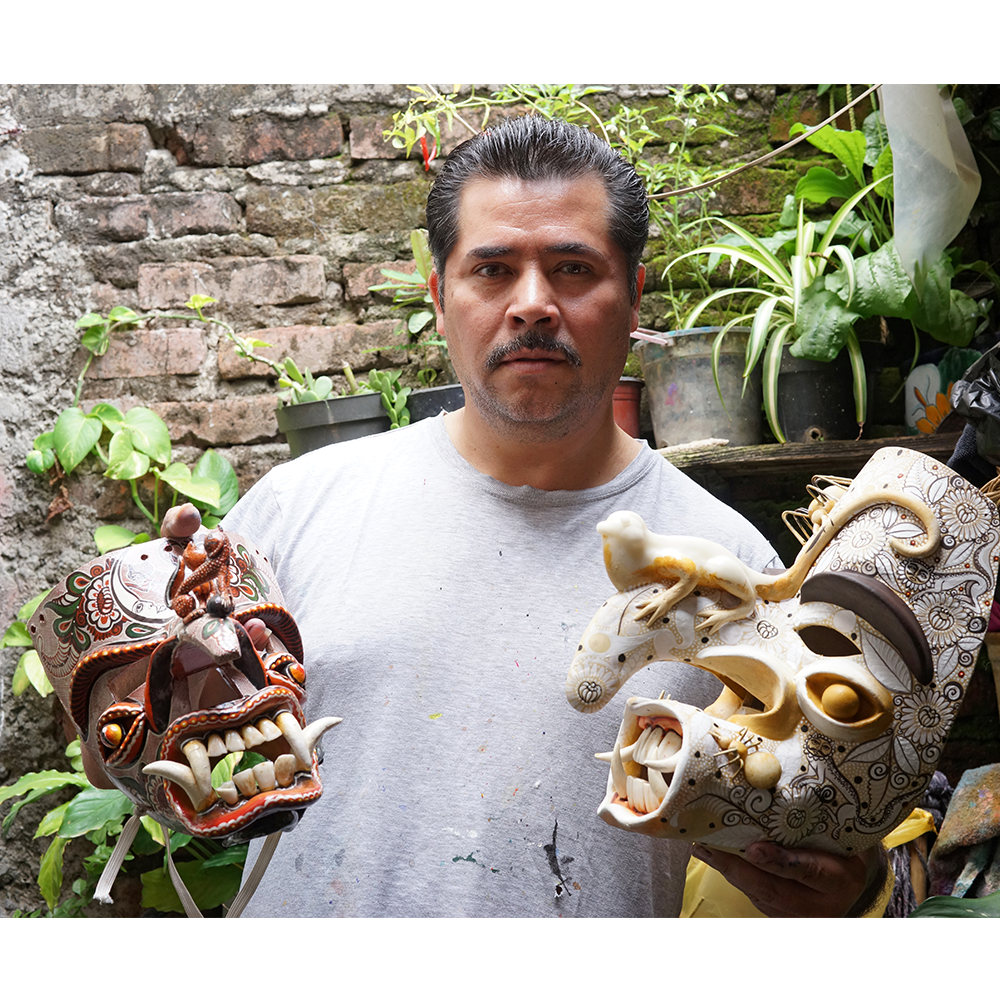
This specific mask was made by the award-winning craftsman Ubaldo Macías of Tonalá.

Click above to watch a short documentary about the tastoanes of Tonalá, Mexico.

: