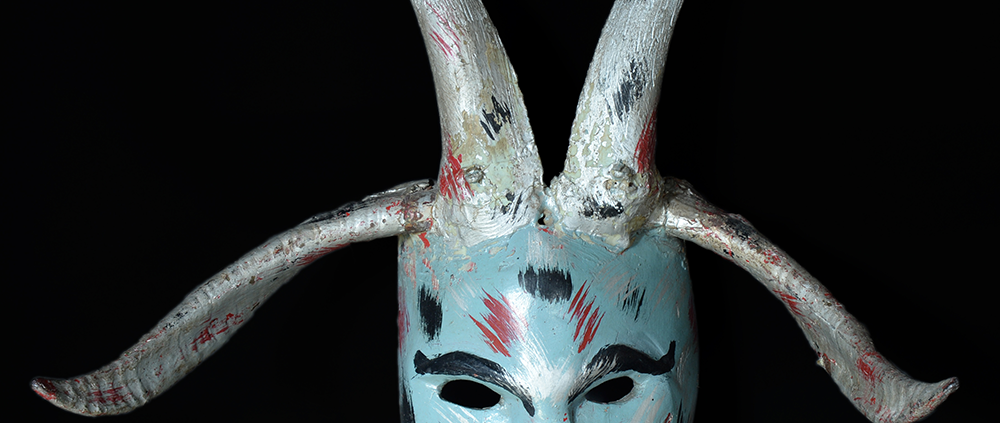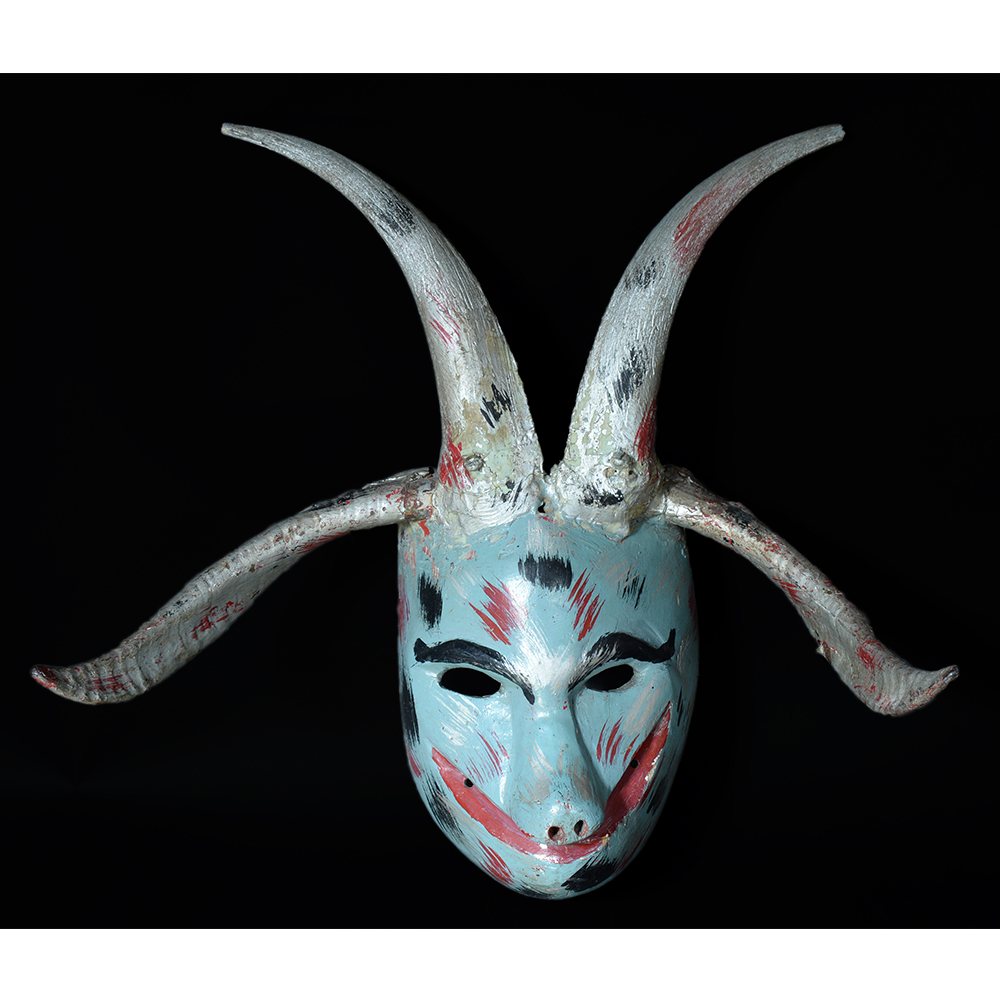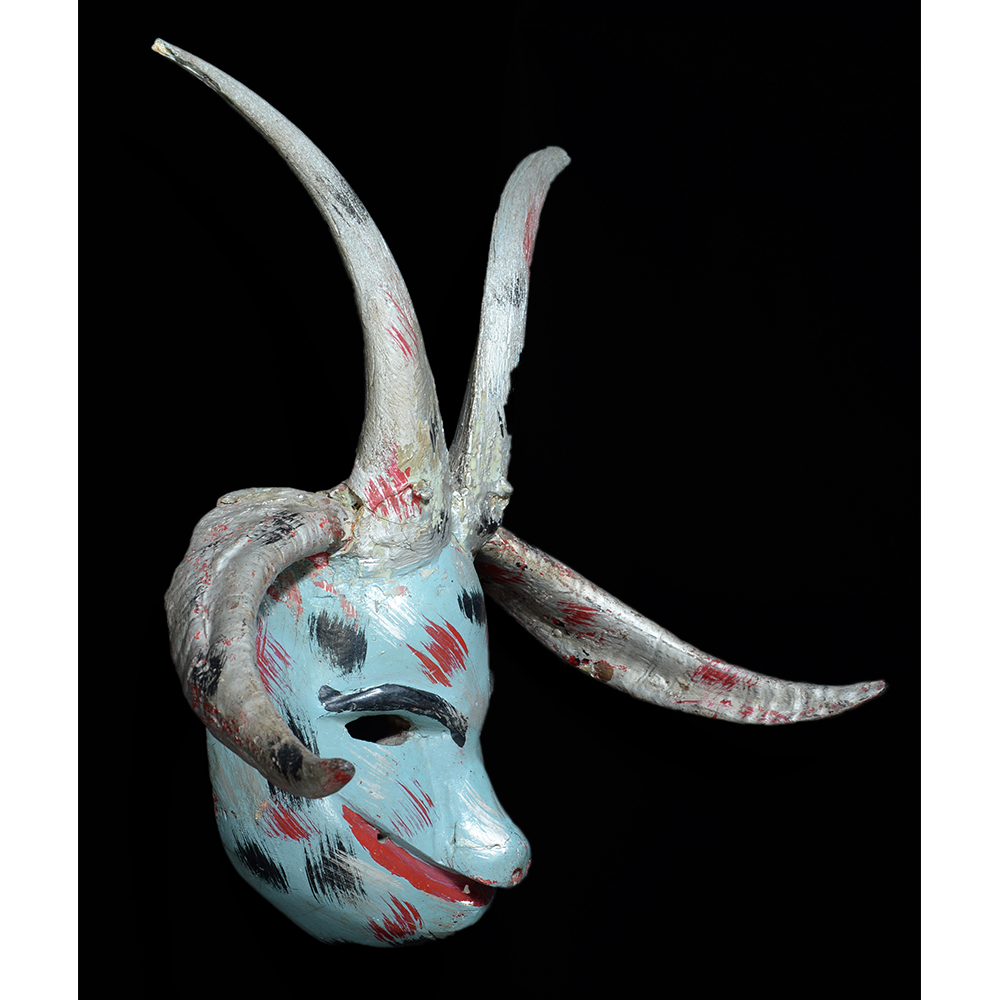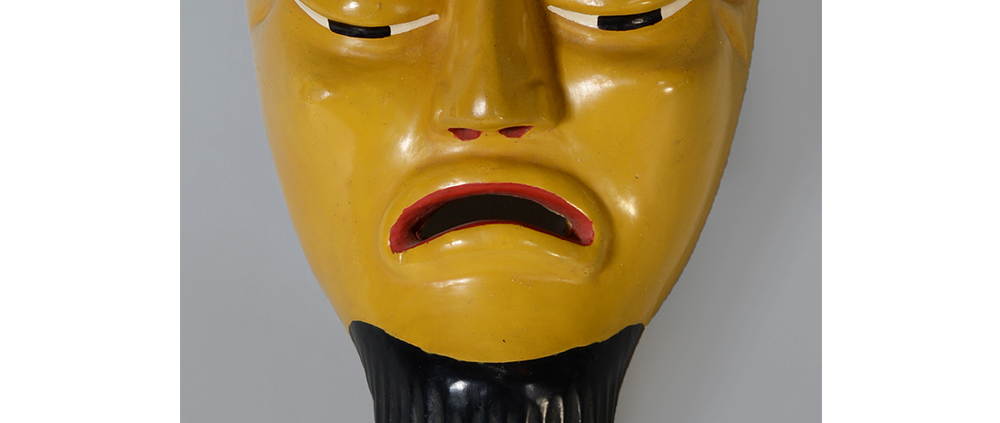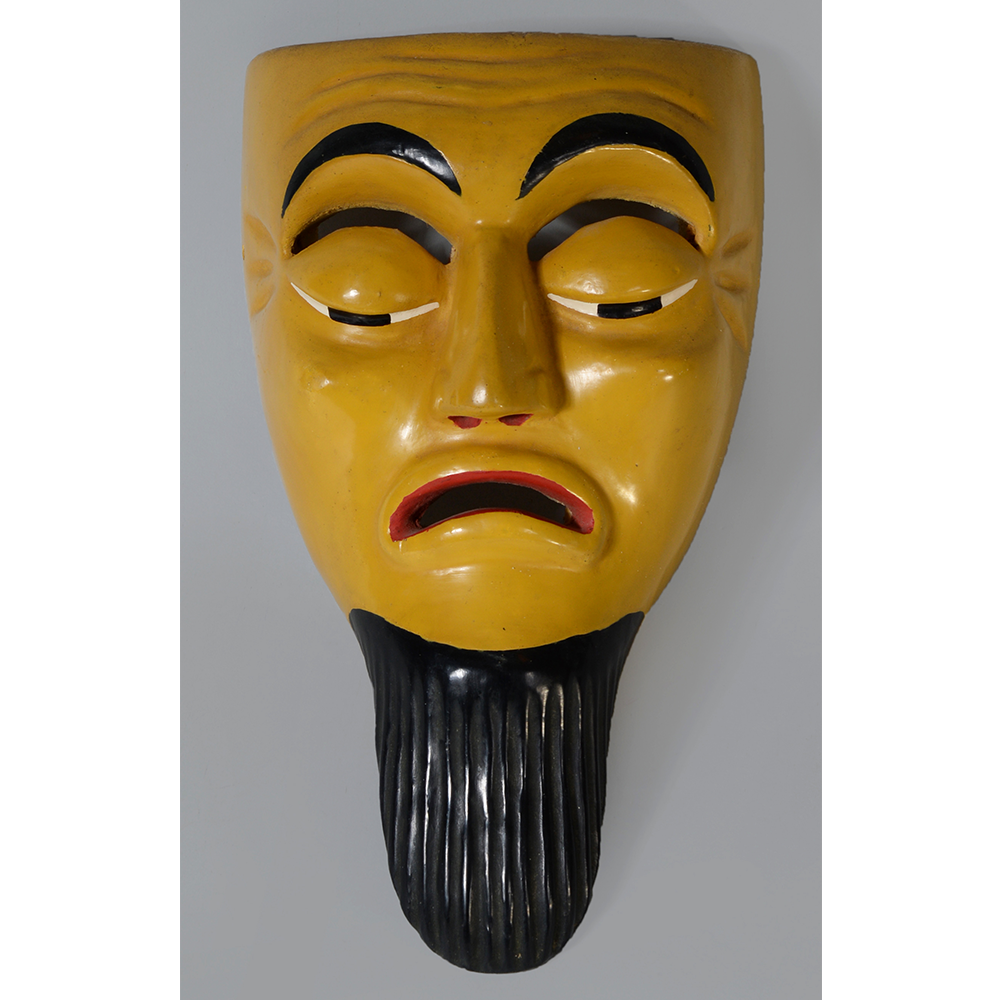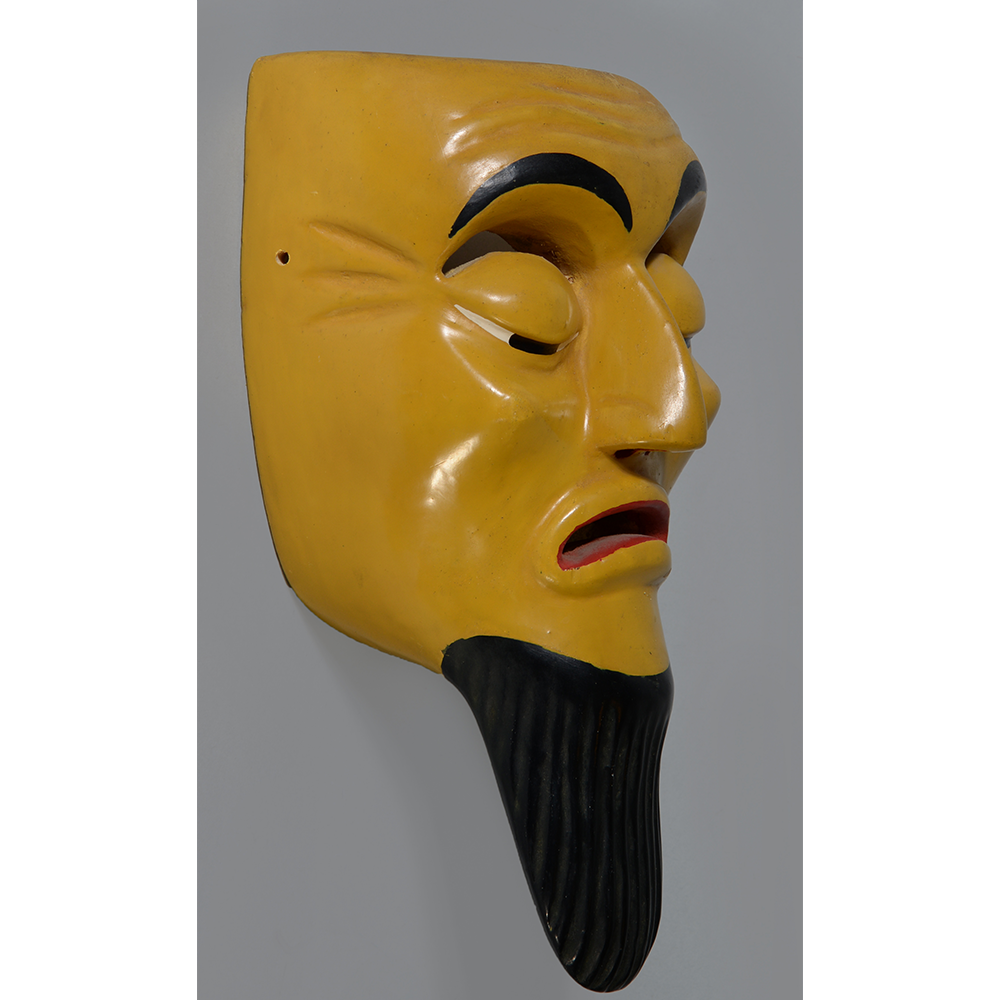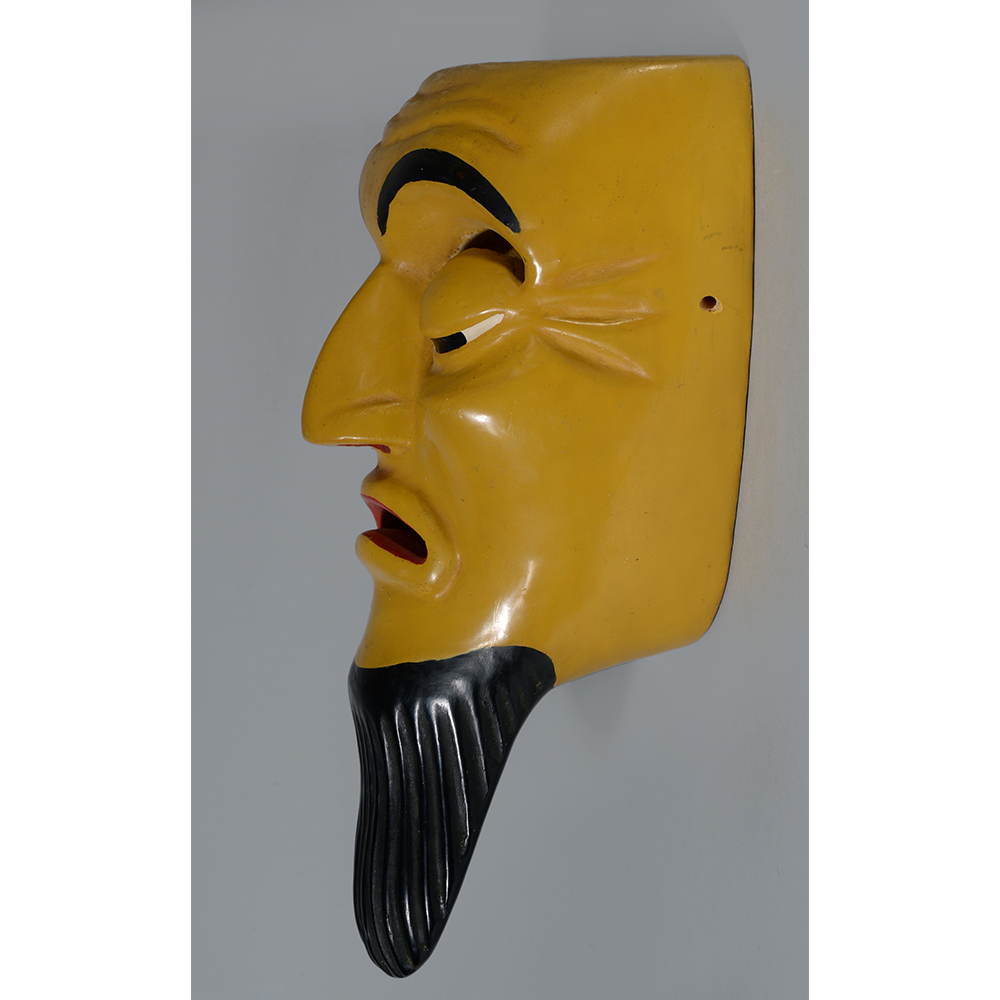
TITLE: Otomí Devil Mask
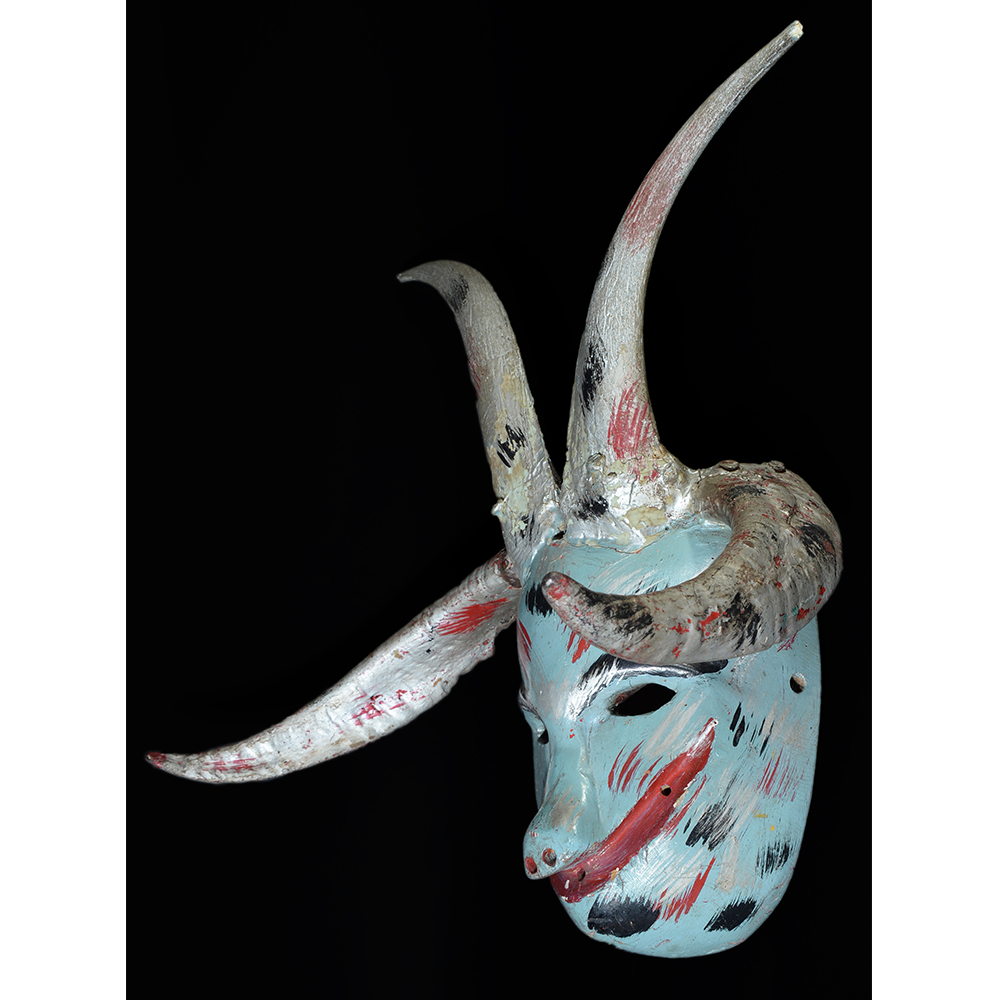
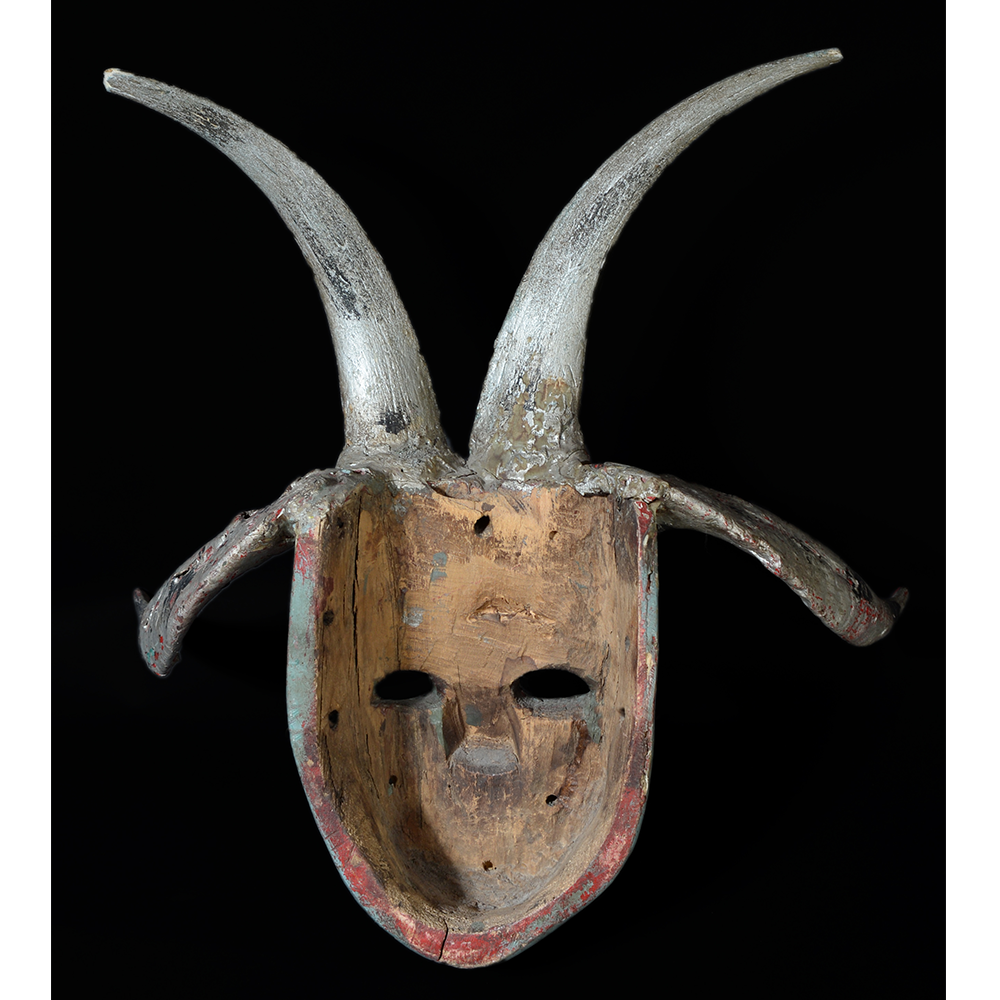
TYPE: face mask
GENERAL REGION: Latin America
COUNTRY: Mexico
SUBREGION: Queretaro
ETHNICITY: Otomí
DESCRIPTION: Diablo (Devil) Mask
CATALOG ID: LAMX108
MAKER: Unknown
CEREMONY: Semana Santa (Holy Week)
AGE: 1970s
MAIN MATERIAL: wood
OTHER MATERIALS: hardware; goat horns; oil-based paint

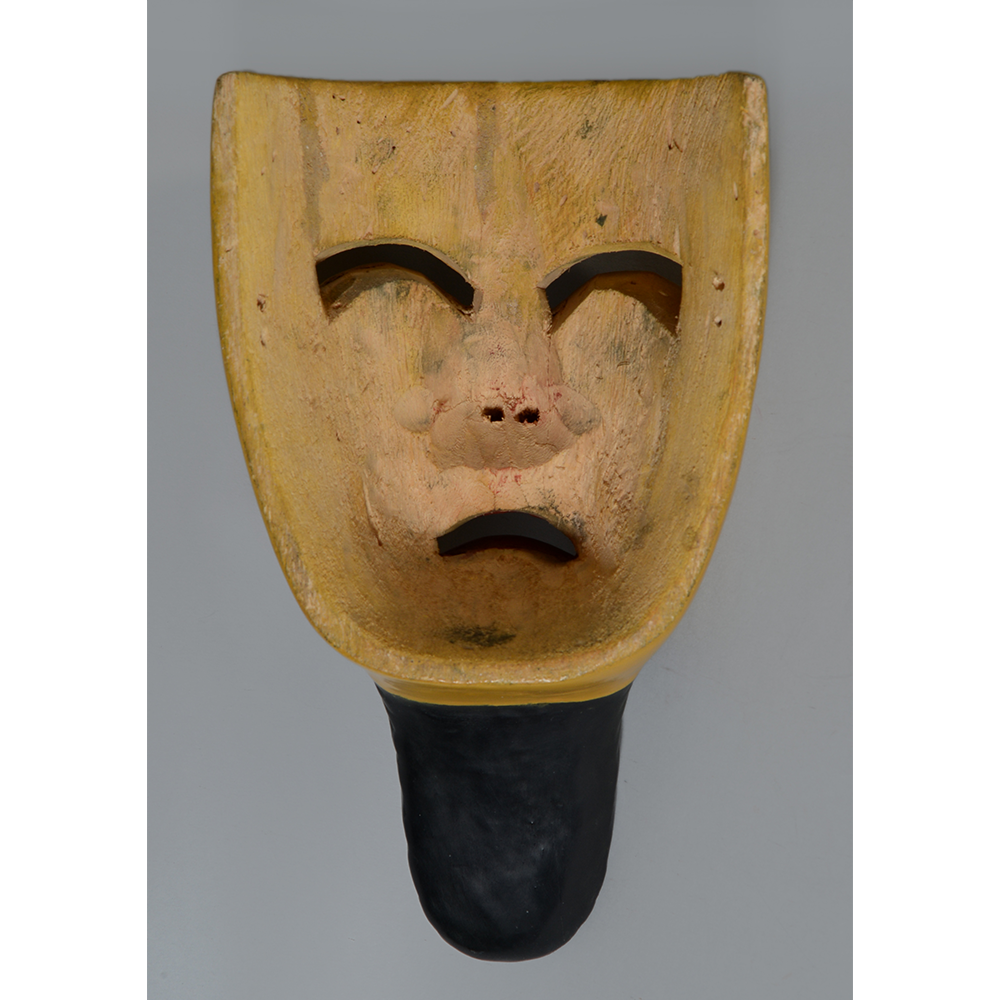
This mask is made for use in the Semana Santa (Holy Week) celebrations of Queretaro, Mexico. Such masks are typically danced as part of the celebration portraying the mythical resurrection of Jesus of Nazareth as a triumph over the personification of evil. This specific mask represents a devil (diablo) having goat-like characteristics.
:

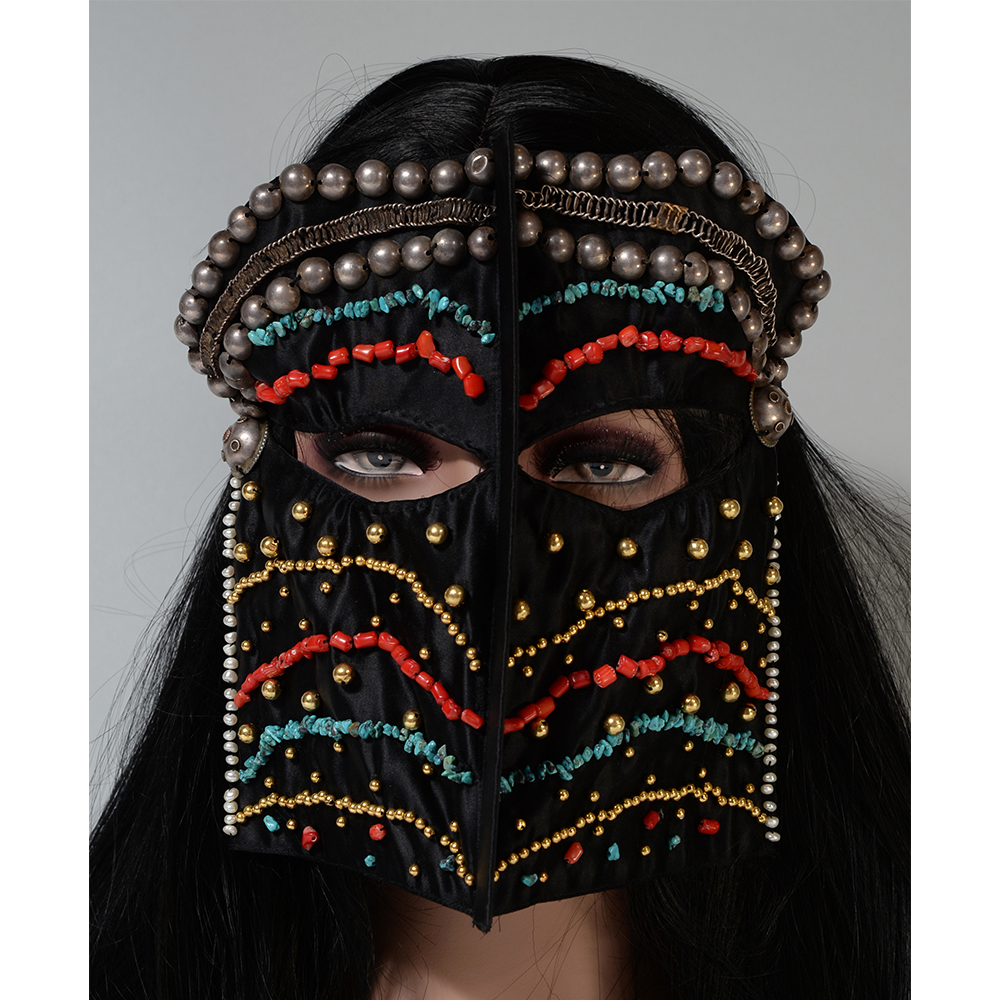
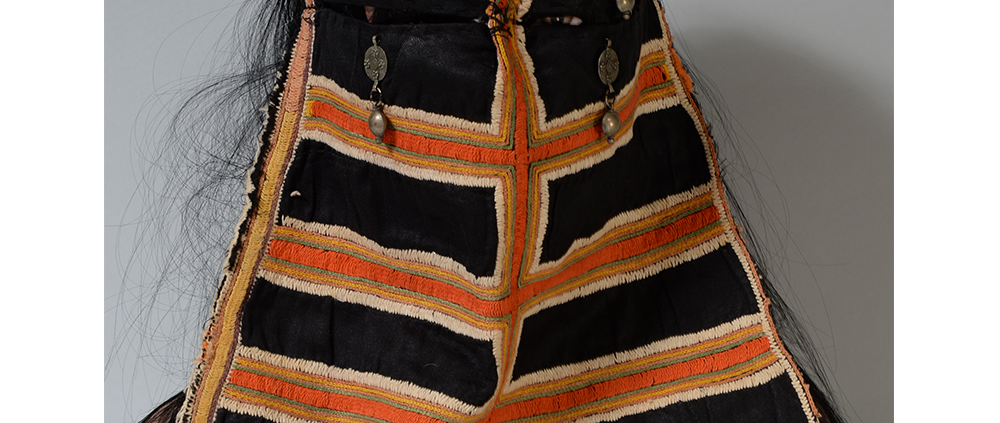
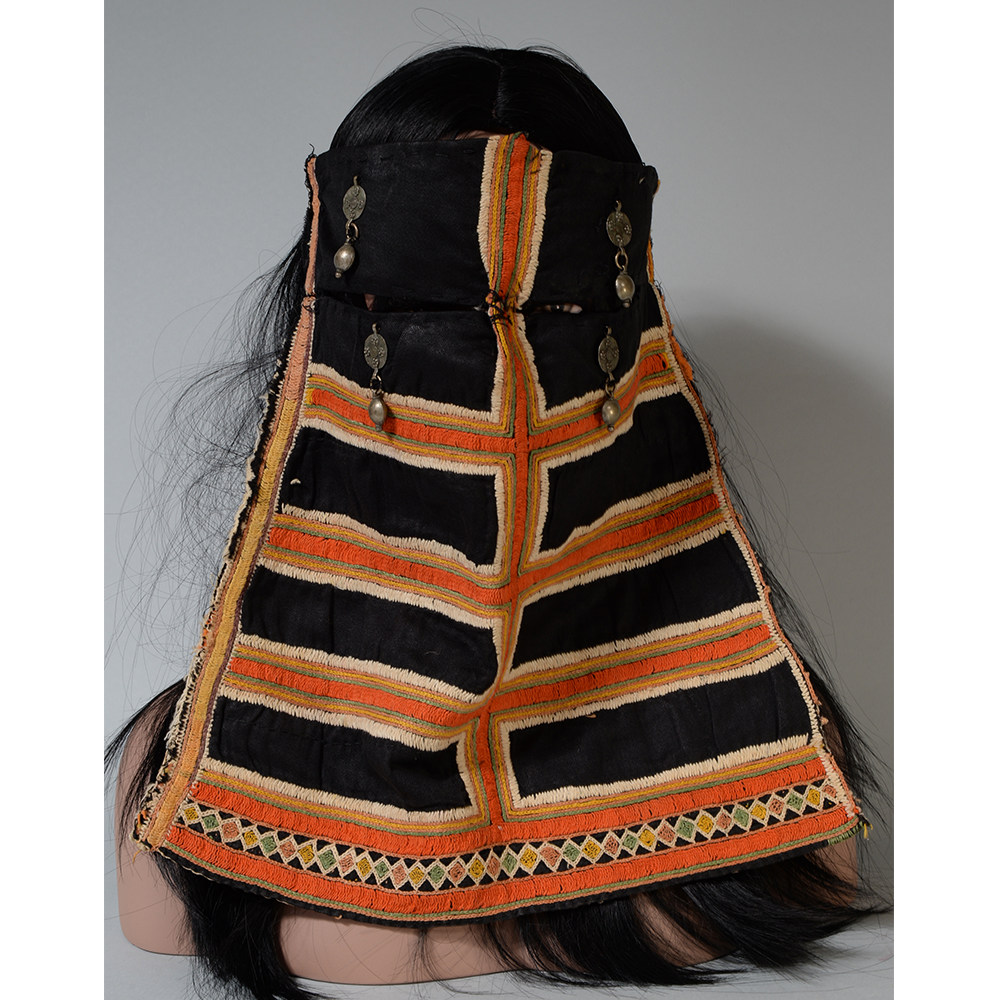
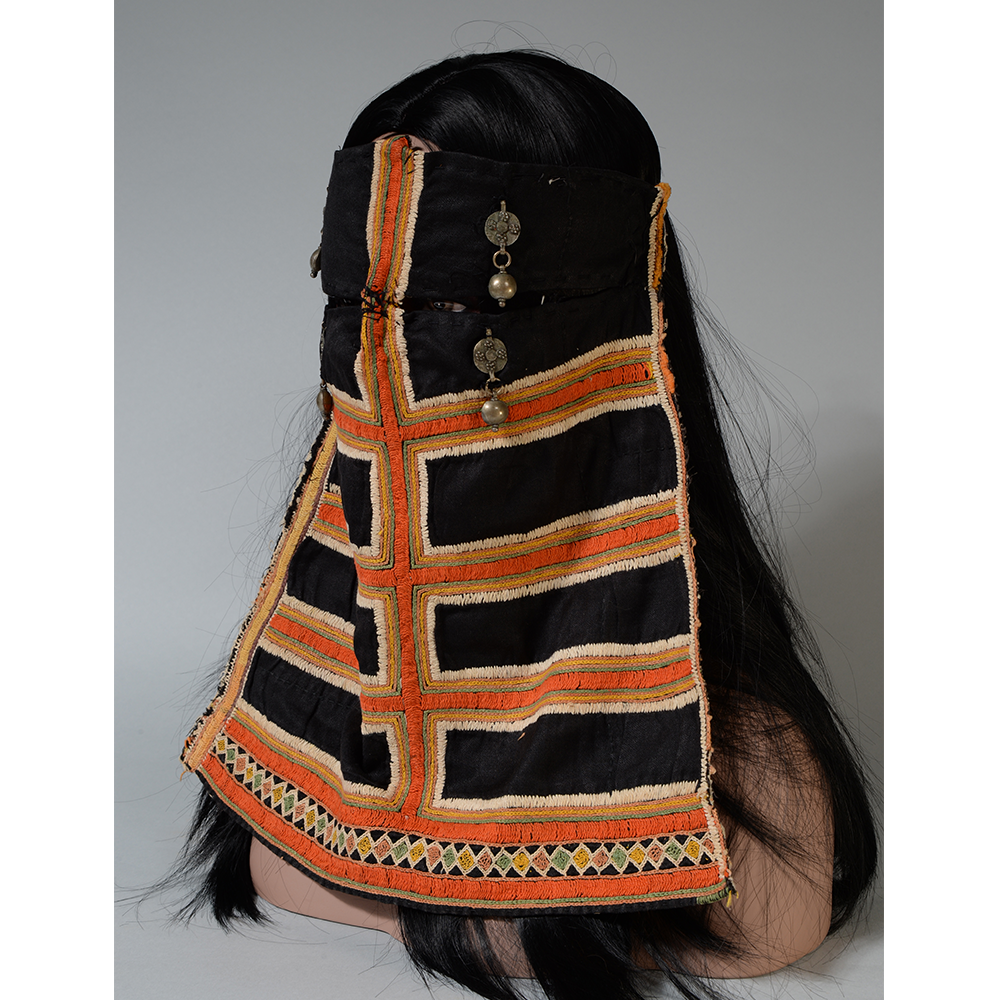
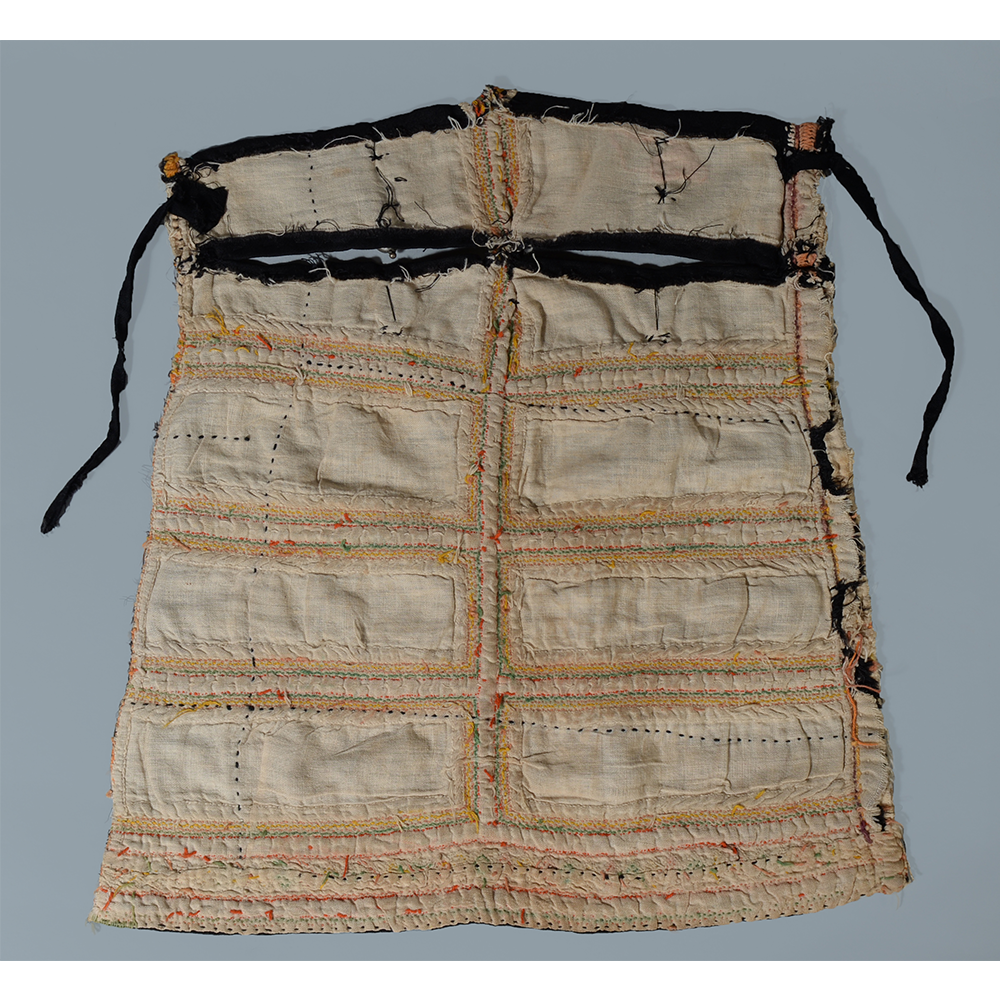
TITLE: Bedouin Battoulah
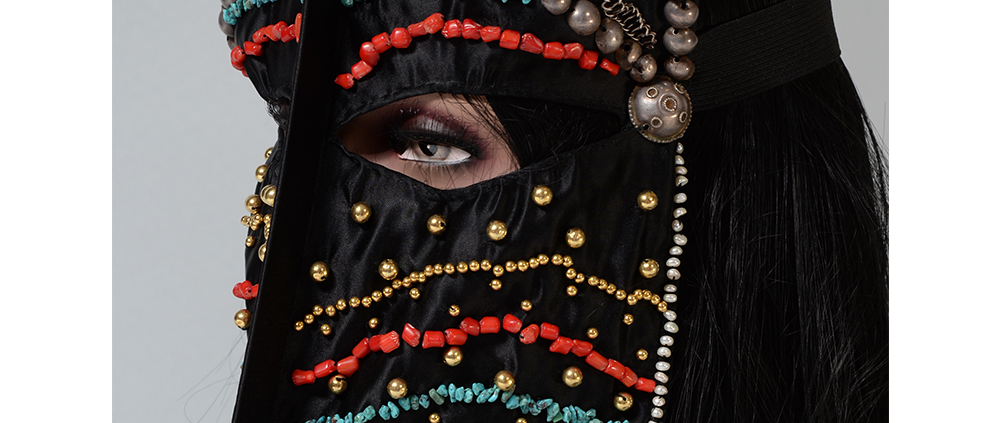
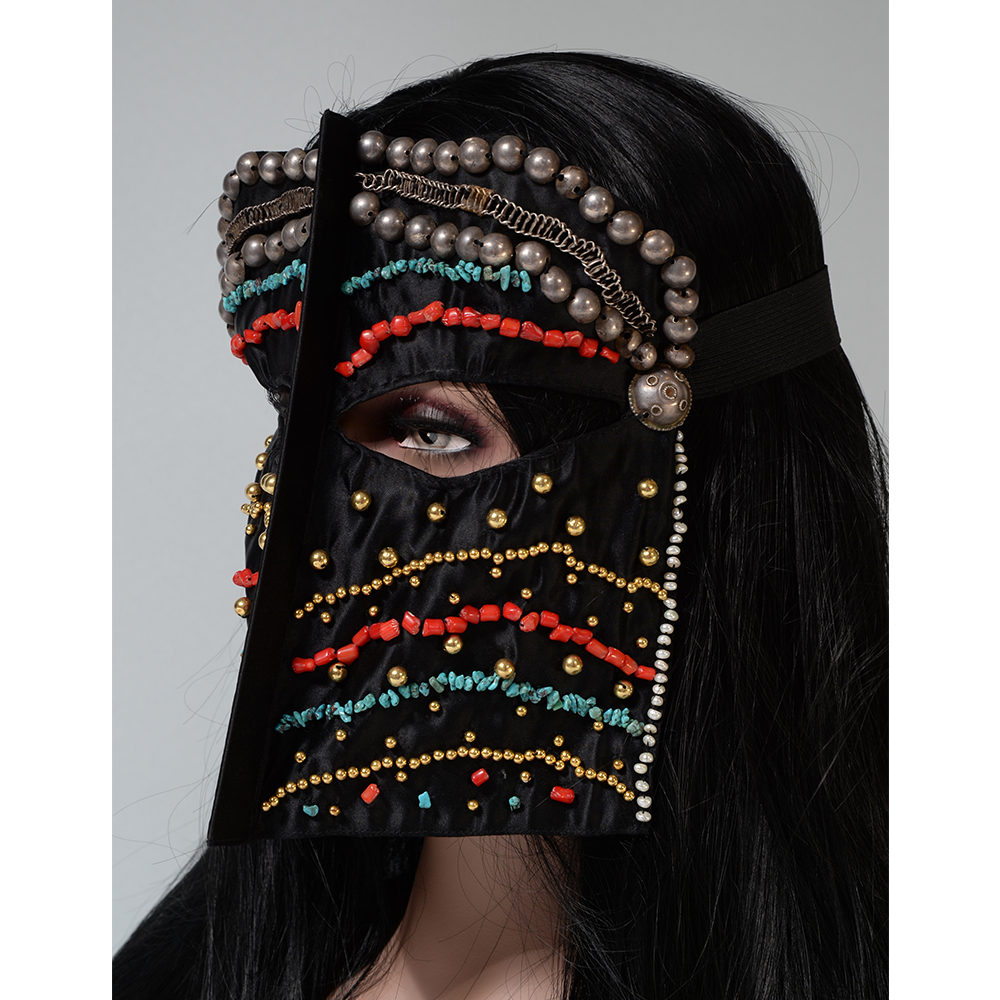
TYPE: face veil
GENERAL REGION: Middle East
COUNTRY: Yemen
ETHNICITY: Arabic
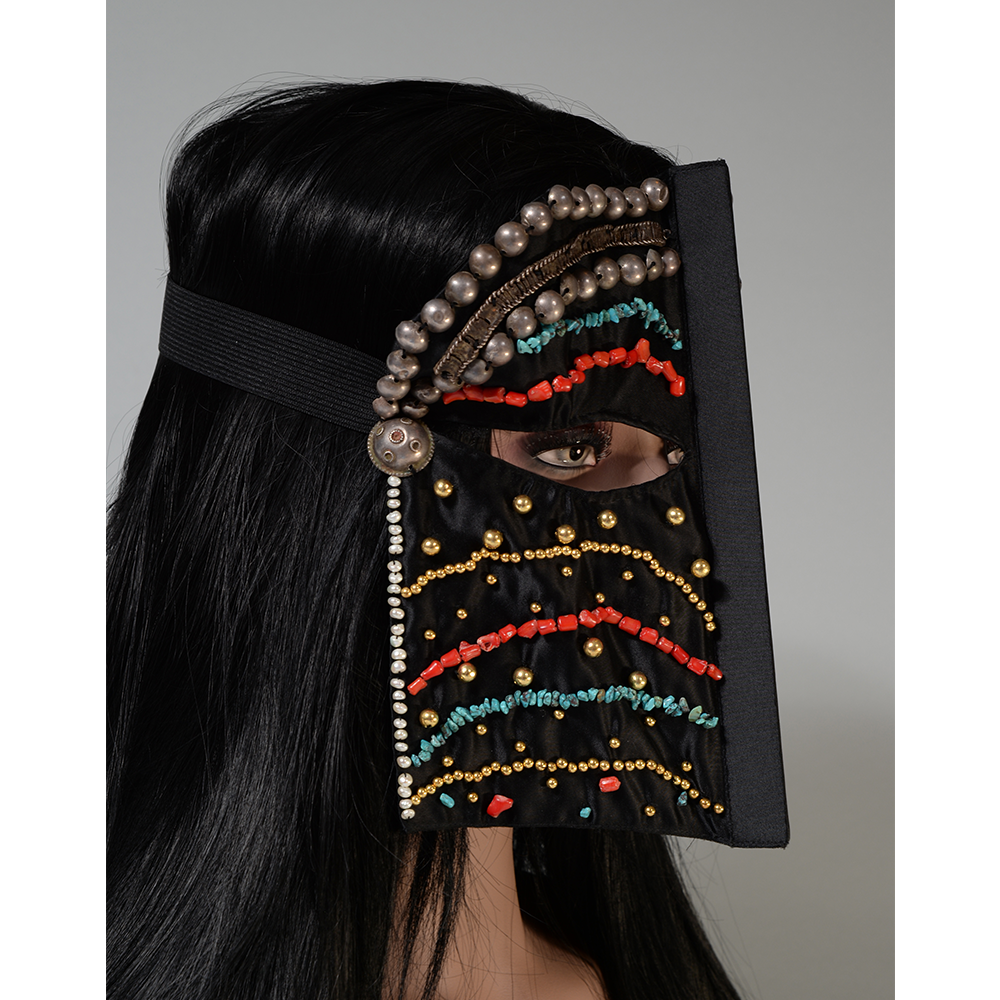
DESCRIPTION: Bedouin Woman’s Battoulah (Veil Mask)
CATALOG ID: MEYE001
MAKER: Unknown
FUNCTION: social control; status
AGE: 1970s
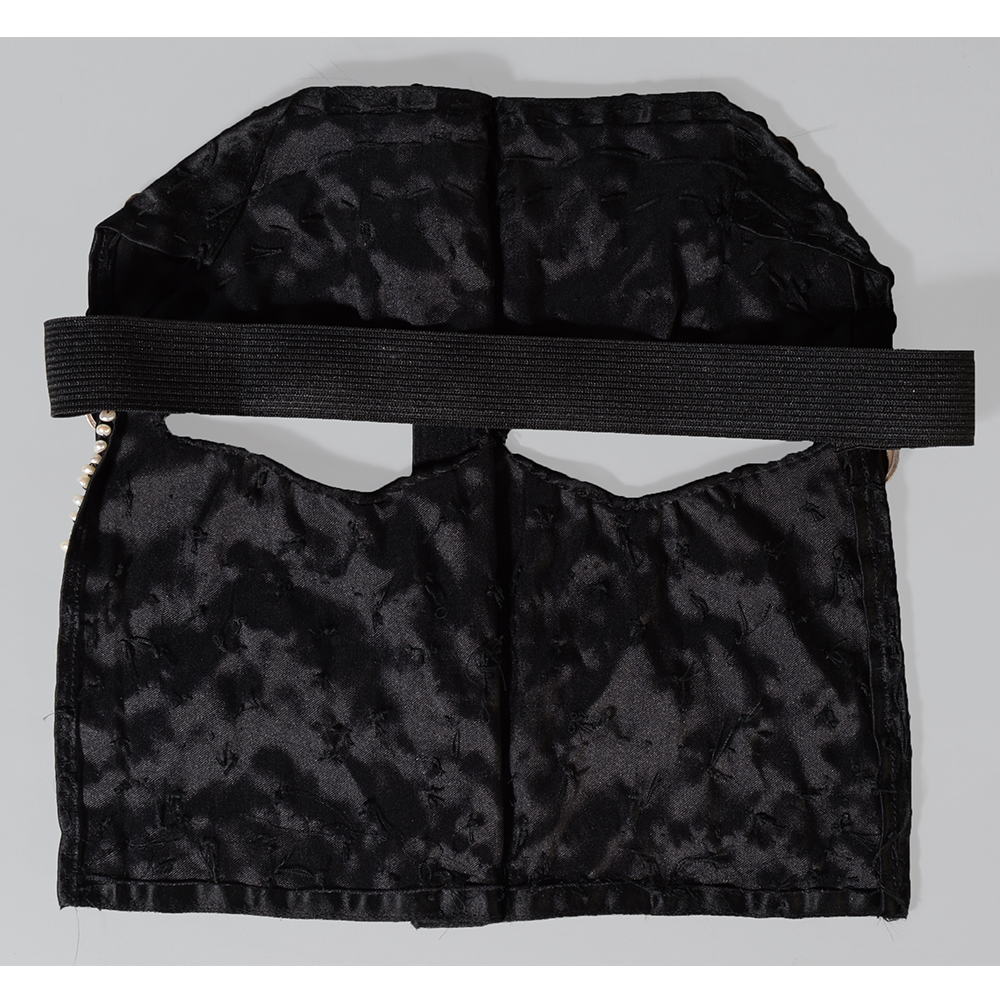
MAIN MATERIAL: dyed cloth
OTHER MATERIALS: dyed cloth; stitching; turquoise pebbles; coral; pearls; silver decorations; gold beads

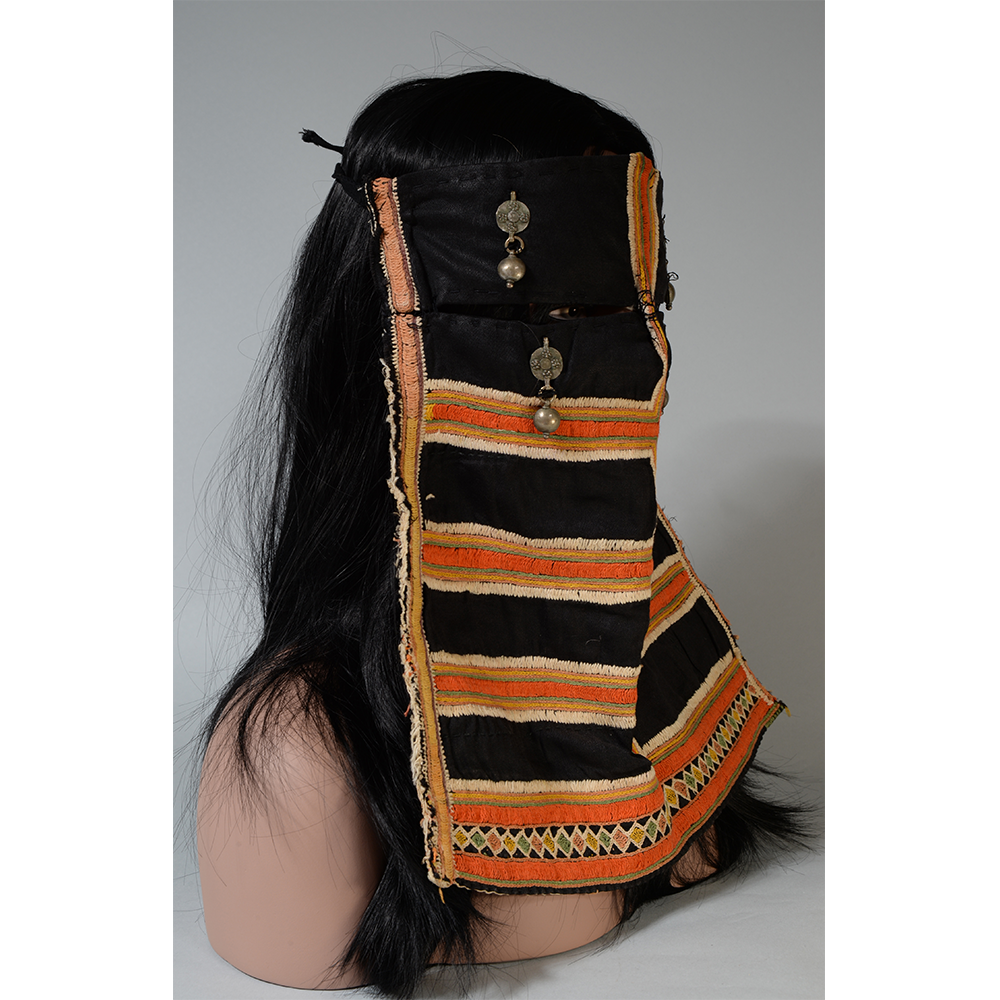
Arabic women living in rural areas or hewing to old traditions continue to wear the battoulah, a partial veil mask, throughout the Persian Gulf region.  Although the tradition has fallen out of favor among younger and urban Arabic women, some continue to wear it to indicate their status as married or to avoid unwanted attention. In the distant past, the mask was gold or red in color, but today black and silver predominate.

:

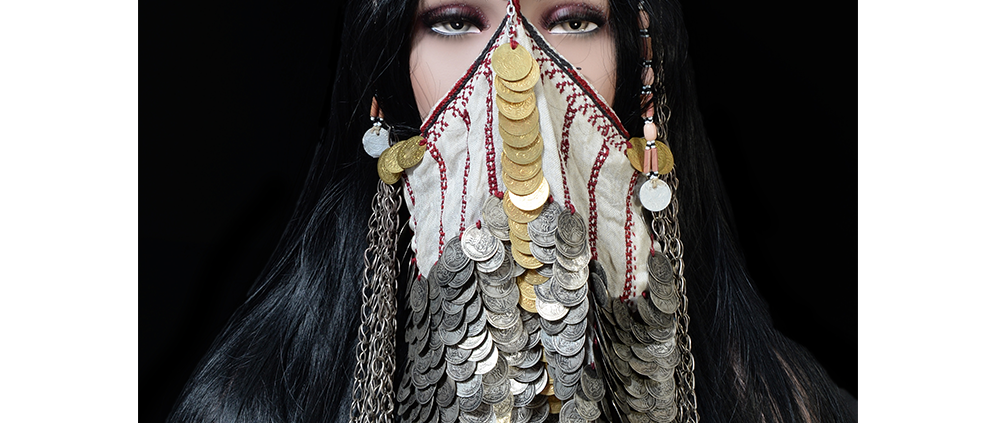
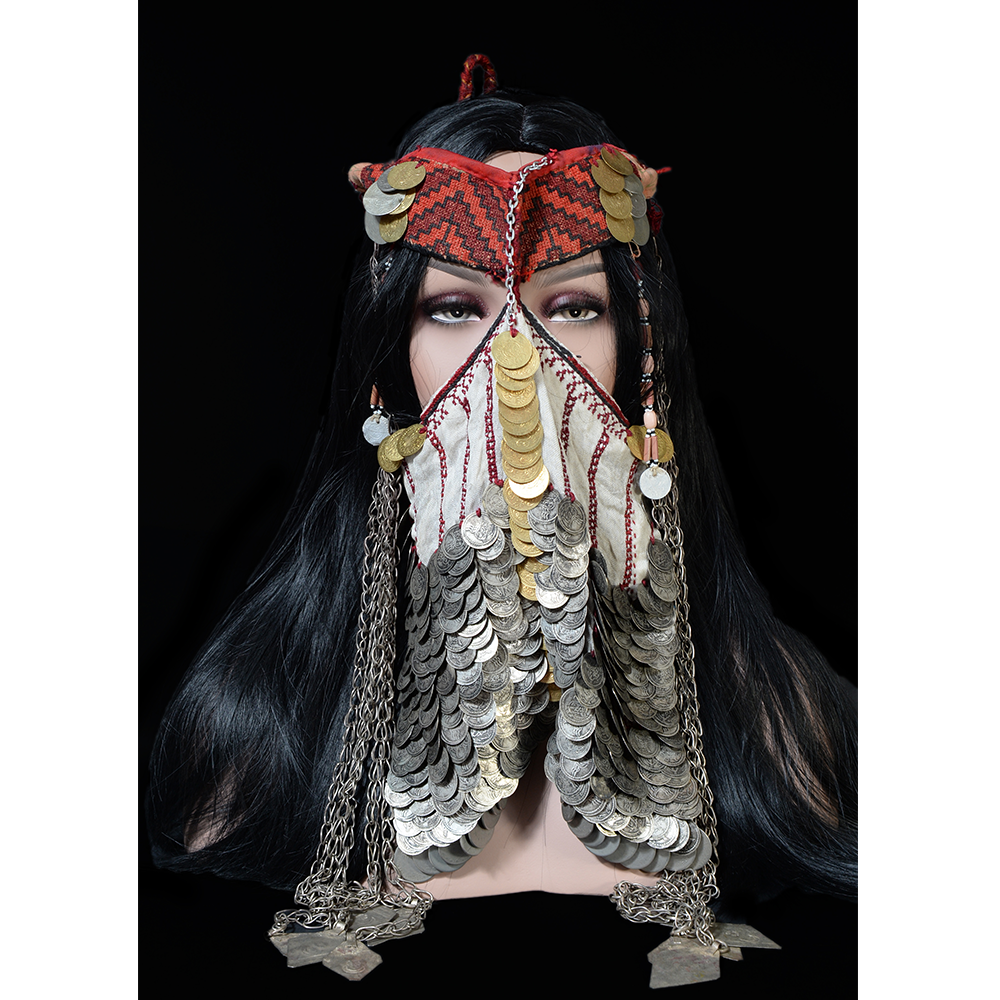
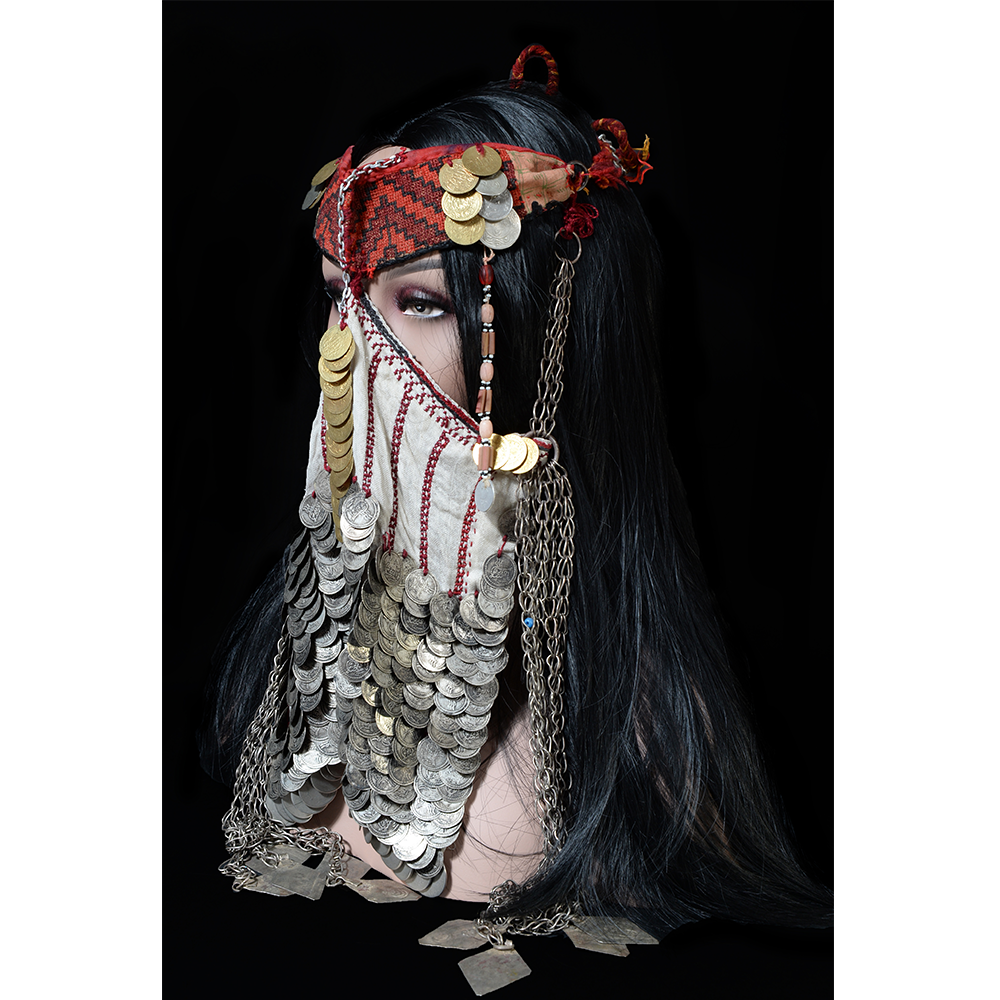
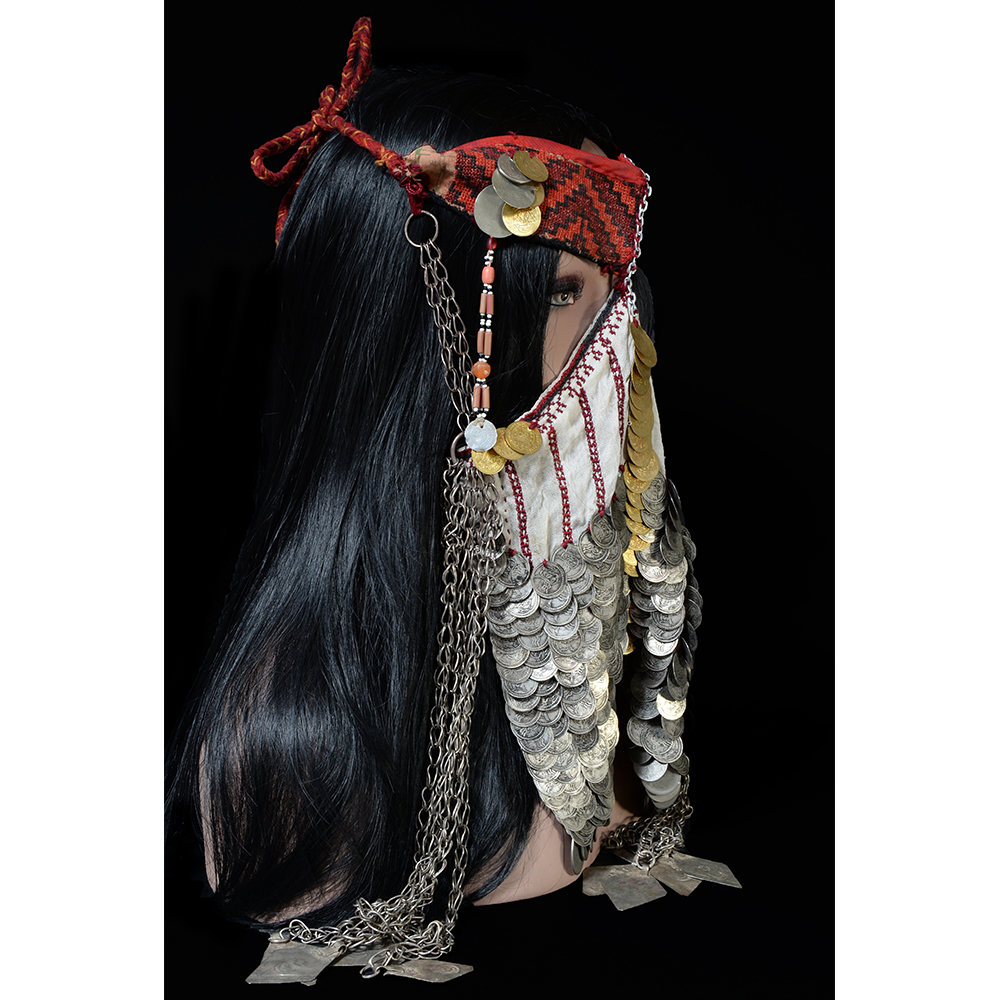
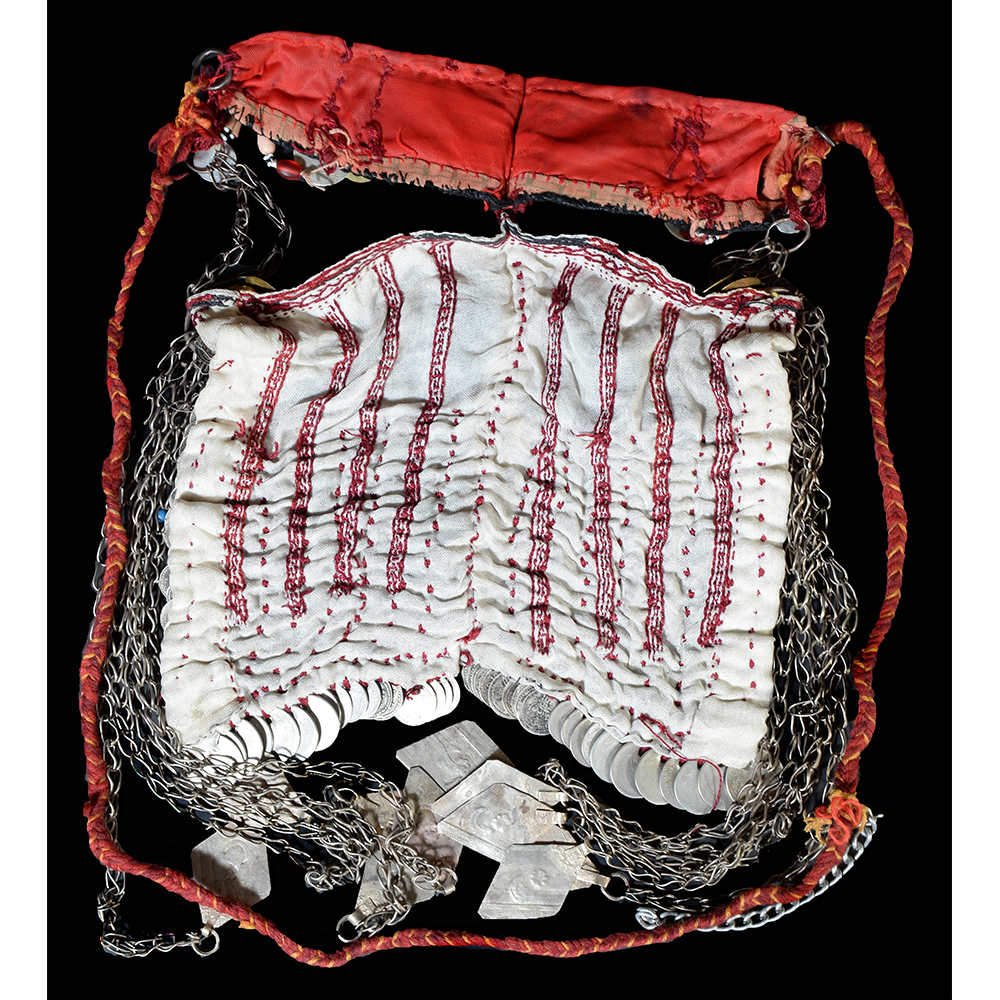
TITLE: Bedouin Niqab
TYPE: face veil
GENERAL REGION: Middle East
COUNTRY: Egypt
SUBREGION: Siwa Oasis
ETHNICITY: Berber
DESCRIPTION: Berber Bedouin Woman’s Niqab (Veil Mask)
CATALOG ID: MEEG002
MAKER: Unknown
FUNCTION: celebration; social control
AGE: 1980s
MAIN MATERIAL: cotton cloth
OTHER MATERIALS: beads; silver coins; brass coins; silver plates; metal chains; stitching

In the western desert of Egypt, Berber women living in Bedouin societies sometimes wear masks or veils called niqab. The veils serve multiple functions, including protecting the women’s face from sun damage, filtering dust from the air, displaying adornment, and demonstrating wealth or status. The veil may also allow men to exercise social control over women’s bodies, maintaining their status as proprietary to fathers and husbands.  Not all Bedouian societies use the niqab, but those that do generally begin the practice after the woman or girl has been married.

The niqab worn by Bedouin women on special occasions are sometimes elaborately decorated with coins and beads, like this one.  Such masks are not for everyday use; they would be too hot and heavy. They are worn during special events, such as weddings and feasts.  This one comes from the Berber people in the Siwa Oasis, in the western Egyptian desert.

:

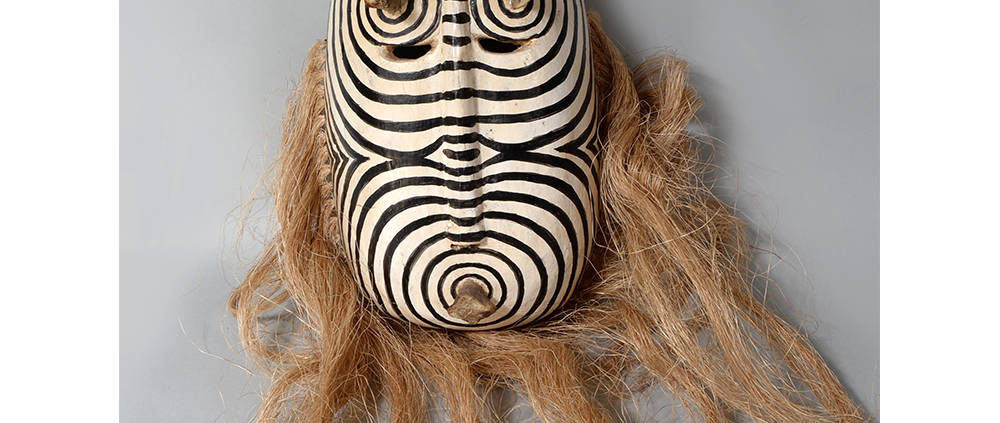
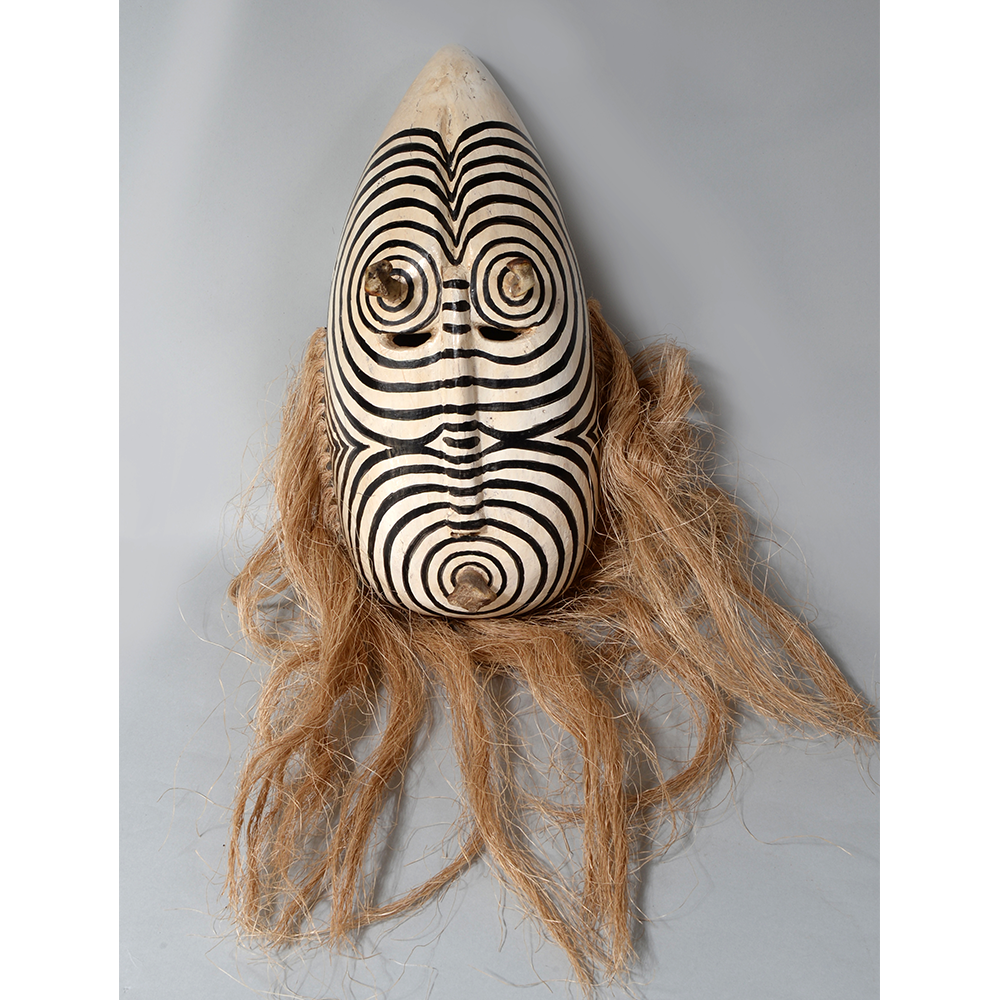
TITLE: Seri (Comcaac) Mask
TYPE: face mask
GENERAL REGION: Latin America
COUNTRY: Mexico
SUBREGION: Sonora
ETHNICITY: Seri (Comcáac)
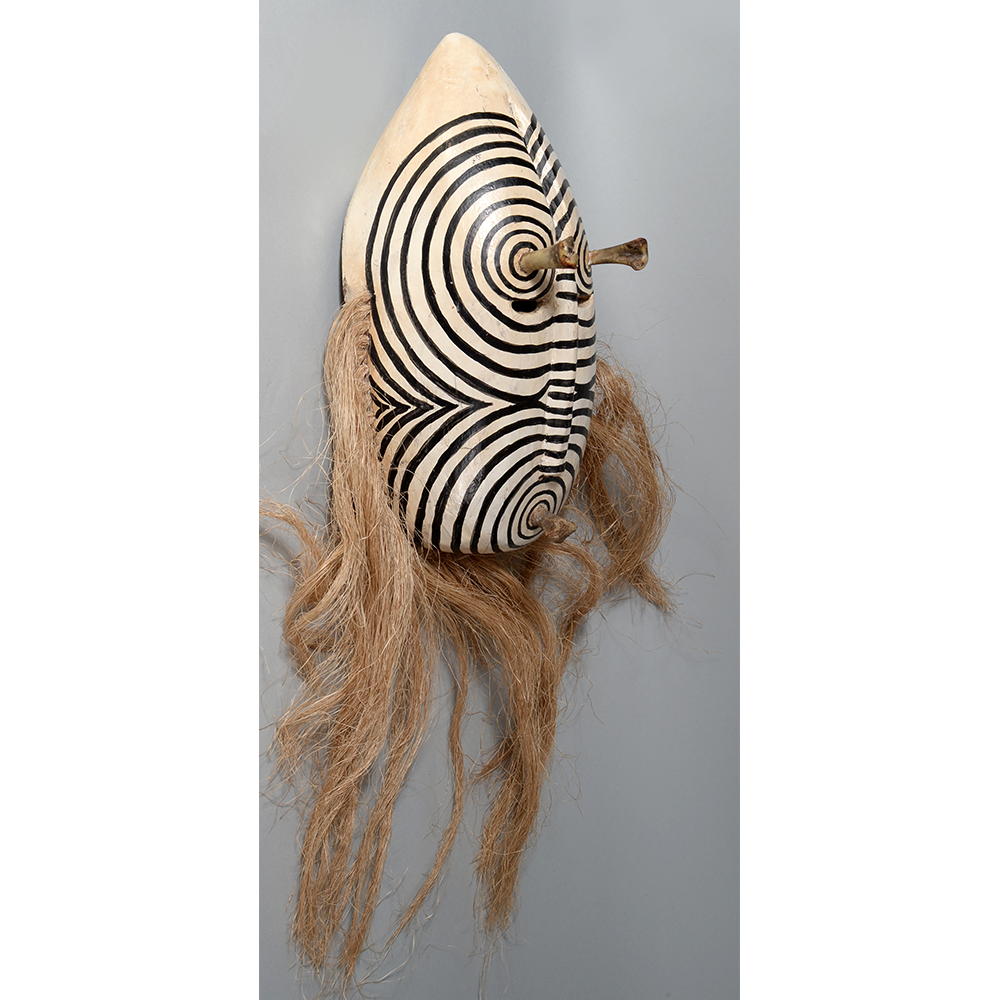
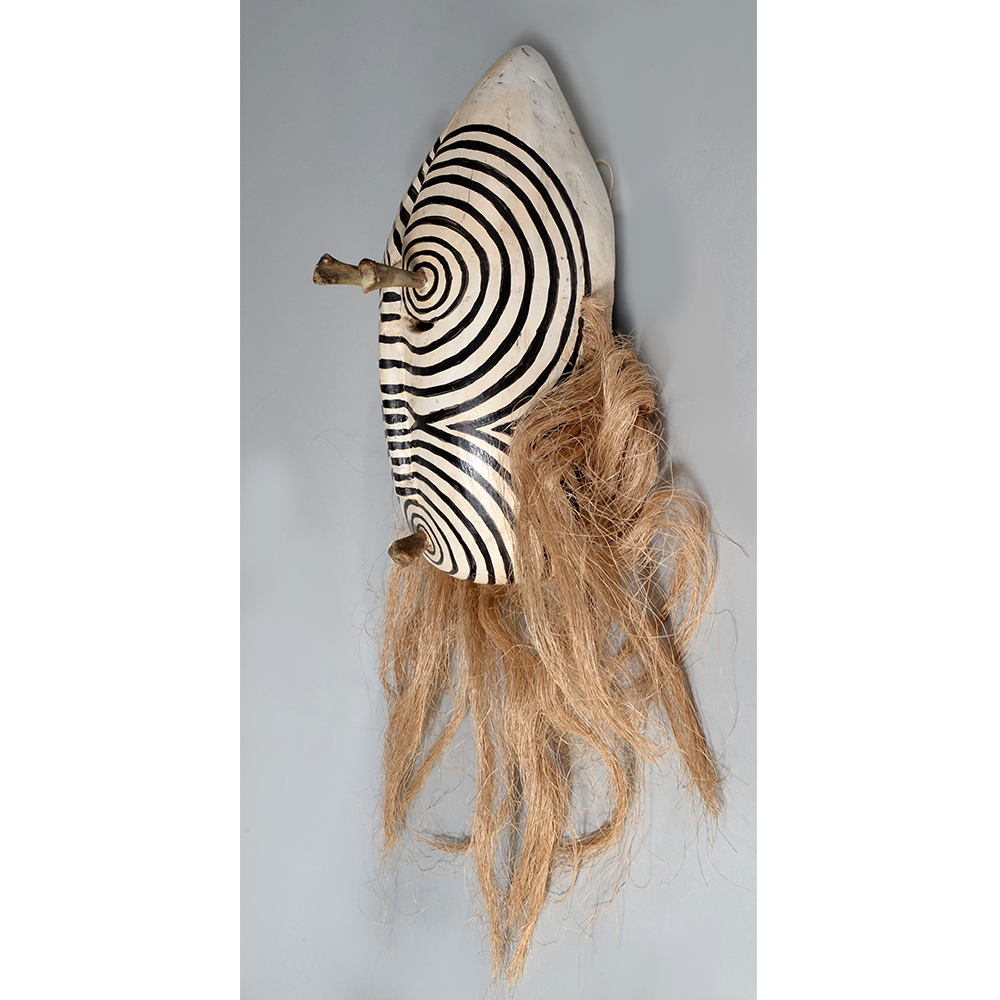
DESCRIPTION: Striped shamanic mask with bones
CATALOG ID: LAMX121
MAKER: Unknown maker in Bahia de Kino
CEREMONY: Shamanic Rituals
FUNCTION: healing (?)
AGE: 1980s
MAIN MATERIAL: wood
OTHER MATERIALS: paint; animal bones; adhesive; string; ixtle fiber

The Seri people of Sonora, Mexico call themselves Comcáac. They live primarily on Shark Island (Isla Tiburón) in the Gulf of California, and the adjacent mainland of Sonora (Punta Chueca and El Desemboque). Despite invasive Spanish colonialism and periodic Mexican assimilation movements, they have maintained their traditions even today. Traditionally, they lived as preliterate hunter-gatherer bands of fifty individuals or fewer, with no tribal organization. They primarily engage in commercial fishing today.

Like many indigenous groups in the region, the Seri engaged in face painting and had shamans who played important roles in healing the sick and protecting the people. Very little is known of their masking traditions, but they were reported by R.W.H. Hardy in the early nineteenth century to have worn deer and mountain lion masks on some occasions, and to have carved wooden masks.  This specific mask may have been made by a shaman for use in healing the sick, and would have been worn with a fringe of ixtle fiber.

:

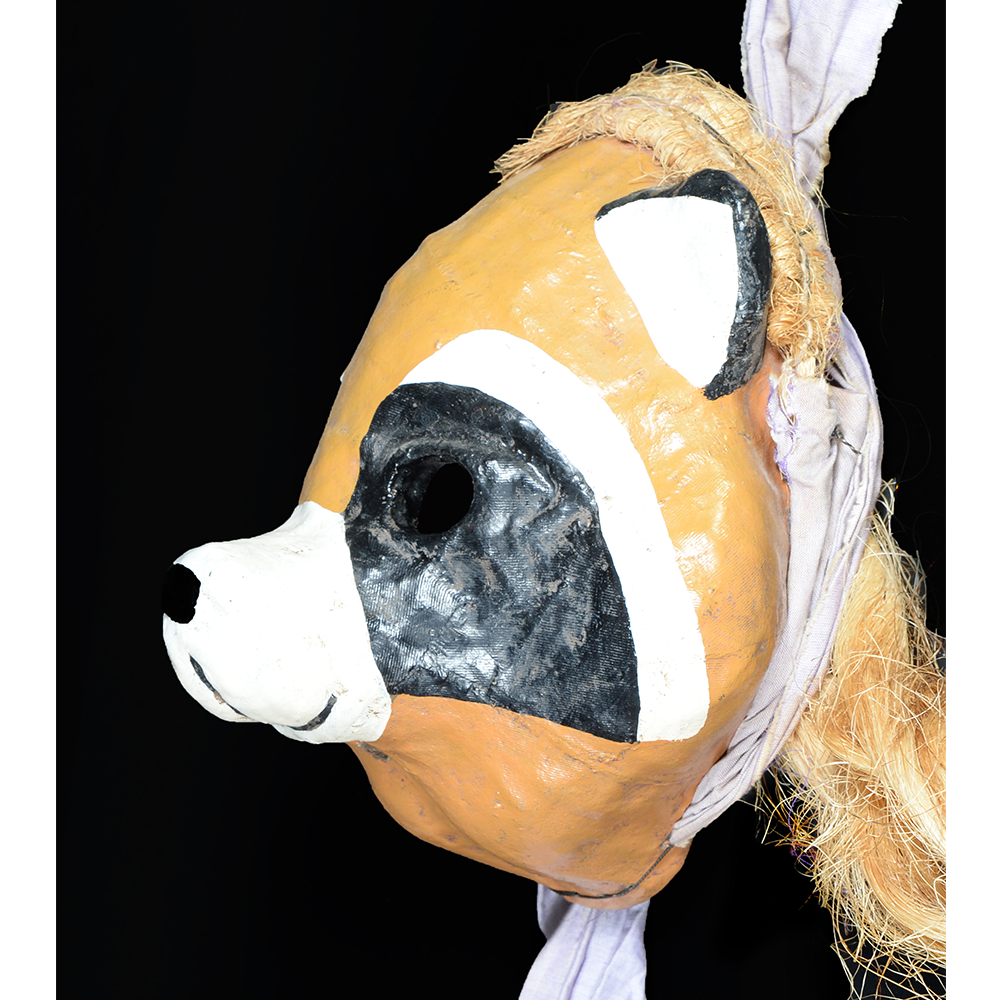
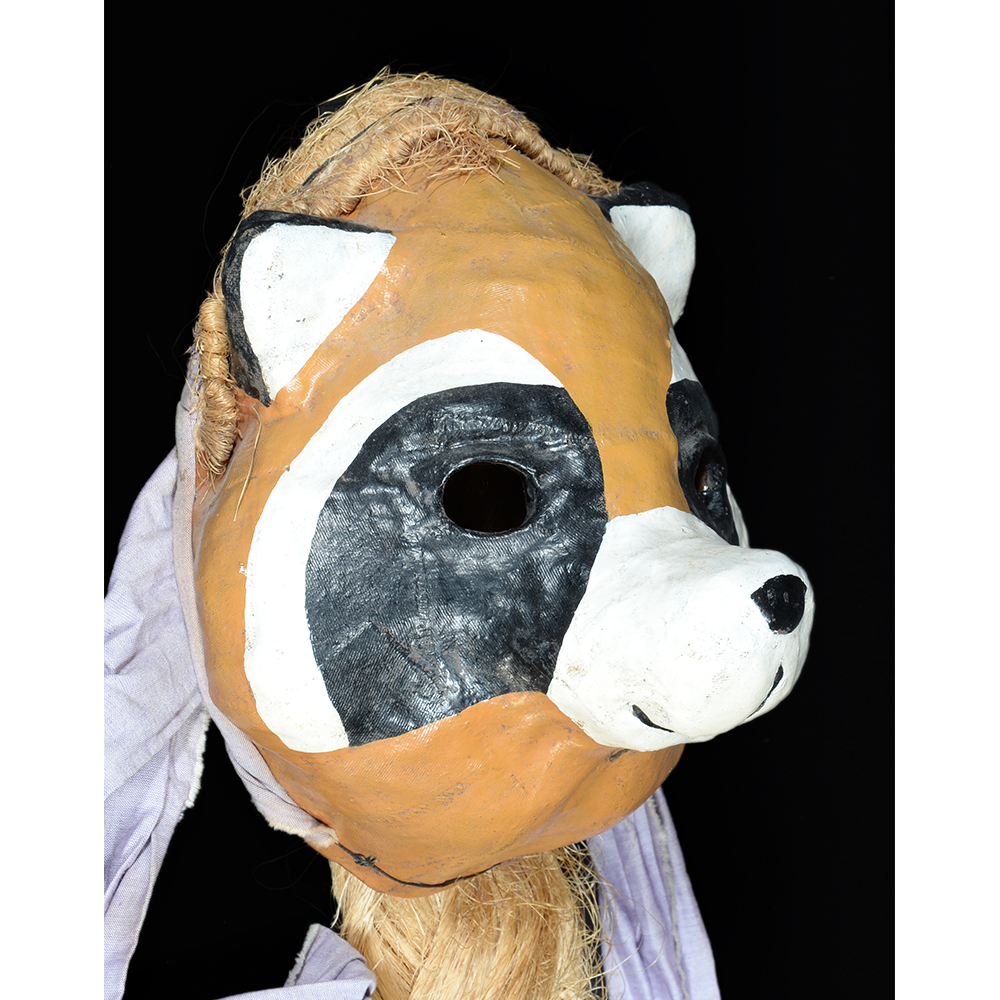
TITLE: Raccoon Fariseo Mask
TYPE: face mask
GENERAL REGION: Latin America
COUNTRY: Mexico
SUBREGION: Queretaro
ETHNICITY: Otomí
DESCRIPTION: Fariseo (Pharisee) Mask of a Raccoon
CATALOG ID: LAMX106
MAKER: Unknown maker in El Doctor
CEREMONY: Semana Santa (Holy Week)
AGE: late 1970s
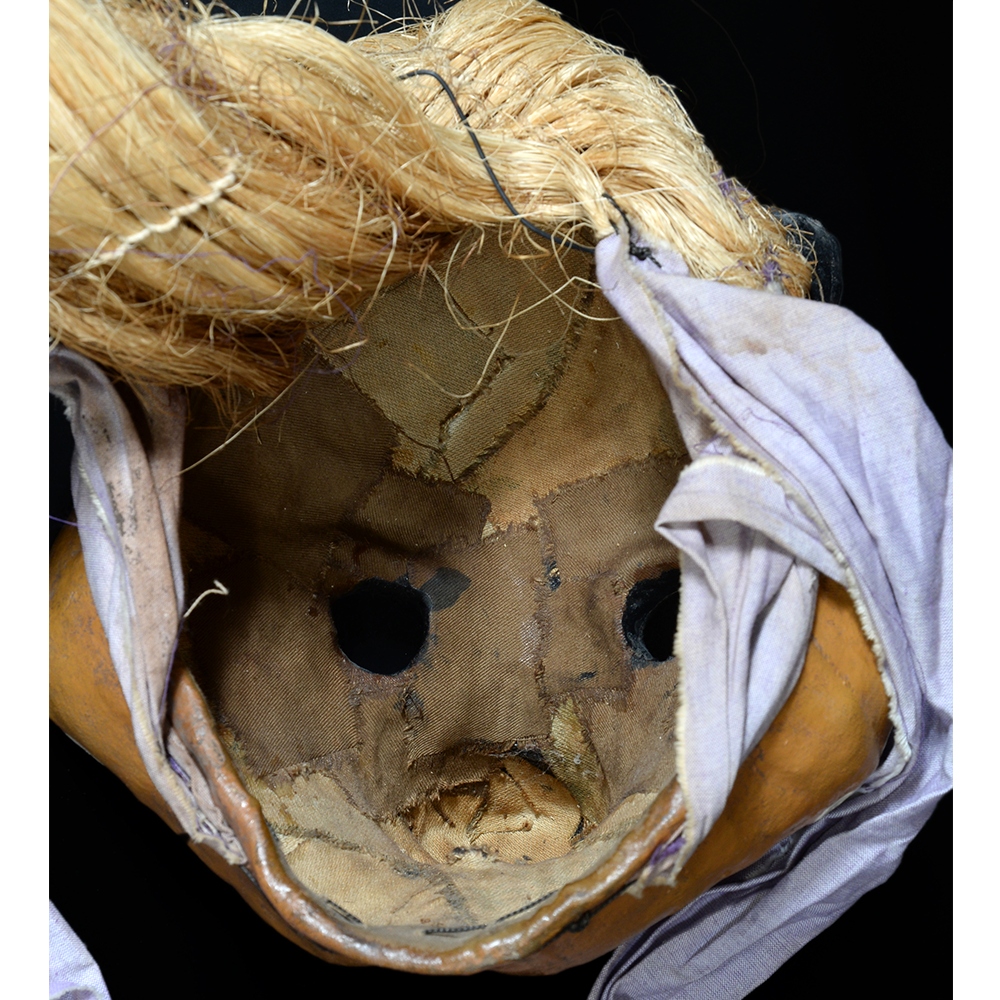
MAIN MATERIAL: cotton cloth
OTHER MATERIALS: glue; resin; ixtle fiber; paint

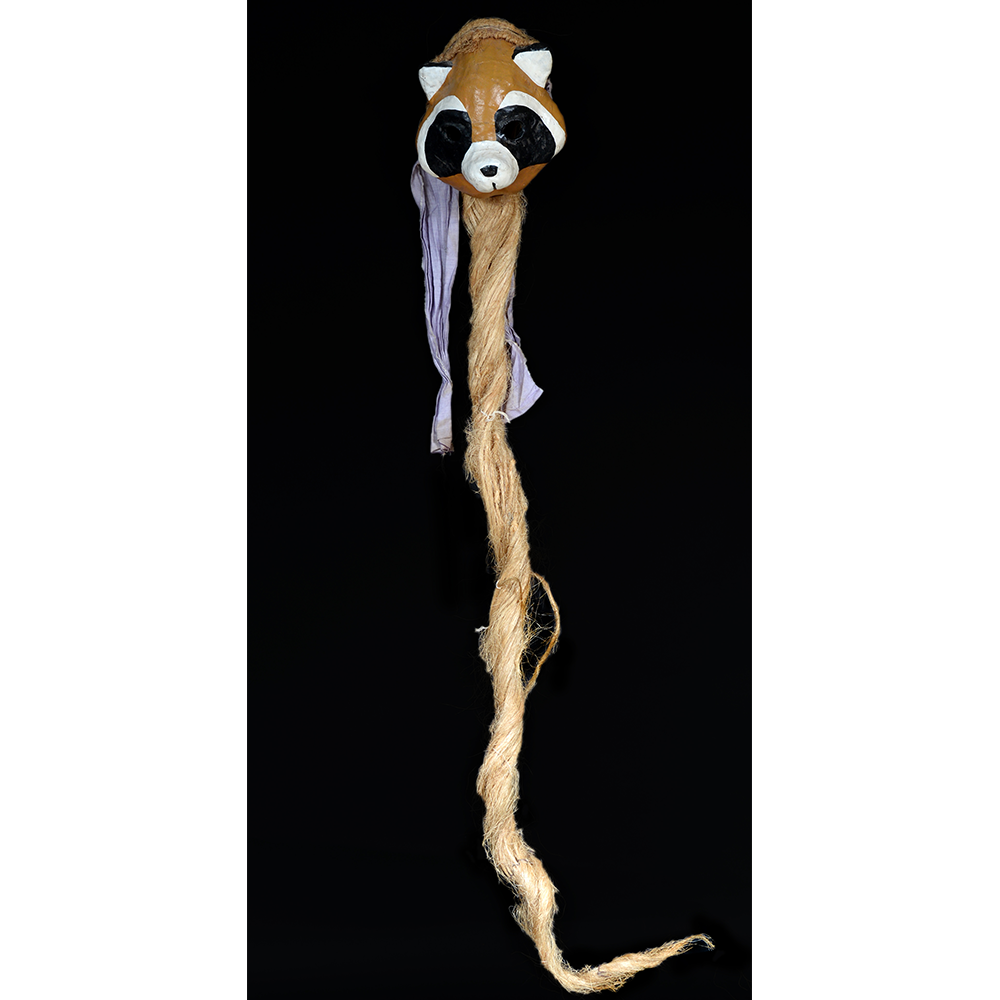
During Semana Santa (Holy Week) in the small mountain town of El Doctor, Queretaro, townspeople celebrate the Passion of Jesus Christ in a unique manner. Participants wear stiff cloth animal masks, known as fariseos (Pharisees) in the form of animals (implying that the Pharisees are bestial) or popular characters. They wear a long wig made of ixtle (agave fiber) and dance in the town square holding a noisemaker (matraca). While dancing, townsfolk often try to set their ixtle wigs on fire, which they have to extinguish, sometimes with the help of others. During the dance, characters known as Judas, who can wear any kind of mask (including a lucha libre wrestling mask), appear in the square and dance through the fariseos, striking their cheeks with small bags of coins. The Judas character now wears paper flowers and balloons on his hat, which townsfolk (and sometimes fariseos) try to pop. Other characters include:

  • Devils, who carry a noisemaker and chain, to represent the sins they drag around with them, and who dance much like the Pharisees.
  • Barrabás, representing the thief who was pardoned by Jesus and who appears in a black, white and red mask with a pointy cap. Barrabás carries a noisemaker, a stick to defend himself, and a cloth bag (morál) with a bottle of tequila in it. He adopts the mannerisms of a drunkard (borracho).
  • Elders, witches, or young women, who may also participate in the same manner as fariseos.

At the end of the festival, the devils and sometimes fariseos light on fire one or more paper maché bulls on a bamboo or stick framework covered in fireworks (the toro de fuego) and carry it through the crowd, showering everyone with sparks. This is the symbolic burning of the Devil. Afterward, devils appear with torches and set alight an effigy of Judas hung in the town square. The effigy is made of straw and fireworks stuffed into clothes, and sets off explosions throughout the plaza.

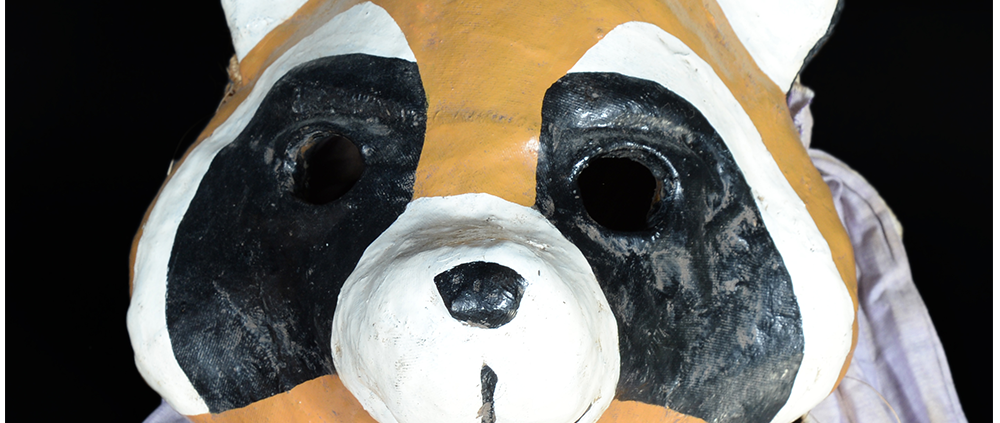
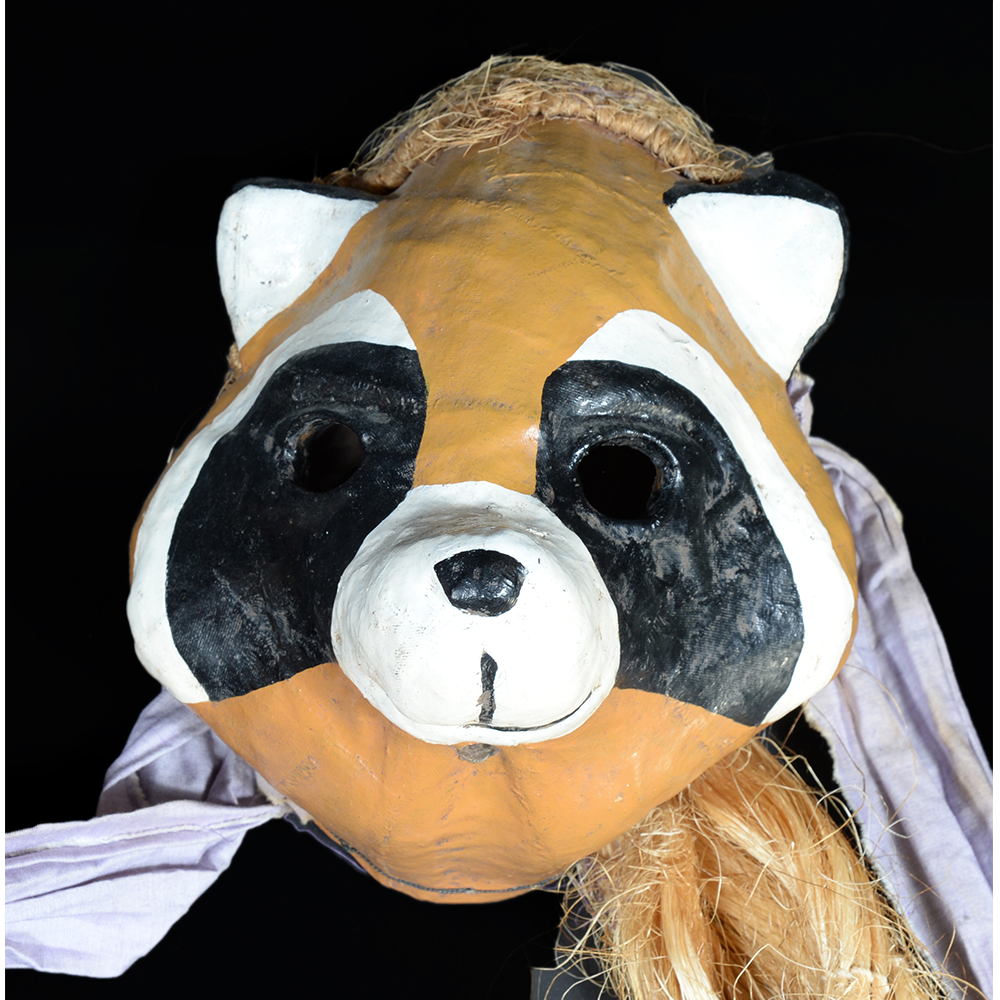
The masks are made of layered strips of cotton cloth, glued together like paper maché and formed over a unique clay mold (which is broken in the course of removing the mask). The mask is then covered in resin to make it hard and water resistant, then painted. This specific Pharisee mask represents a raccoon (mapache).

:

TITLE: Rey de Jardineros
TYPE: face mask
GENERAL REGION: Latin America
COUNTRY: Mexico
SUBREGION: Oaxaca
ETHNICITY: Zapotec
DESCRIPTION: Rey de Jardineros
CATALOG ID: LAMX085
MAKER: Unknown
CEREMONY: Danza de Jardineros
AGE: late 1970s
MAIN MATERIAL: cloth covered in beeswax
OTHER MATERIALS: paint; metal o-rings; cotton string

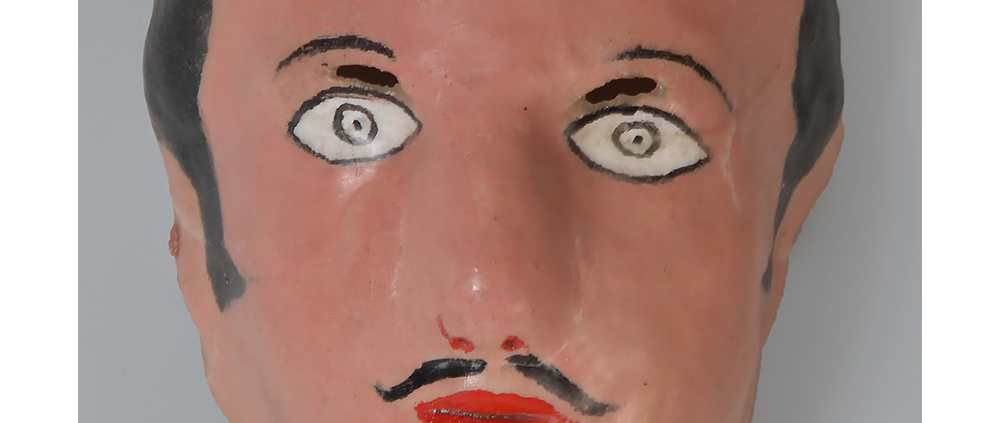
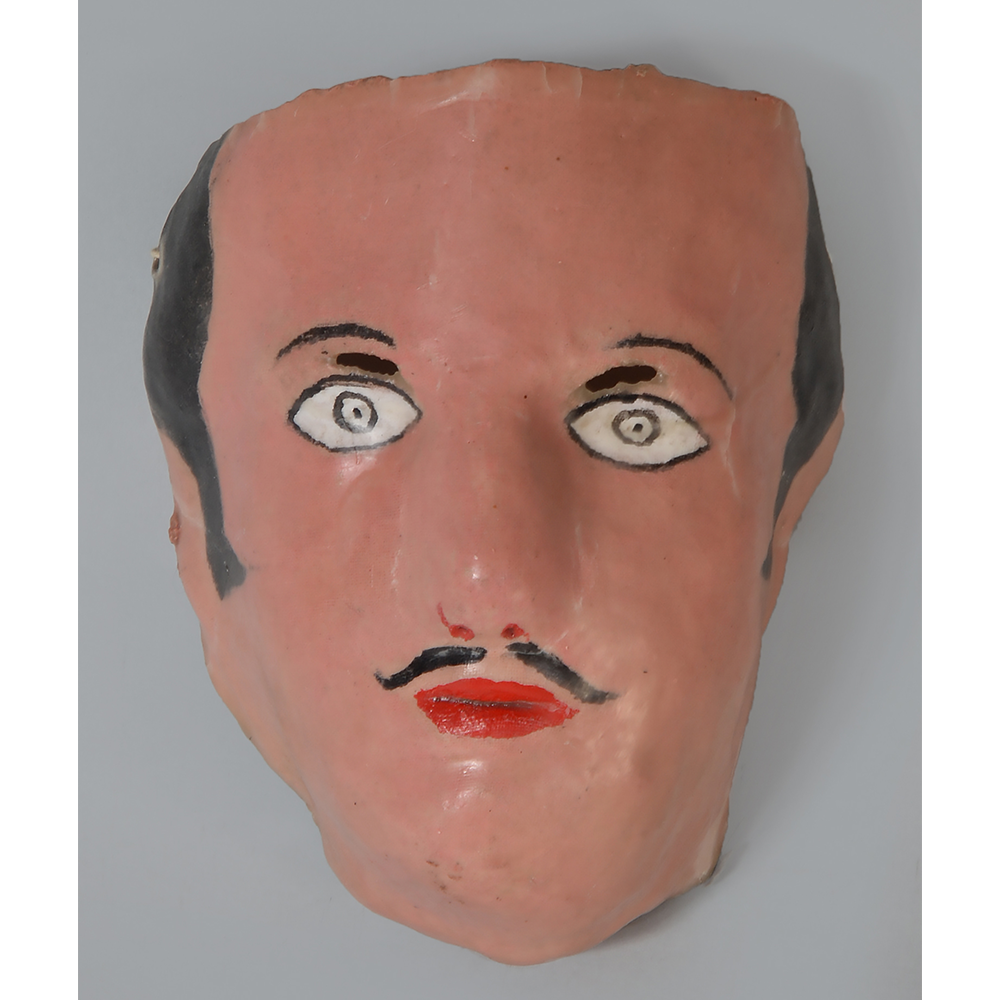
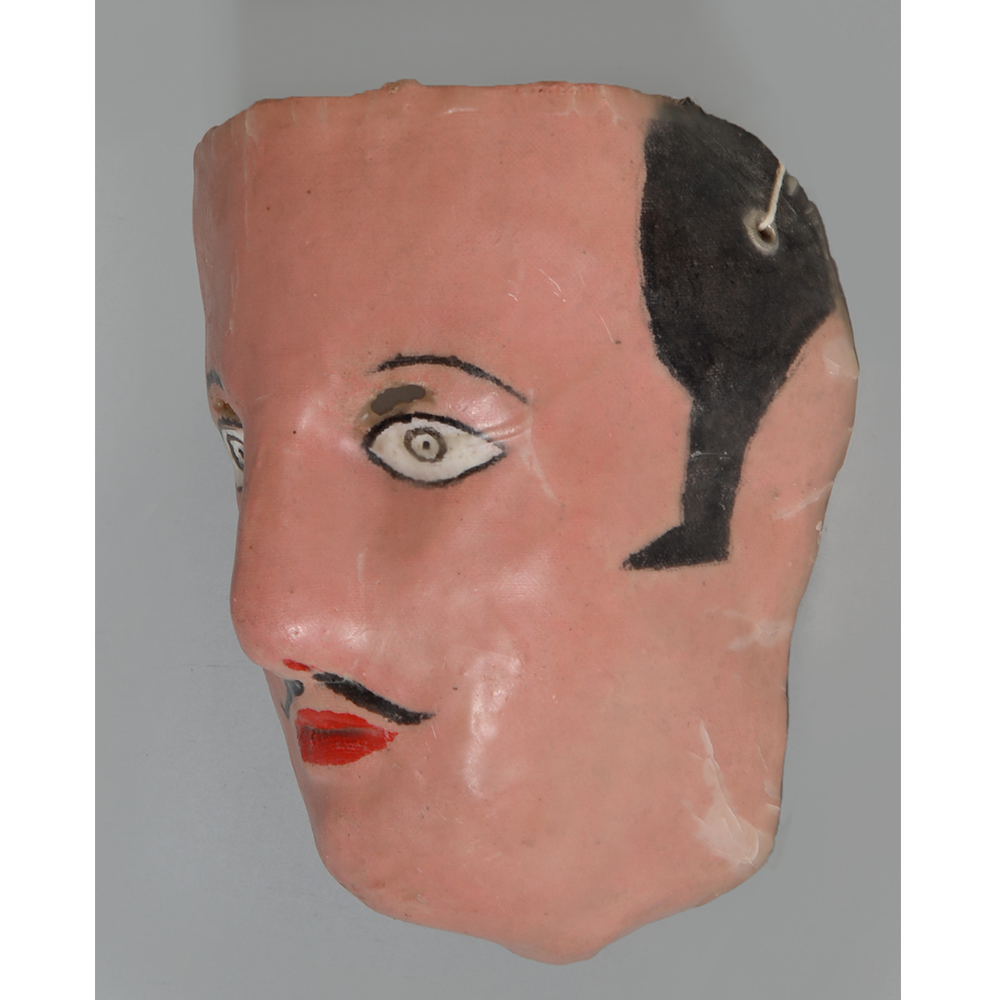
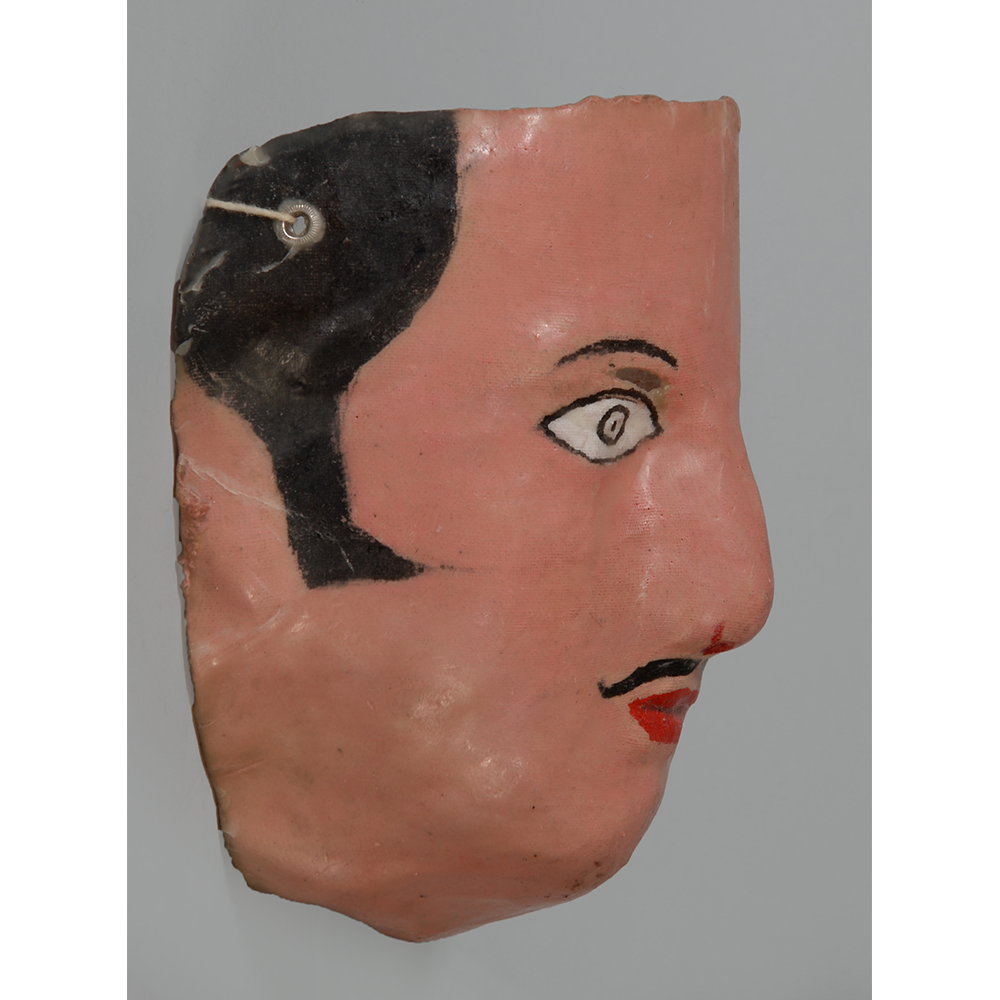
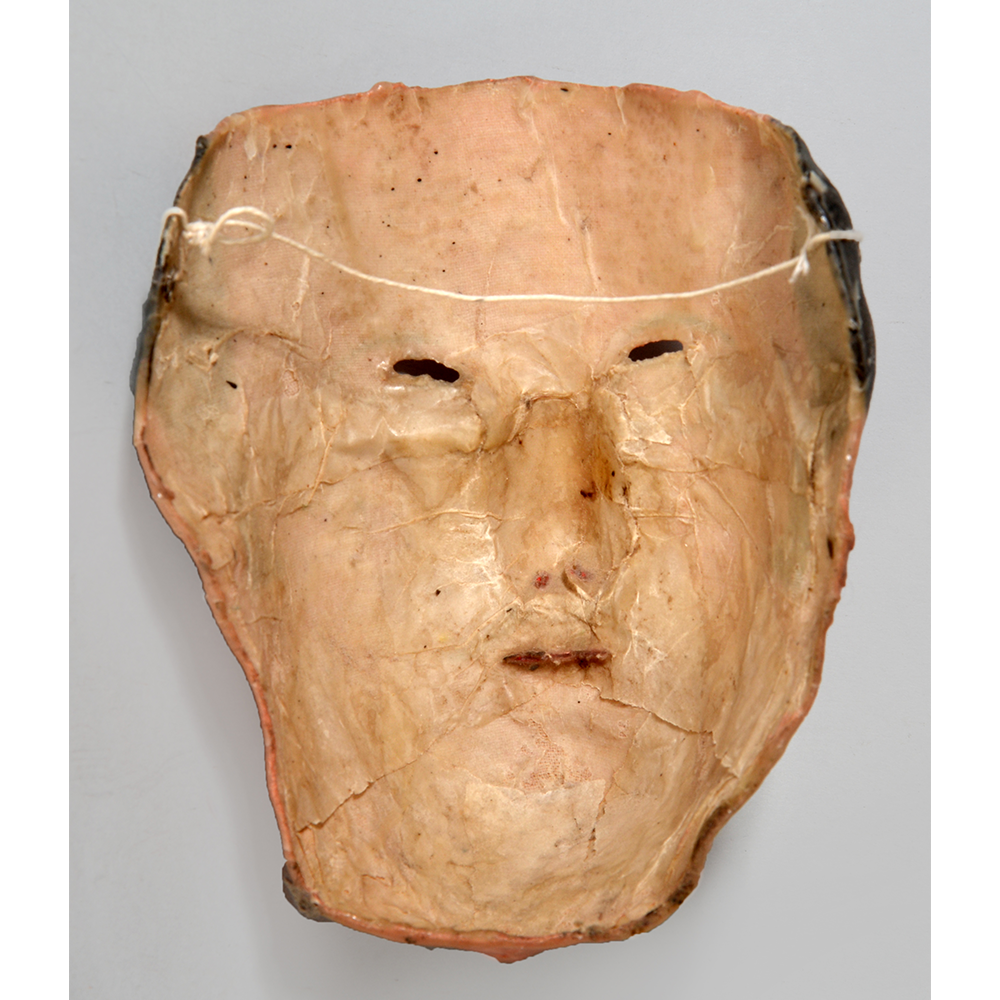
In many parts of Mexico, indigenous populations reenact the Spanish Reconquista, known as the Danza de los Cristianos y los Moros, usually on holidays in honor of the patron saint of the village. In the Zapotec region of Oaxaca, especially San Bartolo Coyotepec, Zaachila, and Santo Tomás Jalieza, this tradition has a unique style and is known as the Dance of the Gardeners. A group formed of a Christian king and queen, a Moorish king and queen, and various princes, princesses, knights and vassals involving an elaborate plot that ends in a machete fight in which the Christians are victorious and force the Muslims to convert to Catholicism. The ceremony is usually performed at the Fiesta de la Virgén de Rosario on the last Sunday of the year, as well as the 2nd and 8th of January. This specific mask represents the Spanish king.

:

TITLE: Harb Bedouin Mask
TYPE: face veil
GENERAL REGION: Middle East
COUNTRY: Saudi Arabia
SUBREGION: Arabian Peninsula (Bilad al-Sham)
ETHNICITY: Arab (Harb)
DESCRIPTION: Harb Bedouin Mask
CATALOG ID: MESA001
MAKER: Unknown
FUNCTION: celebration; social control
AGE: 1970s
MAIN MATERIAL: cotton cloth
OTHER MATERIALS: stitching; silver ornaments

In the Hijaz (Islamic holy land), Arabic women of the Harb tribe wear the veil on certain occasions.  The Harb people are a Bedouin tribe living between western Saudi Arabia and Yemen.  The function of the veil is ostensibly to preserve female modesty, which allows male tribe members to control female bodies.  Such masks are not for everyday use; they would be too hot and heavy. They are worn during special events, such as weddings and feasts, and when strangers visit the camp.

:

TITLE: Korkobi Mask
TYPE: face mask
GENERAL REGION: Latin America
COUNTRY: Mexico
SUBREGION: Michoacán (Charapán)
ETHNICITY: Purépecha
DESCRIPTION: Korkobi (Corcoví) Mask
CATALOG ID: LAMX061
MAKER: Victoriano Salgado Morales (1920-2012, Uruapan)
CEREMONY: Danza de los Viejitos
AGE: 1970s
MAIN MATERIAL: wood
OTHER MATERIALS: maque; plaster

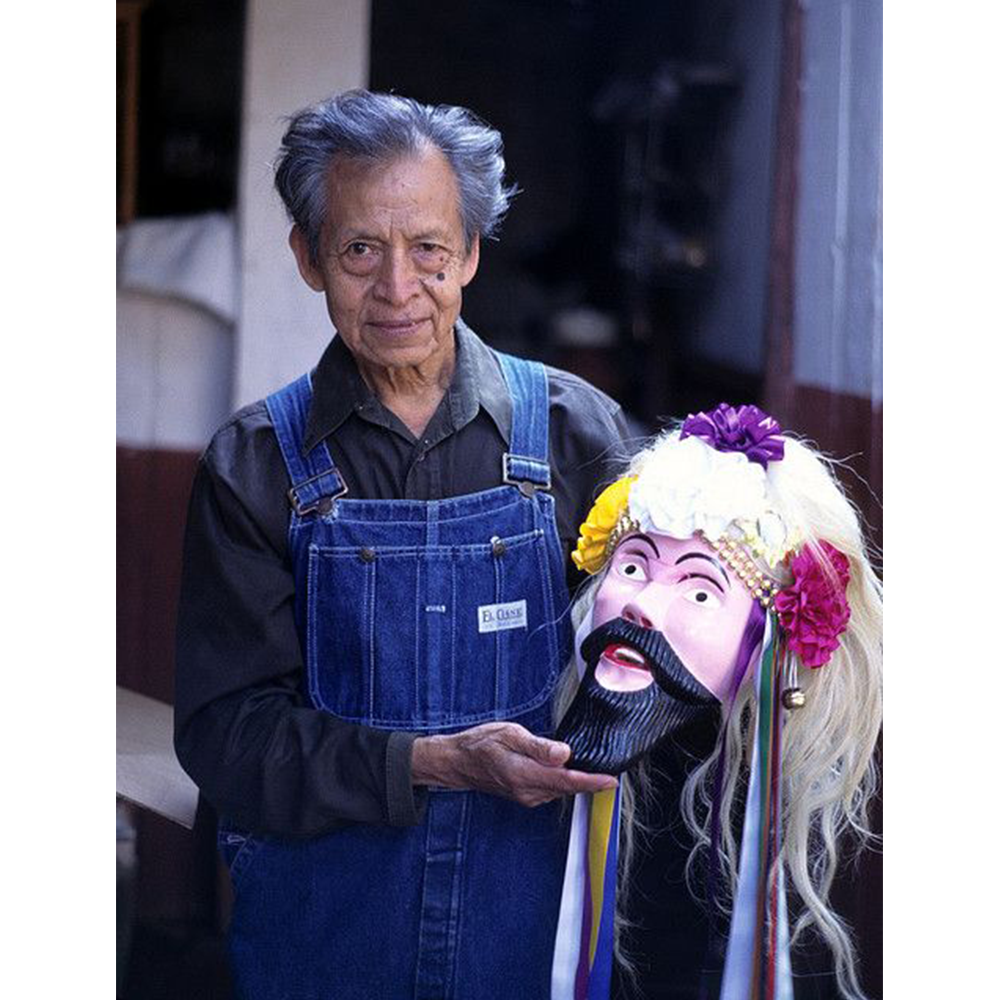
The Korkobi mask (also written in many variations, such as Corcoví and Corcobi) represents a nocturnal bird, which in Purépecha beliefs is considered a sign of ill omen, because its song announces death.  However, the character also represents the sun. The Korkobi dances in the Christmas Eve Danza de los Viejitos (Dance of the Little Old Men) and is primarily used in the small town of Charapán.

In this dance, a female character (Maringuía) represents the moon, the Korkobi represents the sun, the tecolote (owl) the night, and the viejitos (old men) represent the stars dancing for the amusement of the Holy Child.

All the characters in the dance try to get the attention of the Maringuía with shouts and compliments but it is the Korkobi alone who succeeds in courting her.

:

TITLE: Bedouin Niqab
TYPE: face veil
GENERAL REGION: Middle East
COUNTRY: Egypt
SUBREGION: Siwa Oasis
ETHNICITY: Berber
DESCRIPTION: Berber Bedouin Woman’s Niqab (Veil Mask)
CATALOG ID: MEEG002
MAKER: Unknown
FUNCTION: celebration; social control
AGE: 1952
MAIN MATERIAL: wool cloth
OTHER MATERIALS: glass beads; silver coins; silver plates; metal chains; stitching

In the western desert of Egypt, Berber women living in Bedouin societies sometimes wear masks or veils called niqab. The veils serve multiple functions, including protecting the women’s face from sun damage, filtering dust from the air, displaying adornment, and demonstrating wealth or status. The veil may also allow men to exercise social control over women’s bodies, maintaining their status as proprietary to fathers and husbands.  Not all Bedouian societies use the niqab, but those that do generally begin the practice after the woman or girl has been married.

The niqab worn by Bedouin women on special occasions are sometimes elaborately decorated with coins and beads, like this one.  Such masks are not for everyday use; they would be too hot and heavy. They are worn during special events, such as weddings and feasts.  This one comes from the Berber people in the Siwa Oasis, in the western Egyptian desert, and was worn by a Bedouin woman until her death in 1952.

:

TITLE: Reina de Jardineros
TYPE: face mask
GENERAL REGION: Latin America
COUNTRY: Mexico
SUBREGION: Oaxaca
ETHNICITY: Zapotec
DESCRIPTION: Reina (Queen) de Jardineros
CATALOG ID: LAMX092
MAKER: Unknown
CEREMONY: Danza de Jardineros
AGE: late 1970s
MAIN MATERIAL: cloth covered in beeswax
OTHER MATERIALS: paint; metal o-rings; cotton string

In many parts of Mexico, indigenous populations reenact the Spanish Reconquista, known as the Danza de los Cristianos y los Moros, usually on holidays in honor of the patron saint of the village. In the Zapotec region of Oaxaca, especially San Bartolo Coyotepec, Zaachila, and Santo Tomás Jalieza, this tradition has a unique style and is known as the Dance of the Gardeners. A group formed of a Christian king and queen, a Moorish king and queen, and various princes, princesses, knights and vassals involving an elaborate plot that ends in a machete fight in which the Christians are victorious and force the Muslims to convert to Catholicism. The ceremony is usually performed at the Fiesta de la Virgén de Rosario on the last Sunday of the year, as well as the 2nd and 8th of January. This specific mask represents the Spanish queen.

: