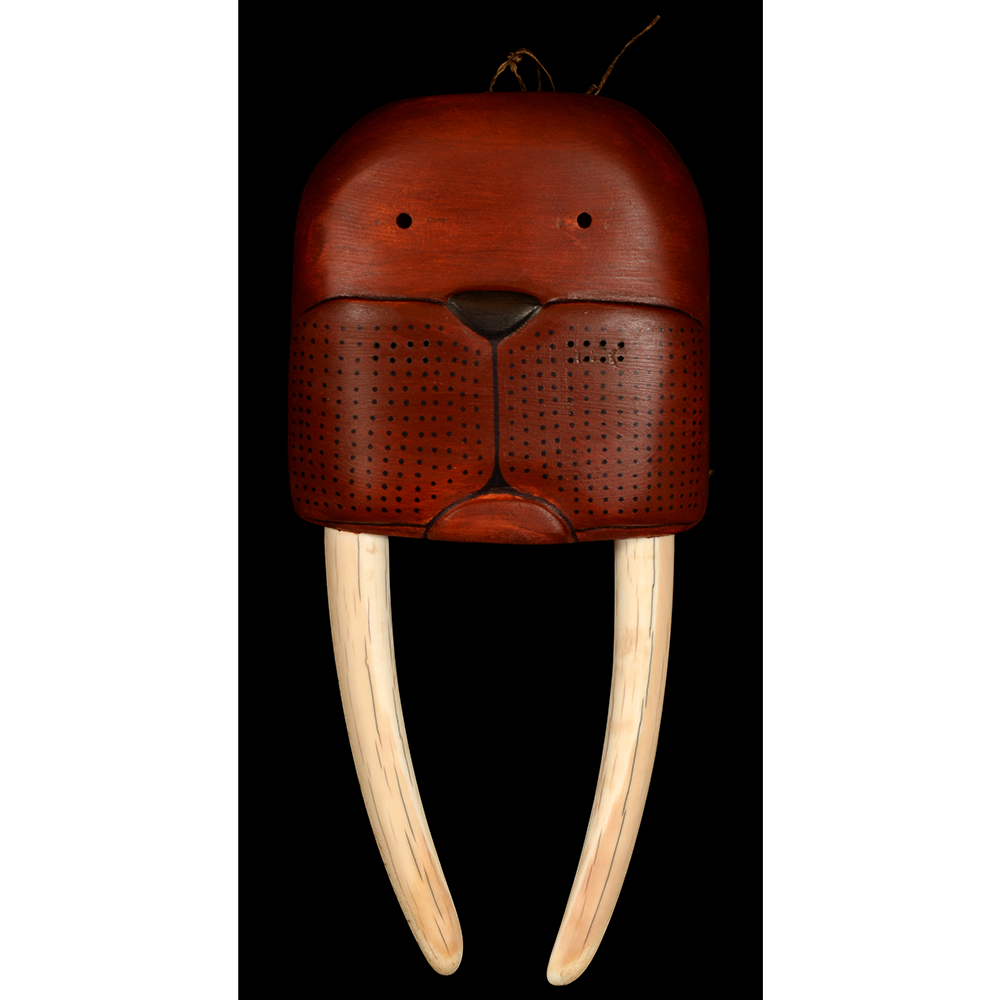
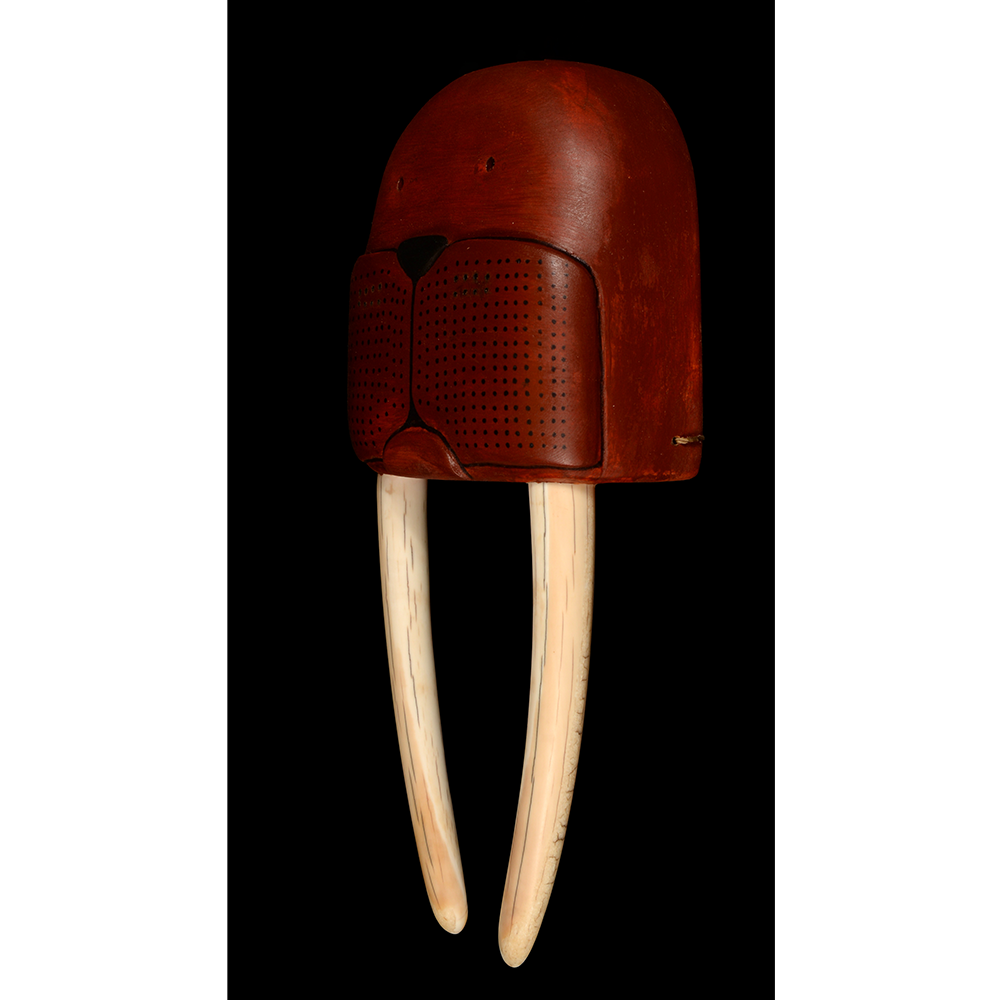
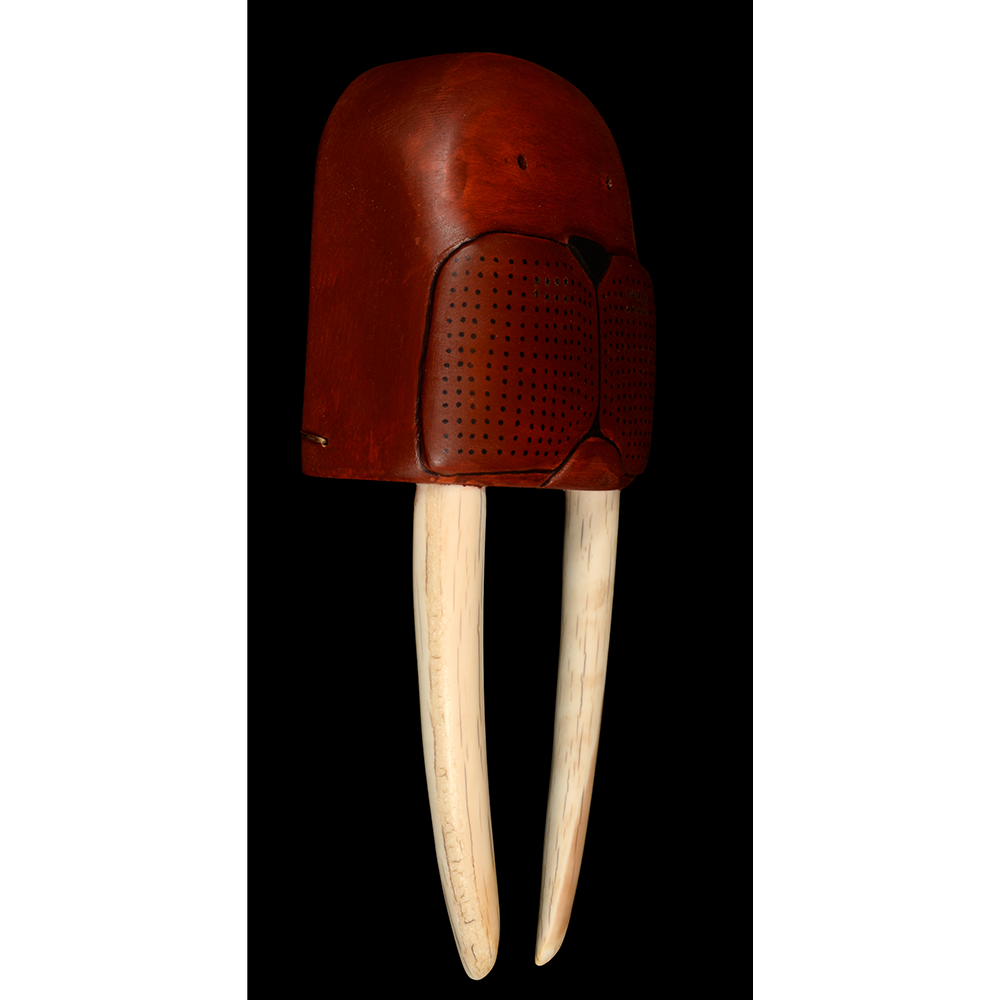
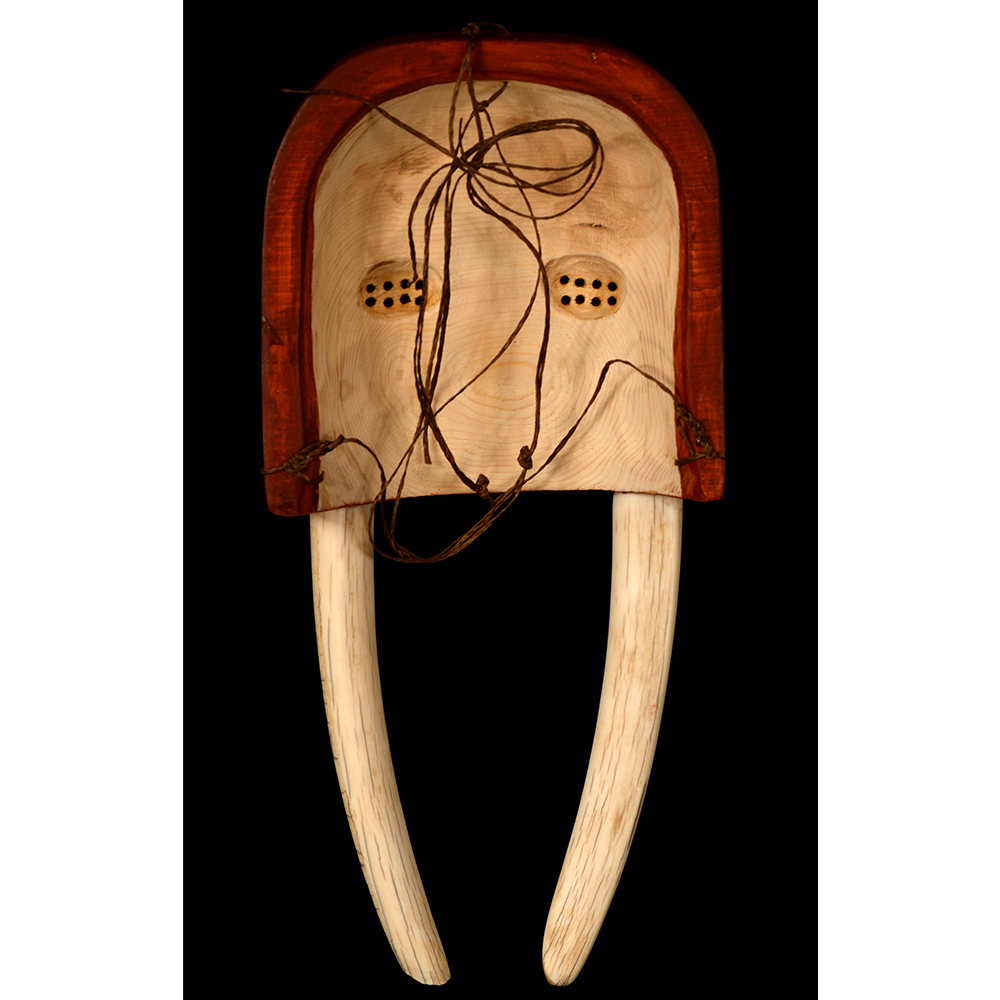
TITLE: Iñupiat Aiviq Mask
TYPE: face mask
GENERAL REGION: North America
COUNTRY: United States of America
SUBREGION: Alaska
ETHNICITY: Iñupiat
DESCRIPTION: Aiviq (Walrus) Mask
CATALOG ID: NAUS163
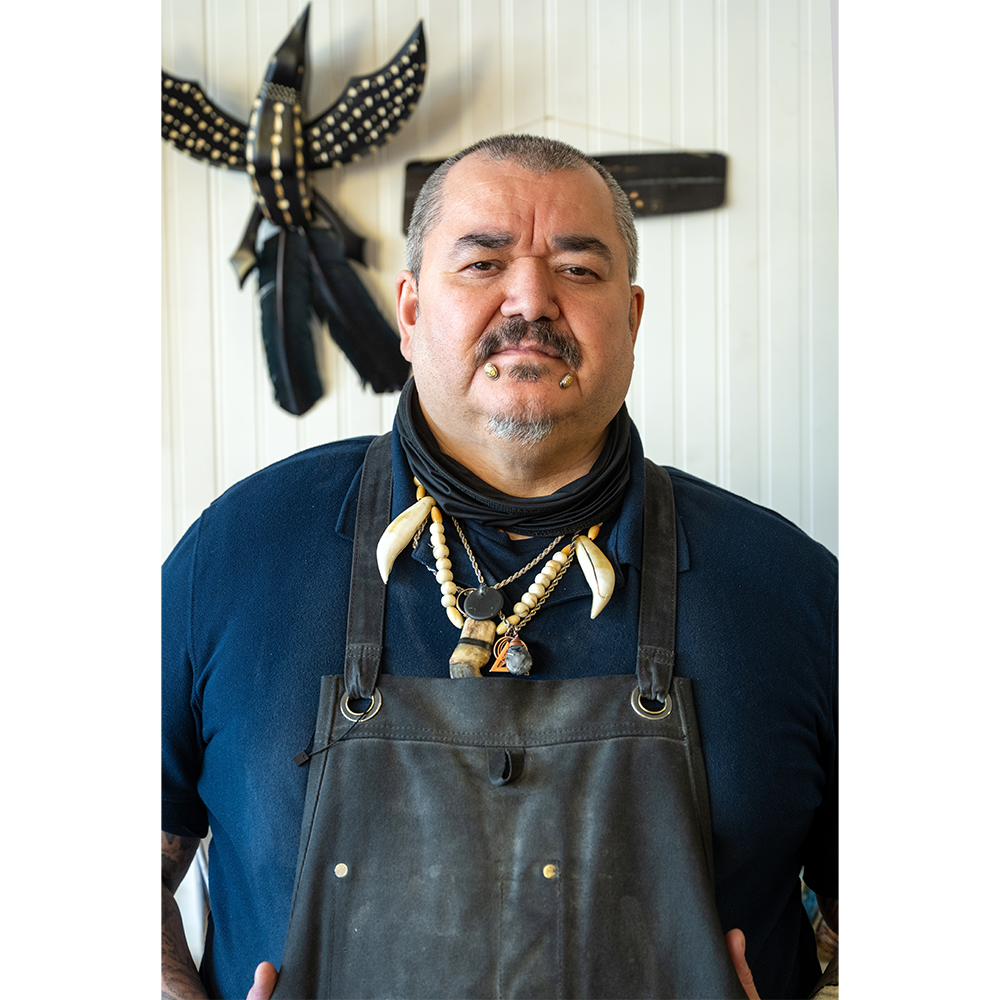
MAKER: Leon Misak Kinneeveauk (Point Hope, Alaska, 1972- )
CEREMONY: Agriculture/Hunting; Entertainment; Spirit Invocation
AGE: 2026
MAIN MATERIAL: spruce wood
OTHER MATERIALS: red clay pigment; walrus tusks; adhesive; waxed string
The Iñupiat people inhabit the Arctic Slope, Northwest Alaska, and the Bering Strait region up to the Canadian border. They comprise some 13,500 persons, about 3000 of whom speak the Iñupiaq language. They traditionally hunt bowhead whales, seals, walrus, and caribou for subsistence, clothing, and tools. The Iñupiat nation is organized into five ethnic communities, ranging from the Bering Strait (Sivunmiut) to the South Seward Peninsula (Qawiaraq Iñupiat).
The aiviq or walrus dance of the Iñupiat people is a dance expressing the community’s spiritual relationship with nature and honoring the animal spirit of the walrus, a traditionally vital source of food, ivory, and hides. Mimetic animal dances are performed to show respect to the spirits of the walruses that give themselves to the hunters. Honoring the walrus spirit through dance ensures that the animals will continue to return willingly to the communities next season and sustain the people. The dance also pantomimes the subsistence hunt of the walrus in the open, skin-covered boat (umiaq), so it serves the purpose of narrating the hunt as well. Finally, the walrus dance may also serve as a trade song, welcoming an outside delegation and establishing a relationship with its people through sharing a valued cultural practice.
The dance is accompanied by the music of handheld frame drums known as qilaun, often made from the stomach of the walrus itself.