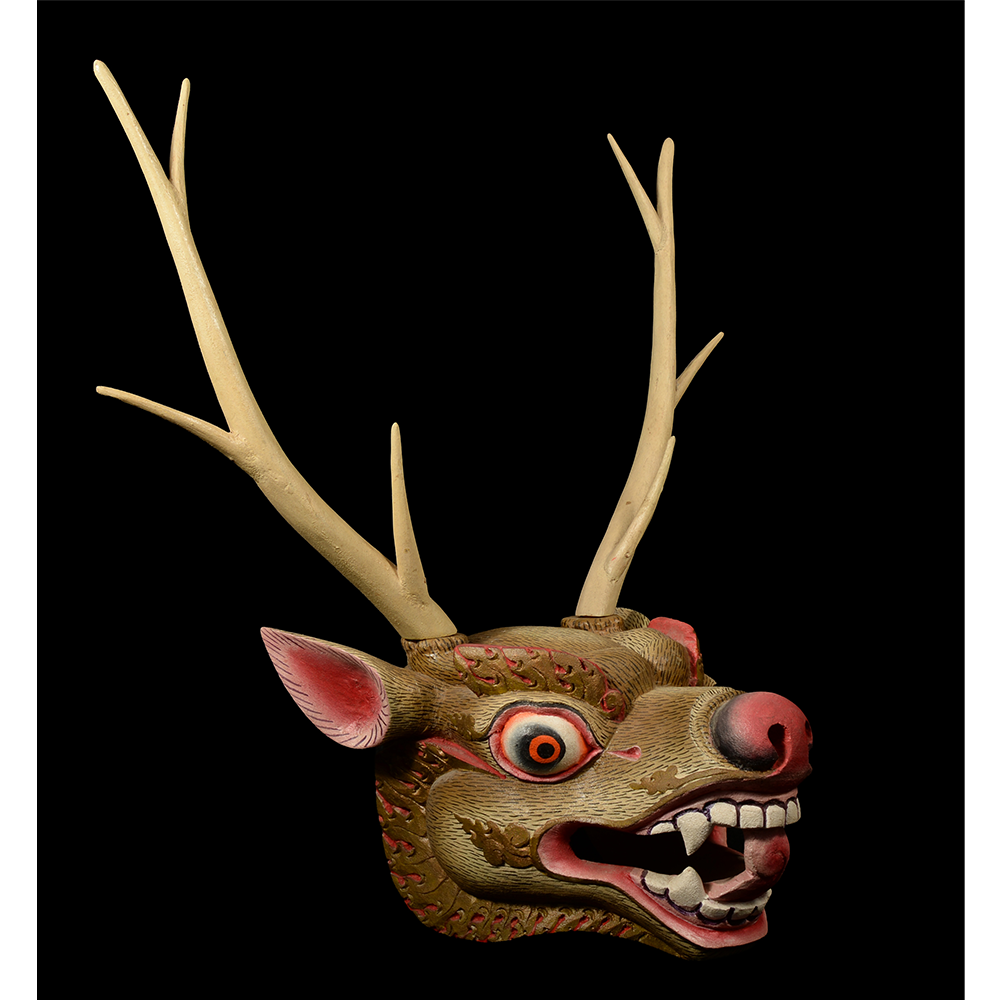
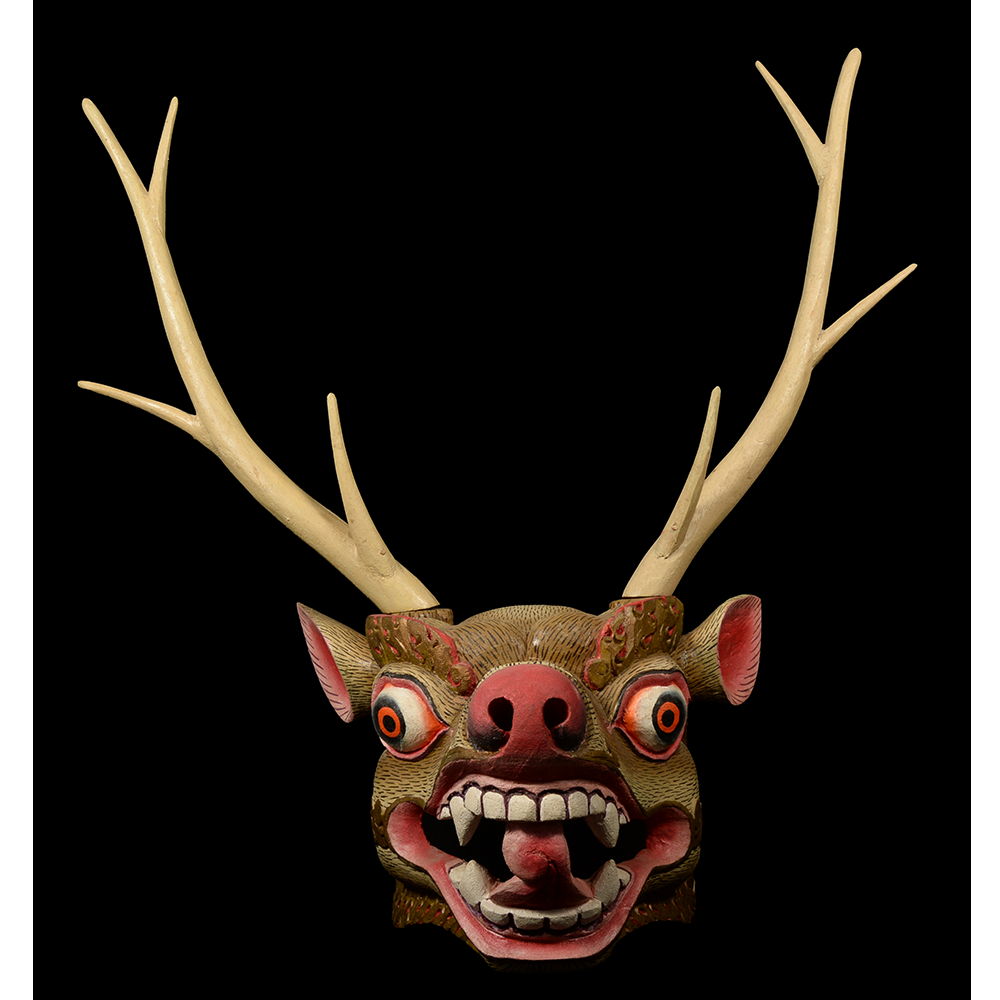
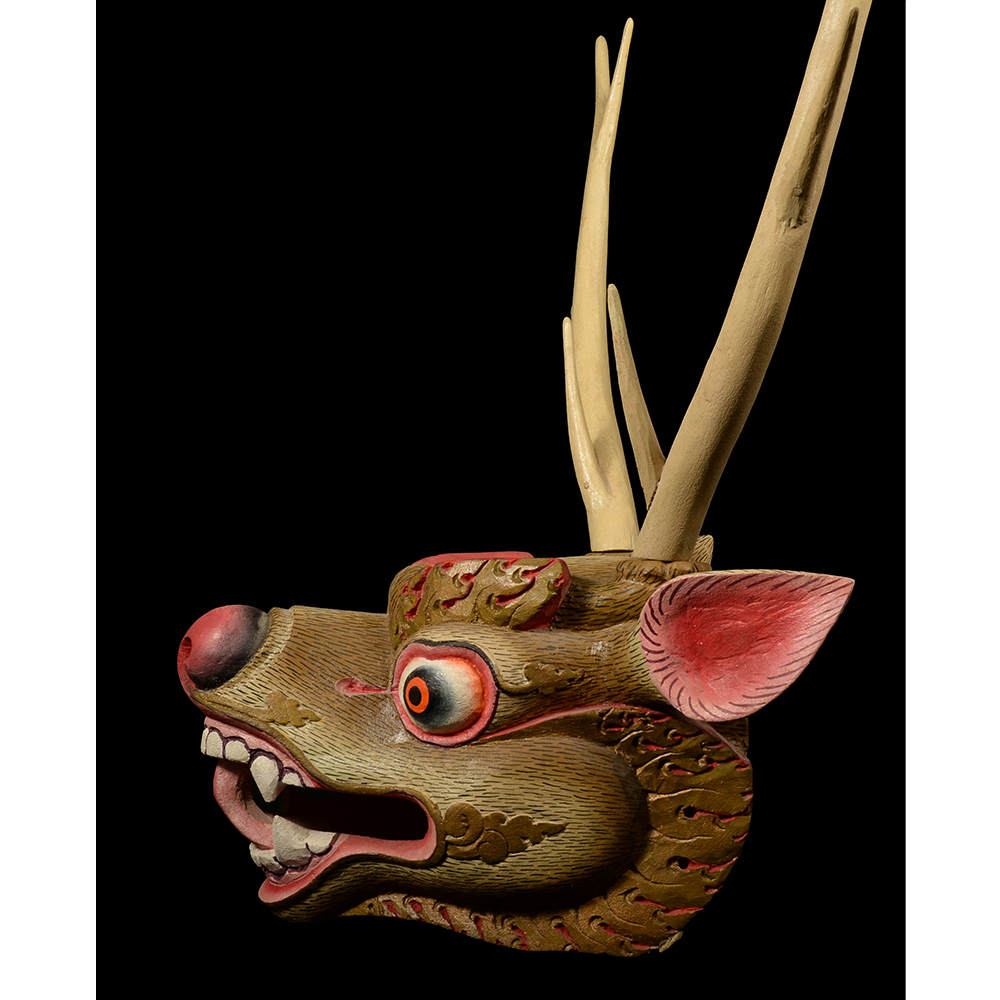
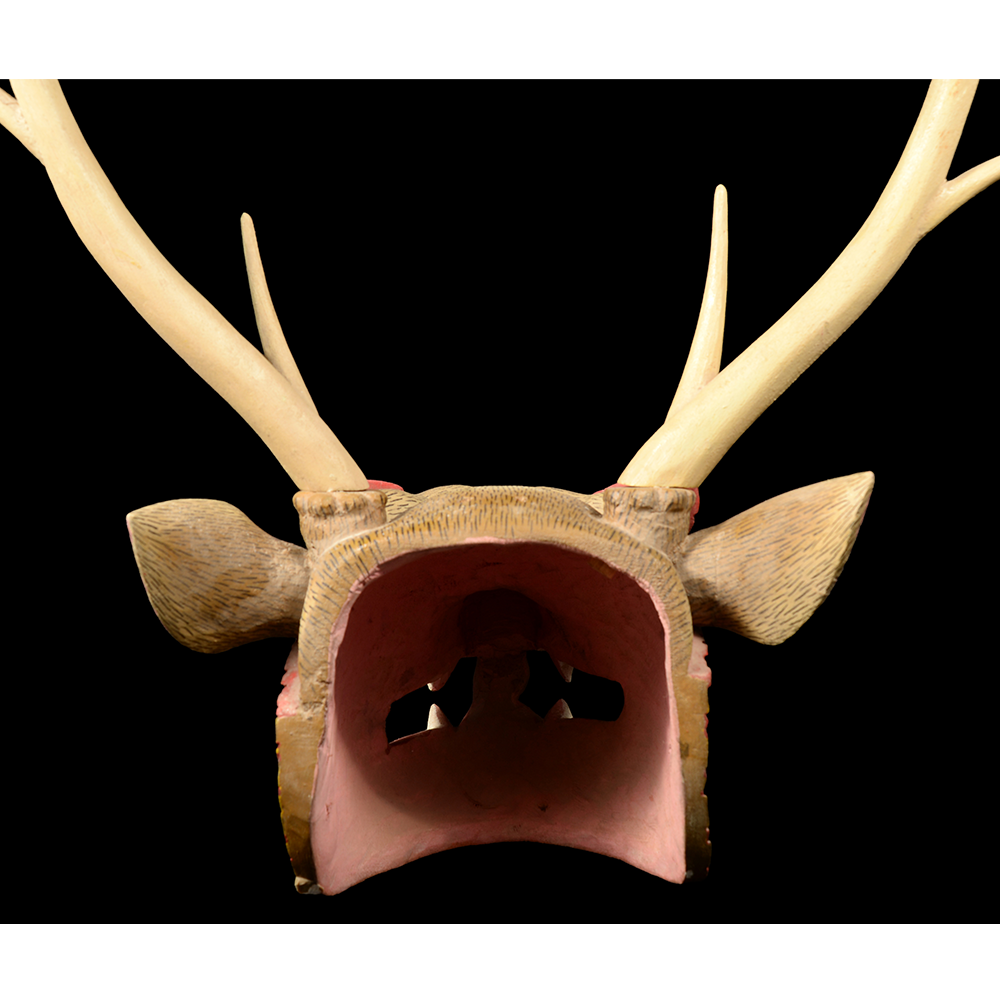
TITLE: Deer Cham Mask
TYPE: face mask
GENERAL REGION: Asia
COUNTRY: Nepal
SUBREGION: Kathmandu Valley
ETHNICITY: Tamang
DESCRIPTION: Deer (Sha-Mukhota) Mask
CATALOG ID: ASNP006
MAKER: Unknown
CEREMONY: Cham Dance
FUNCTION: Celebration, Protection/Purification, Spirit Invocation, Social Control
AGE: ca. 1980s
MAIN MATERIAL: wood
OTHER MATERIALS: paint
The Tamang people of the Kathmandu Valley are a Tibetan Buddhist people whose lamas and monks perform traditional masked cham dances at the monasteries during major religious festivals, such as Lhosar and Buddha Jayanti. They mostly live in settlements encircling Kathmandu. The cham dances serve both to protect and purify the region by invoking Buddhist-Bonbo spirits and to provide religious instruction to the audience. These dances are typically performed to the music of Tibetan horsn (dungchen), cymbals (rolmo), drums (nga), and rhythmic chanting by lamas. The deer dance (Sha-Mukhota) is often the first dance performed and purifies the grounds. The deer in Buddhist symbolism represents the untamed, restless mind, driven by a delusional attachment to the physical world. The deer carry a sword that symbolizes transcendent wisdom (prajna), which cuts through this attachment and helps the deer transcend to peace, discipline, and enlightenment. In shamanistic (bon) practices, the deer is a divine messener between the natural world and spiritual realm, so it also tends to bring blessings and prosperity to those who host it.