TITLE: Yeongno Ogwandae Talnoli Mask
TYPE: face mask
GENERAL REGION: Asia
COUNTRY: Korea
SUBREGION: Gyeongsangnam-do
ETHNICITY: Korean
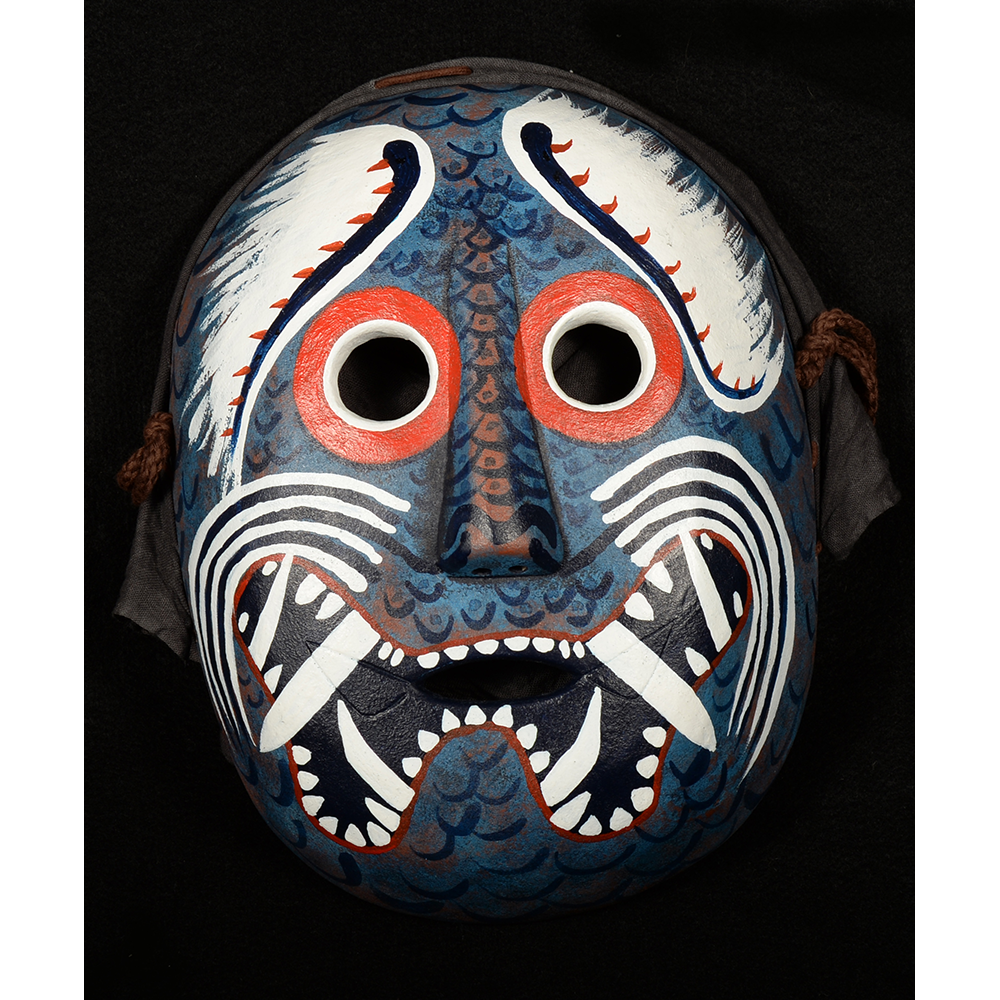
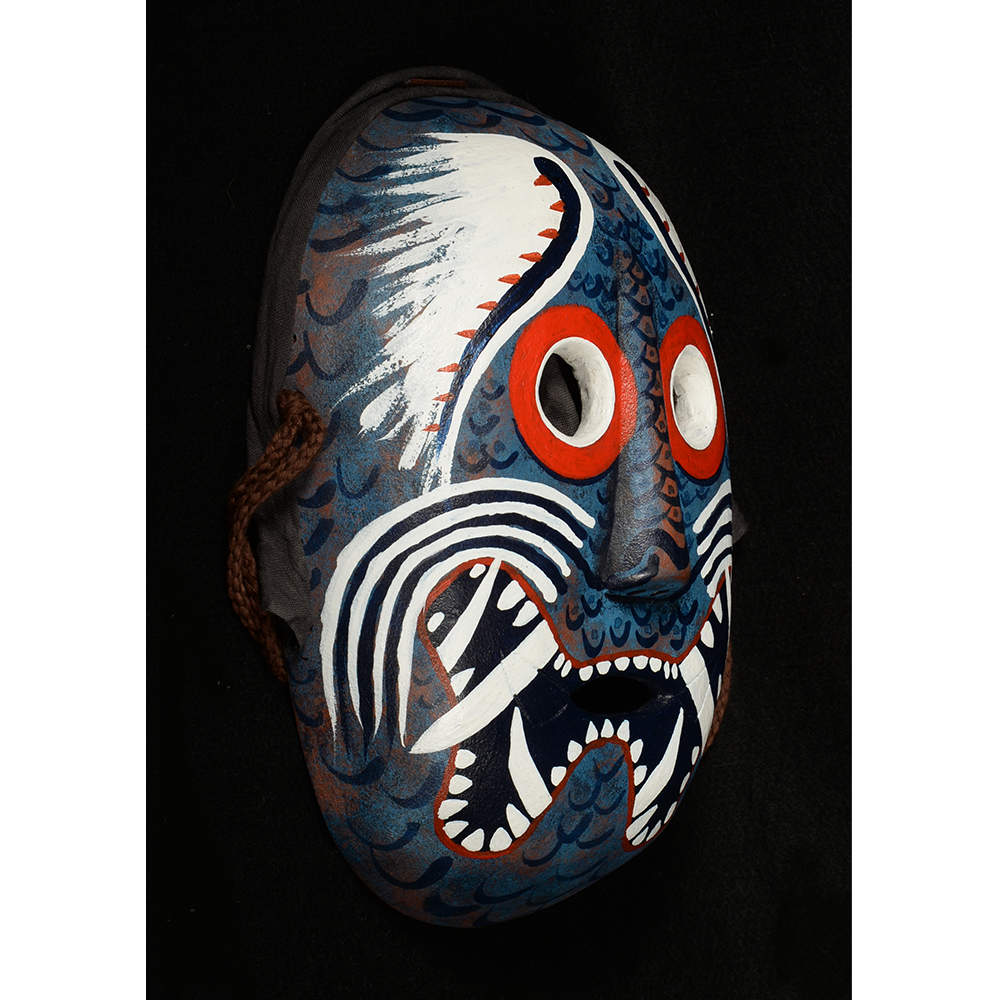
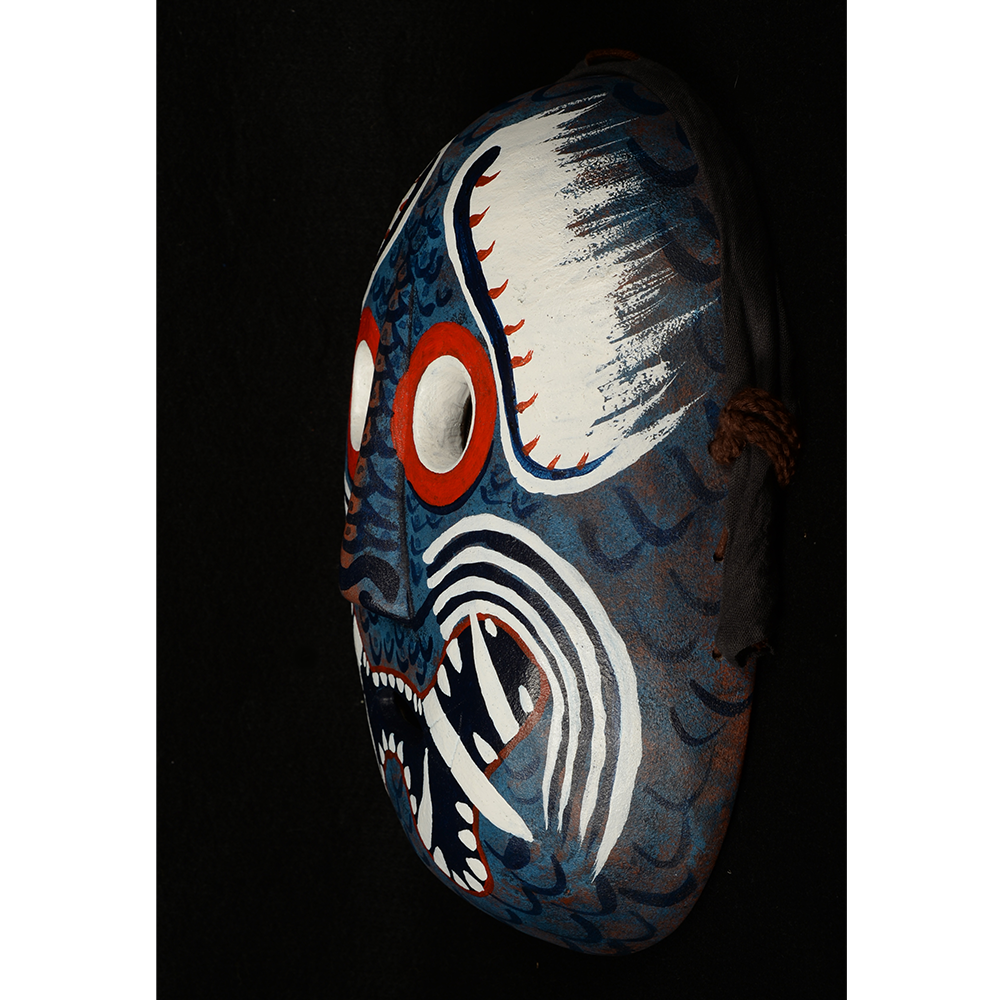
DESCRIPTION: Yeongno (Sea Dragon) Mask for Ogwandae Talnoli
CATALOG ID: ASKR013
MAKER: Jung Sung Am (Haeju Jongshi, North Korea, 1958- )
CEREMONY: Ogwandae Talnoli Dance-Drama
FUNCTION: celebration; entertainment; purification
AGE: 2025
MAIN MATERIAL: wood
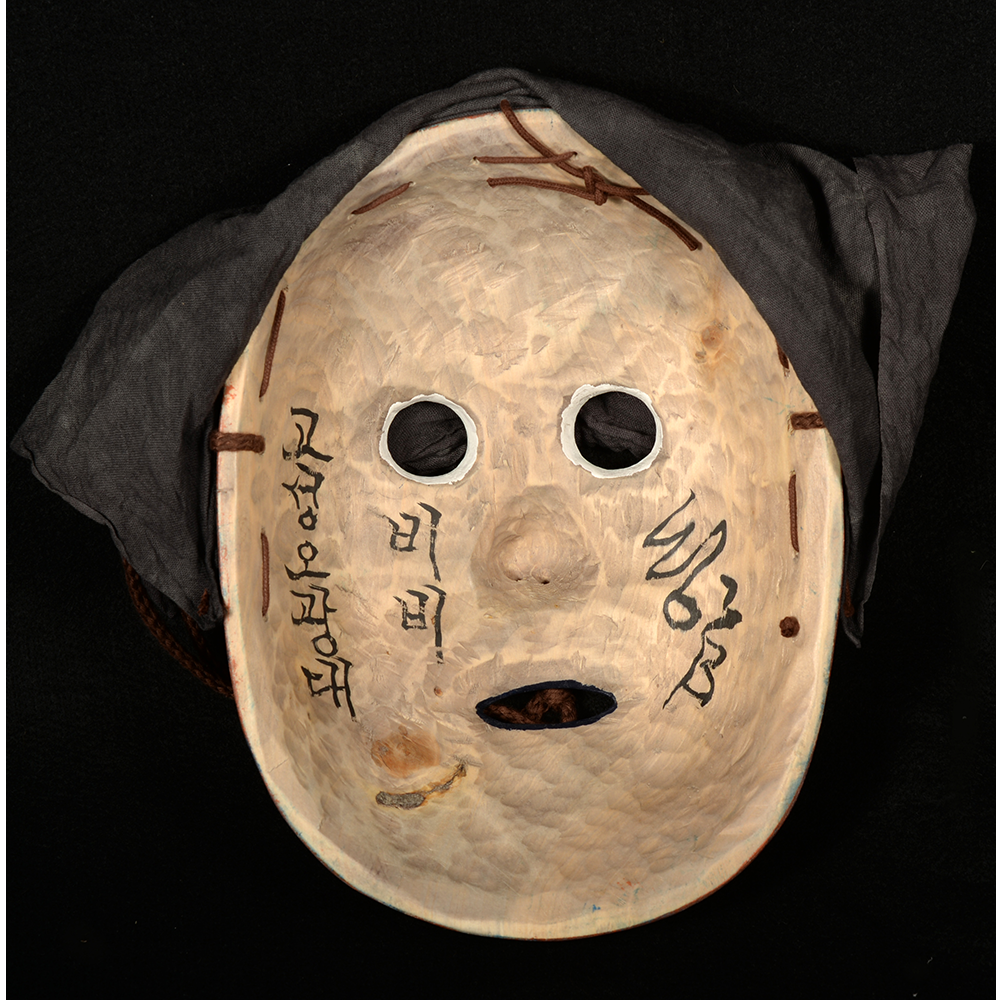
OTHER MATERIALS: paint; dyed cotton cloth; stitching
The Ogwandae Talnoli means “Five Clowns” and is a traditional masked dance-drama of the Gyeongsangnam Province of southeastern Korea. It began as a performance by traveling troupes along the Nakdong River and was later incorporated by villagers into annual community rituals, such as Jeongwol Daeboreum (first full moon of the lunar new year), to drive away evil spirits, pray for good harvests, and cement community identity. There may be five or six dances, incorporating the following:
- Mundungi (The Leper), a sorrowful solo dance in which the title character laments his suffering and the sins of his ancestors before finding joy through music and dance.
- Yangban and Malttugi (The Nobleman and Servant), a satirical dance in which the servant mocks various noblemen for thier greed and arrogance.
- Yeongo, or Pibi (Sea Dragon), in which the yongo is a mythical sea dragon that claims to have eaten 99 corrupt noblemen. In his play, he terrifies a cowardly nobleman who is supposed to be the hundredth the yongno needs to ascend to heaven.
- Nongchang (Apostate Monks) satirizes corrupt Buddhist monks who abandon their vows to flirt with a young woman.
- Yeonggam and Halmi (Old Couple) tells a story of an elderly couple whose domestic disputes and family tragedies reflect the suffering of ordinary working people.
This mask represents the yeongno, which has a fierce face and large fangs. The costume is typically cloth painted with scales and worn loosely to represent the monstrous body of the dragon. The yeongno performer keeps a small willow reed whistle in his mouth to produce a high-pitched squeak often characterized as pibi or bibi.