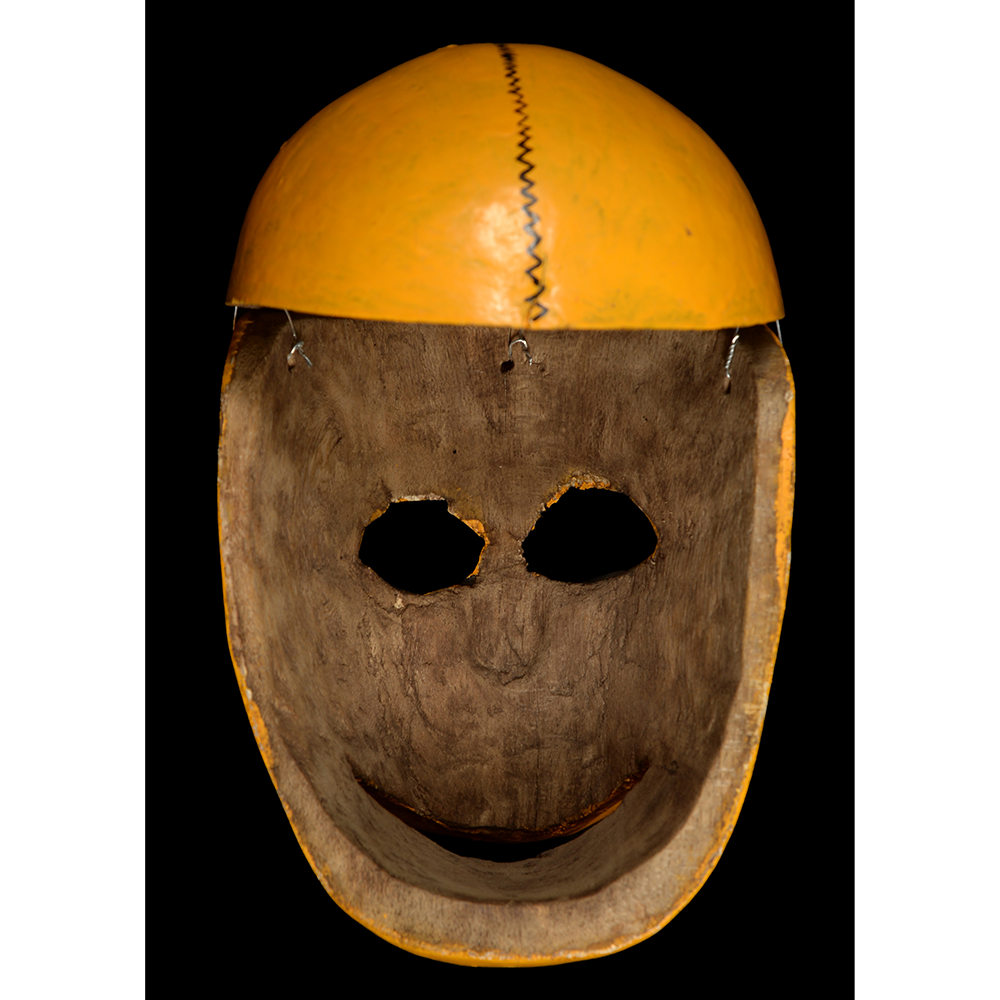
TITLE: Calavera Mask
TYPE: face mask
GENERAL REGION: Latin America
COUNTRY: Mexico
SUBREGION: Guerrero
ETHNICITY: Nahua
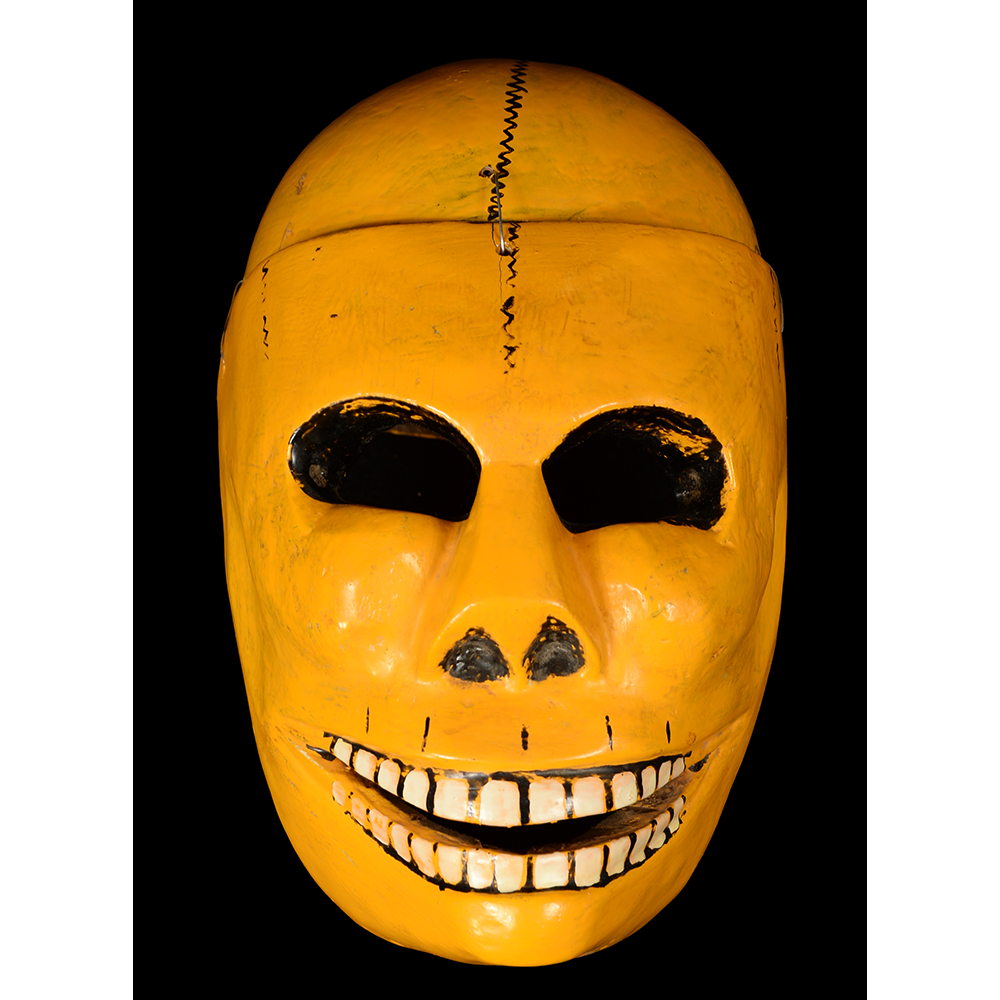
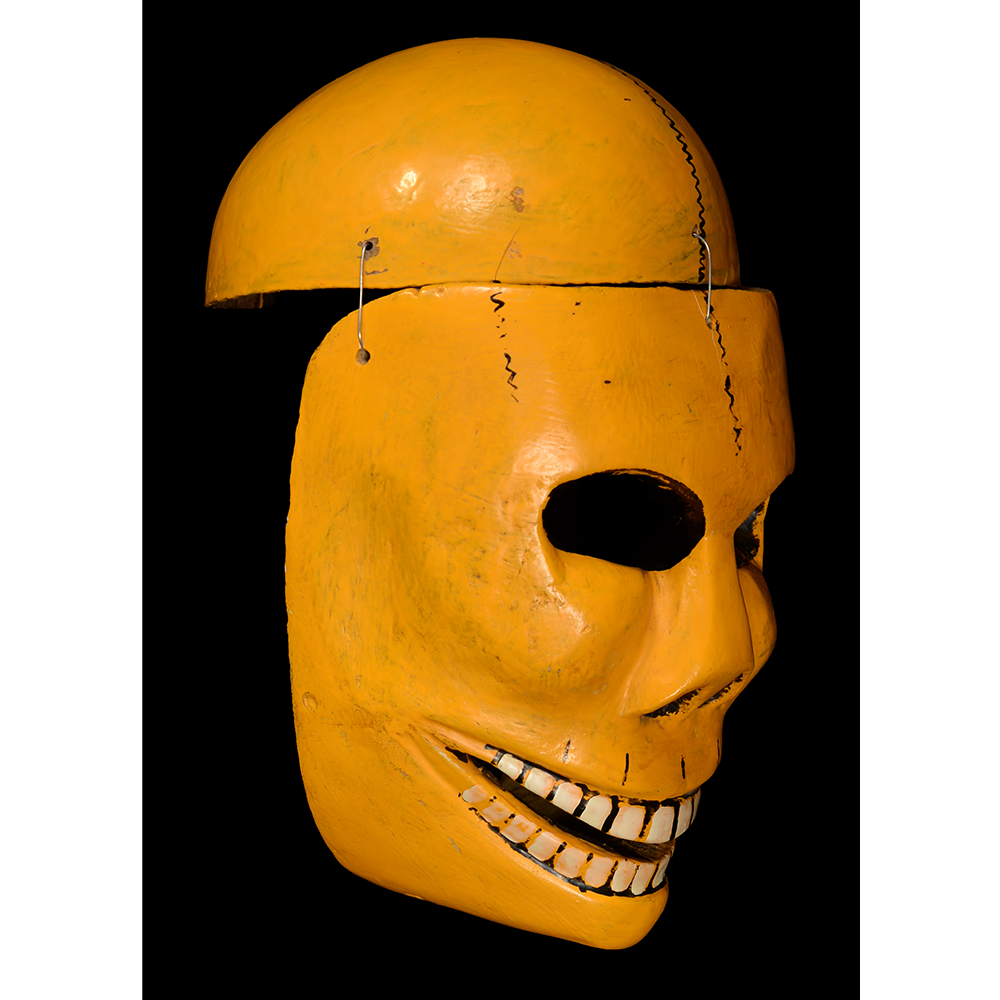
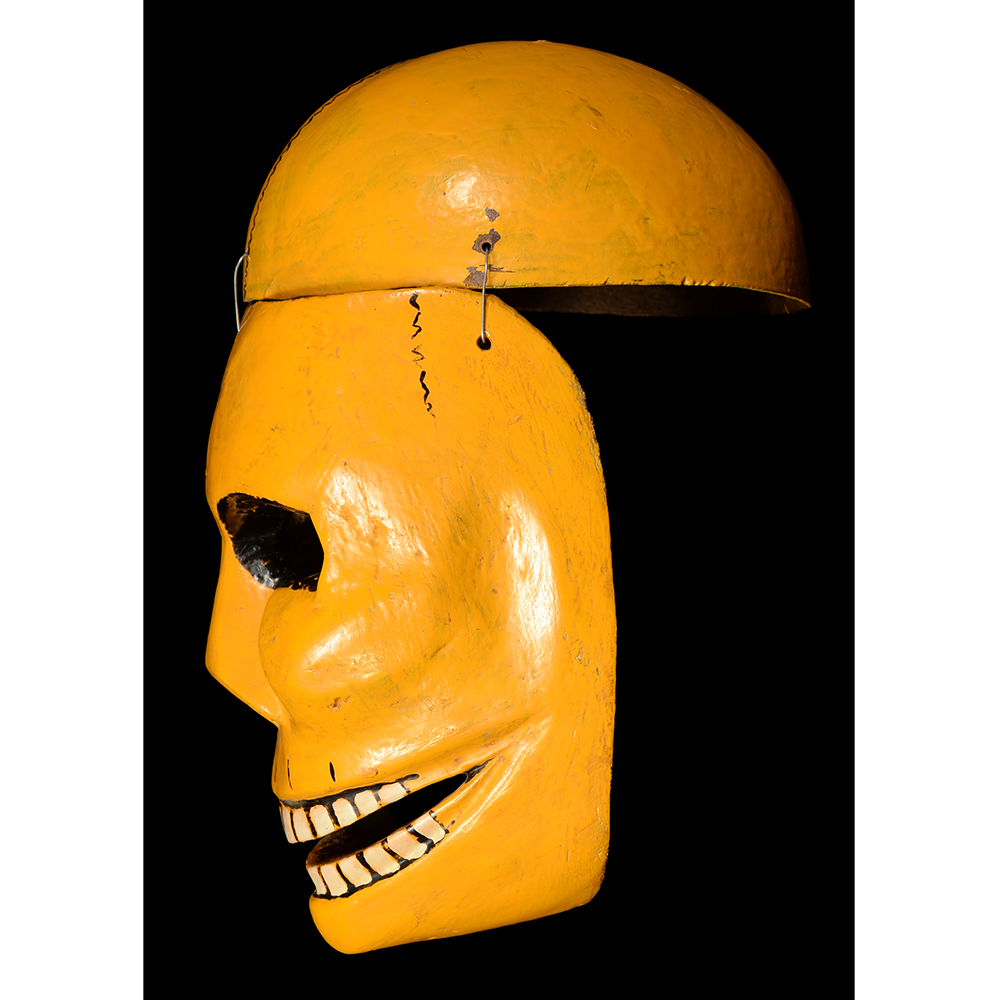
DESCRIPTION: Calavera (Skull), Muerte (Death), Mikistli (Death) Mask
CATALOG ID: LAMX183
MAKER: Unknown maker in Zitlala
CEREMONY: Danza de los Mecos (Danza de los Apaches); Xantolo (Day of the Dead)
AGE: 2009
MAIN MATERIAL: wood
OTHER MATERIALS: paint; gourd; hardware
The Danza de los Mecos, also known as the Danza de los Apaches, is an important dance in Guerrero, San Luís Potosí, and Morelos. The name Mecos refers to the historical indigenous peoples of northern Mexico (Chichimecas). The dance symbolizes the resistance of indigenous peoples to the Spanish conquest and indoctrination into Catholicism. Dancers typically wear body paint using black mud or natural dyes to symbolize the connection of the warriors to the earth. The masks include devils, representing the historical Chichimeca god Tlacatecolotl, as well as viejos (old men), and human-animal blends. They often carry a bow and arrow or spear, and in Guerrero, especially Mochitlán and Chilpancingo, often have feathered headdresses (penachos). Some carry a whip, which they crack to clear the spiritual path to victory. The dance is executed in pairs or groups (cuadrillas) ranging from 10 to 30 couples. Performances are accompanied by traditional brass bands or the string-heavy sones of Huastecan trios. The dance is usually performed during Carnival, on the town’s patron saint festival, or during Xantolo (Day of the Dead).
In some cases, the dancers include a skull (calavera) like this one, representing Death (La Muerte in Spanish, or Mikistli in Nahua). This mask would likely also have been used on the Day of the Dead celebration.